Category: argentina

  • ”The Funnel” to Fiambala

    ”The Funnel” to Fiambala

    THE FINAL PUSH

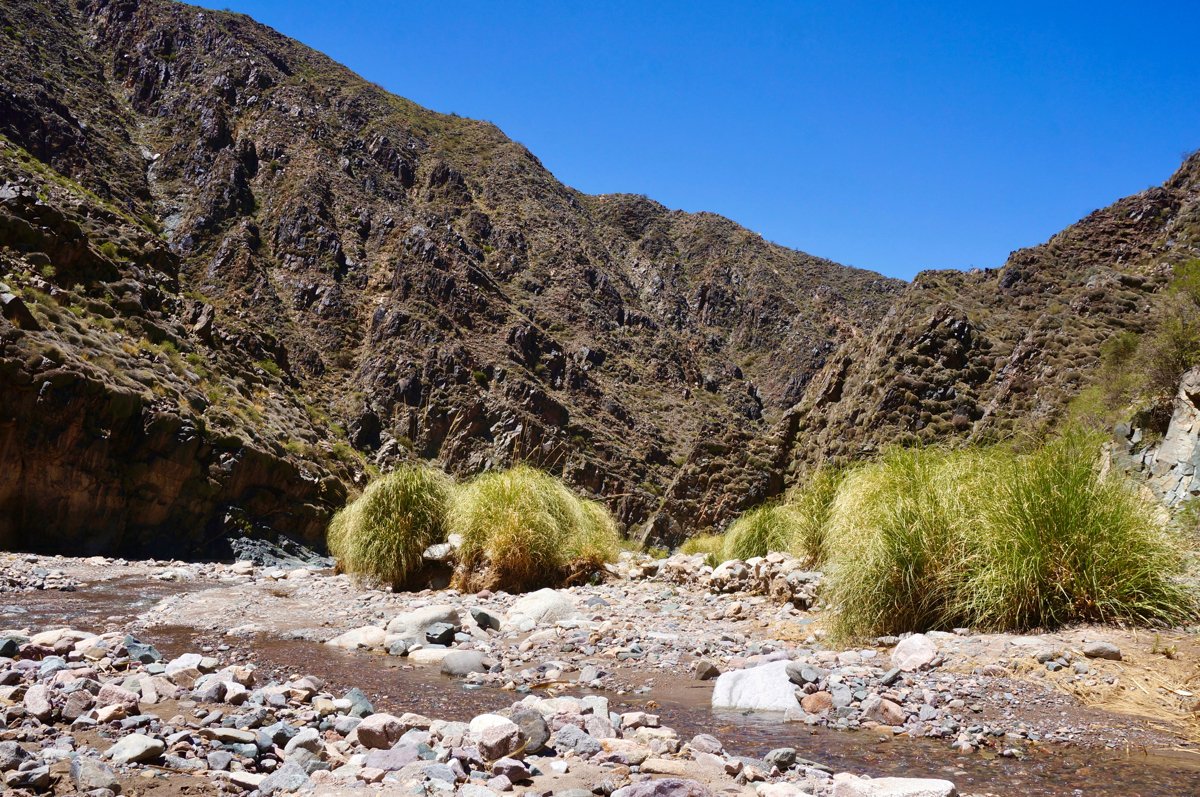
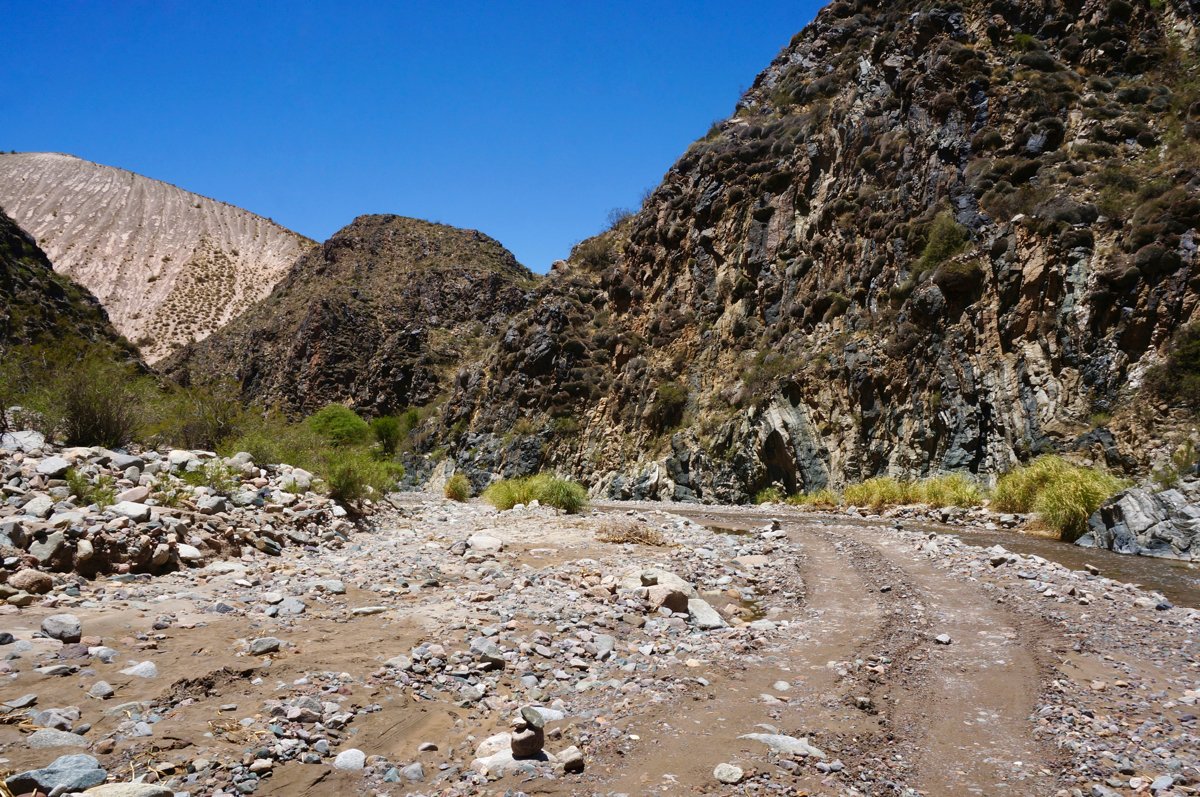
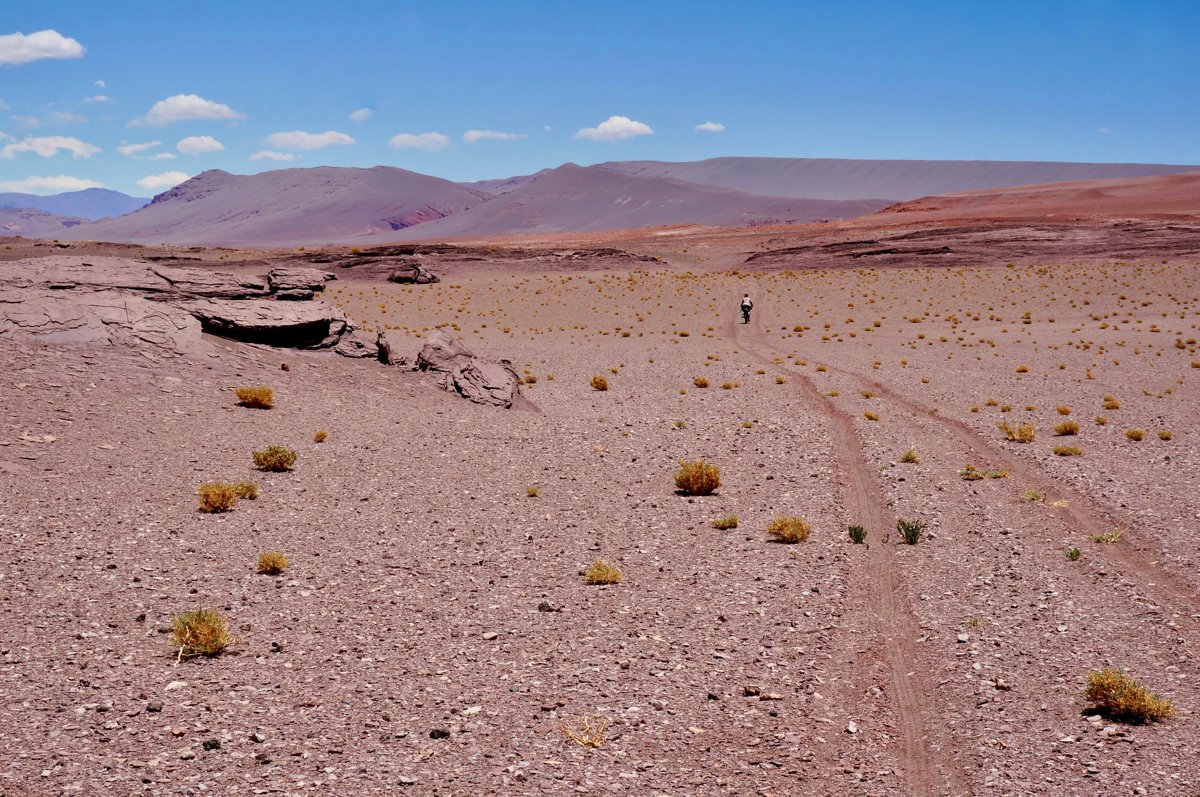
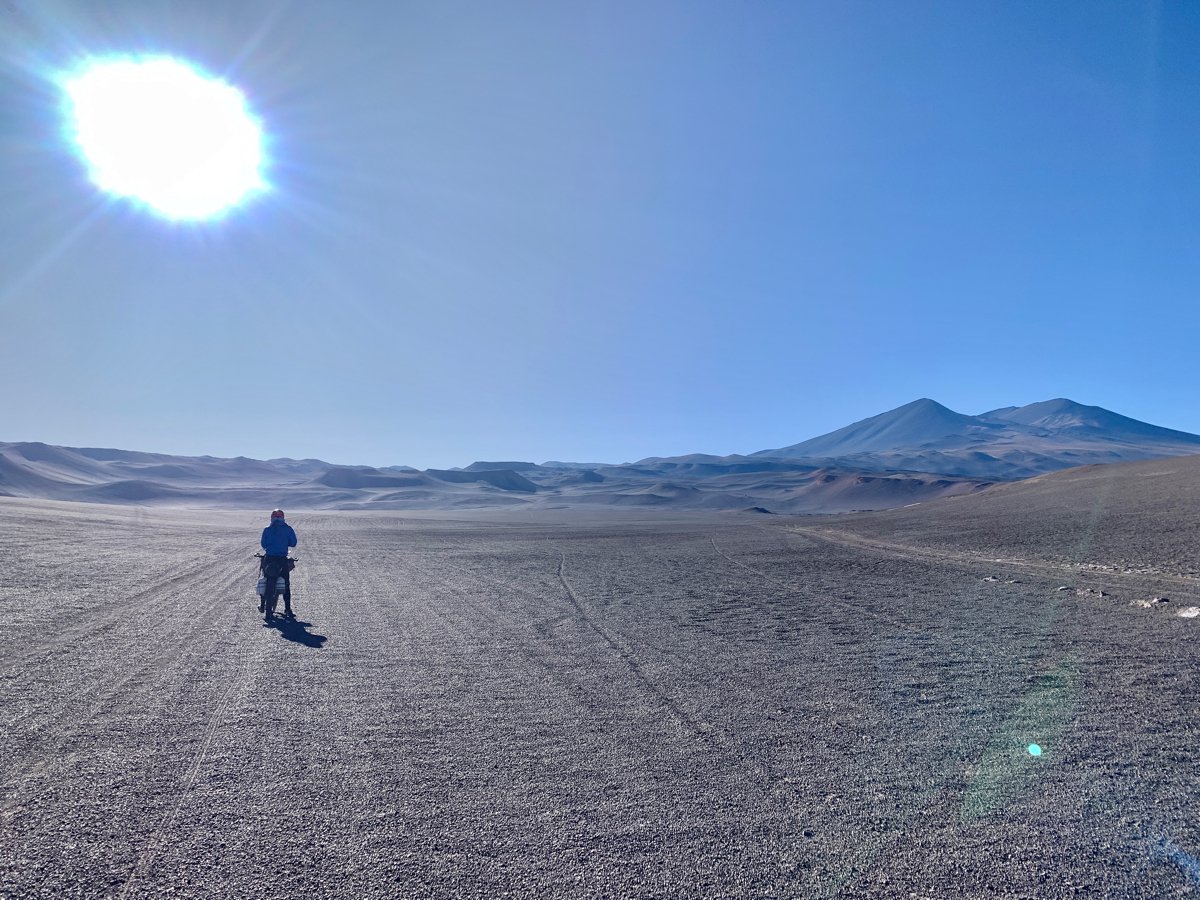
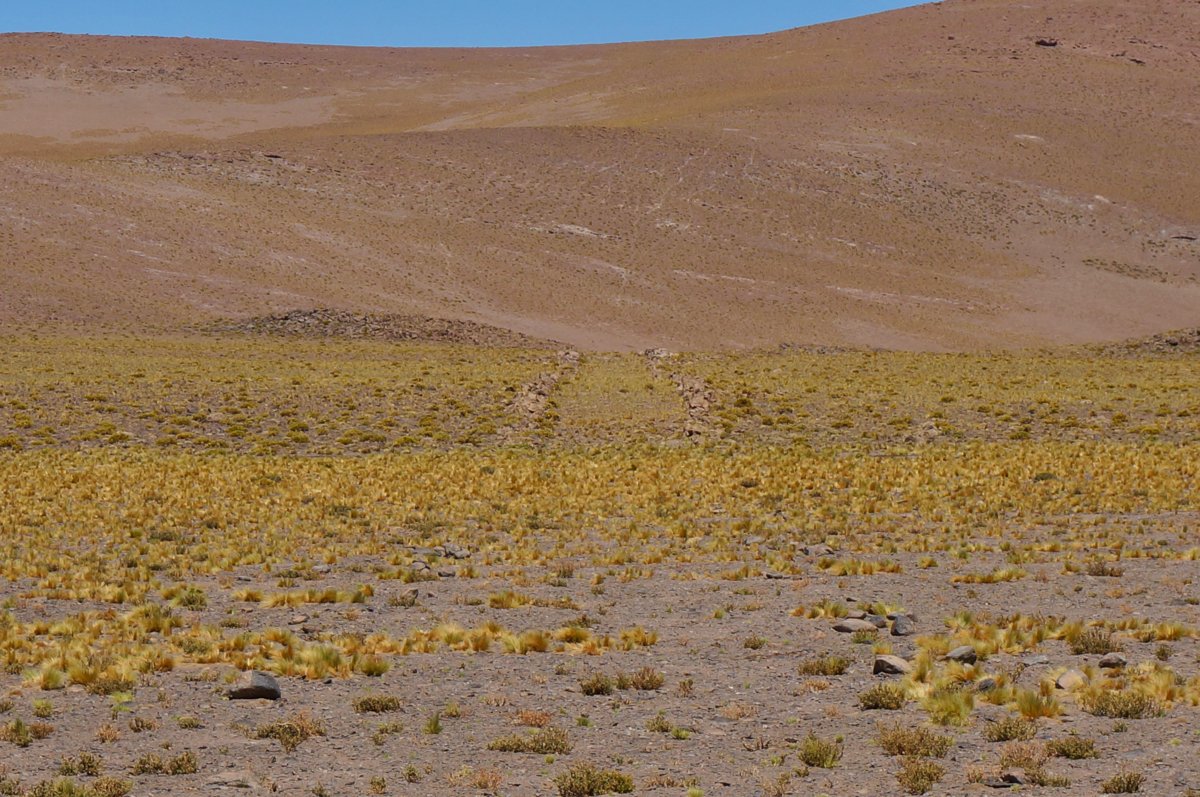
    ~The never ending approach, to Peinado, through the funnel.~

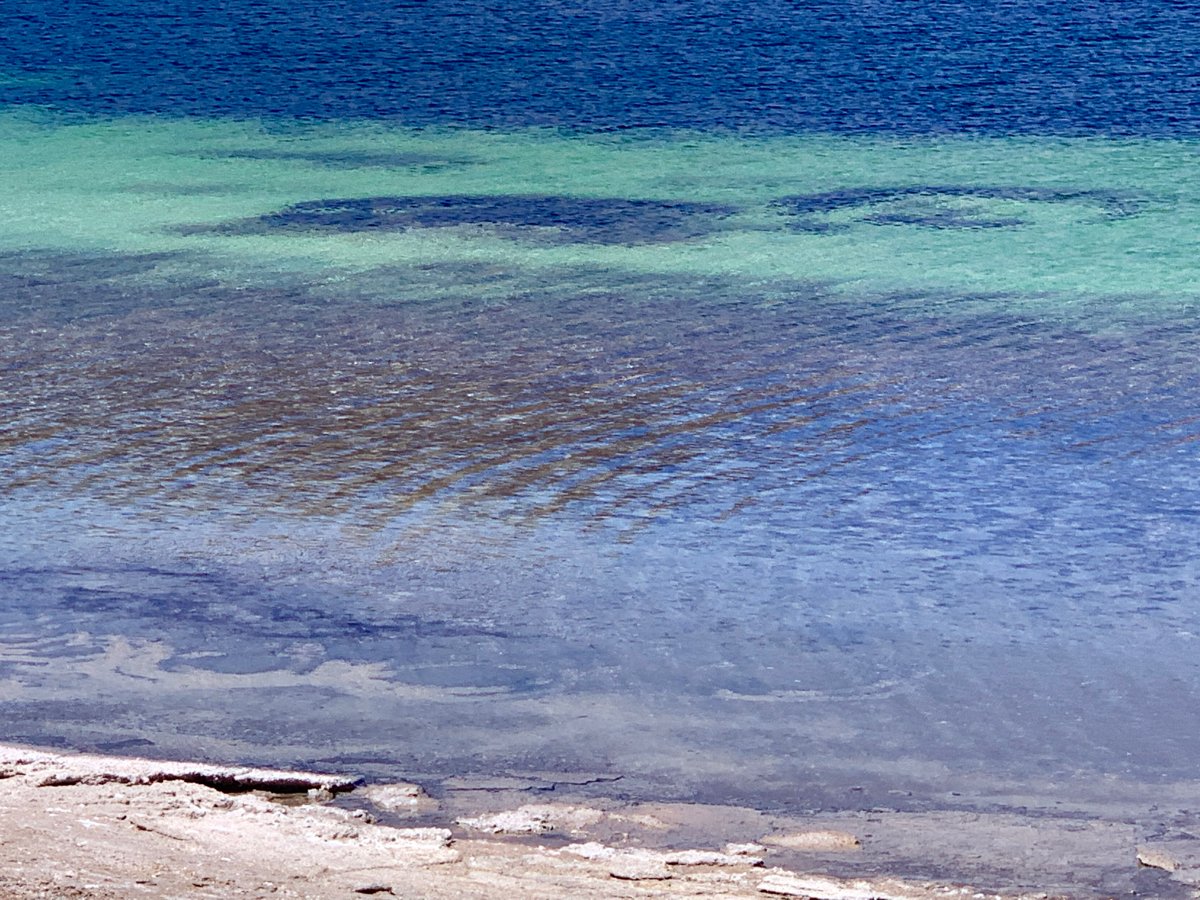
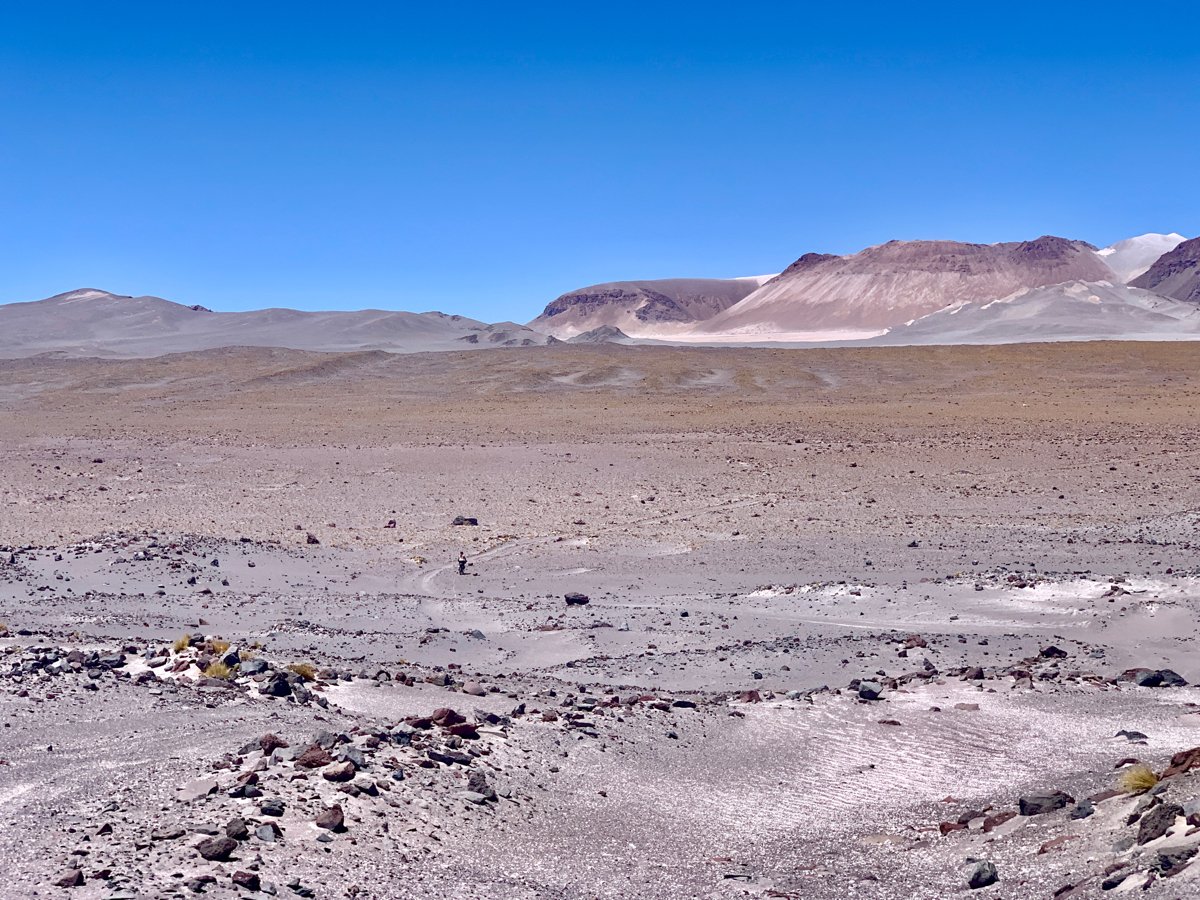
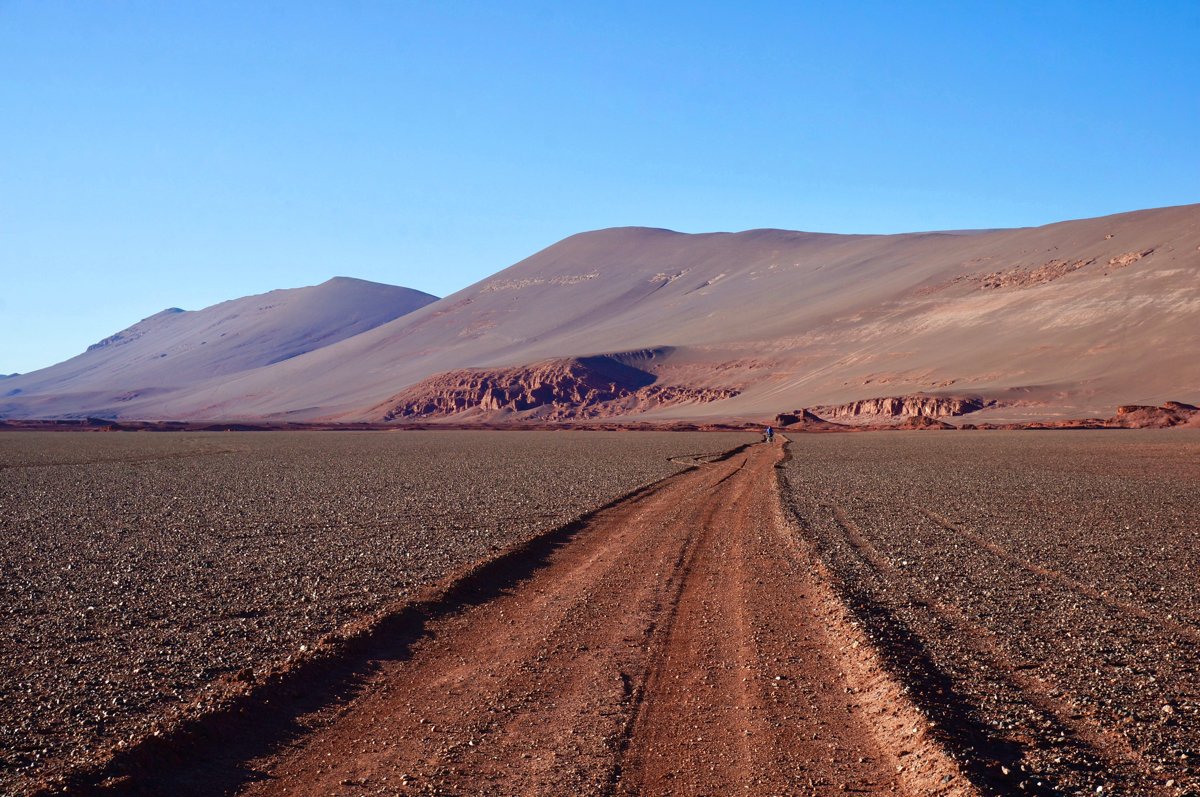
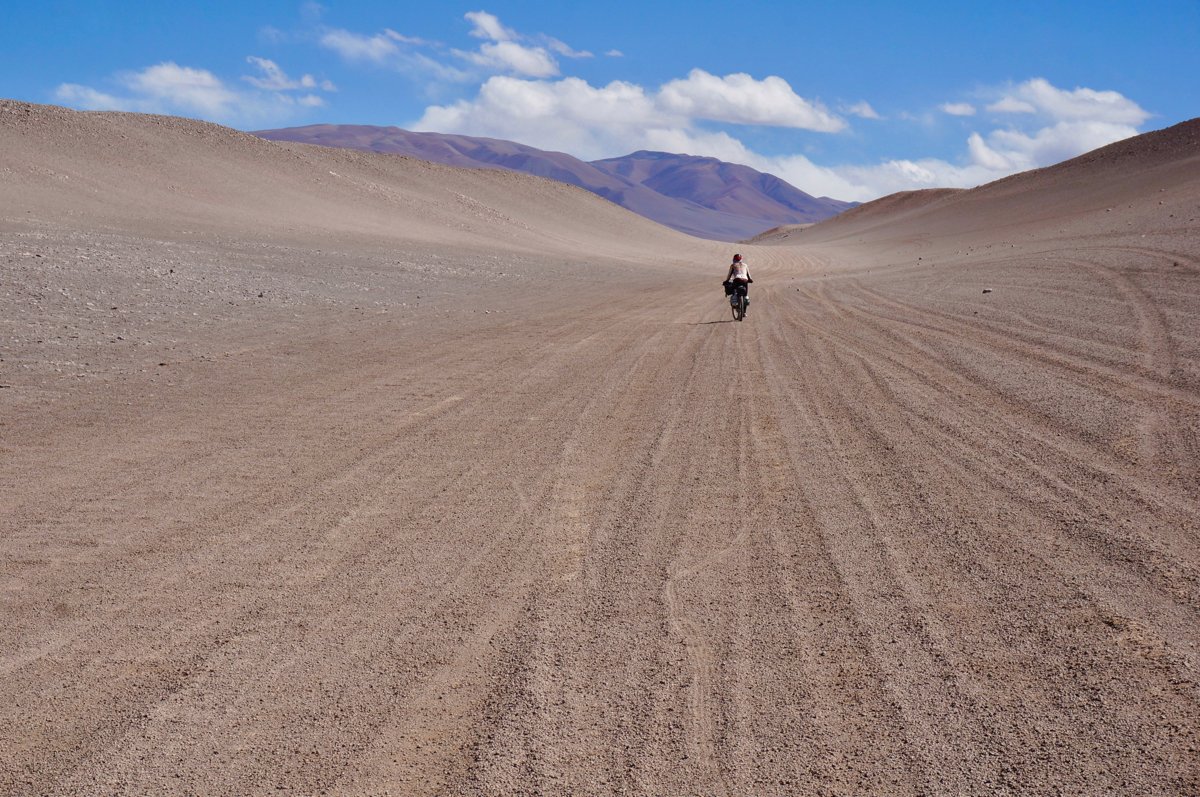
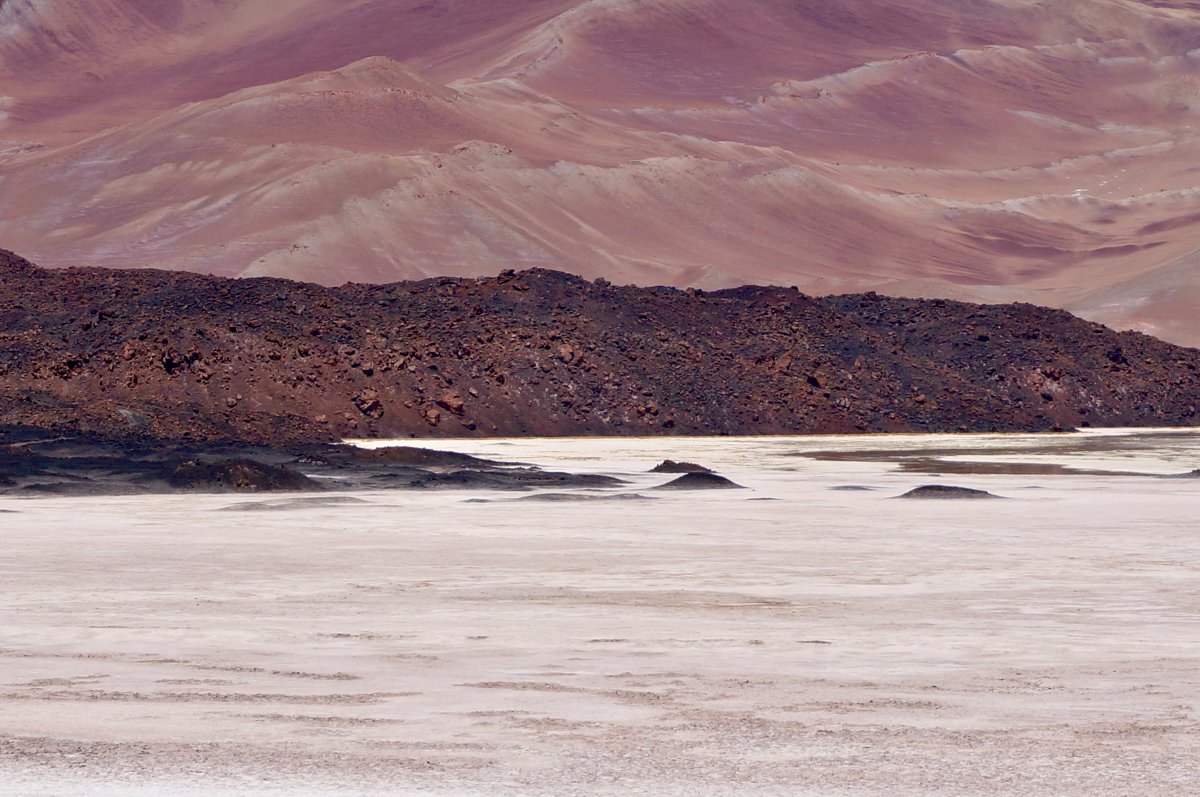
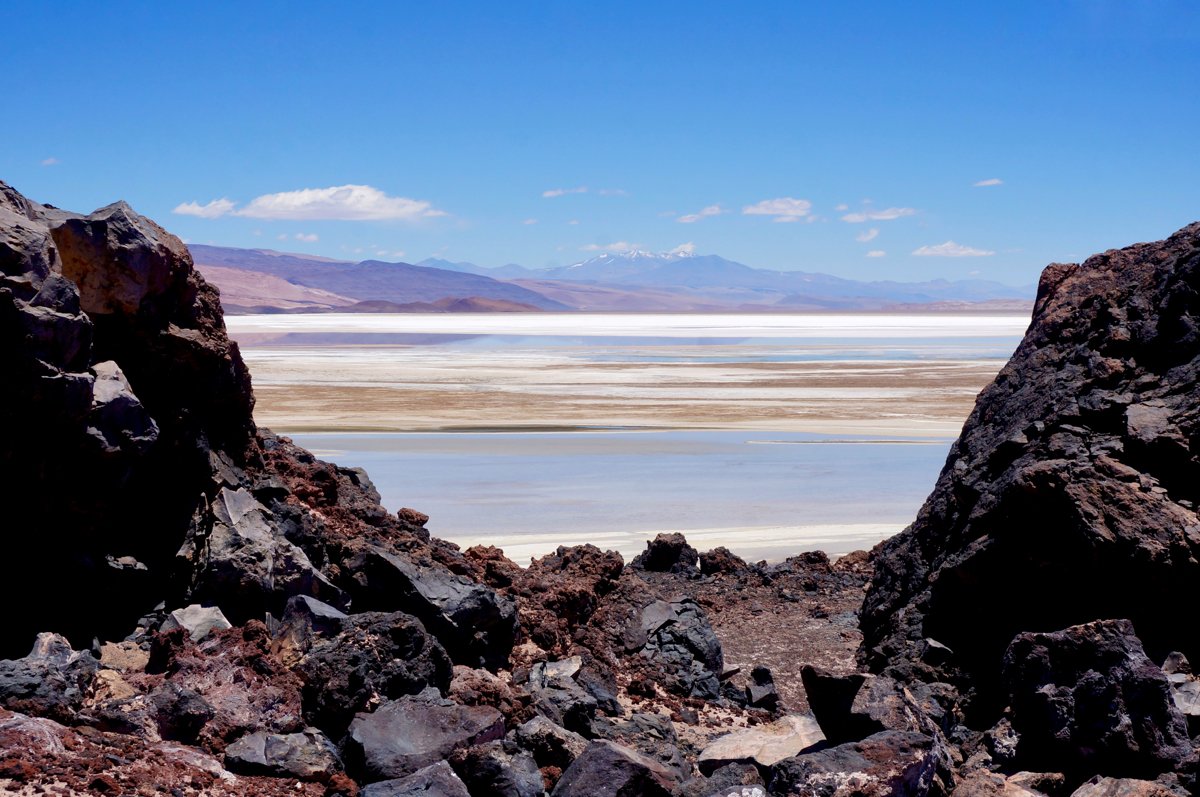
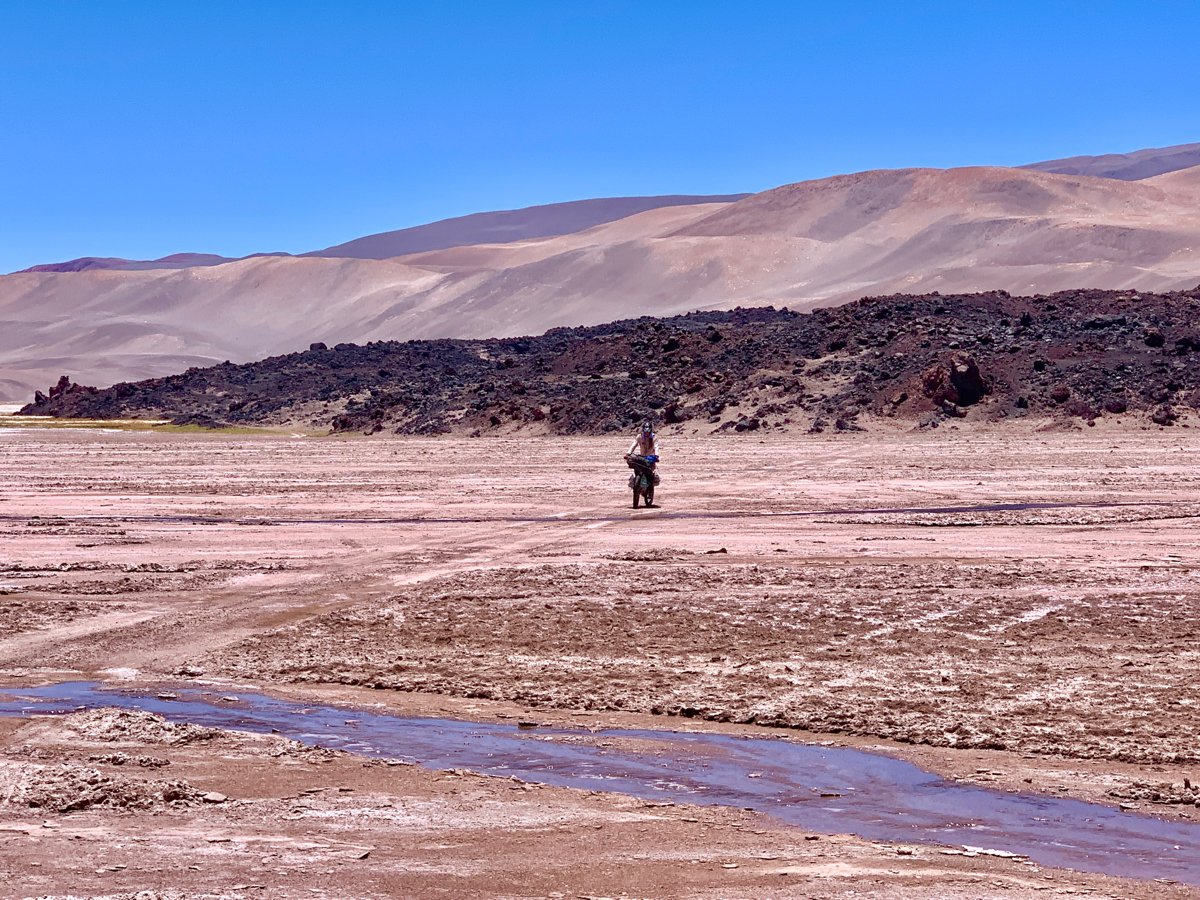
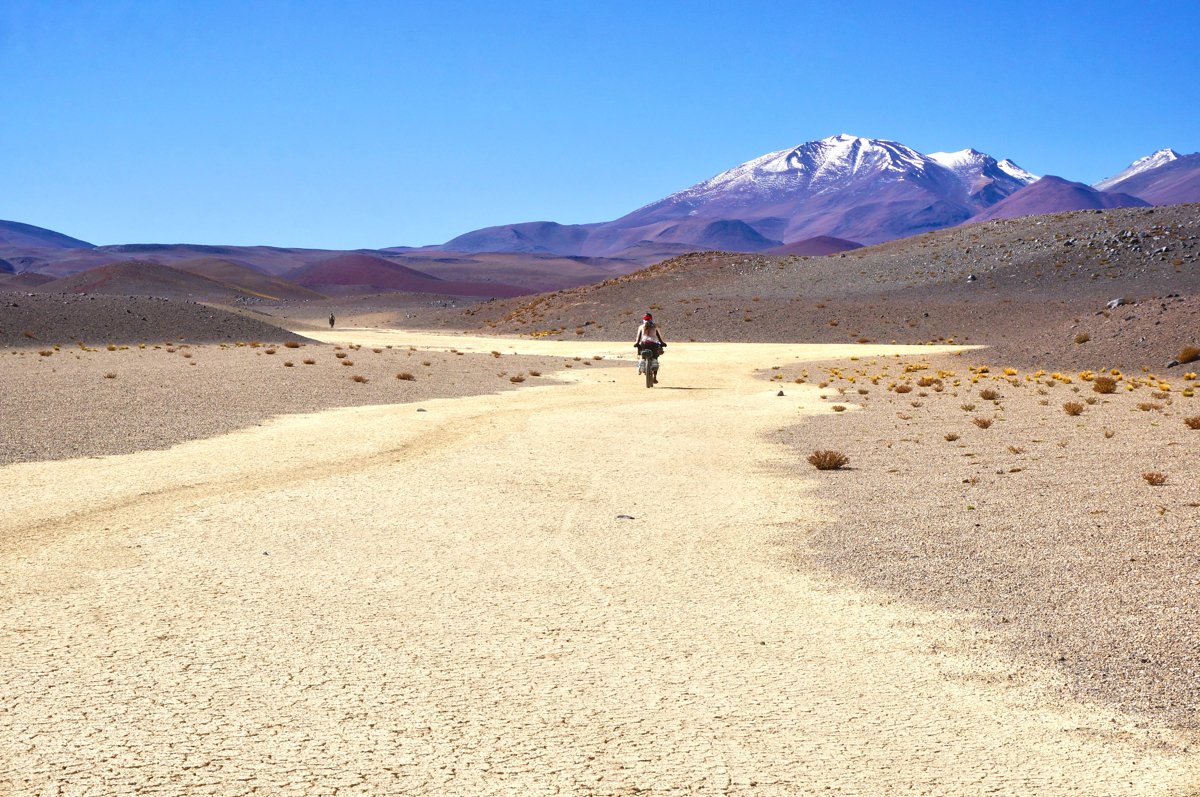
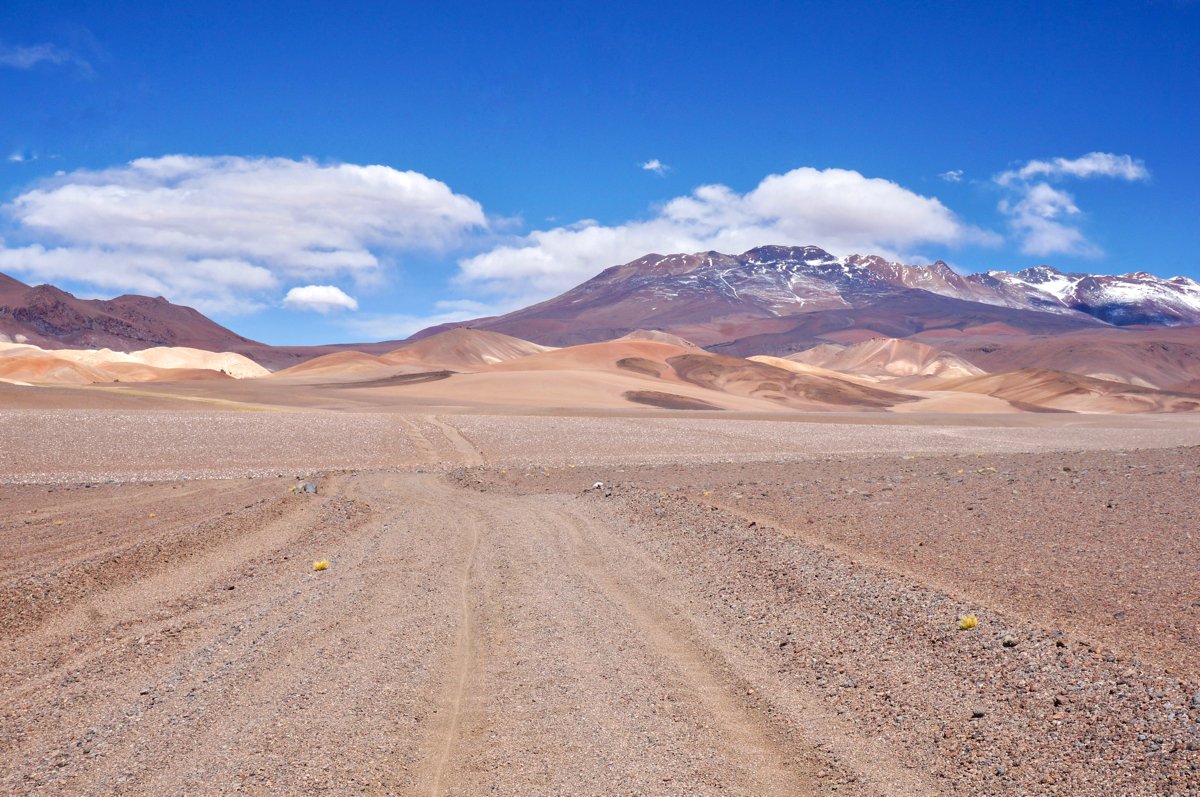
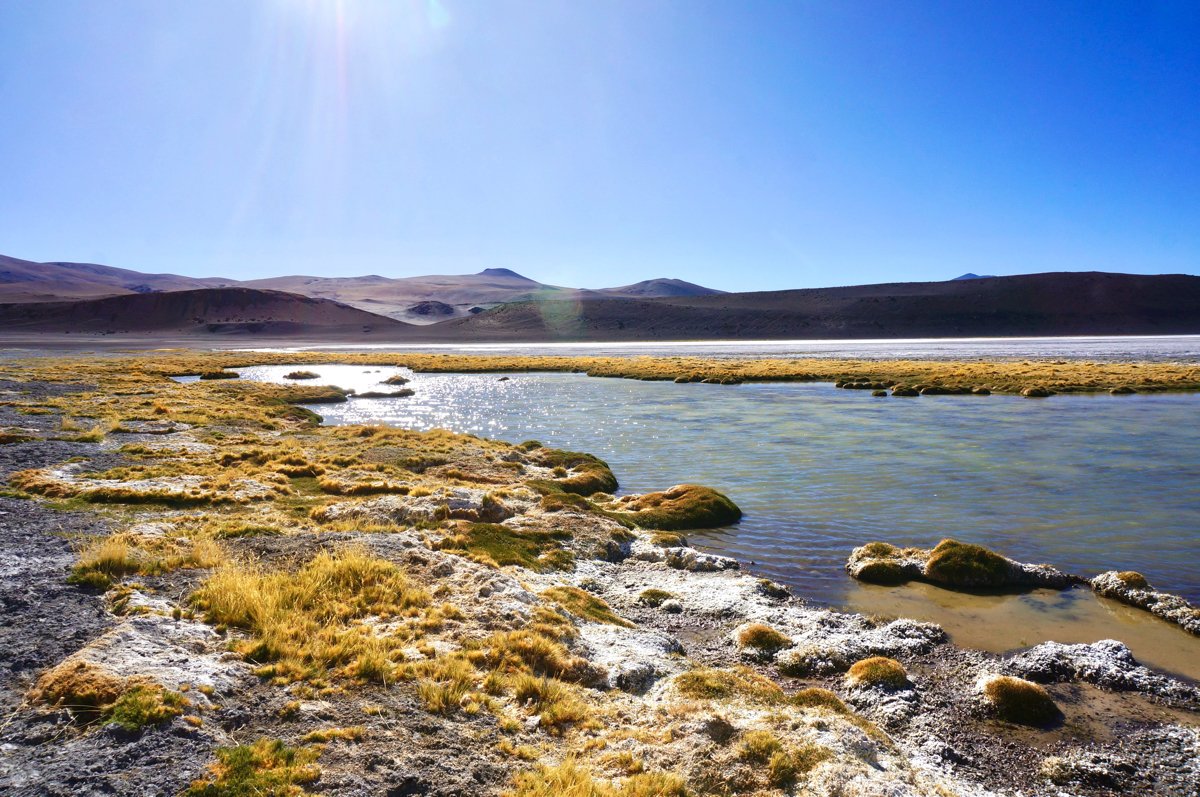
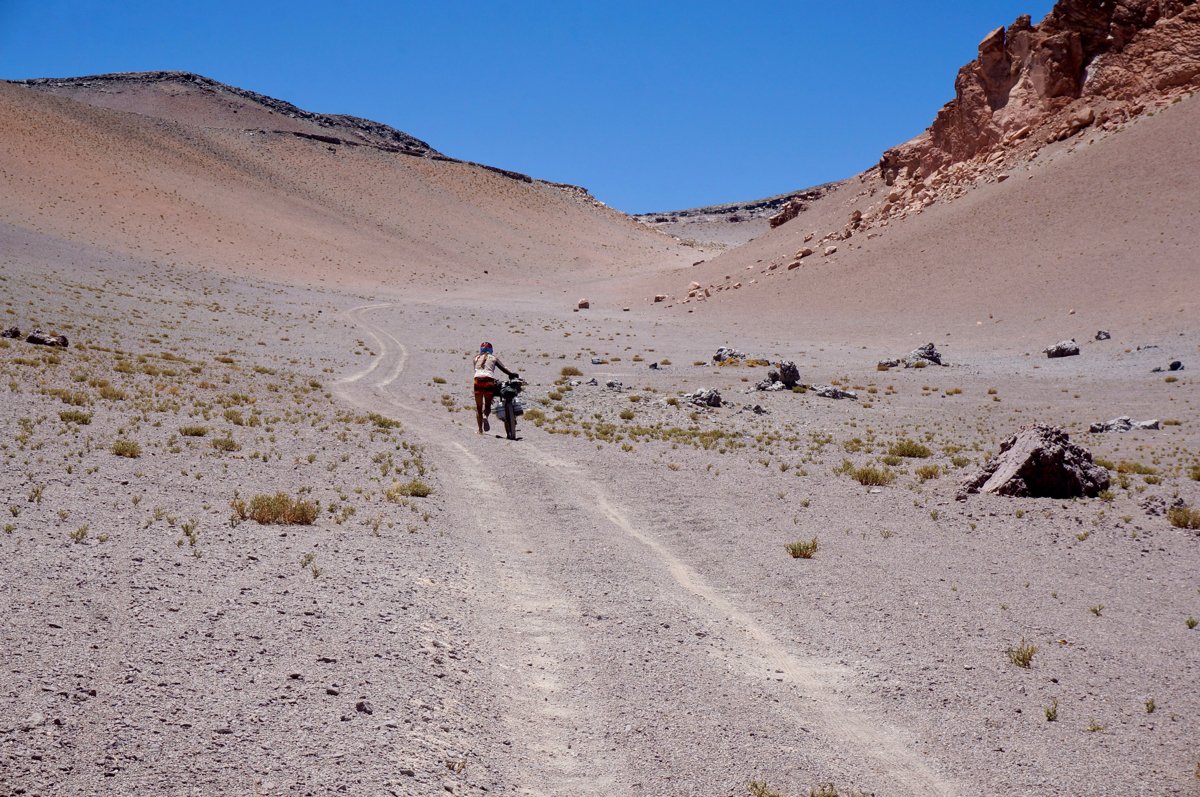
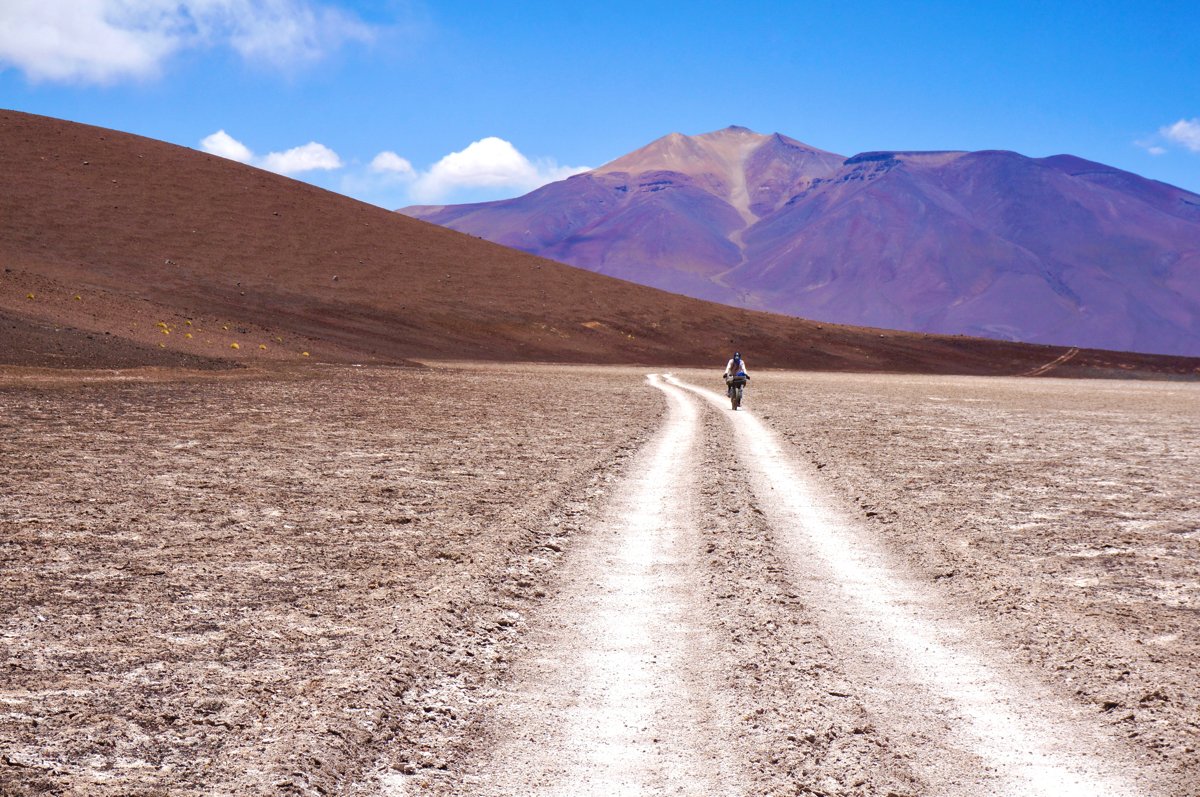
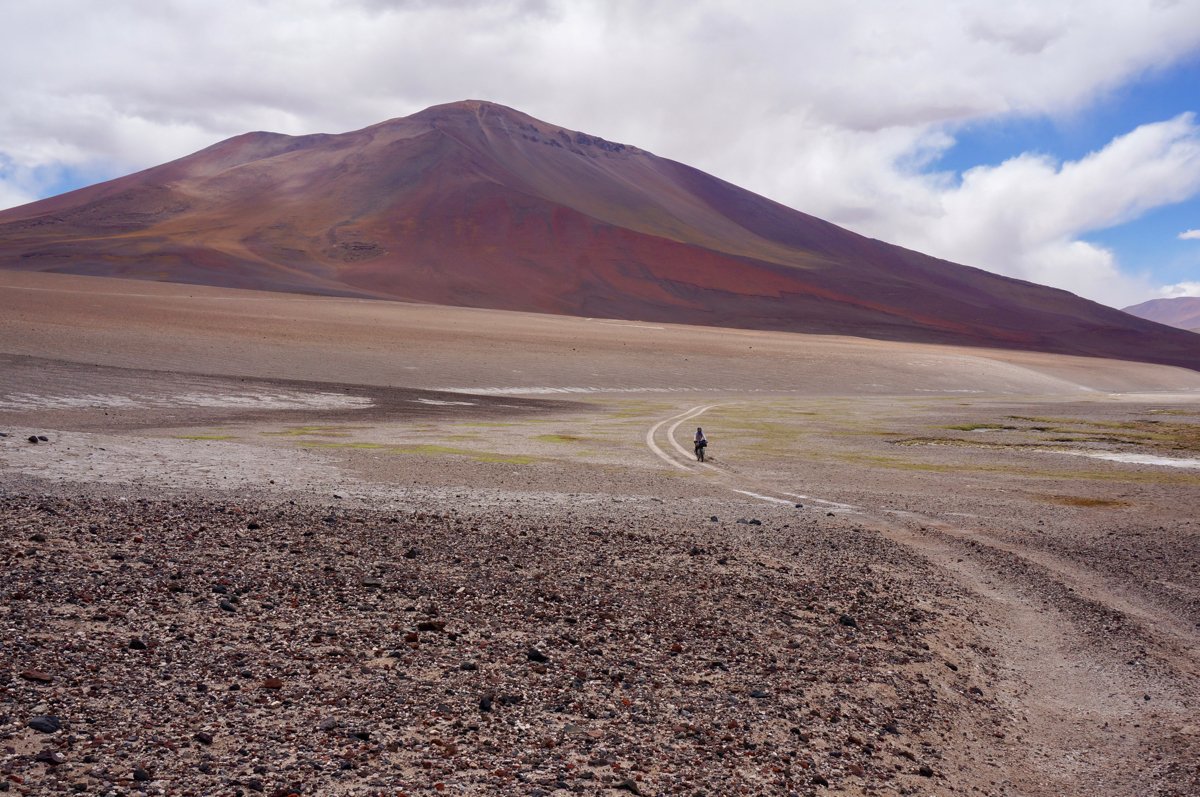
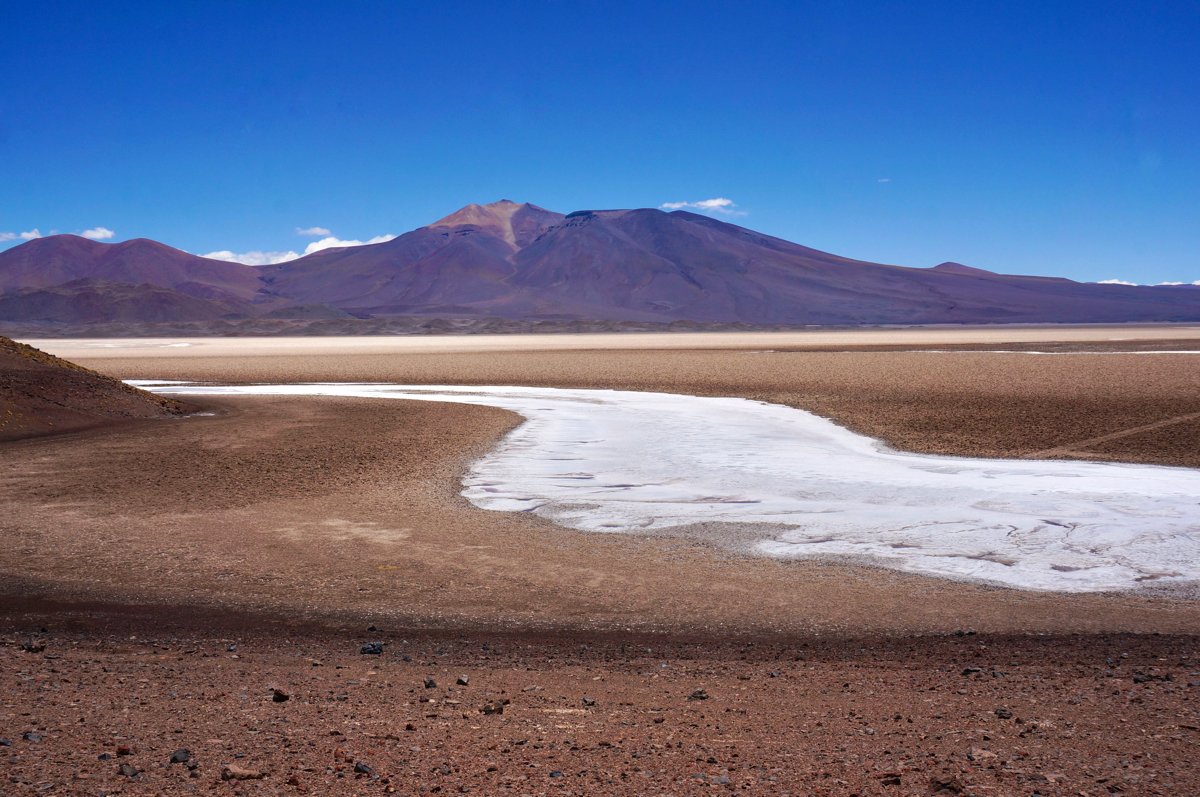
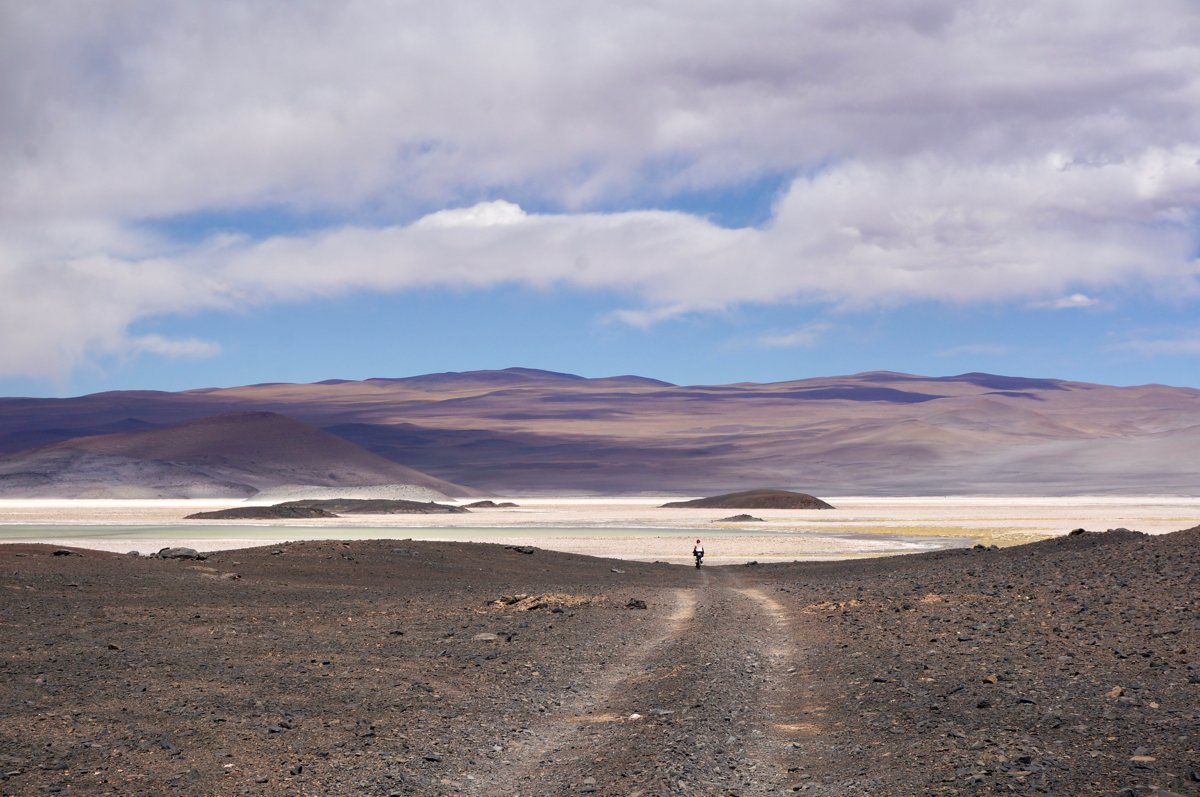
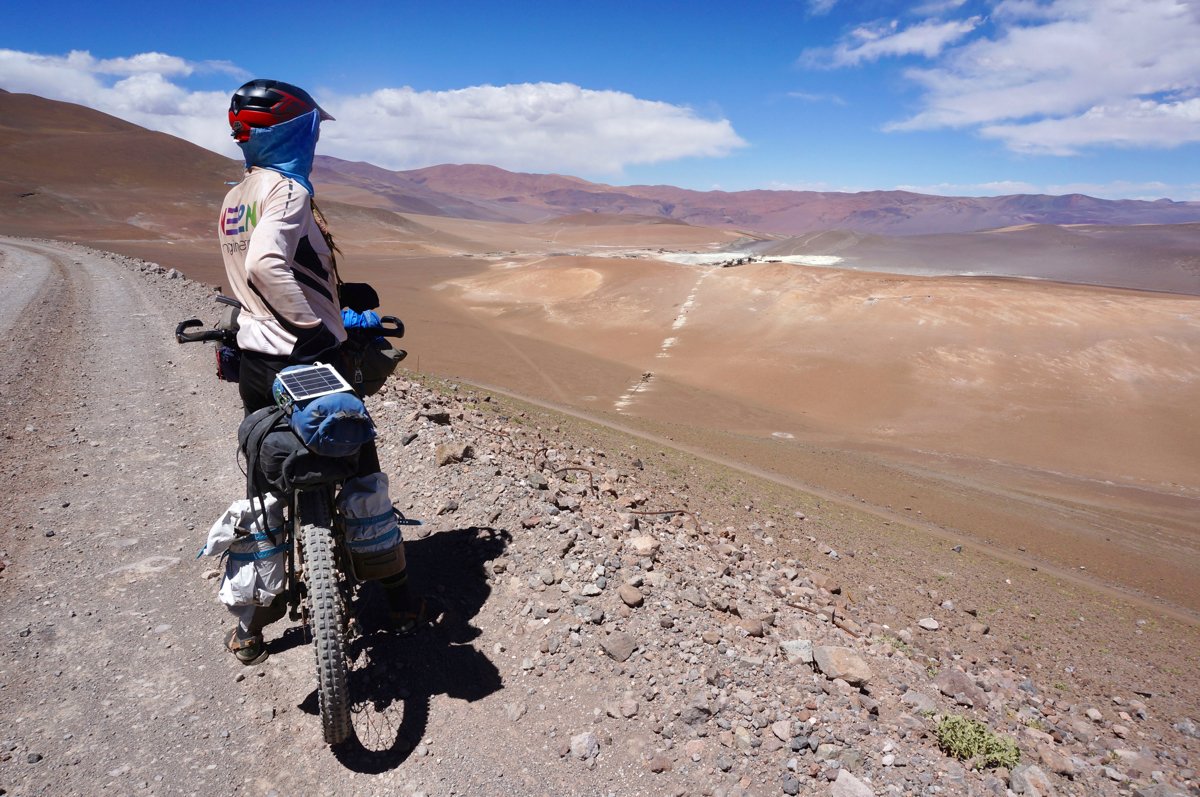
    I’m grateful for the warm morning. The push through the deep sand in “the funnel” lasts much longer than I anticipated. Hours pass before finally laying eyes on Laguna del Peinado, a green lake, glacial green, appears first.

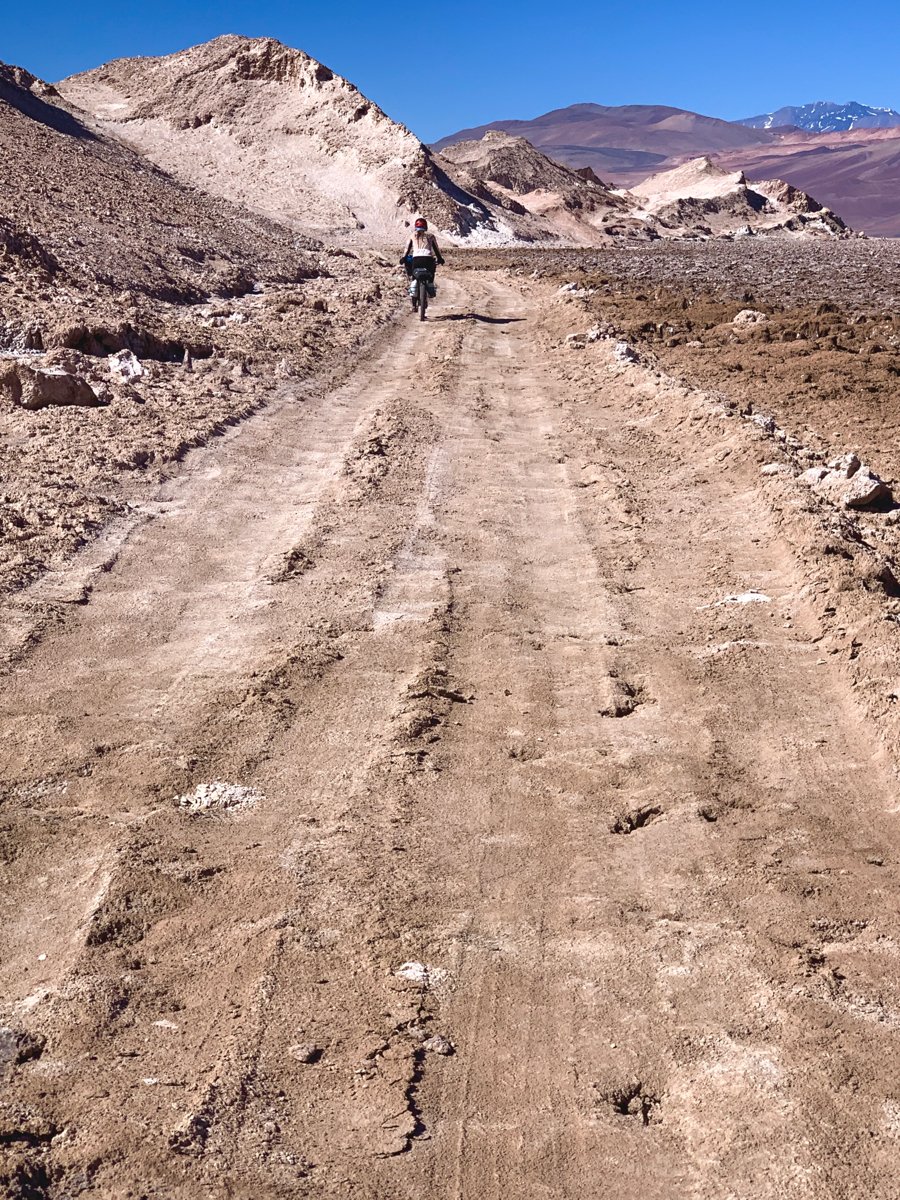
    I guess I got too excited by the sight of a road emerging, forgetting that it’s still sand—as I start down the road, I immediately drop my bike, more of a crash than a drop really. Shortly after, the roads are really good and we double our kilometers for the day in less than an hour.
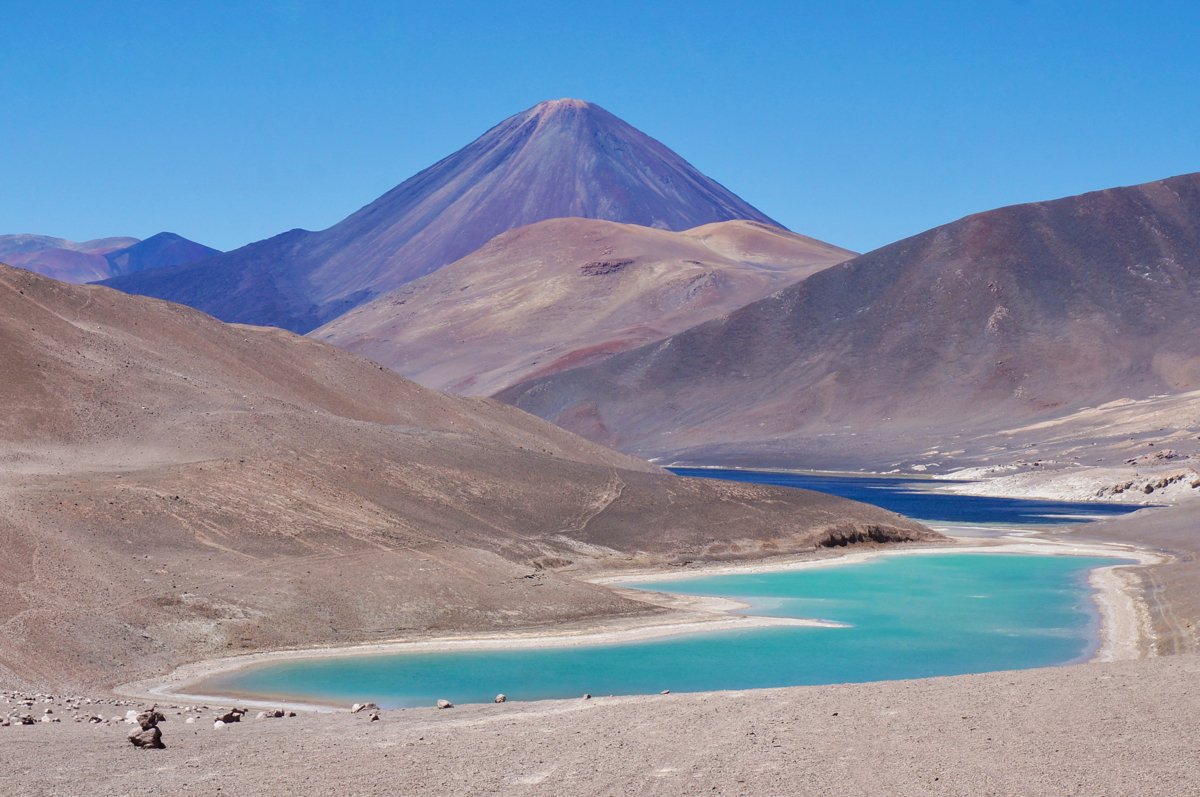
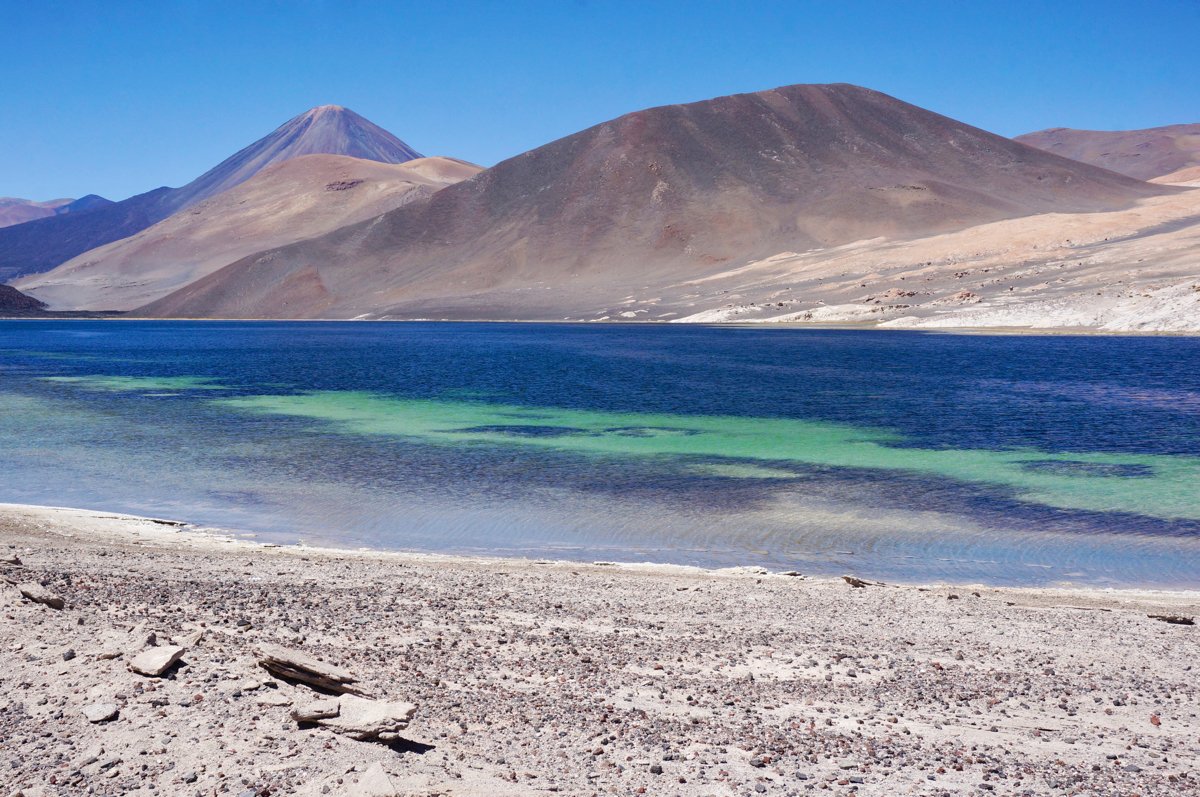
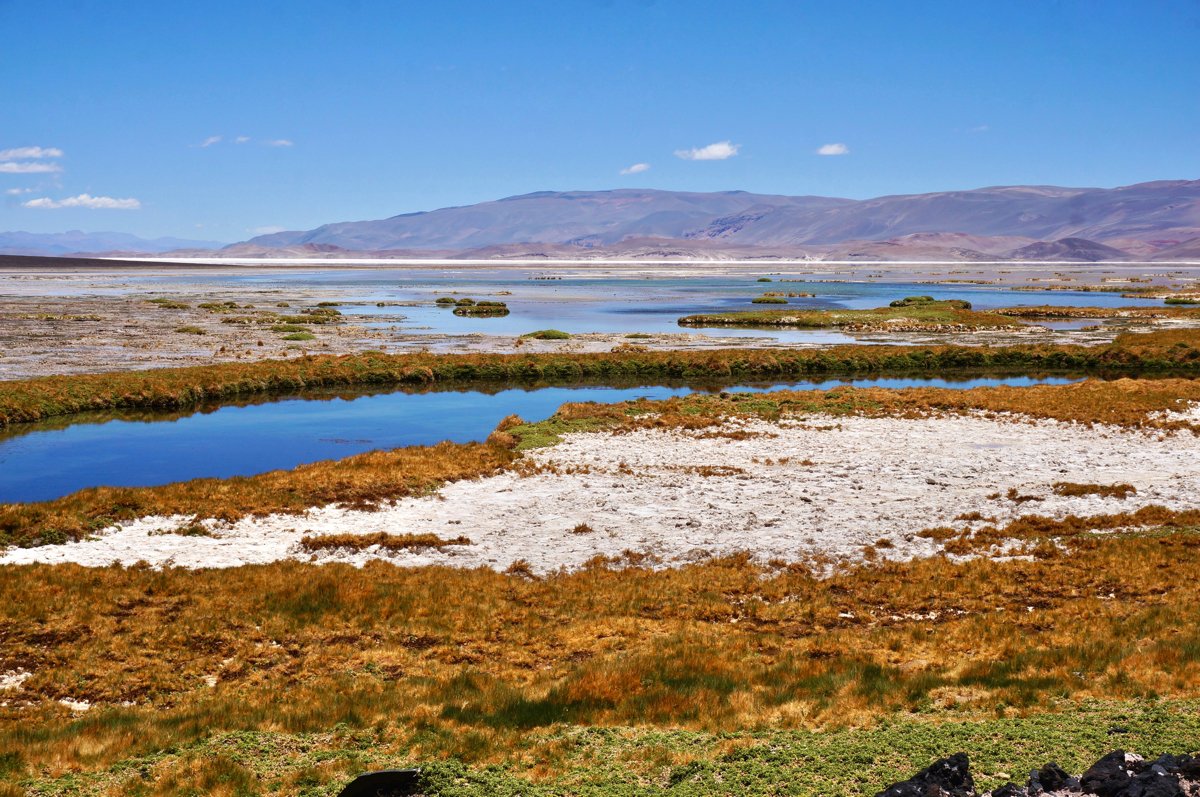
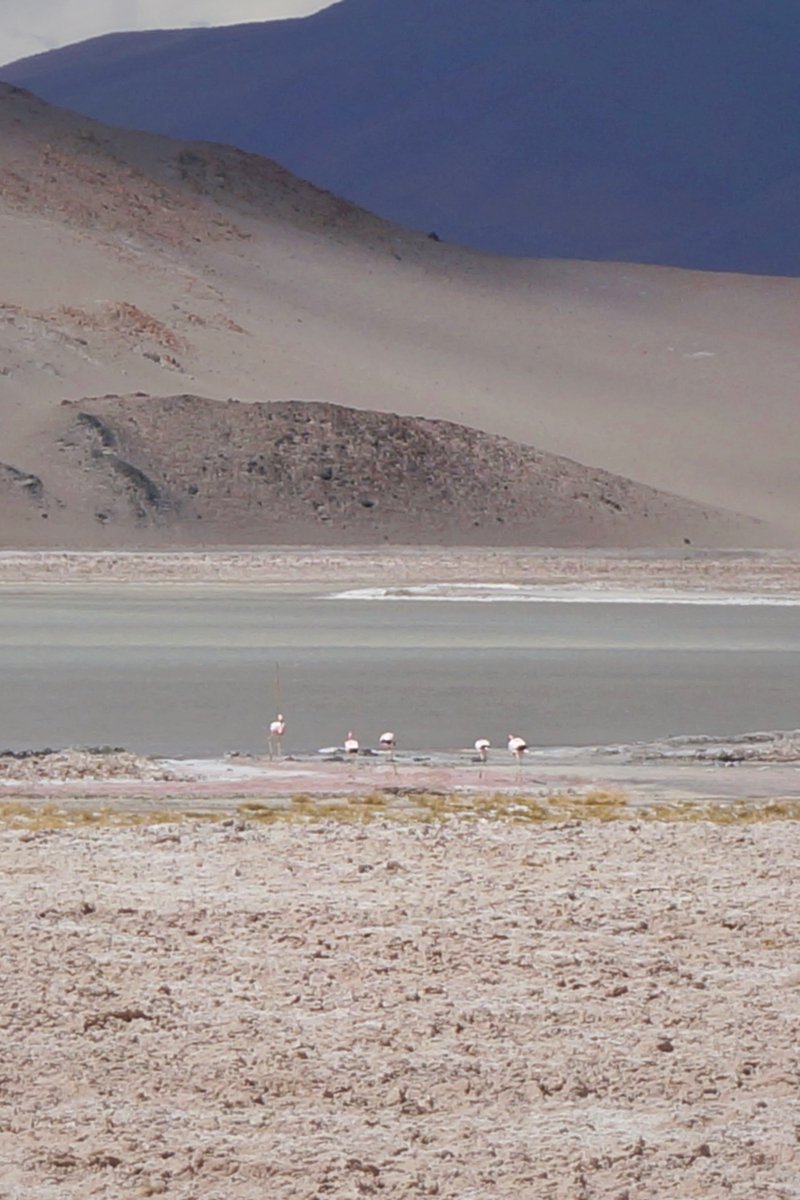
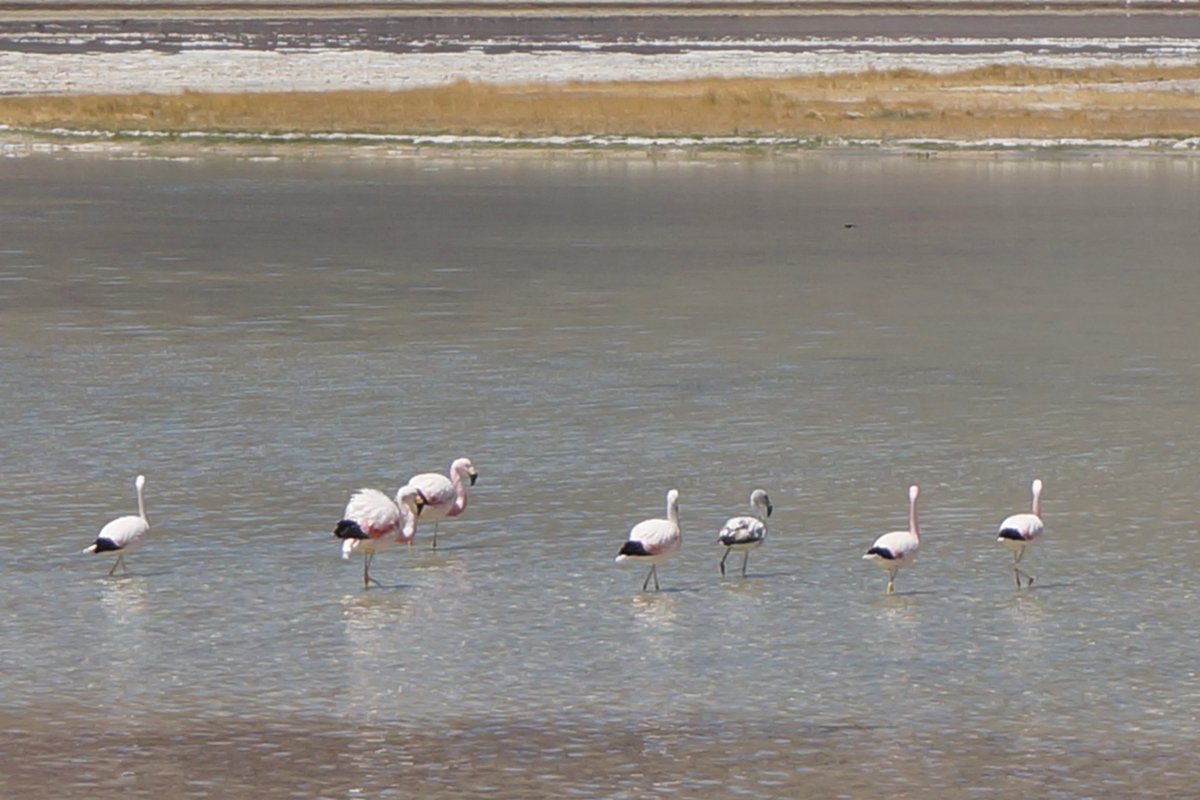
    The next part of the lake is deep blue and there are more flamingos. Our presence disturbs them and they move out further in the lake, opening their wings. I shrill with excitement. When they open their wings, they flash the most brilliant deep hot pink. It’s exciting. I shrill at each tip of their wings. The little flies are thick, too gross to stop for more than a few moments, but we still manage to snap a few photos before the loud whining of the flies scares us away.
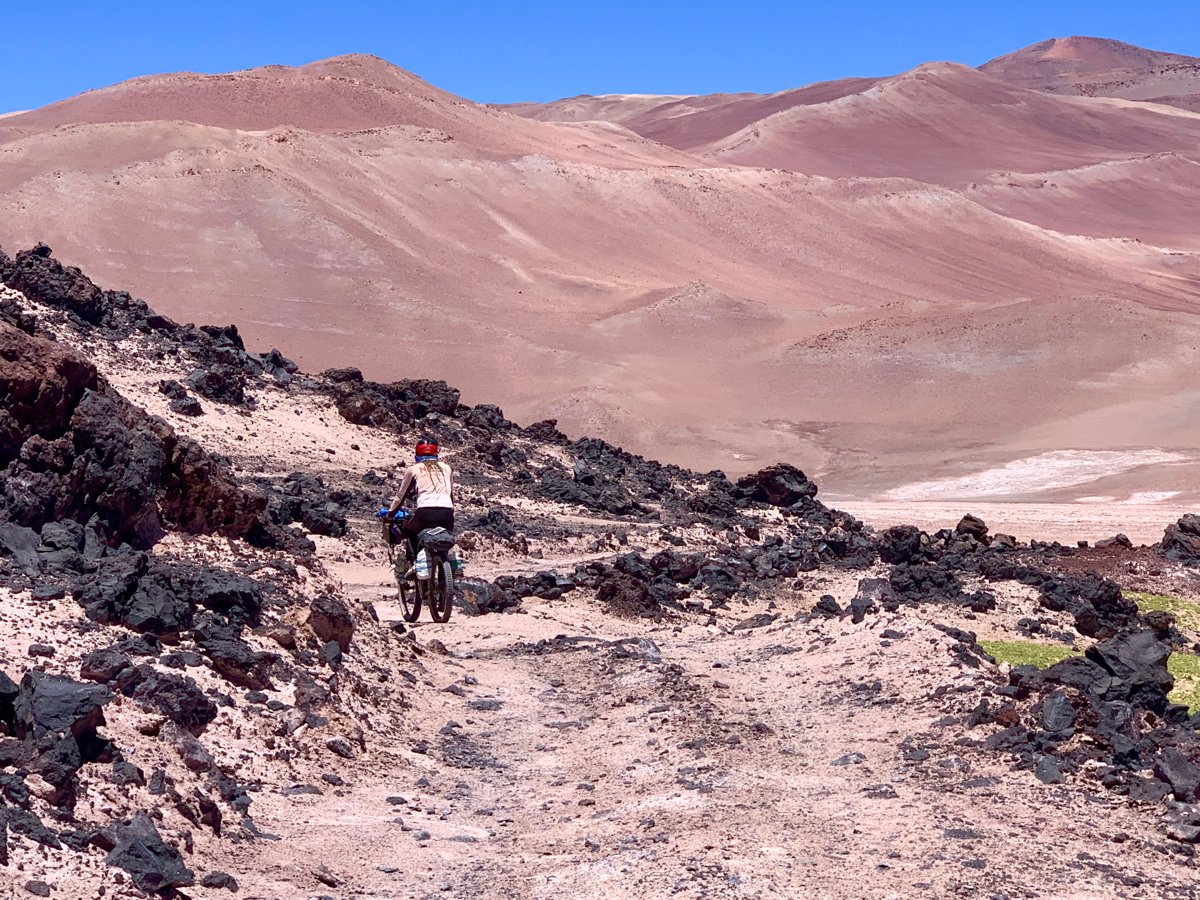
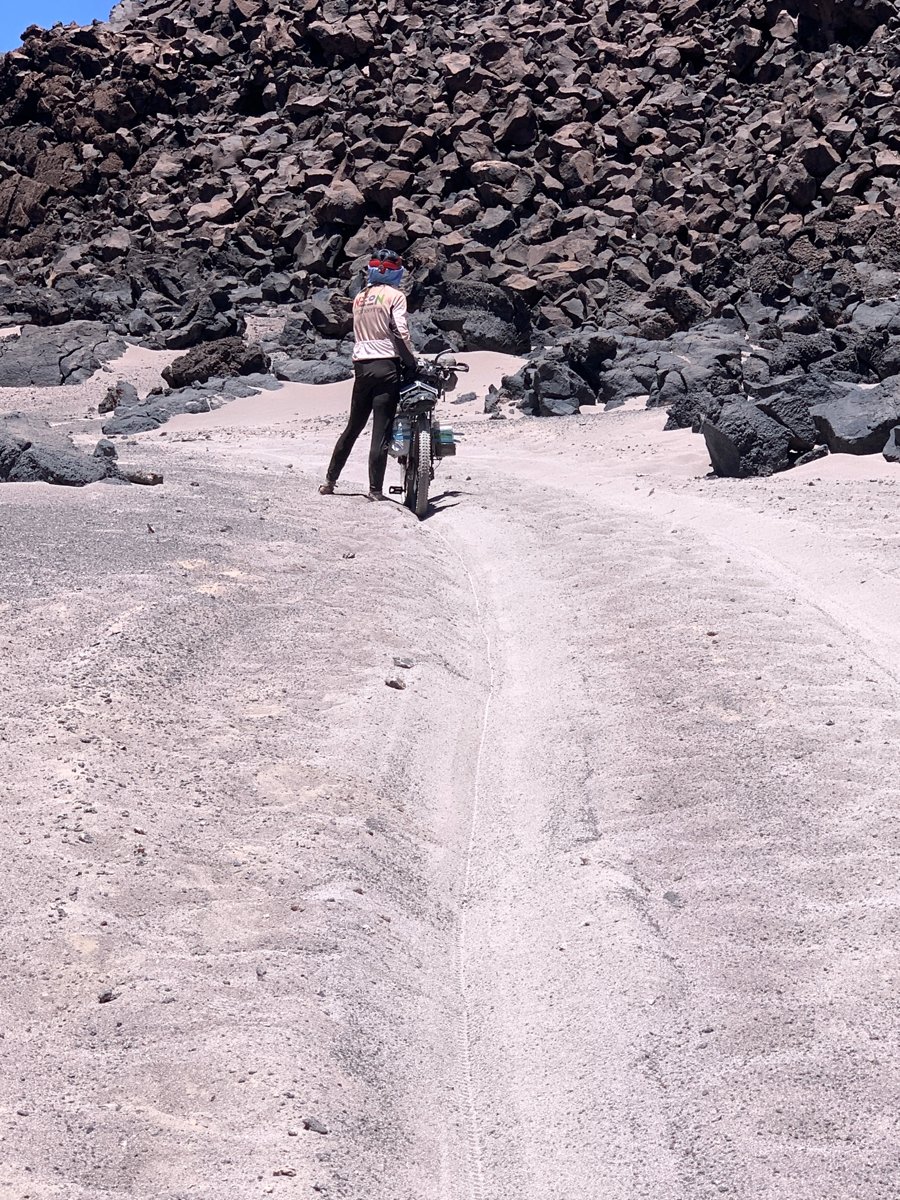
    We took a break at the far end of the lava, past the end of the lake, after the flies subside. A short daunting sandy climb looms over our break. After a lot of snacking I decide the steep climb doesn’t look so steep after all. But I was wrong. About half way through the short climb, after I thought it got less steep, is when it broke me. It seemed to be getting harder, not easier.

    To our surprise, a pickup started down the climb as we were almost up. The passenger was motioning at me to move to the other side of the road. I smiled at them in disbelief. They obviously have no idea how incredibly difficult it is to move a loaded bike in deep sand, and how nearly impossible it is to move a loaded bike sideways in deep sand. I continued smiling at them, staying with the line I was on. They took pictures, I smiled. Those last few feet seemed to go on forever. Finally I was close enough to the truck. I stopped and motioned for them to go around me on the other side of the road. They were hesitant with the drop off on that side, but finally went around. I finished the climb. Neon was waiting at the top.

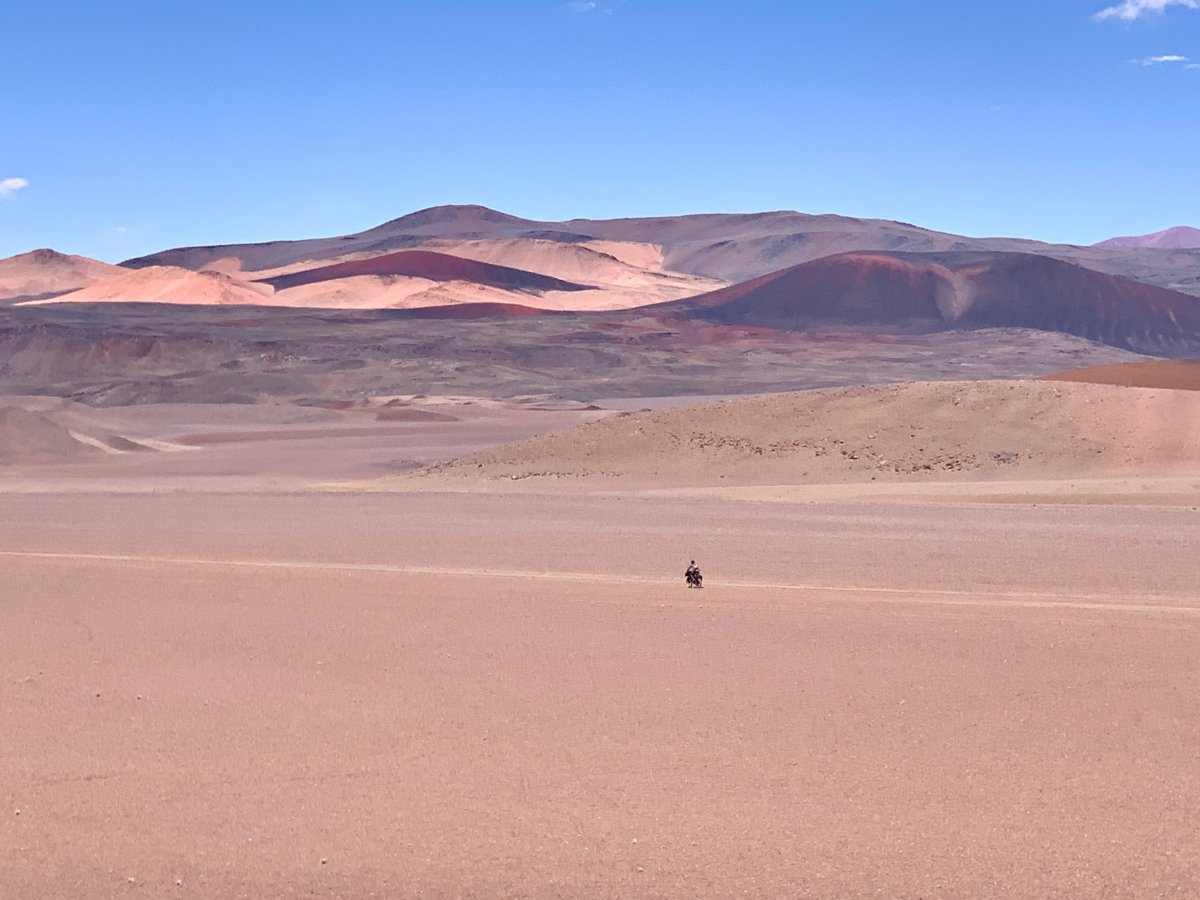
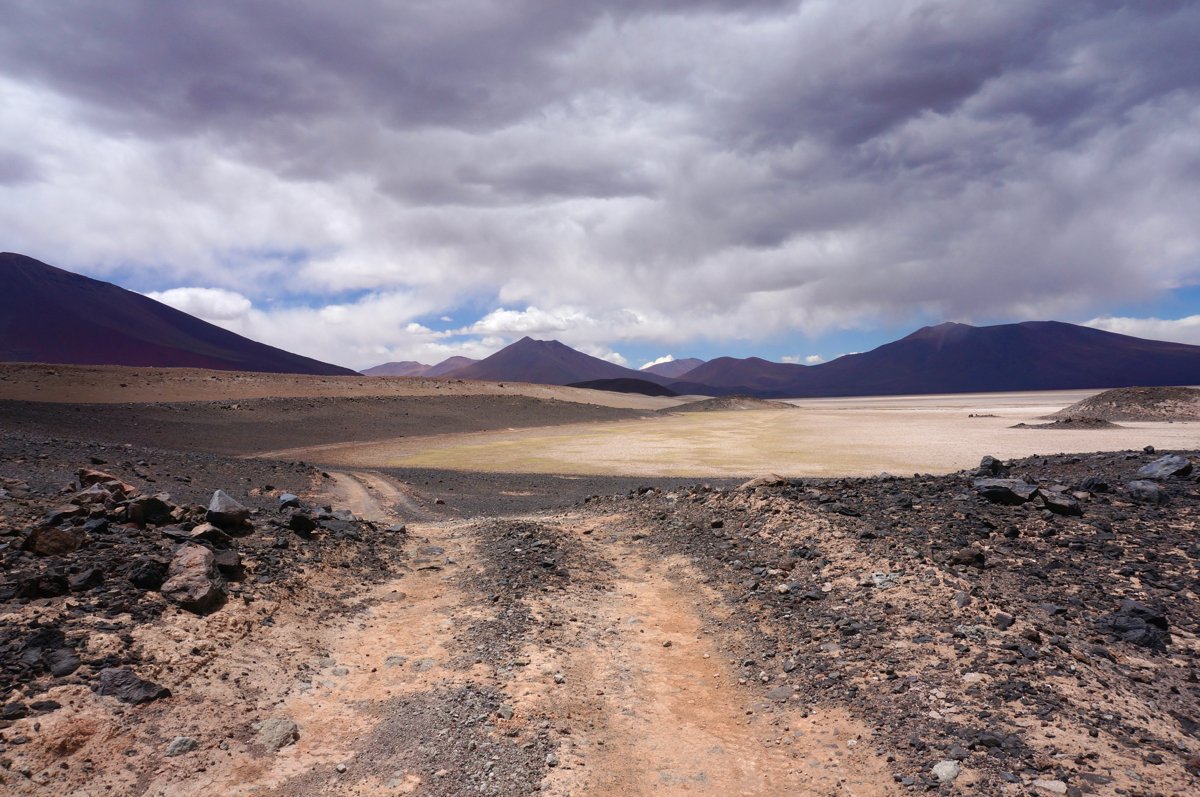
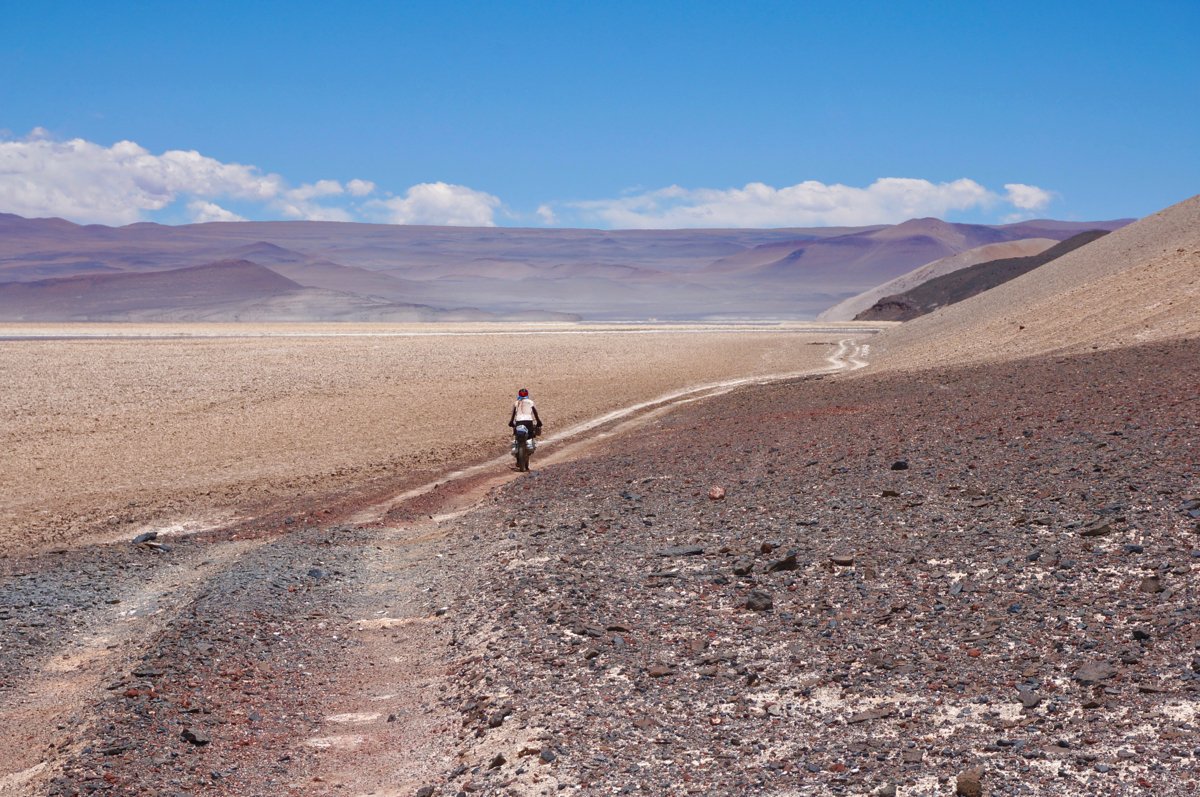
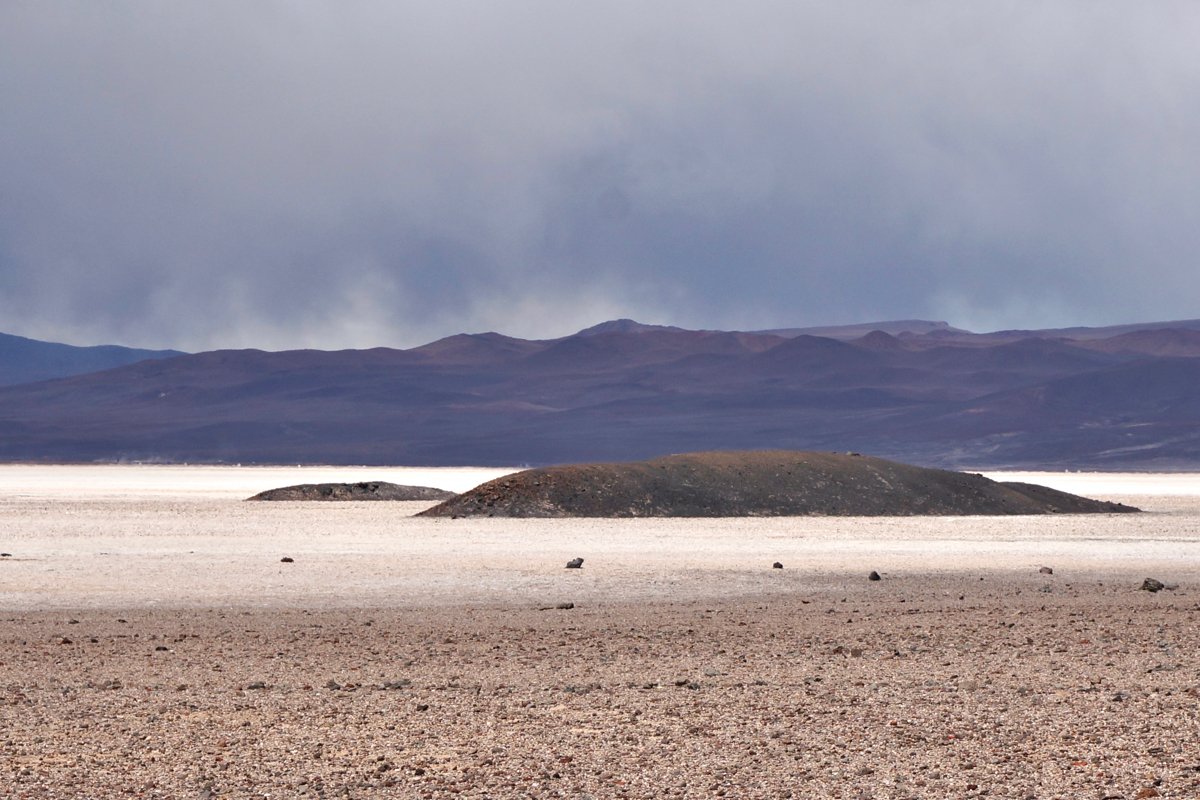
    There was a short sandy down, that wasn’t even ridable for Neon, and then a nice ride across some firm mud. Then more sand through more lava. It seemed to go on forever. Deeper and deeper sand, literally picking up the bike and dragging it to make it go where it needed to go. Time stopped. There was only sand. It all seemed endless. We were both exhausted by the time the surface improved. We made it a few kilometers further to an arroyo that made a decent wind block. Why are there always big storm clouds on the horizon when we camp in an arroyo?
    I was dizzy. Every time I bent over to hammer in a tent peg I thought I was going to pass out. I finally got the tent up, crawled inside, and sorted my next day’s food. It was hot in the tent, and yet still I felt tiny chills ripple through my body. All through the night little chills would ripple, slowly turning into an occasional shiver. But it was warm. When I got up to pee in the night, my head was pounding. My stomach did a somersault. By morning, I felt worse. And our second ~5000 meter pass was today’s task.

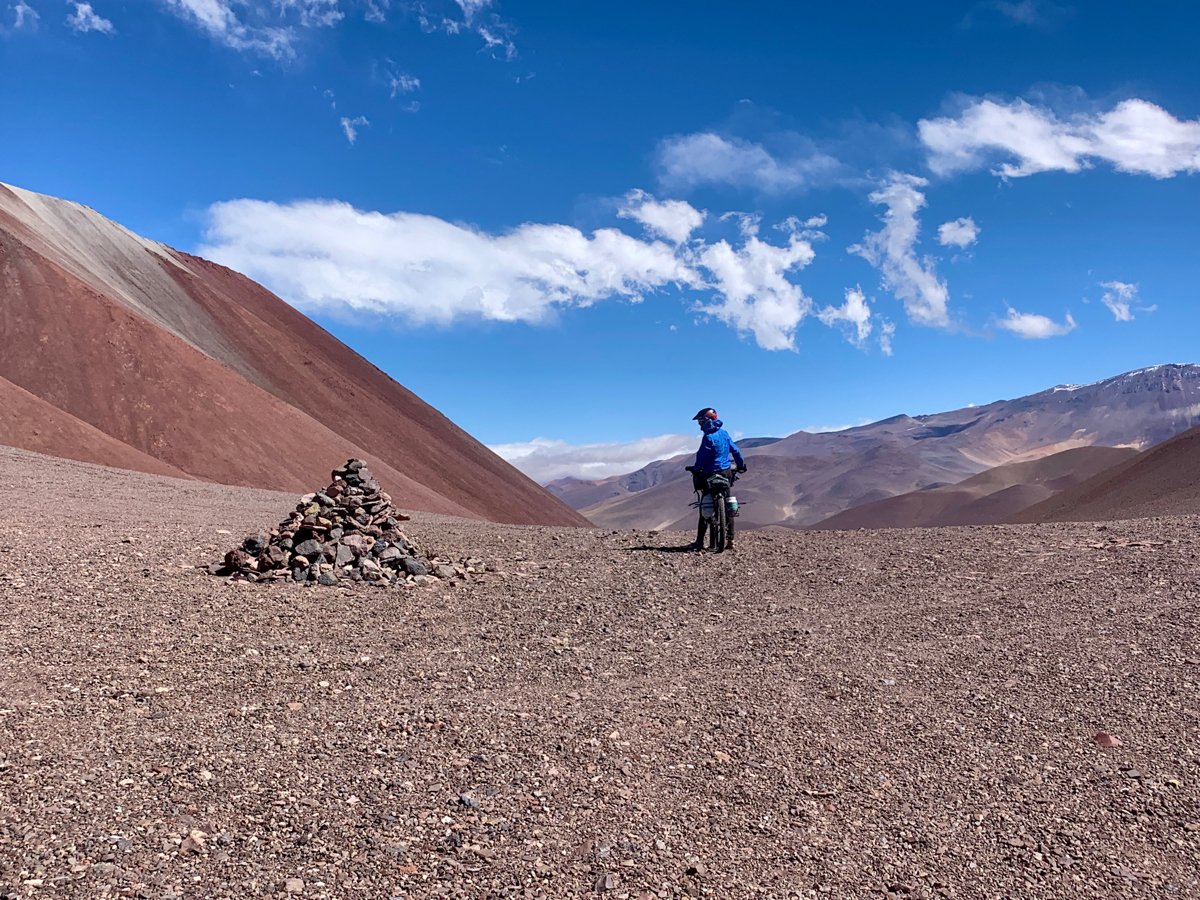
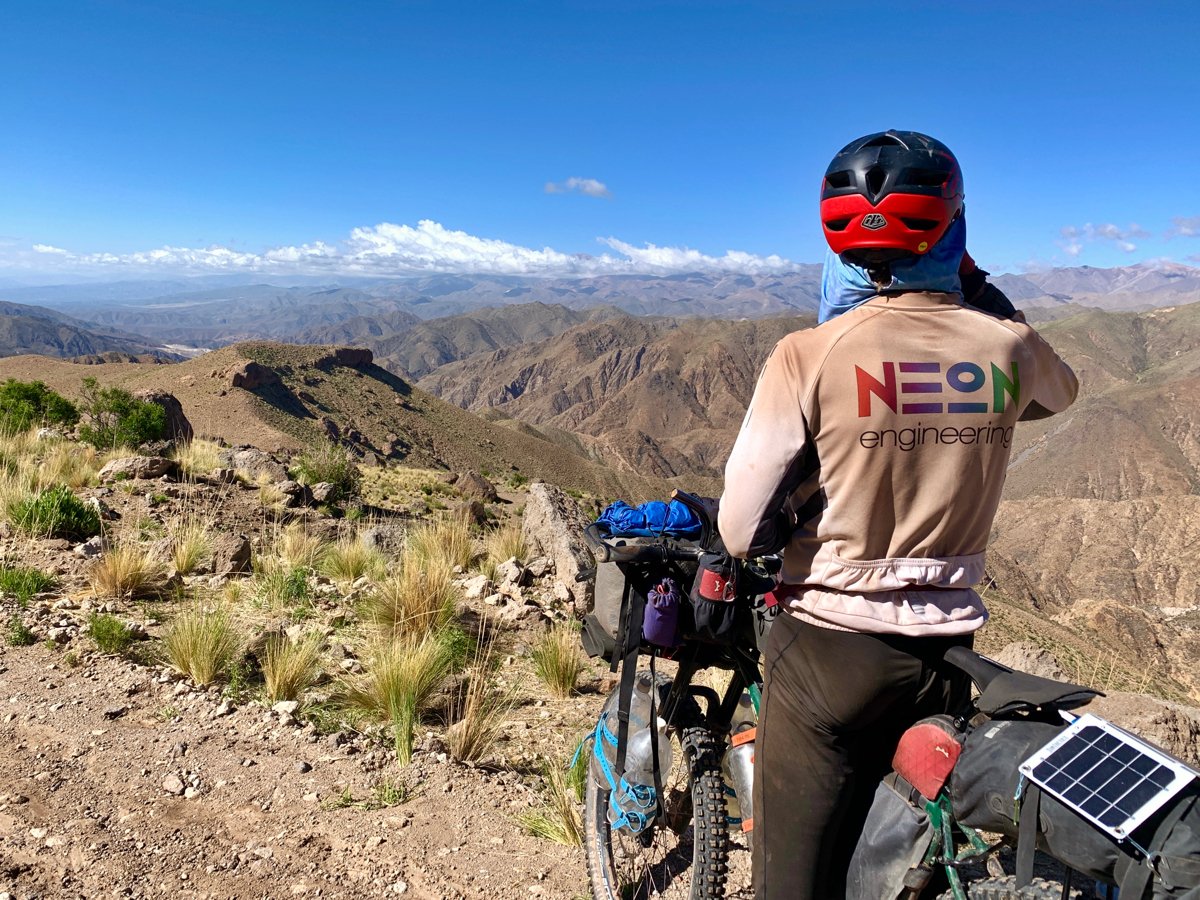
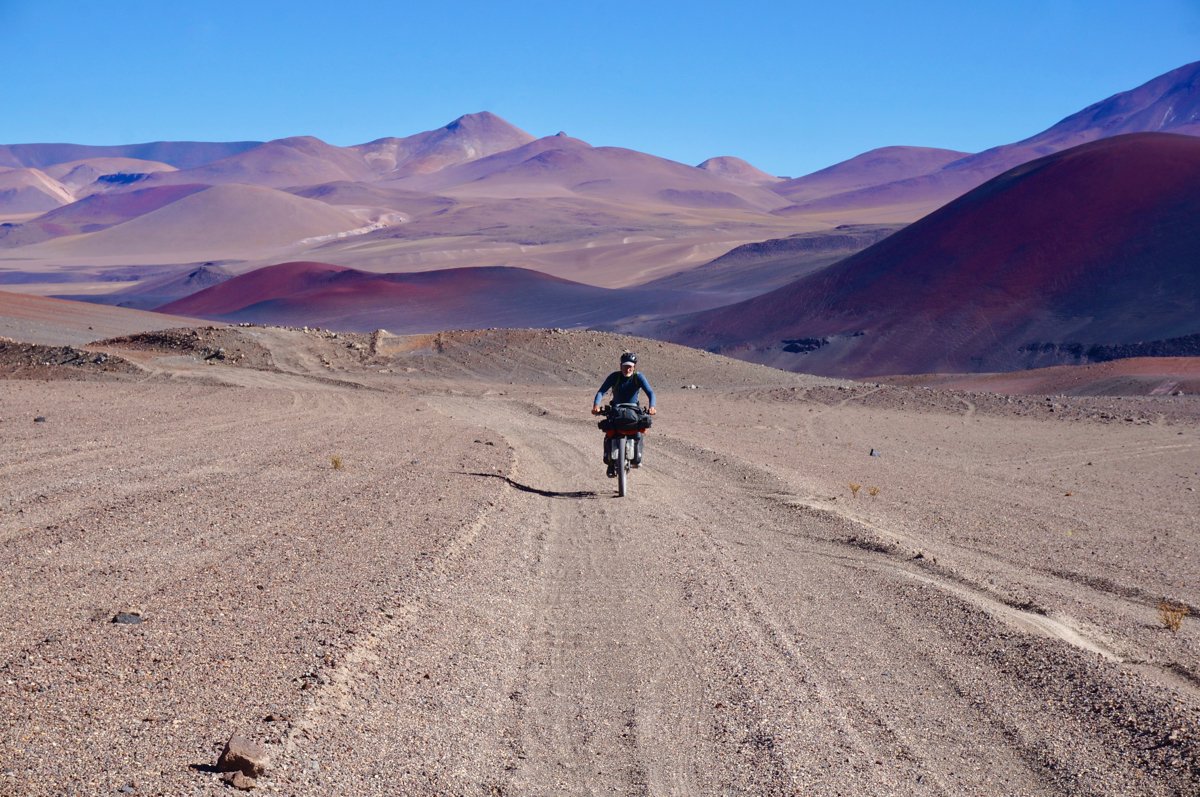
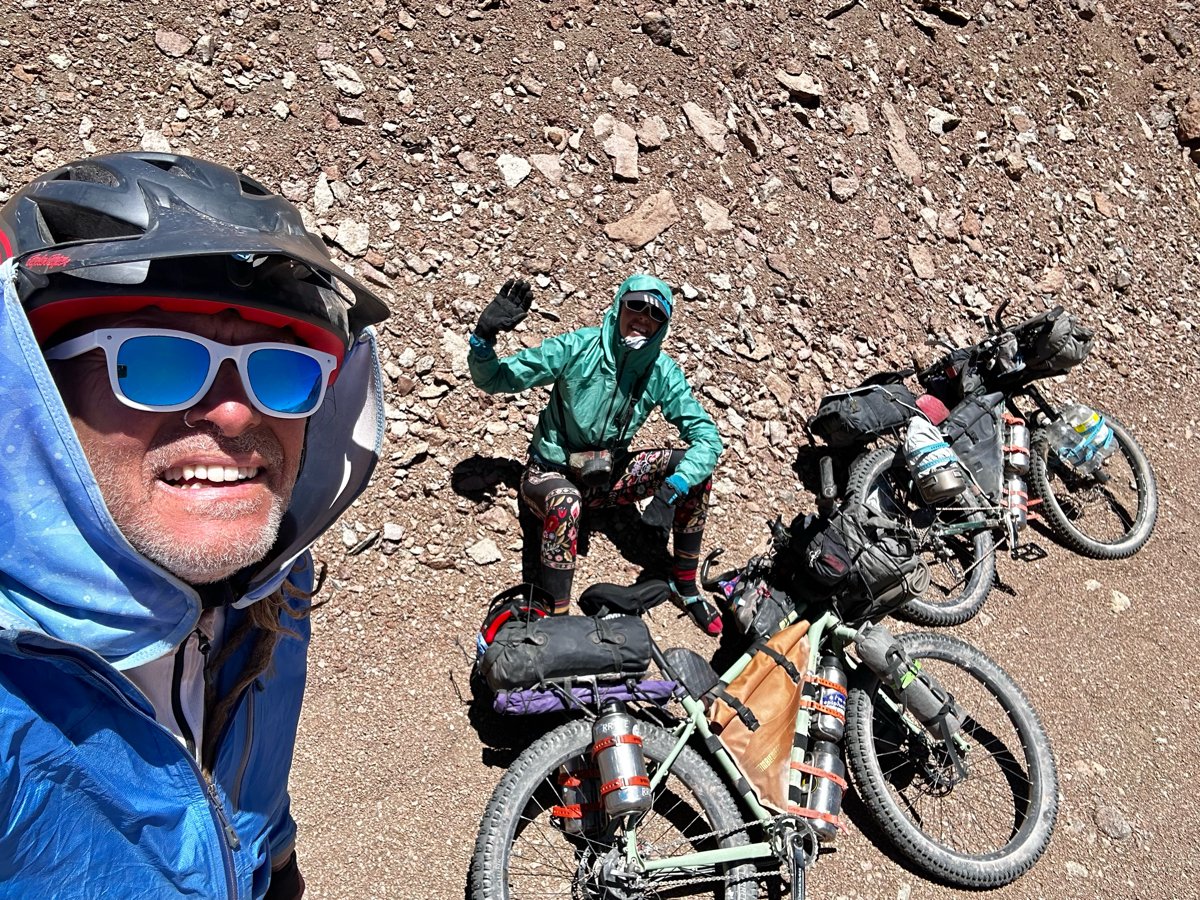
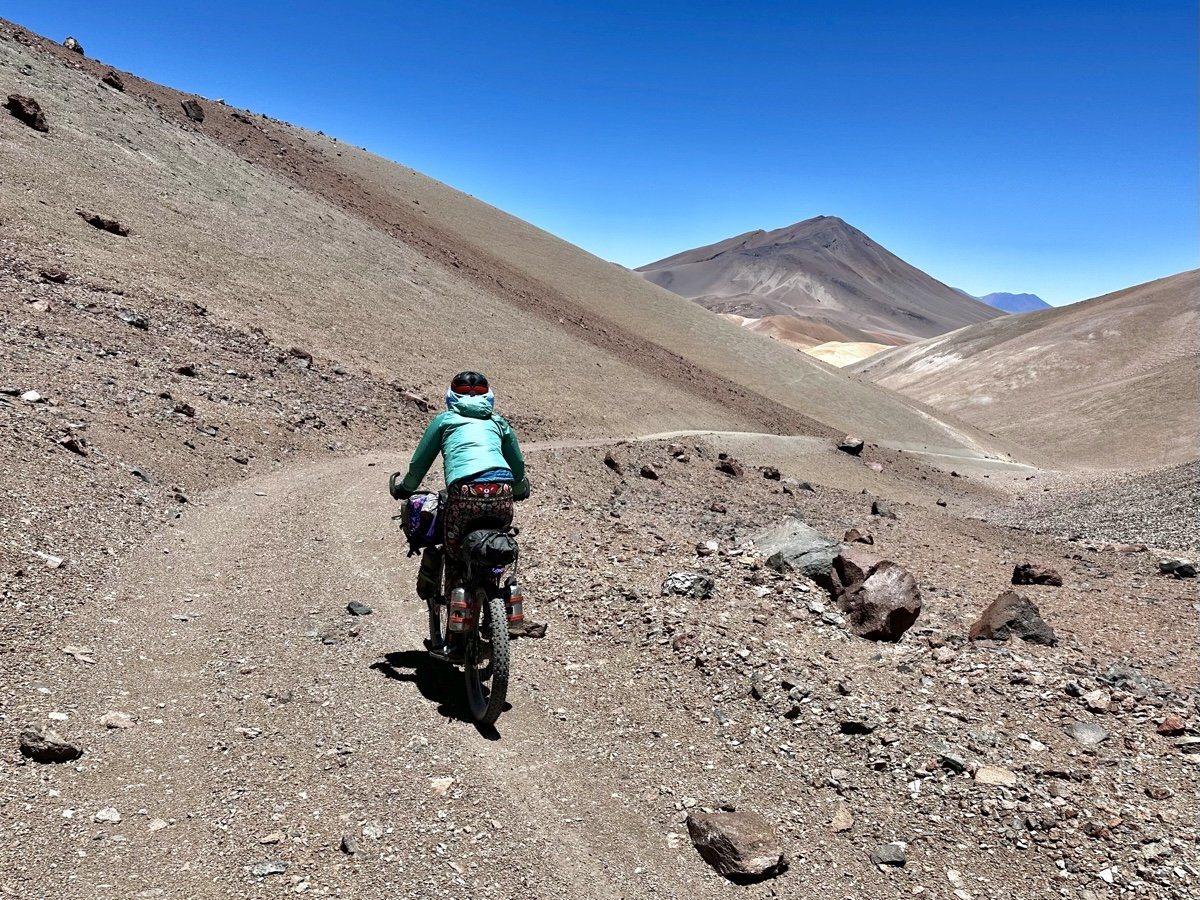
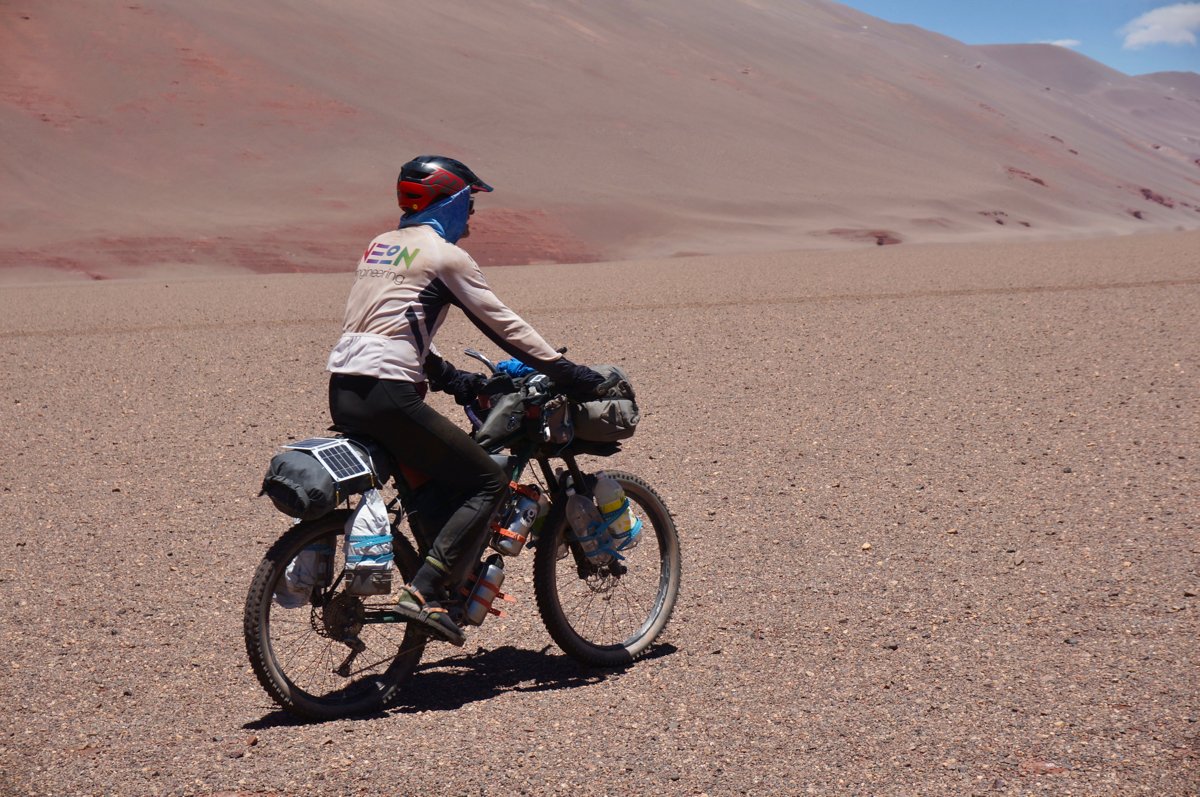
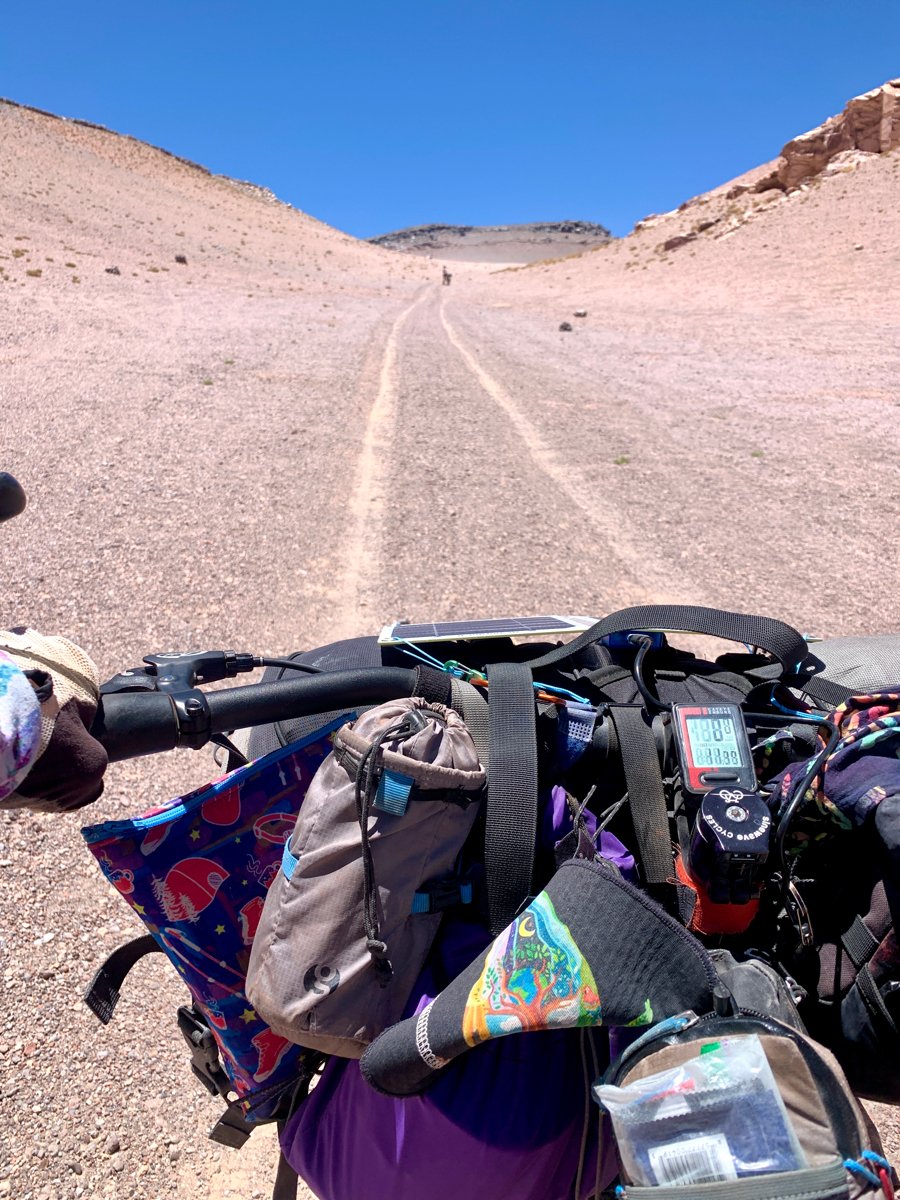
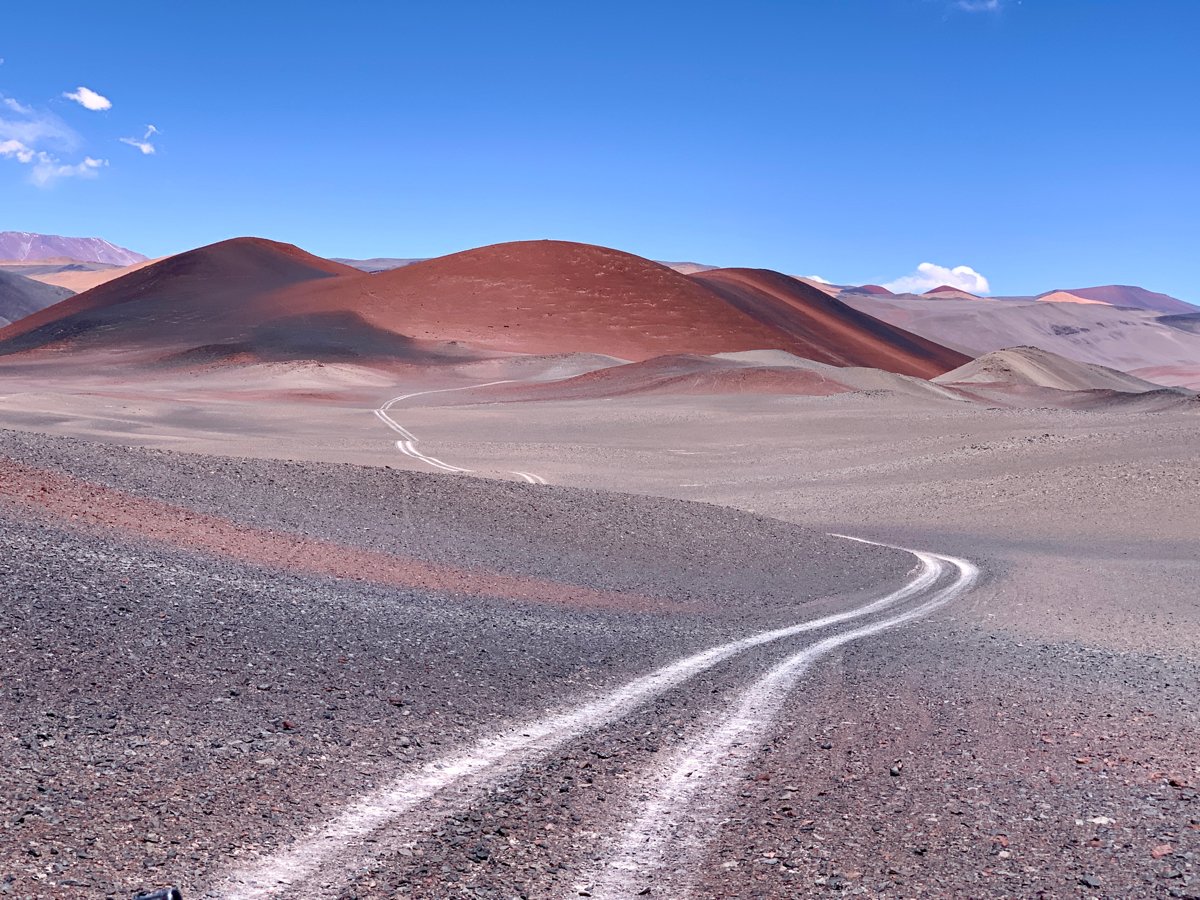
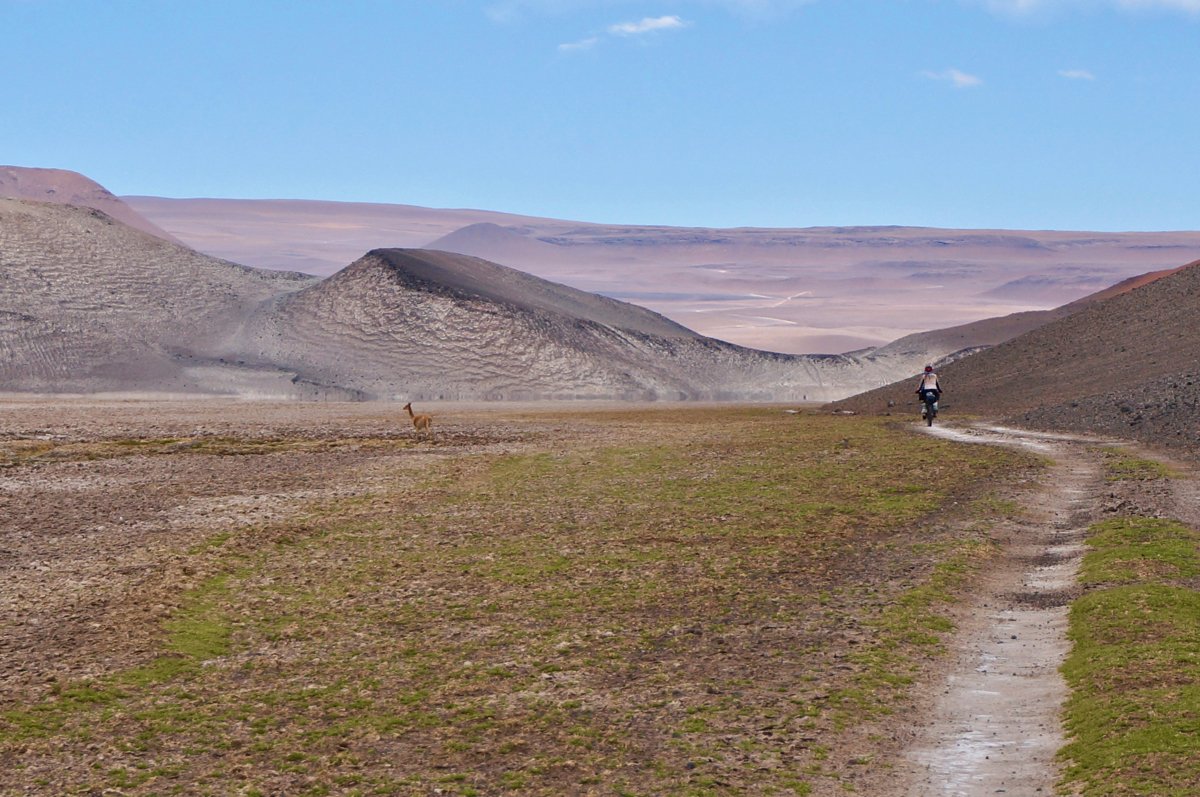
    It had all finally broke me. Too much cold, too much pushing, too little laughter joy break time. But here I was with a 4990 meter (16,371 feet) pass between me and a shower and the promise of different food. I usually have a will of steel, endurance fueled by joy at every little thing: a butterfly, a new flower, another vicuña, it doesn’t take much. I sing in icy rain, and smile at every new plant I see. But today it was going to take something different. I felt bad, really, really bad. And I had nothing. All I could do was put one foot in front of the other. There was some pedaling, but the climb was steep and we both pushed our bikes most of the way to the pass. I had to stop often—head pounding, stomach still doing somersaults. Little by little I made the pass. It was a steep descent down the other side. It went quickly, despite the fierce and freezing headwind.

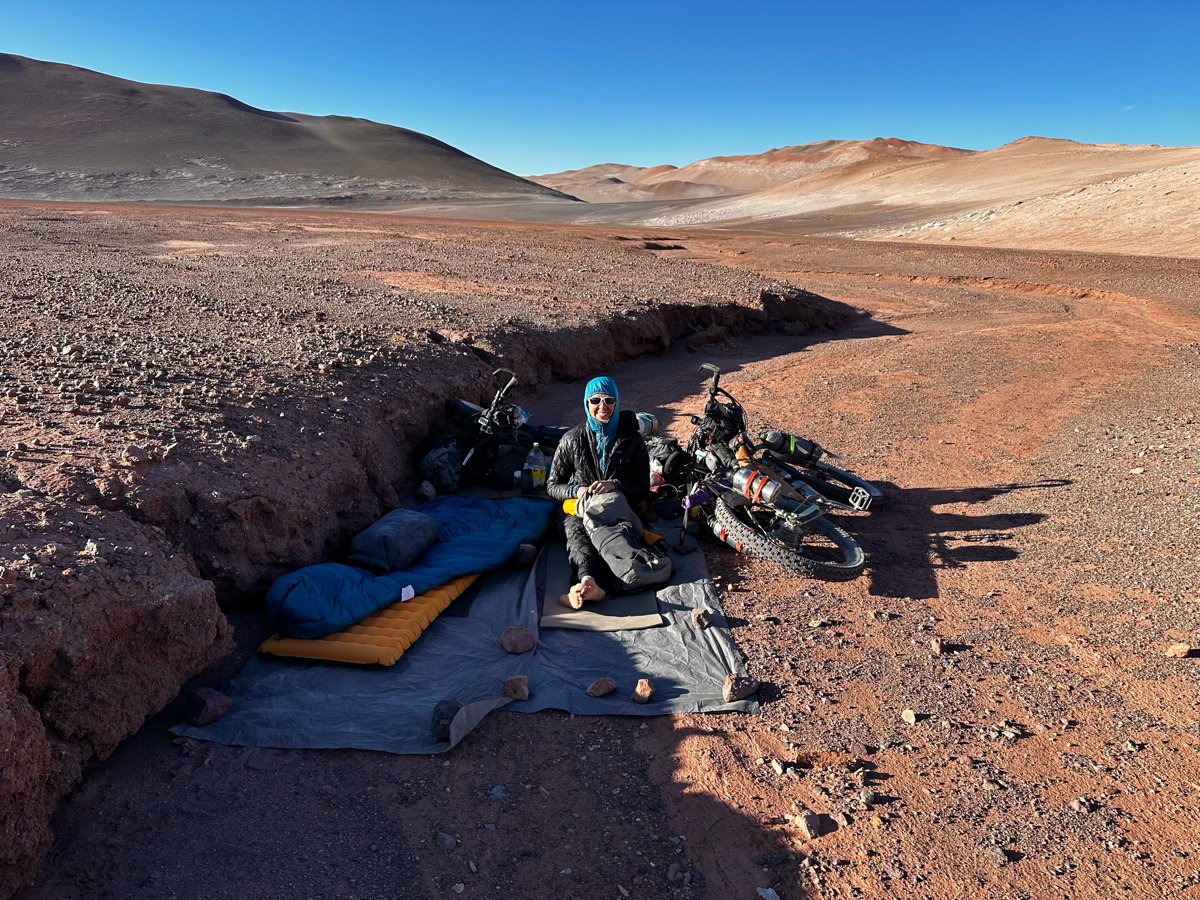
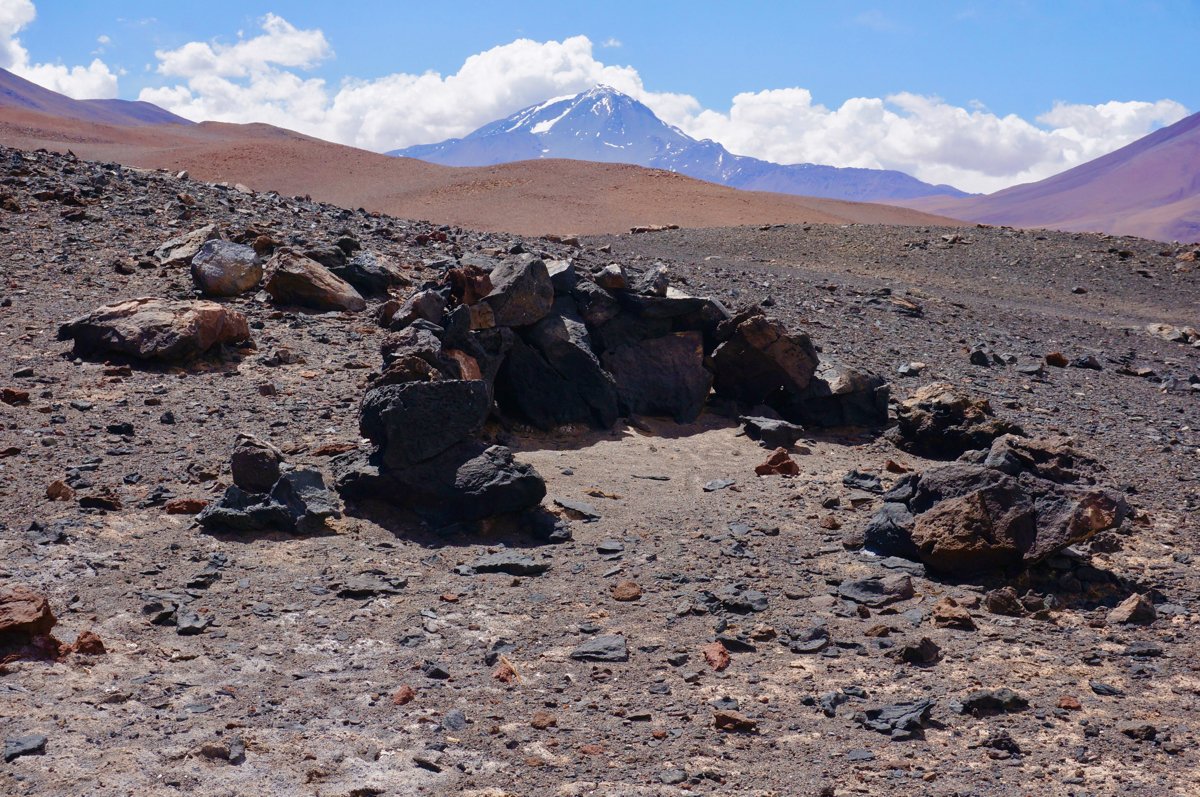
    An hour later we had made it down to a waypoint marked for camping. I could not believe, in this fierce headwind, that there would be anywhere protected to camp. But then it appeared, a rock wall at the edge of the lava. I broke out crying, almost hyperventilating at the sight of the beautiful rock wall. I stepped inside its boundaries. The wind stopped. It was warm. The tears flowed. The only thing I had thought about all day long—the thing I leaned on so heavily to get me up that pass—was the image of crawling back into my warm sleeping bag again. And then when we crested the pass, and the wind laughed at us, getting stronger with every kilometer closer to camping, I thought it would never happen. The relief upon arriving was so strong it broke the dam. I could not contain my emotions. A well placed campsite is such a beautiful thing.

    We set up the tent and crawled in. I peaked out the tent door, gazing at all the beautiful flamingos in Lago Purolla. Too far away. I apologized to them for not admiring them closer. I told them they are beautiful, and I love them, and the brilliant hot pink they hold secret is extraordinary. I wanted so much to see them closer, especially since there are no flies here, but I could not move. The next morning they were gone.

    The first miles passed quickly. My headache was ever present, and the nausea coming and going. Anything steep or bumpy brought me to a stop. Some miles passed quickly, some seemed never ending. The wind teased me, pretending for a moment to be a tailwind, only to push me sideways, and then slap me in the face.
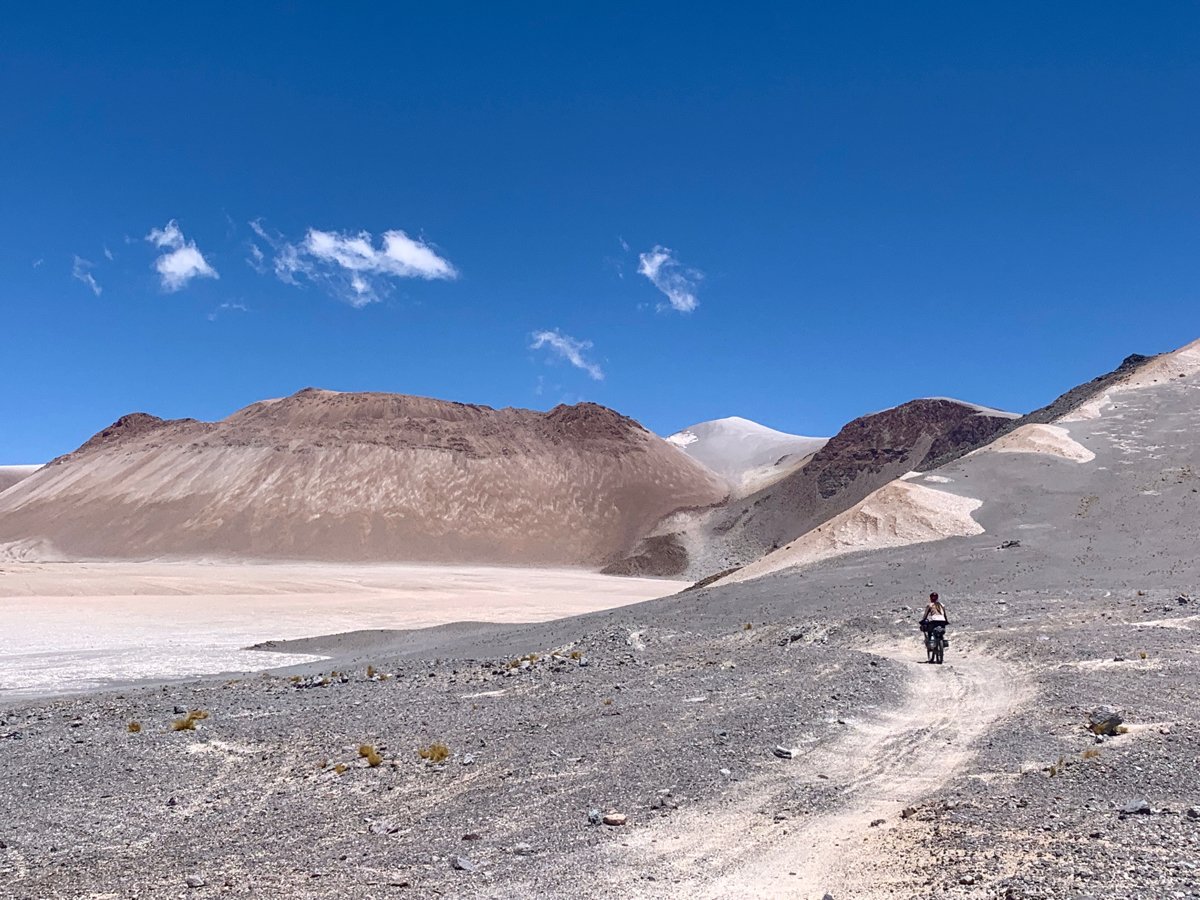
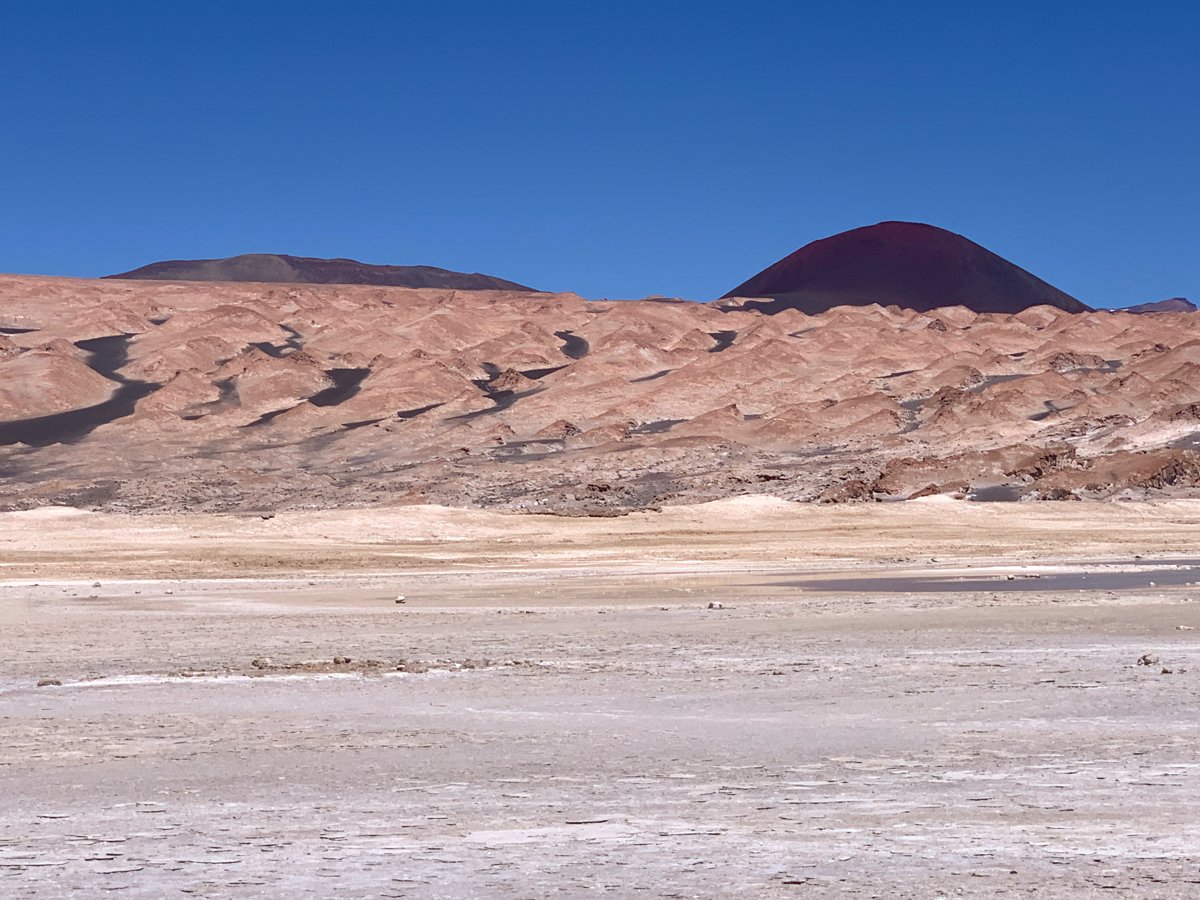
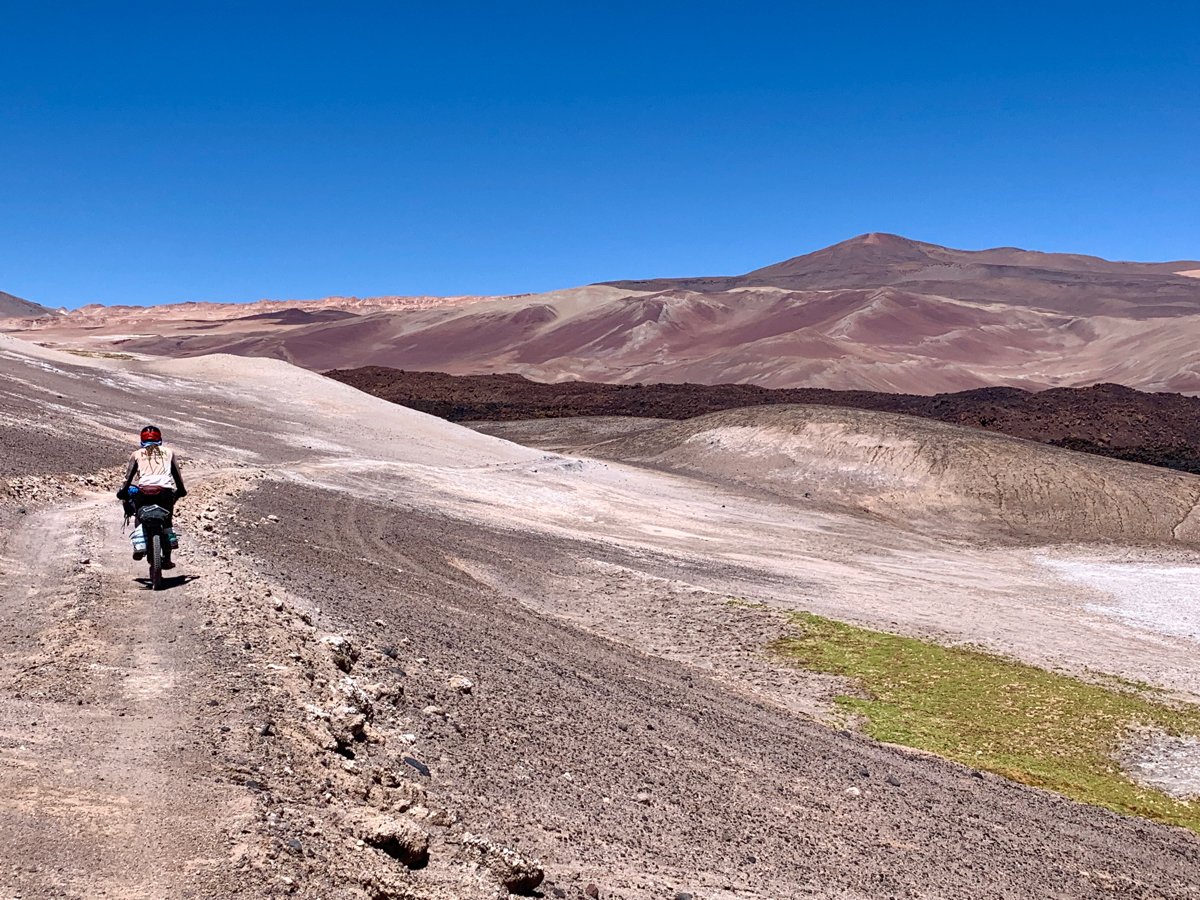
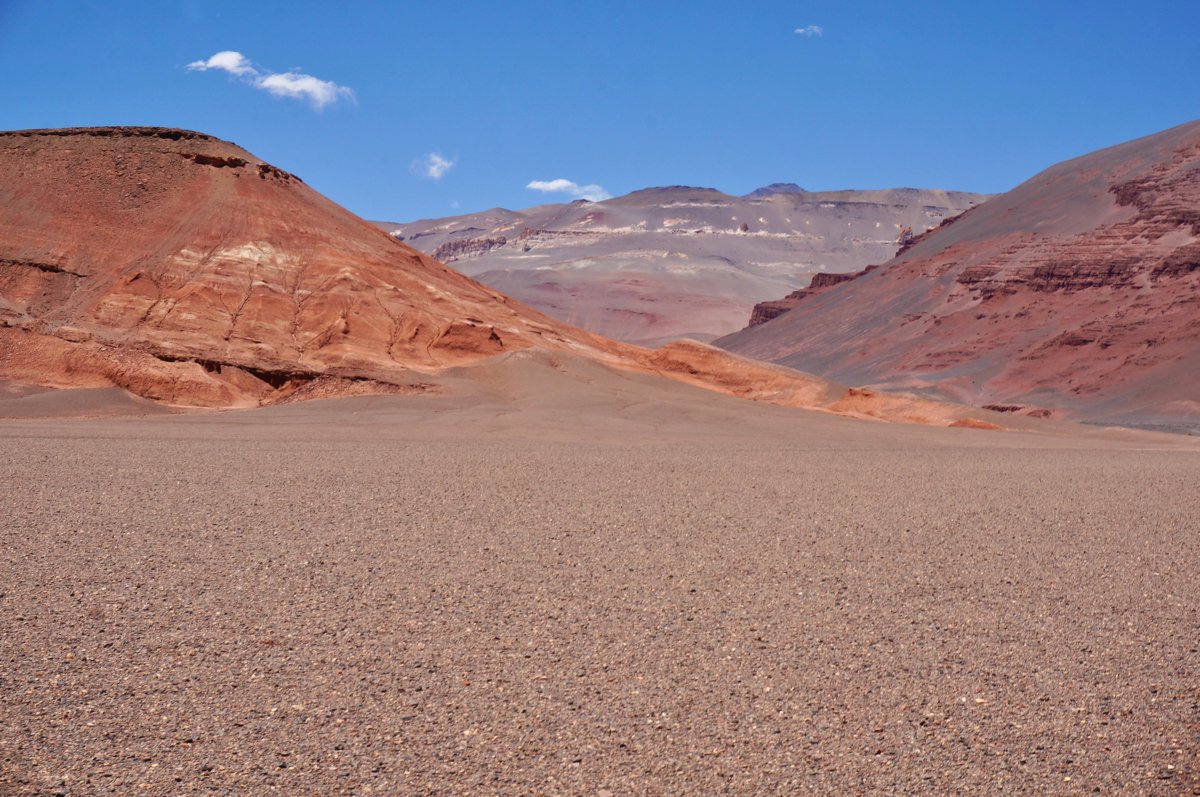
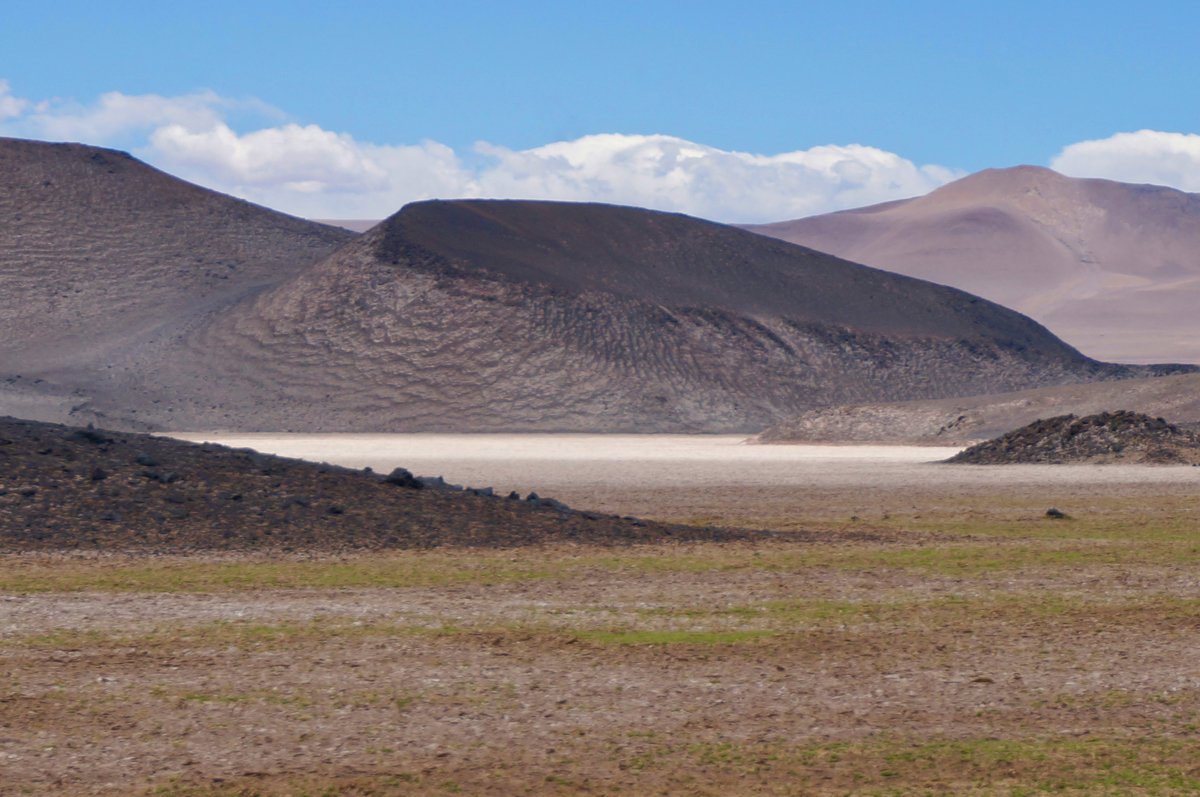
    ~Crossing the crater of Volcán Blanco.~

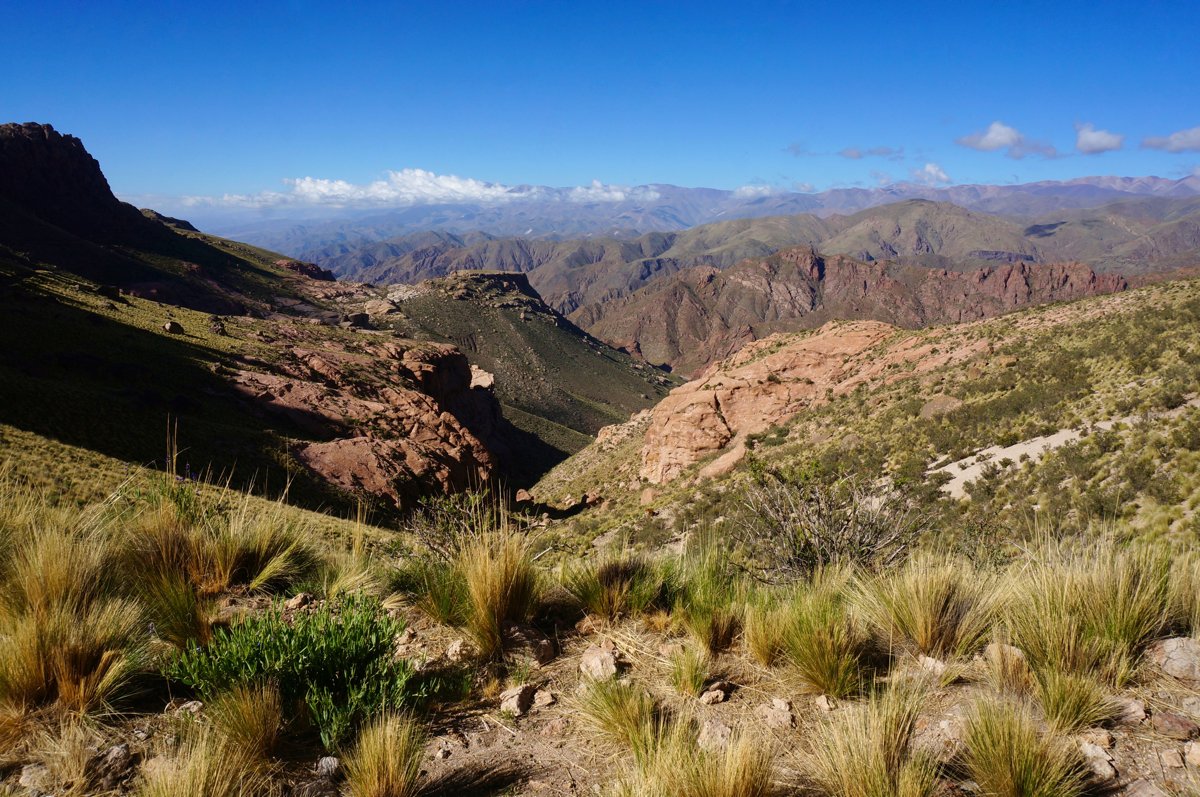
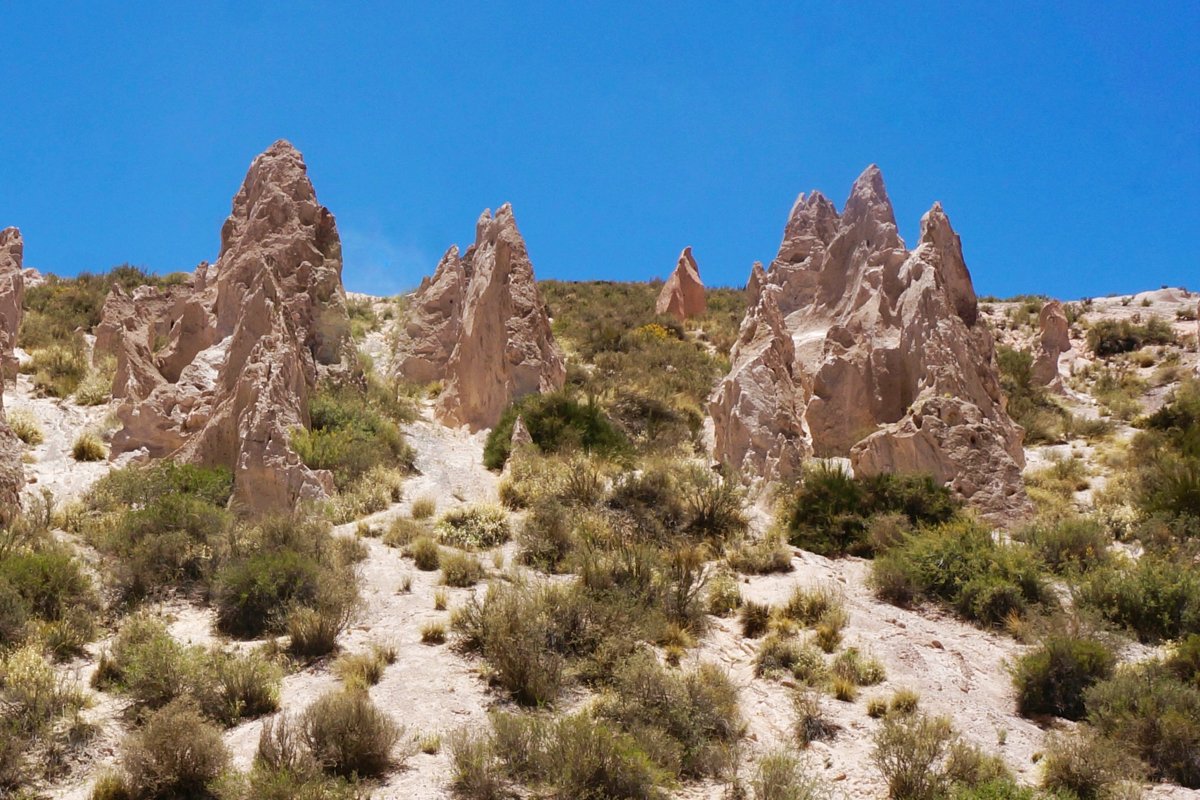
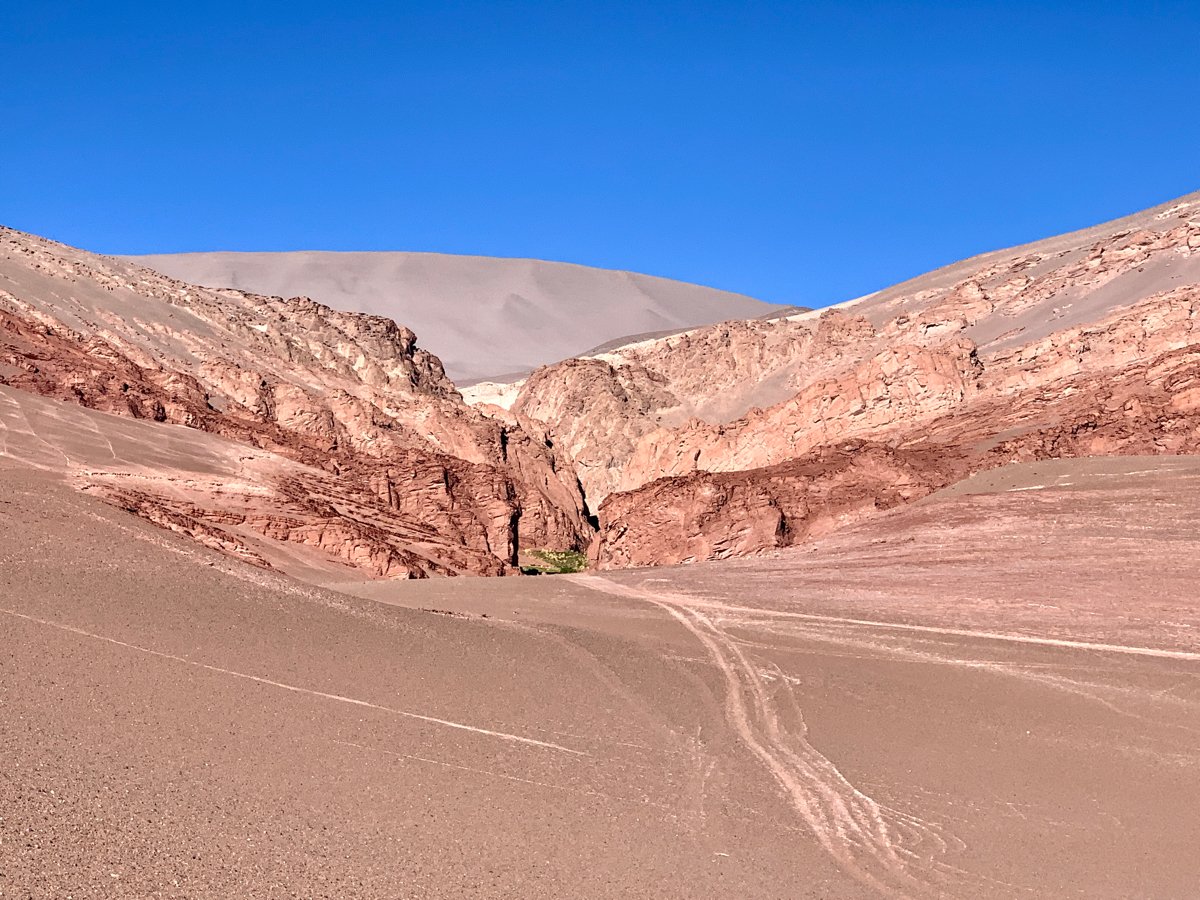
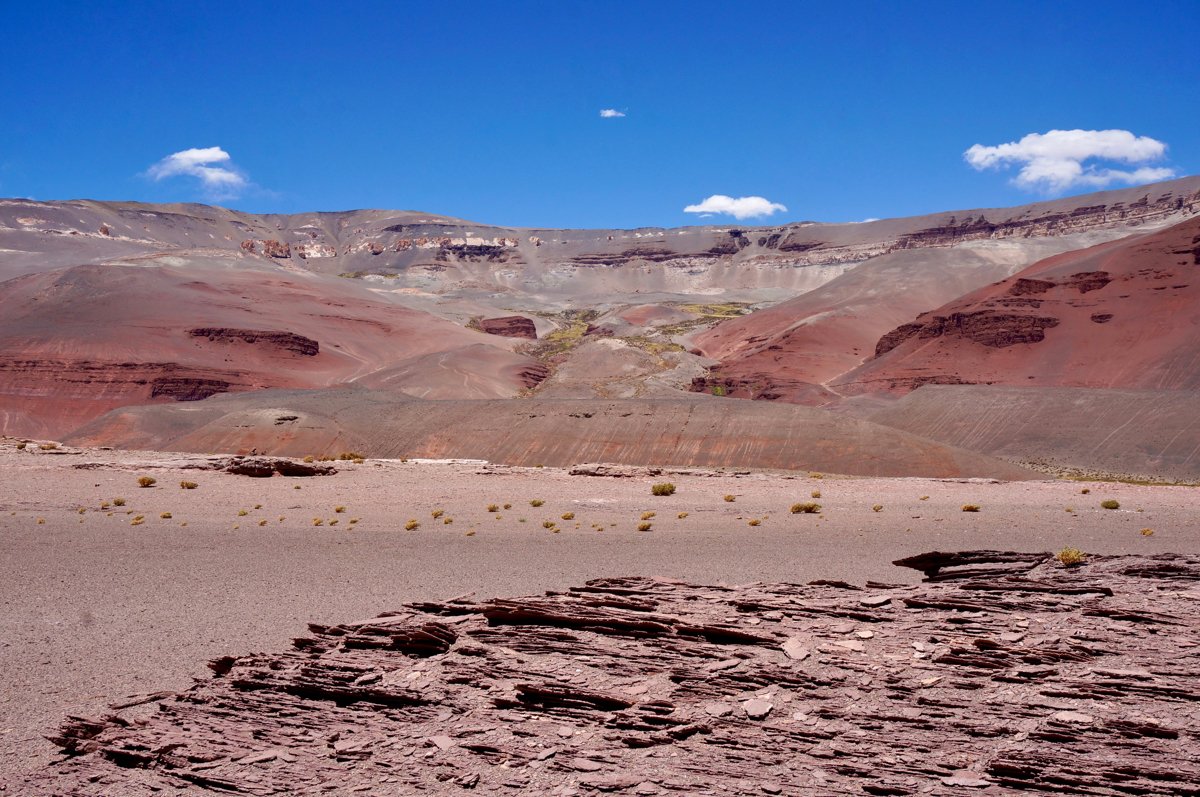
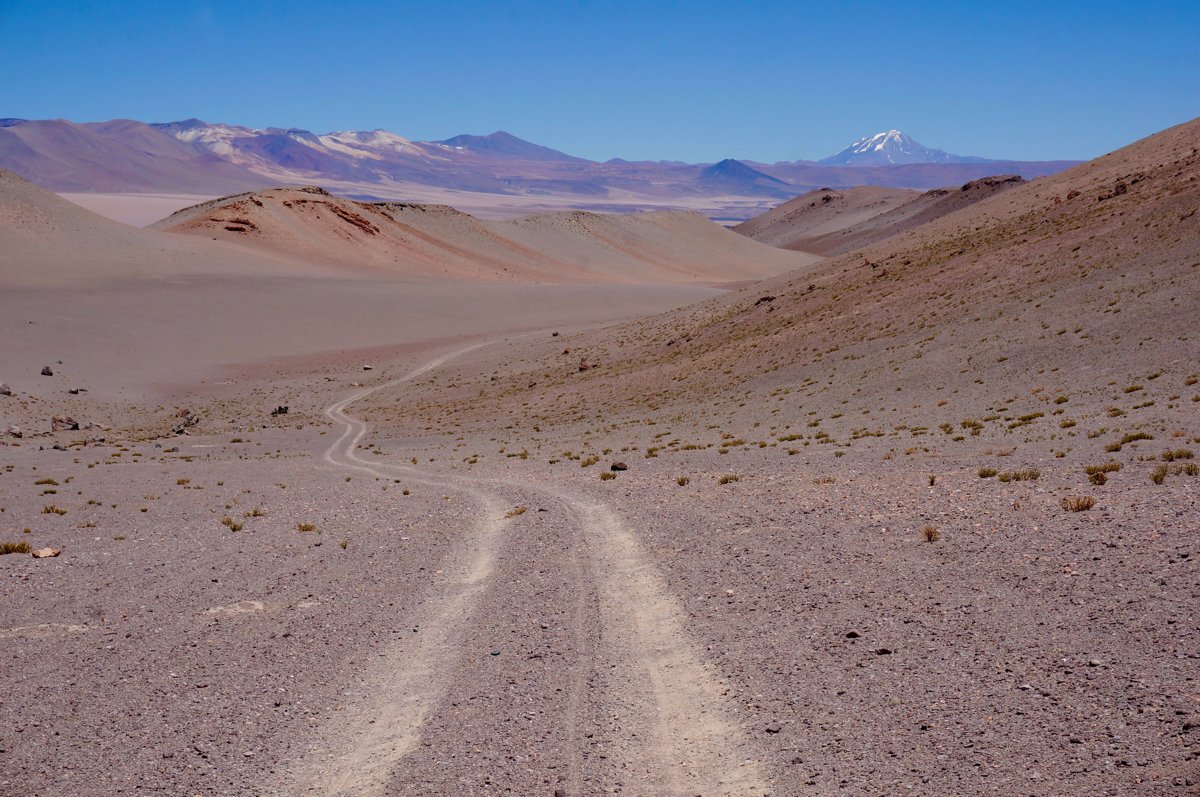
    Finally in the late afternoon, a fast downhill on a good road surface brought us to a changing landscape. Wild West looking cliffs, greenery, and deep canyons. The cliffs got craggier, the canyons got deeper, and the greenery got greener.

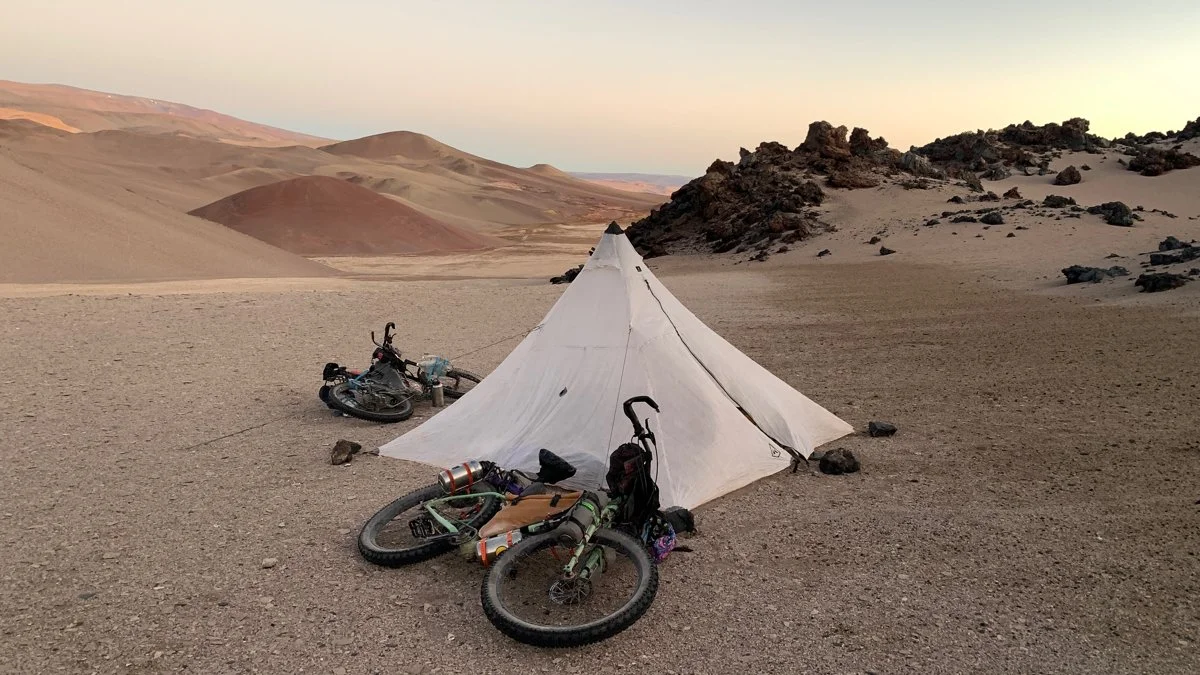
    We took the turn to “Termas Los Baños” excited for a warm soak. The road was steep, very steep at one point. I worried about pushing my bike up it in the morning. Some locals had moved into the buildings. They had goats and dogs. But the hot spring pool was still available. We soaked for a long time. Some deep exfoliating took place. We set up our tent a ways down the road. It was a damp area, but the air was warm and there was no wind.

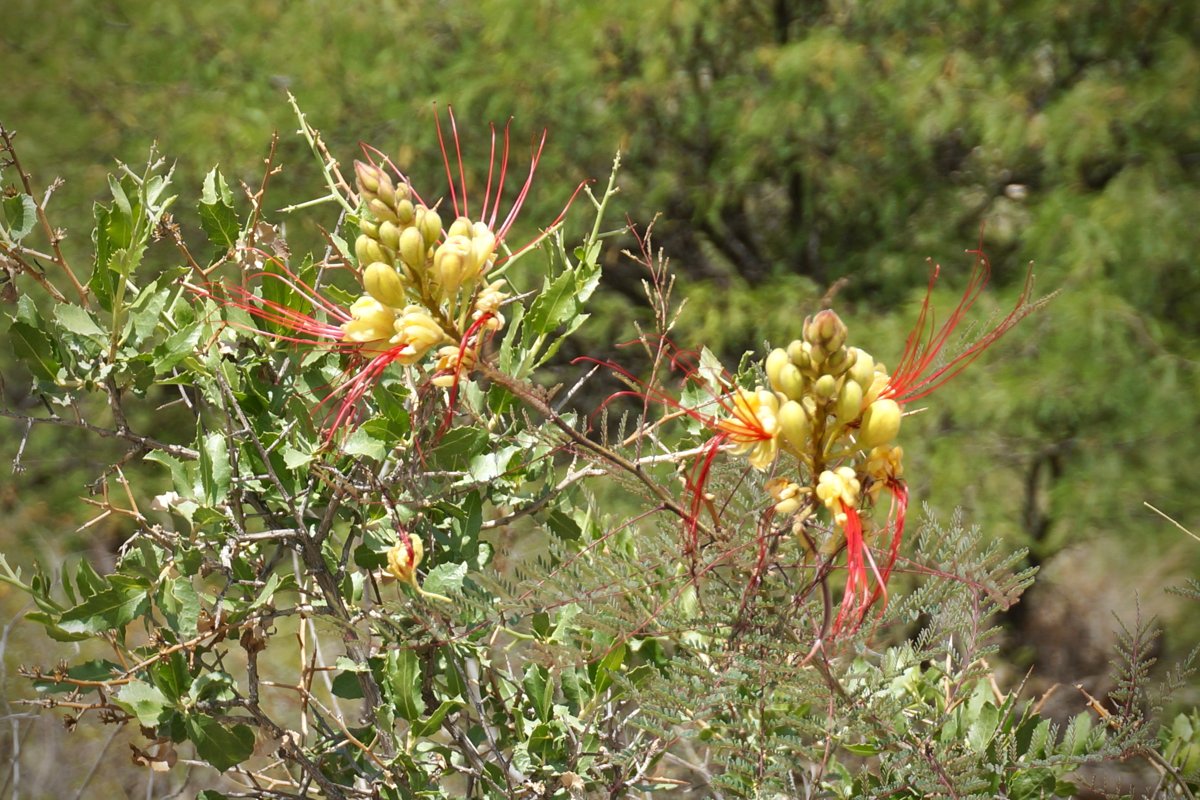
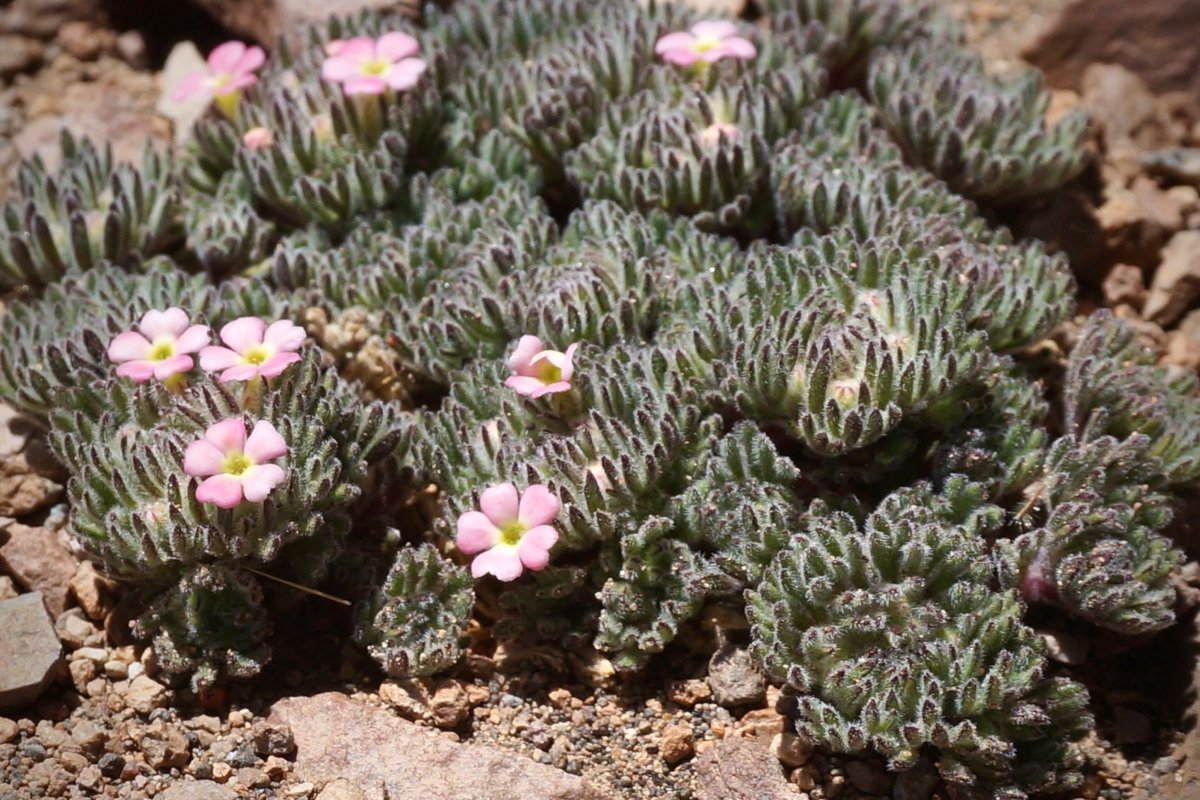
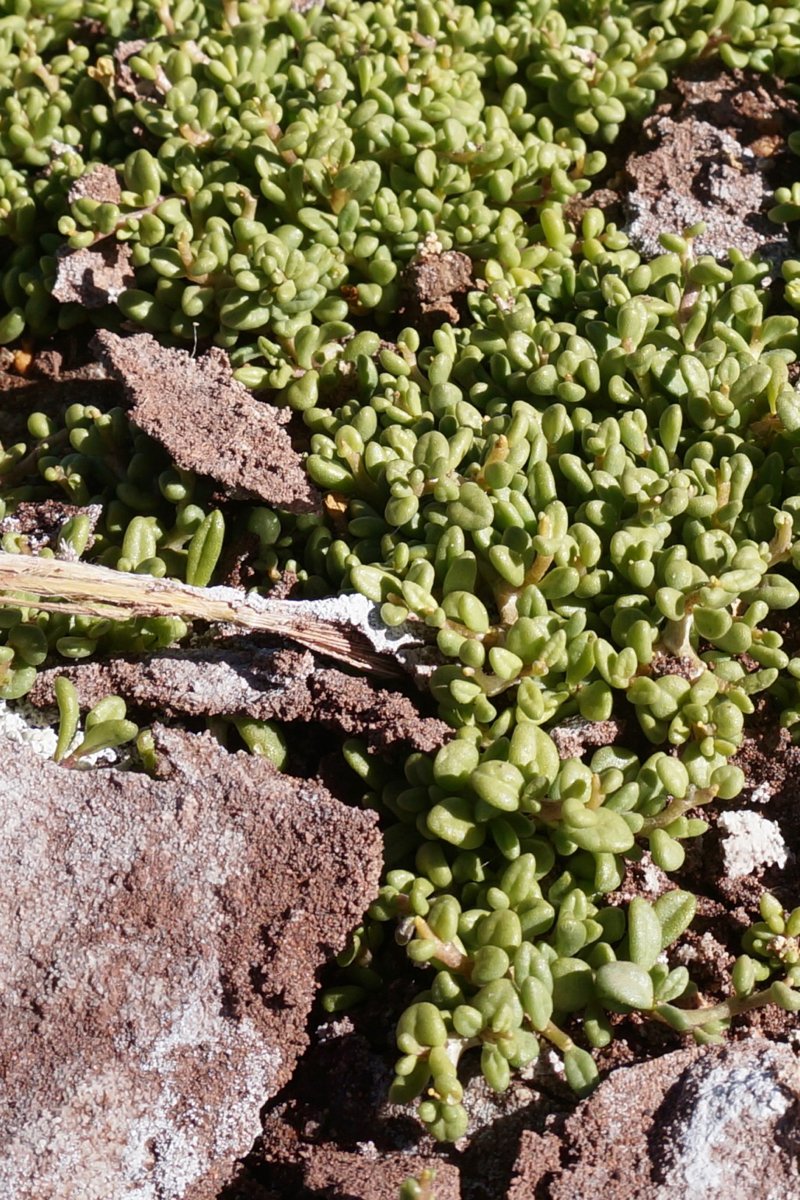
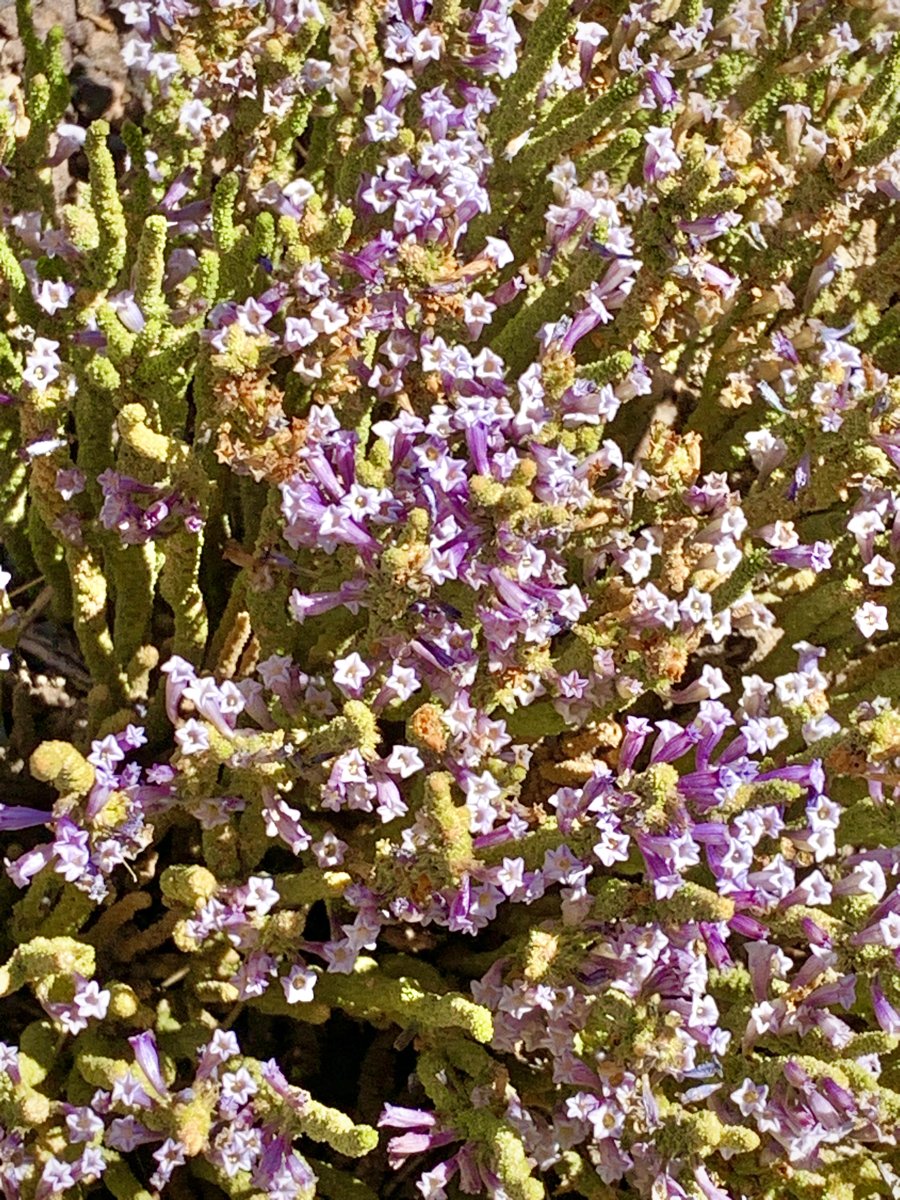
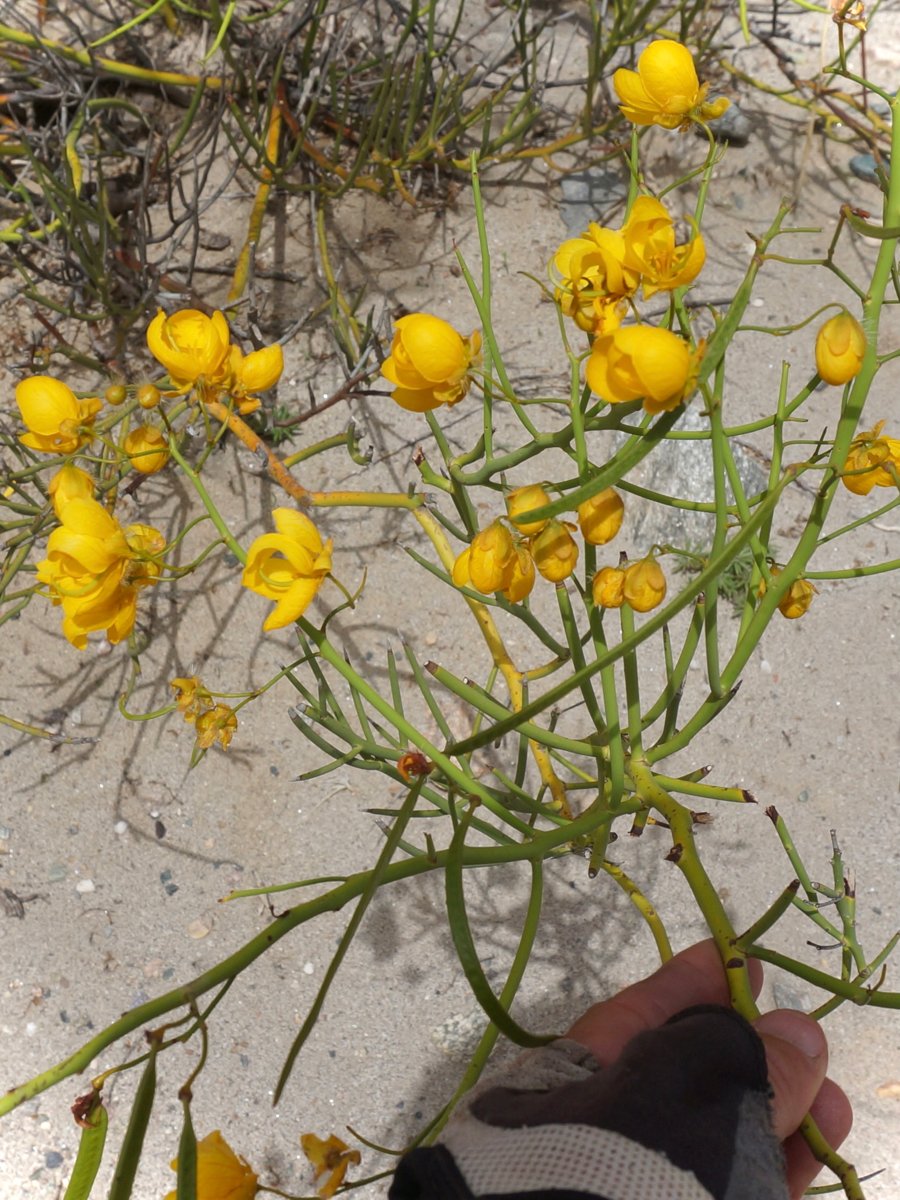
    In the morning I wore my backpack front-roll and pushed my bike up the steep grade. It was a 33% grade at one point. After reconnecting with our route, it was mostly downhill all the way to the tiny village of Los Papas. The bumpy road reminded me how bad I still felt, but the lower in elevation we got, the warmer the air got. The warm sun made me feel a little better. I could feel its heat deep in my bones. Things that made me happy: a strange red flower, the warm sun, a grouse-like bird, a bunny sighting, and a burro snorting at me. [The grouse-like bird I saw was a Tinamou, and I’m pretty sure it was either the Andean Tinamou (Nothoprocta pentlandii) or the ornate Tinamou (Nothoprocta ornata). The strange red flower is in the genus Caiophora, possibly Caiophora Chuquitensis, but I’m not sure. Also, in looking up creosote bush I’ve learned that creosote bush originated from South America in a region that includes southern Peru, Bolivia, and Argentina, and apparently spread to the southwest regions of the U.S. during the Pleistocene between 1 million and 10,000 years ago.]

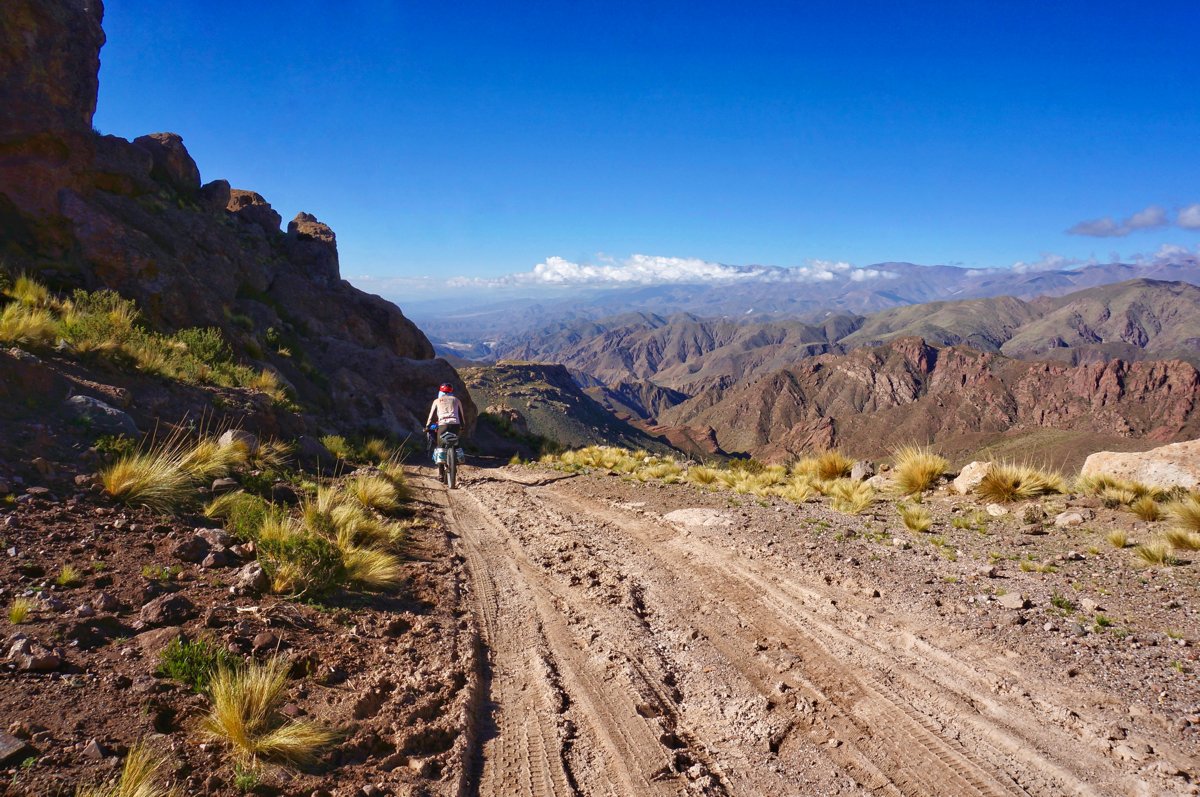
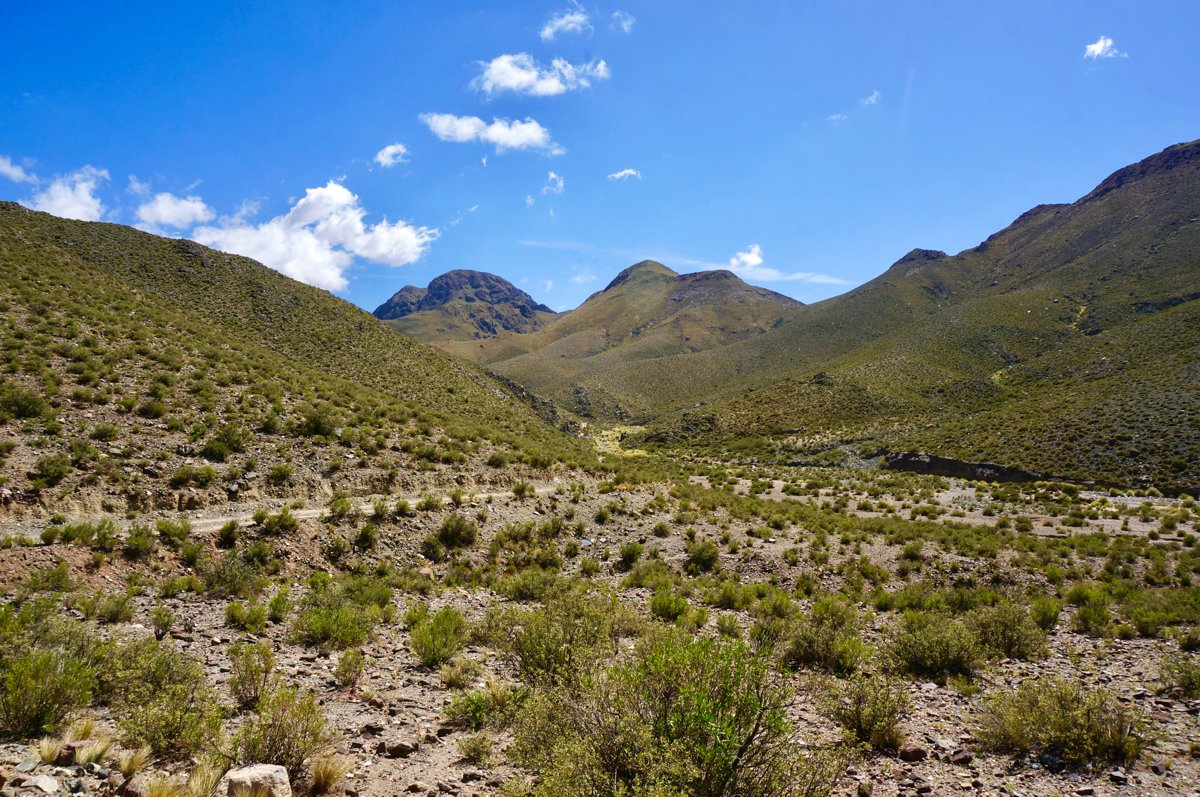
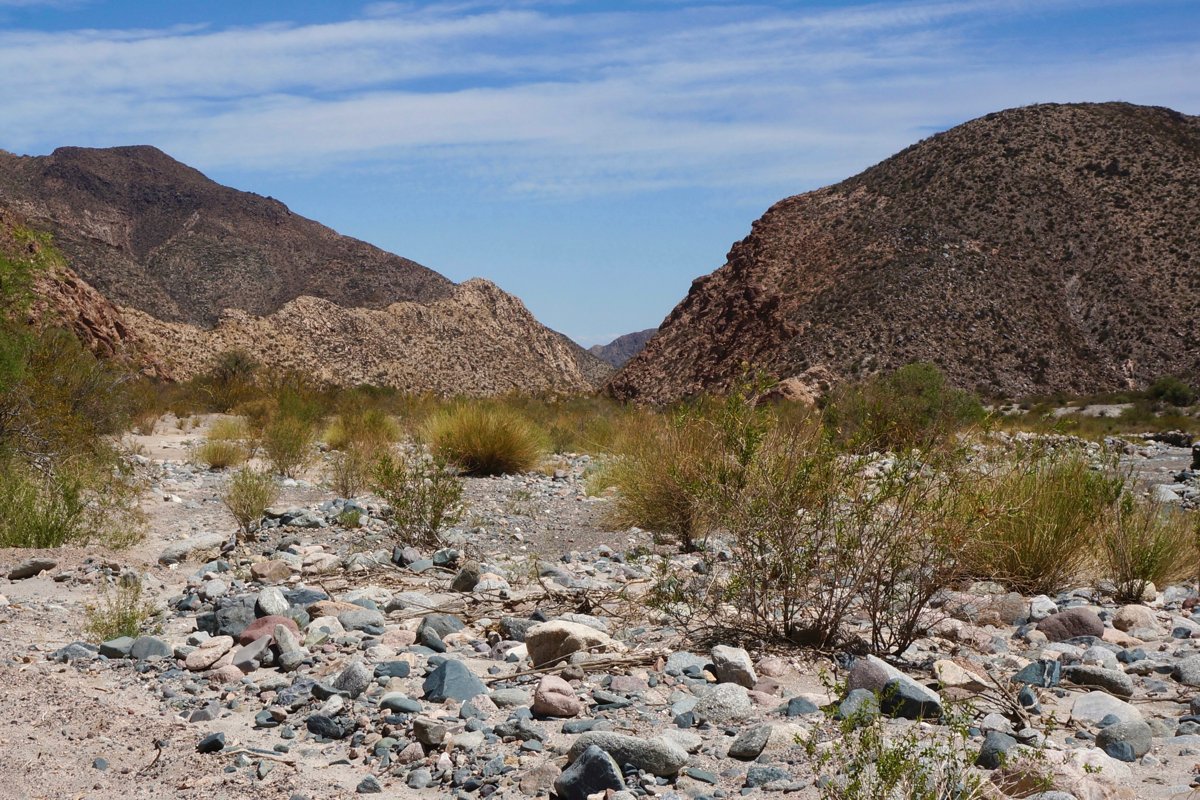
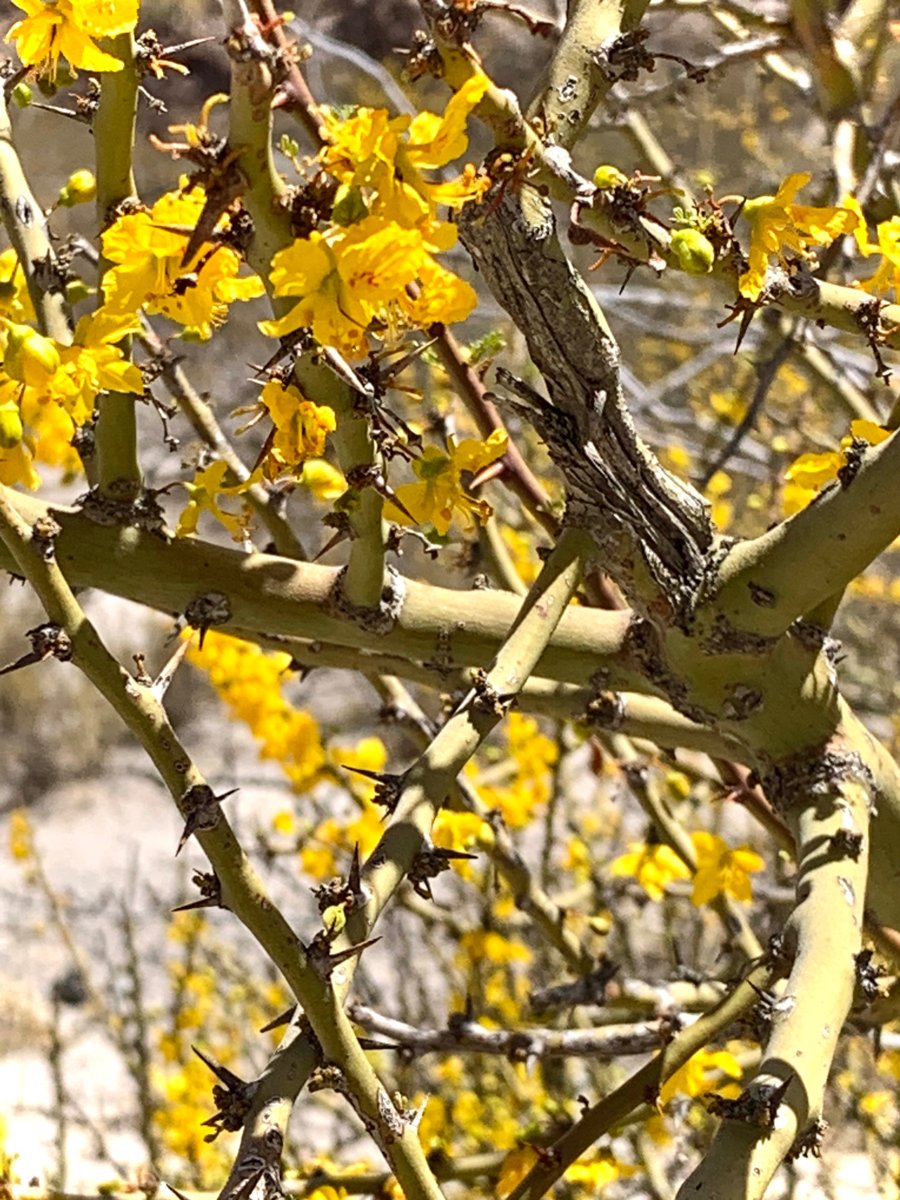
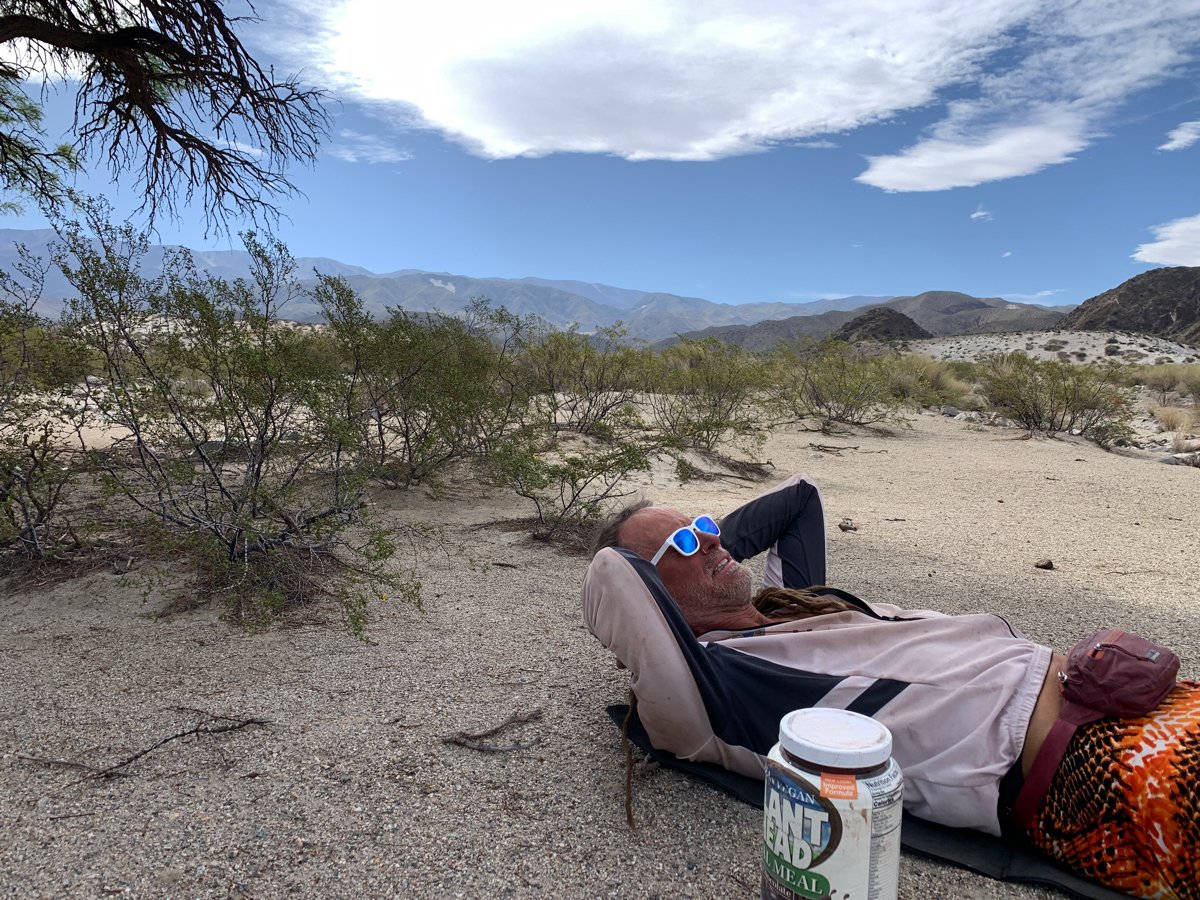
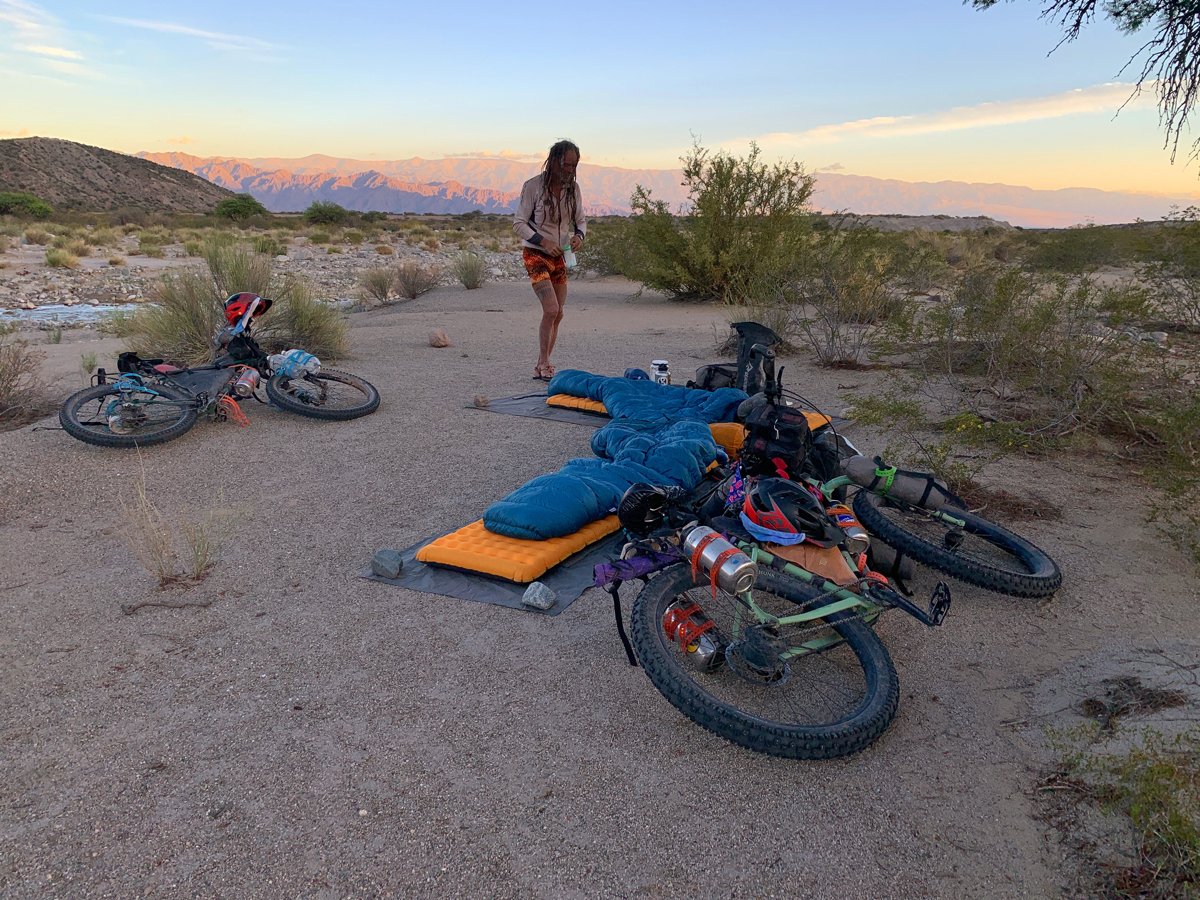
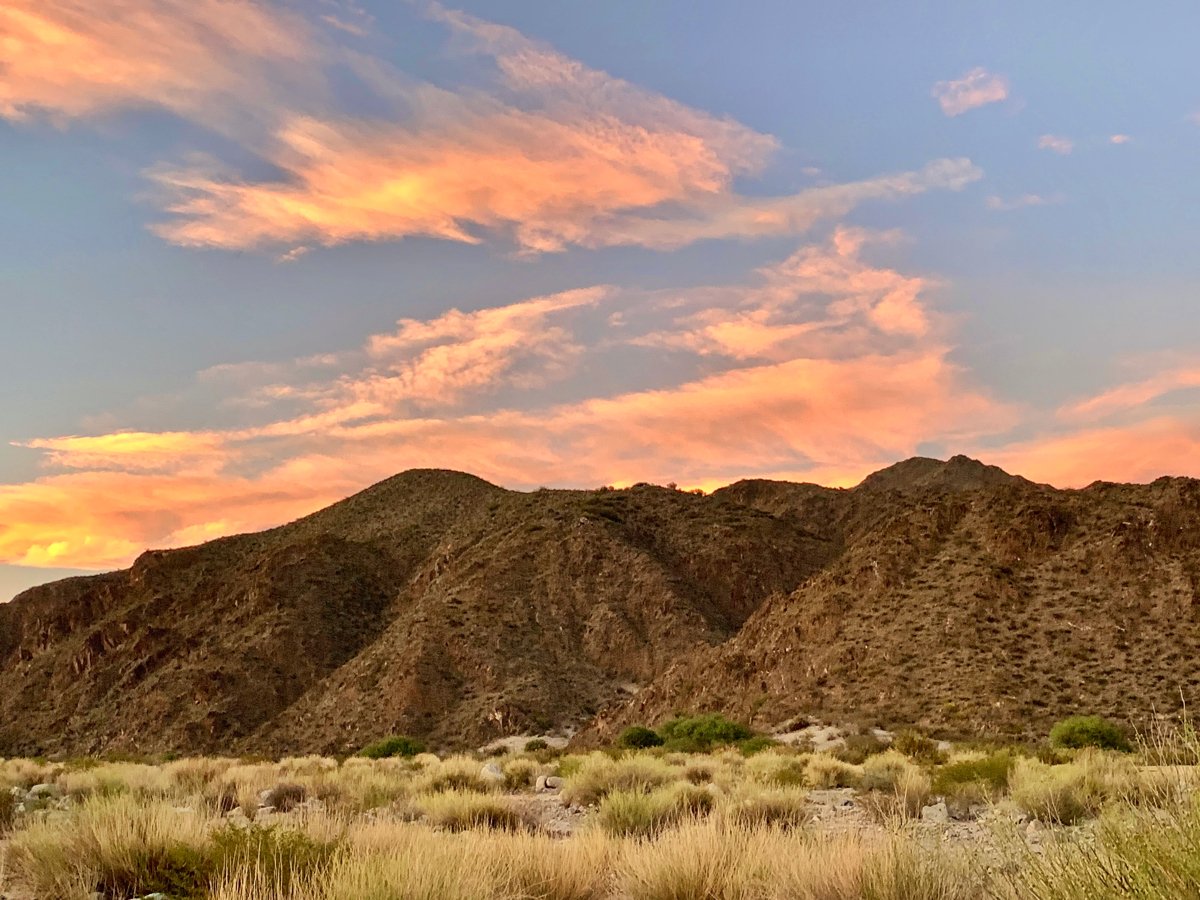
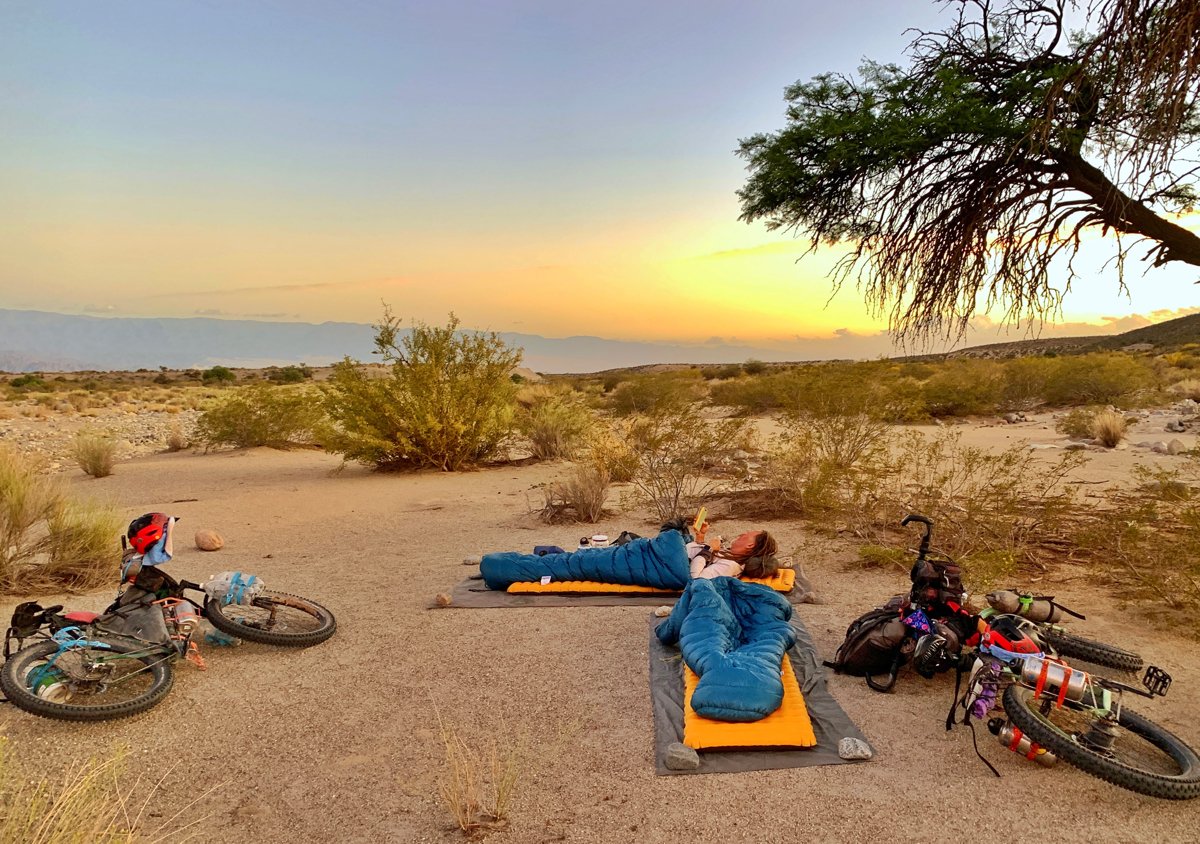
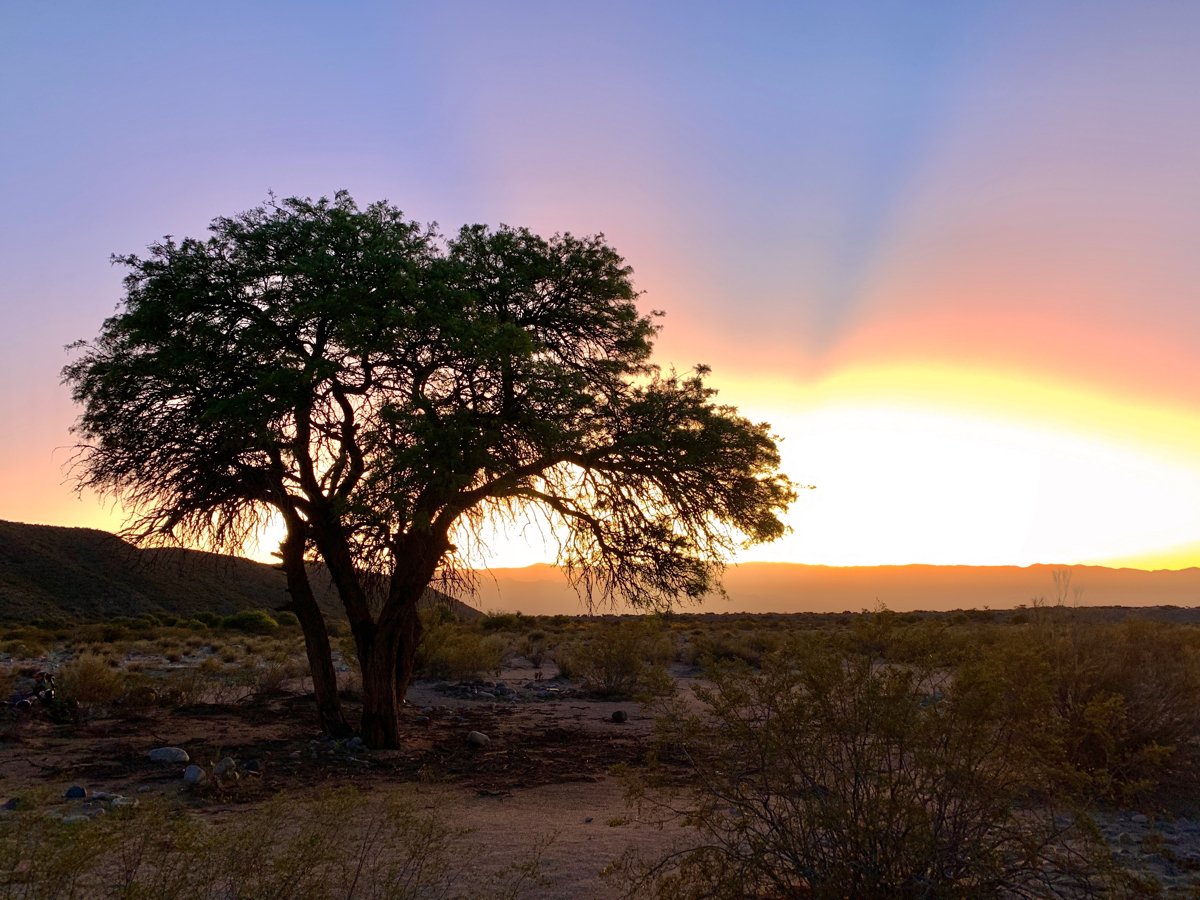
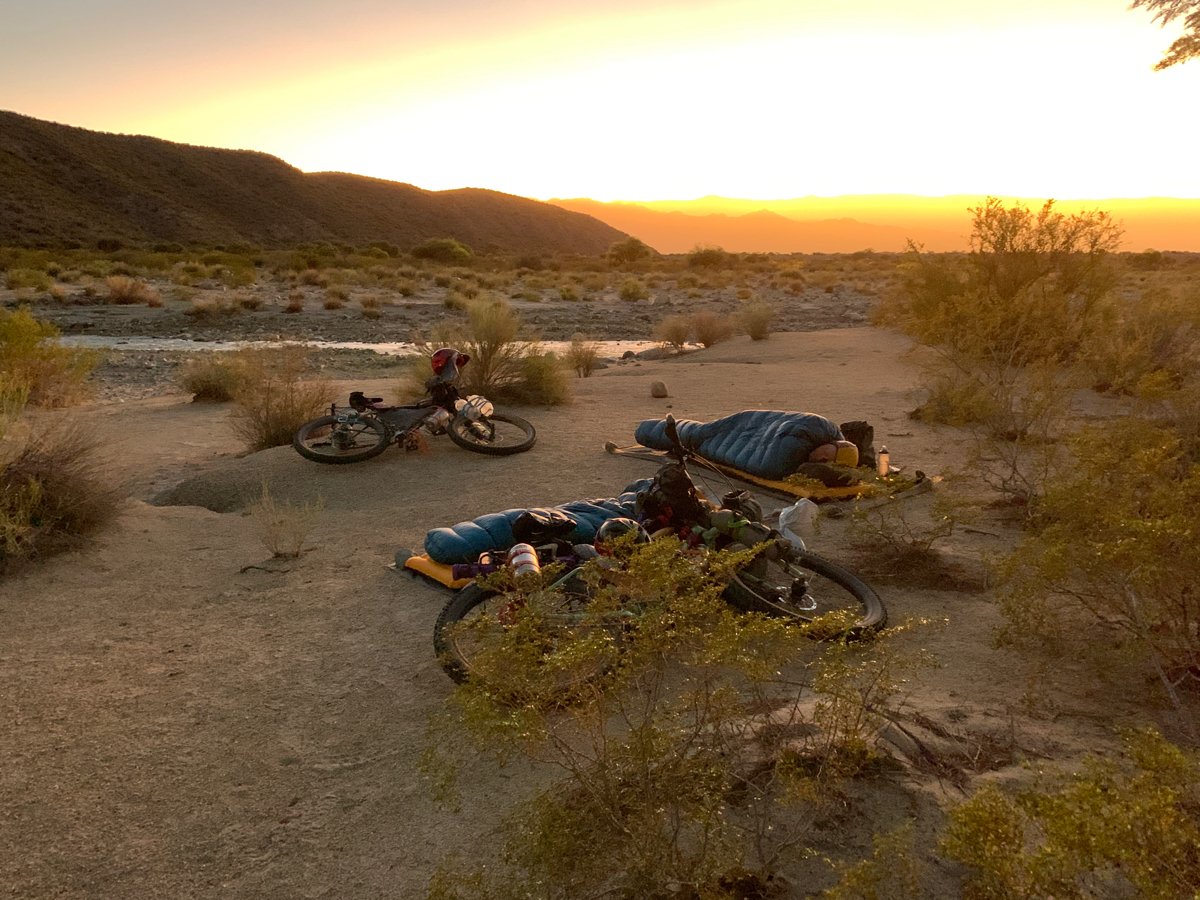
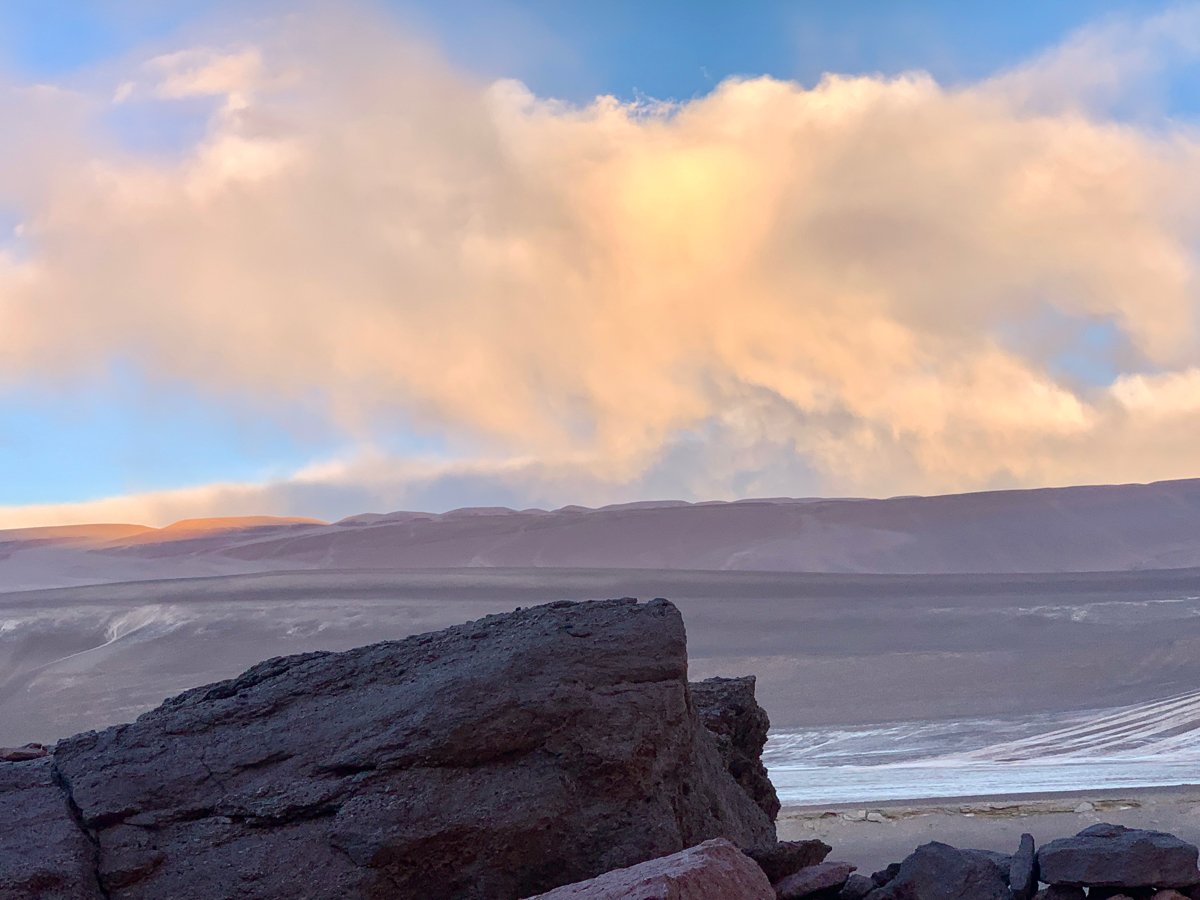
    Ninety river crossings stood between us and the end of the day. We skipped Los Papas and headed down river. The crossings were tedious, but there were good stretches of road that passed the kilometers much more quickly than we had anticipated. After the last crossing, the narrow canyon opened up and dumped us out into a landscape that reminded me of parts of Arizona, California, and New Mexico. Rotten granite gravely-sand, creosote bush, mesquite trees, and palo verde trees. Even the sunset reminded me of Arizona. There were tarantula hawks, velvet ants, song birds, and tiny ants everywhere. I just hoped we wouldn’t see a scorpion or rattlesnake too. The air was warm. We braved the clouds and decided to cowboy camp one more time. I watched the clouds dress the horizon in pink, spreading out wispy across the darkening sky. A few stars peaking through their veil.

    Walk gently on this earth.

    Walk gently on your self.

    Am I a parasite, or a warrior?

    Words to lose one self by.

    What do I give back to the earth?

    Is the exploration enough?

    Is it enough to share this with you?

    Is there not value in the beauty

    and the inspiration?

    In love and light

    the warrior shines.

    The morning was warm and we got an early start. It was still early when we arrived in Punta de Agua so we continued on to Palo Blanco. No restaurant was open when we arrived in Palo Blanco, forgetting that it was Sunday and New Year’s Day. We bought some snacks at a minimart, and the lady invited us in for breakfast. It was the standard Argentinian breakfast: crackers, jam, butter, and tea. But it was so nice. We ate the whole block of butter, and the jam was homemade. We tried to give her some money, maybe feeling guilty for having eaten the whole block of butter (and half of her homemade jam), but she refused any payment. We made our way to the next minimart and bought some orange juice, apples, and water.

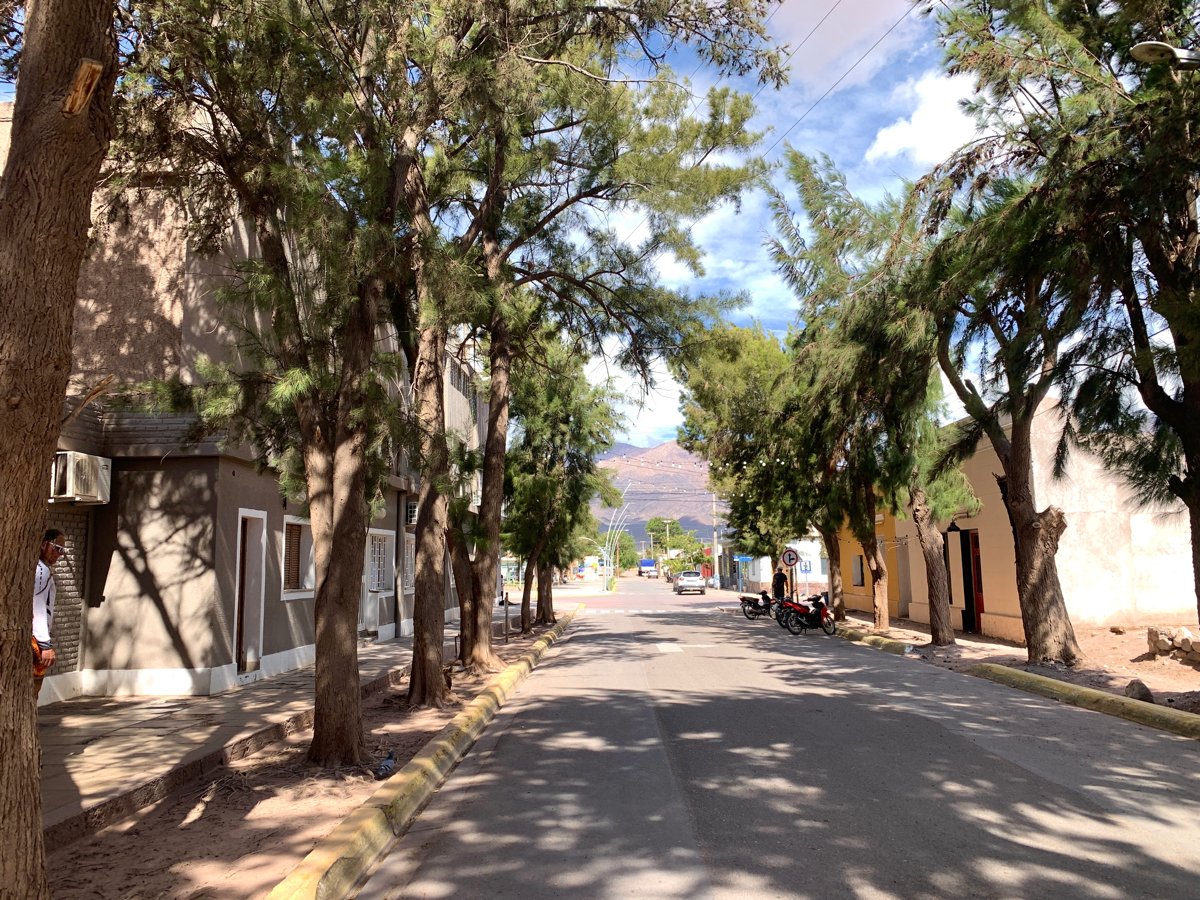
    The road from Palo Blanco to Fiambala is paved and mostly downhill so we thought it would be easy and we’d arrive in Fiambala in the early afternoon. But the wind decided to have one last laugh at what we thought. It started as we were heading out of Palo Blanco. It got stronger and stronger and stronger the closer we got to Fiambala. The wind was so strong that it pushed me to the other side of the road more than once, facing me into head on traffic. I finally stopped riding and just pushed the last few kilometers into Fiambala. The wind did not give until we reached the trees that enclose the town.

    I was so faint with exhaustion. My face was so dirty even though I washed it everyday. We checked into a hostel, and went straight to the ice cream shop (the only place that was open).

    Moments are never just moments. In their passing, reality is forever redefined. Letting go is the most difficult part of any journey. And sometimes, the most difficult ones are the ones I can’t stop thinking about. I (almost) want to go back and do it all over again.

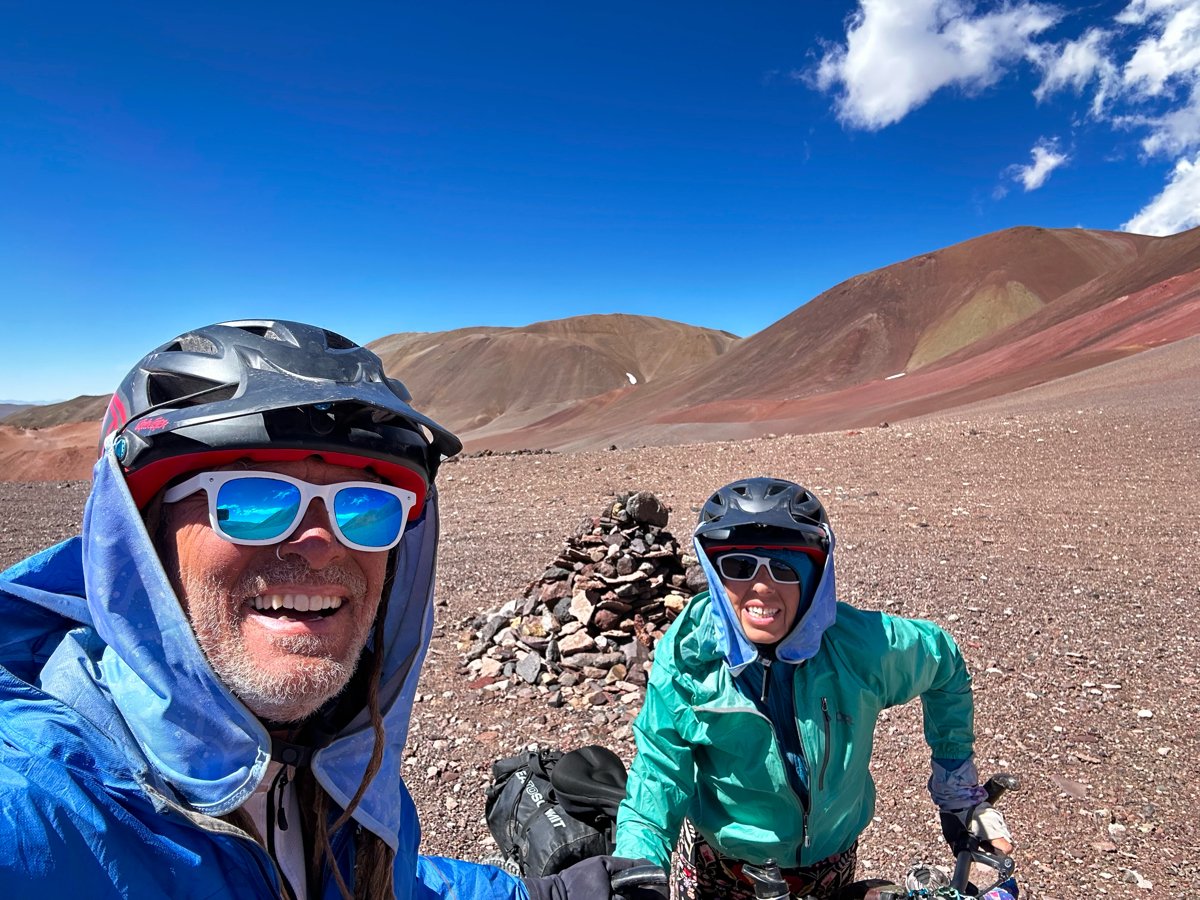
    ~Looking much shinier after a lot of rest, showering, and eating.~

    ~My favorite part of Fiambala—the espresso machine at the gas station!~

    ~There are a lot of small vineyards around Fiambala.~

  • Potrerillo Creek to “The Funnel”

    Potrerillo Creek to “The Funnel”

    HERE COMES THE SUN

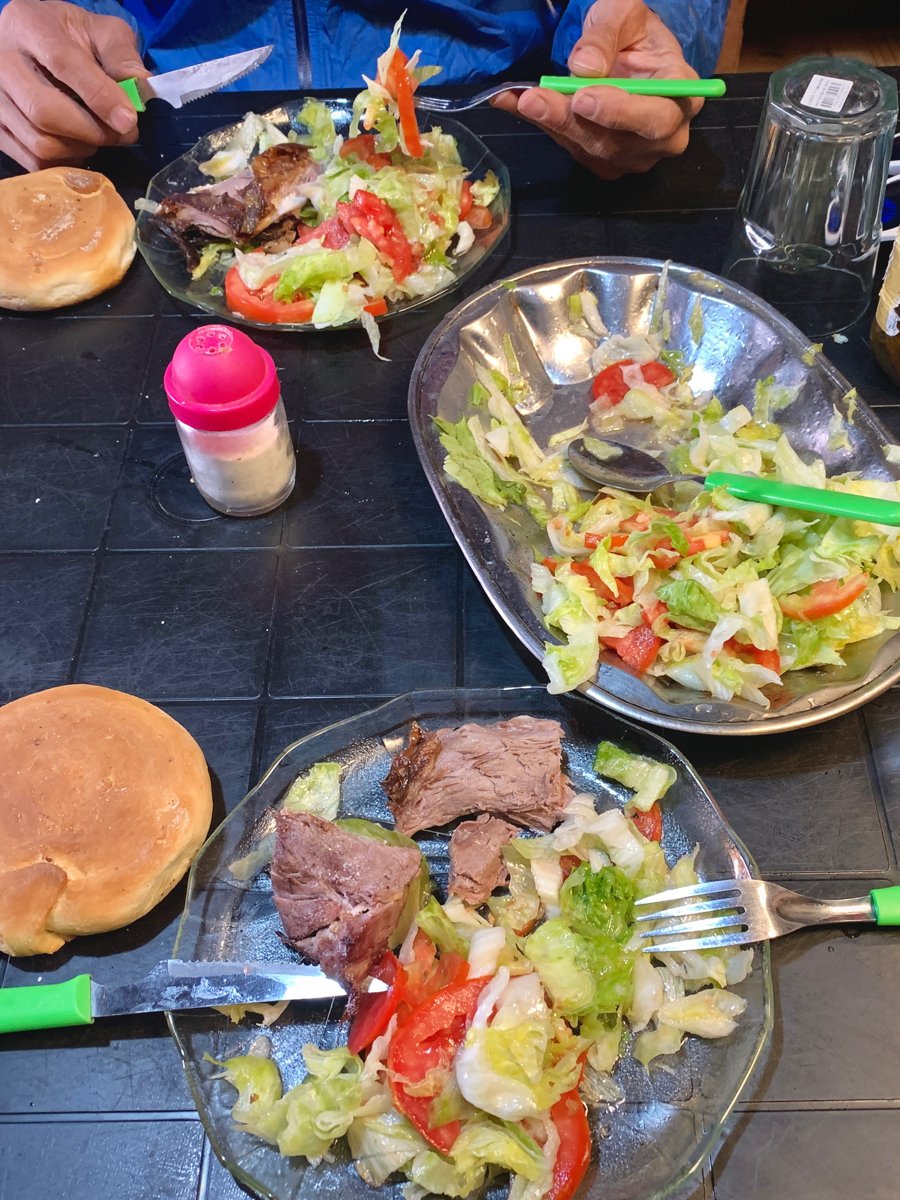
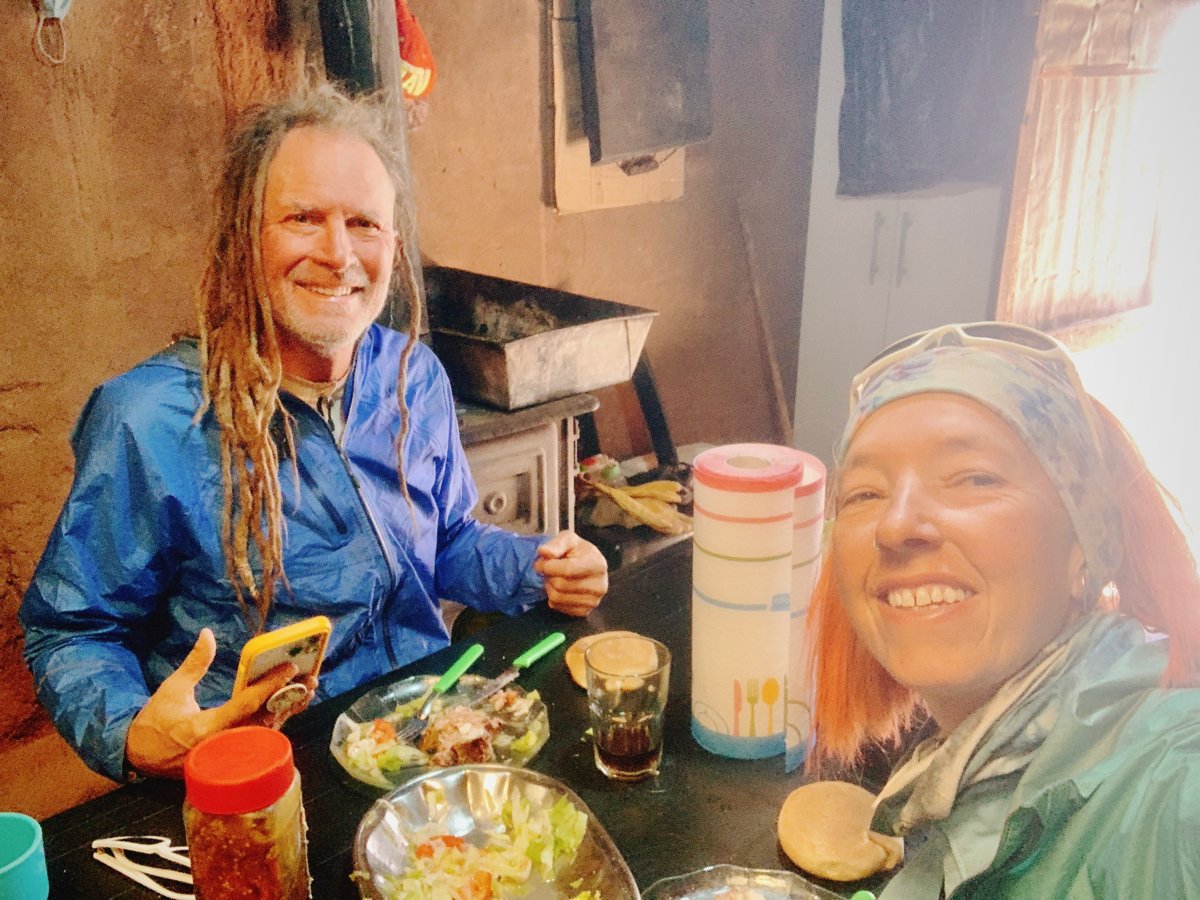
    I savored the warm waking and morning. The miles passed quickly to the Brea Family summer farm. Upon our arrival, we asked for water, and were quickly invited to lunch: lamb meat, salad, and coca cola. There were parts of animals everywhere: innards drying on a wall, hides drying on the porch, a bloody lamb’s head in the back of the bed of a pickup (the carcass inside the cab), various animal preparations in the kitchen (heads, tongue, brains and all being cracked open like a nut). It was a surreal scene.

    I greatly appreciated the meal, and found myself falling into anthropologist mode at the whole scene, indifferent and curious. I was offered candy and cookies from the little boys running around—I never even looked to see what it was, as the only thing I saw was that those little hands had just picked up a bloody lamb’s head that had been rolling around fermenting in the sun in the back of a pickup. I greatly appreciated having this experience, but my knowledge of germs had me keeping my distance.

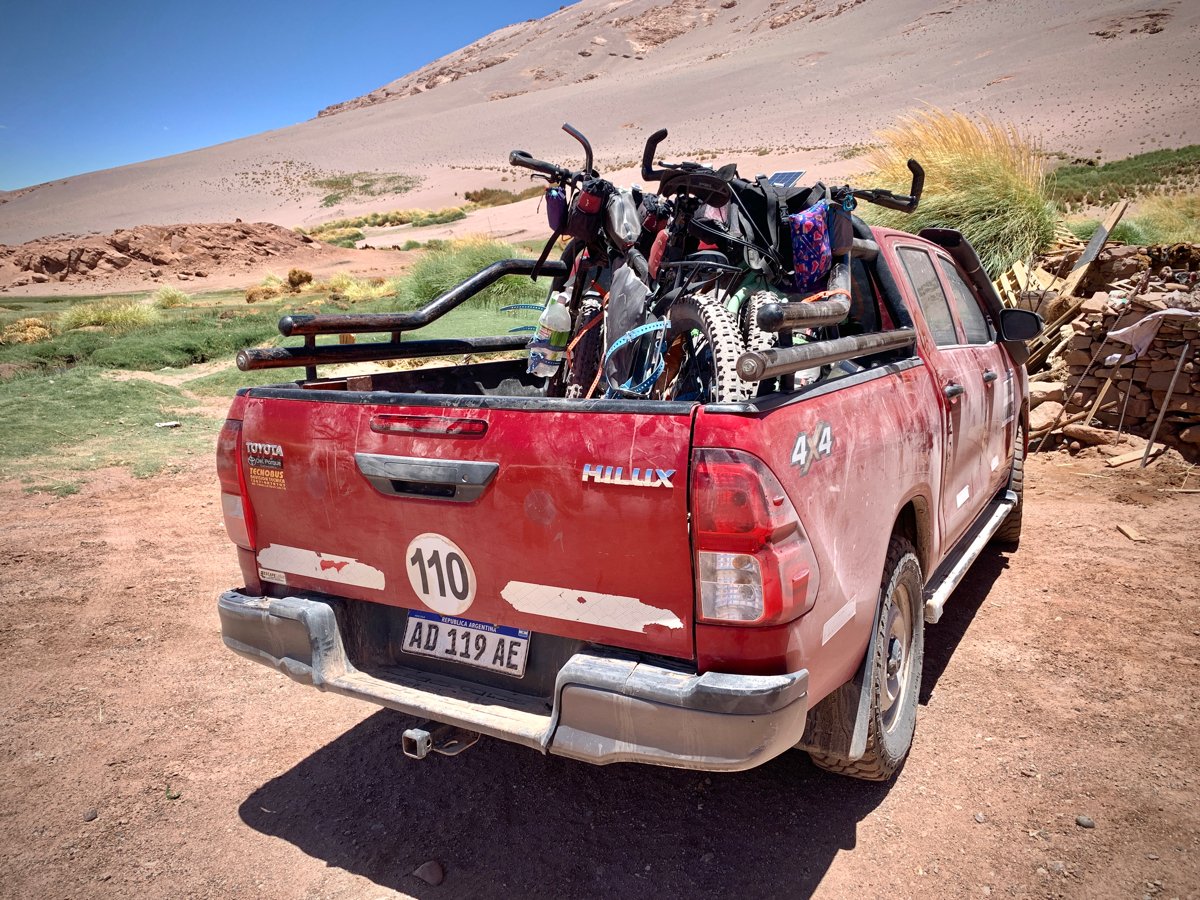
    We rested and were given a ride twenty kilometers down route. Even the ride was surreal, watching the landscape bounce and jiggle by with no effort from my body. It was an immensely enjoyable experience.

    We were dropped off on an alternate to our route, in the heaviest wind we had had yet, late in the afternoon, far from any possibility of a camp. Thankfully it was a tailwind, and twenty-eight kilometers passed in just a couple of hours. We found a desperate camp, behind a short dirt wall in an arroyo, with big storm clouds on the horizon. I slept hard.

    [Neon, in the video: “So, we just got dropped off here. In the middle of nowhere …and it’s got to be like a seventy mile an hour wind.”]

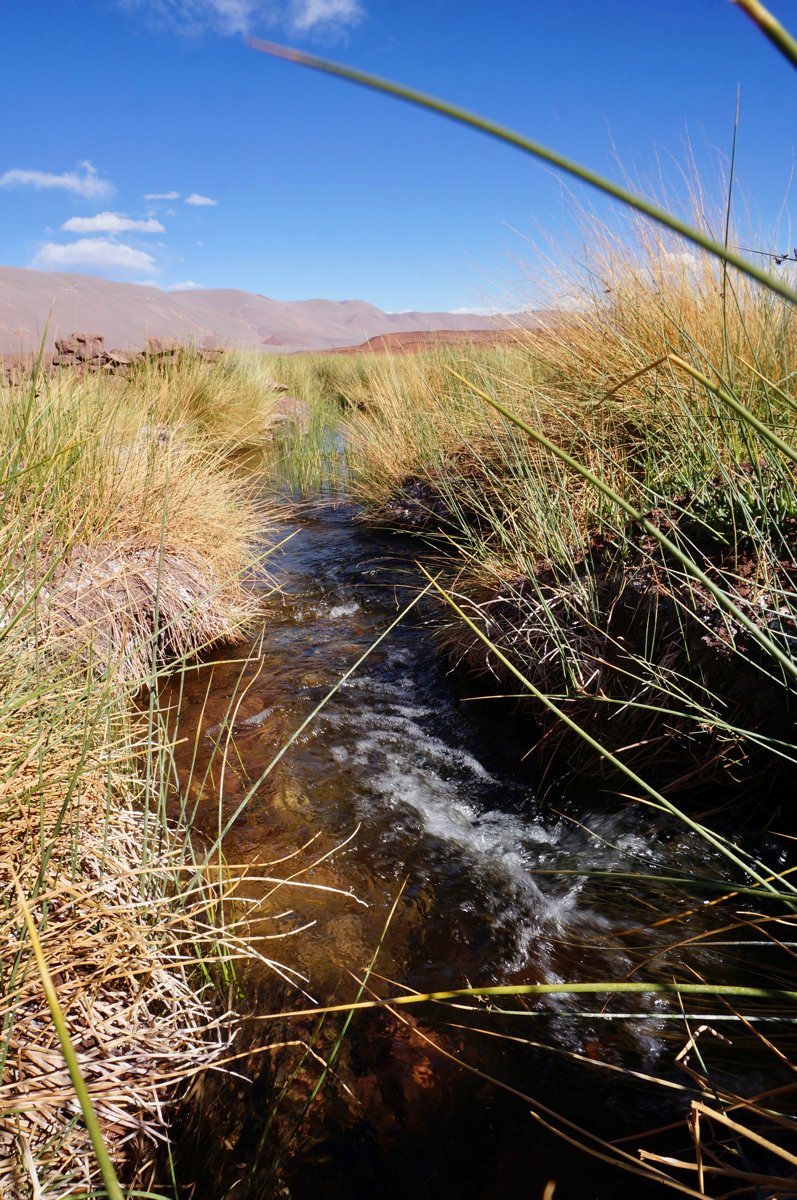
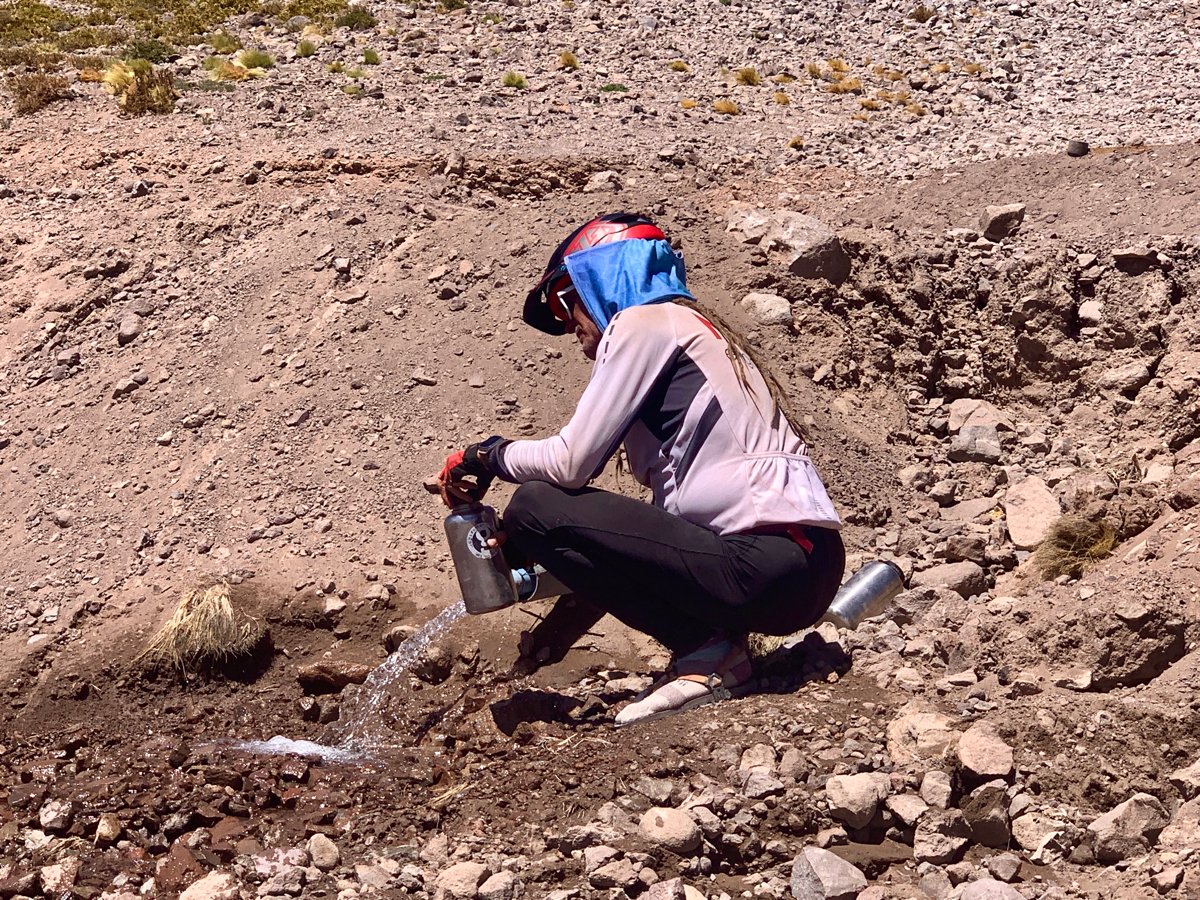
    ~Neon collecting water from the small stream of fresh water that runs through the pampas grass at Vega Agua Dulce.~

    ~Back at the bikes with the fresh water I’d carried down from Vega August Dulce.~

    My body was tired; I could feel it wearing down. I thought I could squeeze out a few more kilometers, and so I tried, but really, things were shutting down and I knew it. You can only embrace so much exhaustion, so much cold, so much seeming rushing, before the body just stops abruptly. My joy was waning quickly. The wind was doing that afternoon thing where it starts to feel like it’s slapping you around just for fun. The day felt like it was stretching into eternity. My will was fading. My sciatic nerve was screaming at me. I screamed out to stop. For everything to stop. For the wind to stop. For Neon to stop. For the exhaustion to stop. For the chill in my bones to stop. My screams fell silent against the wind. I got off the bike and sat in the road, breaking into tears. A moment later I was riding again.

    I pushed my bike up into “the funnel” to the edge of the black lava rocks, where neon was zapping his water with his Steripen. I said “this is a nice spot.” I sat down beside him and started messing with my gear. He said “maybe we should set up the tent tonight”? We both quickly agreed. It was warm inside the tent, out of the wind. We slept hard, and did not budge in the morning until the sun hit the tent, with my famous morning singing “here comes the sun … it’s alright …”

  • Salar de Archibarca to Potrerillo Creek

    Salar de Archibarca to Potrerillo Creek

    THE SHORTEST DAY

    Am I a parasite?

    What do I give back to the earth?

    Is the exploration enough?

    Is it enough to share this with you?

    Is there not value in the beauty and the inspiration?

    The temperature dropped to 15°F (-9.5C) by morning. We waited for the sun to crest the horizon before beginning the climb up to our first ~5000 meter pass. Frank starts first, but we catch up to him by first break. We slowly make our way up to the waypoint marked “Antofalla Basecamp” on our gps track. Frank is struggling with the elevation. The “basecamp” is at 14,605 ft.

    We arrived early in the afternoon at “Antofalla Basecamp”, intending to continue over the pass, but the headwind was already fierce and we were already exhausted. We decide to call it a day after only ~12 kilometers. After an hour or so, Frank announces he feels really bad and is going to head back down and take a different route.

    I spent the afternoon painting, and Neon passed the hours reading. The long afternoon turned into a trail “nero” of sorts. Restless with time, Neon’s anxieties were running high again. Such little progress was made today, his food dwindling down, the route slow and hard. More than any other adventure we’ve ever done, this one has had his hackles raised with deep discomfort, his nerves frayed, his uncertainties exploding. With all that in the air, neither of us sleeps well.

    Waking was hardly better than not sleeping. Another 15°F (-9.5°C) morning—and a way too early start to ensure reaching the pass, and more importantly, descending down the other side—left my fingers brittle-y frigid with little feeling at the tips. My head swimming with lack of sleep once more, nauseous from not eating from the way too cold start, the first kilometers passed slower than necessary. The sun finally risen and warming the earth, I stopped to eat a bar, and shortly after for second breakfast. With more food in my blood, the kilometers started moving at a slightly better pace. The road was sandy and we pushed the last six kilometers to the pass together, the wind growing stronger.

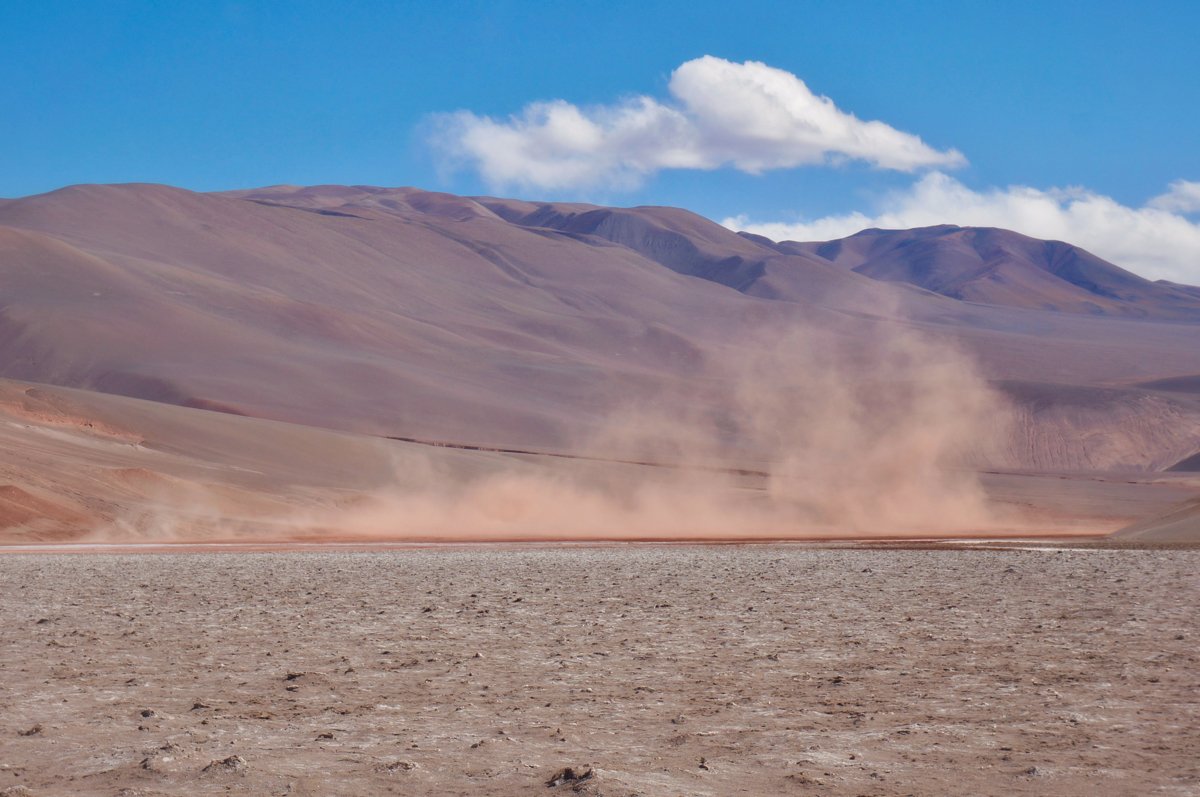
    We made the pass, 5003 meters (16,414 ft), snapped a quick photo and raced down the other side. The road was steep, and the sand deeper. My bike wobbled, having a hard time picking a line in the deep sand. I dropped it coming to a stop. The wind gusting every which way. We found a large rock to break behind. The wind swirled around it in earnest. The wind is not a friend here. It is a mischievous little devil, laughing and taunting.

    We continued down, Neon having better success riding in the the sand with the side gusting headwind. I walked often. Closer to Laguna Patos, the sand improved and we made it to a place to camp behind some rocks.

    I went to bed chilled, the wind blasting. I never got warm, and the temperature dropped again to 15°F (-9.5°C) by morning. We rushed out of camp early again. My fingers left with no feeling. A four hundred foot climb. A slow start. The sun emerged. We ate. Changed our outfits. Repacked. And began again.

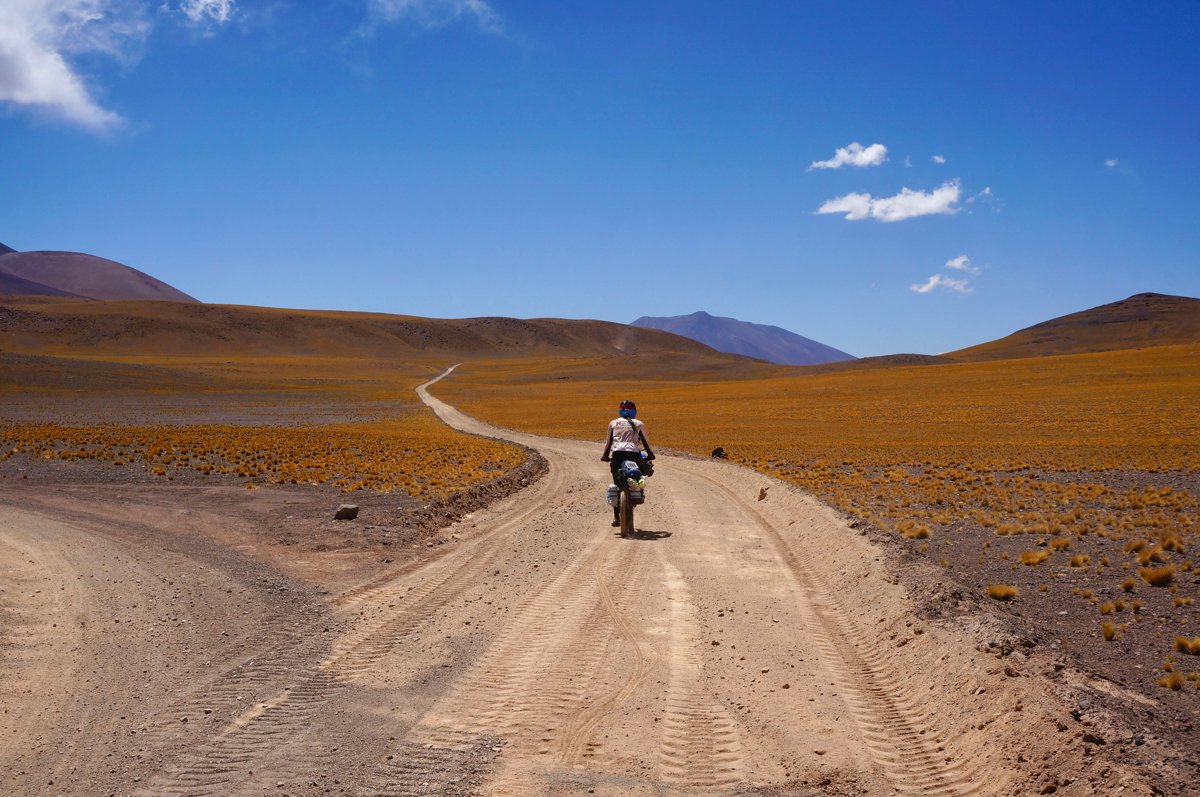
    The descent down the other side was relatively firm and we made good time. The fast descent improved our moods. We stopped for a warmer break near Laguna Cajeras. Burros stared curiously at our presence. The route climbed slightly and we wondered if it would be rideable or sandy. The wind blew at our backs, and we climbed with ease. The wind blew so hard, there were times my speedometer reached speeds greater than 20 kilometers/hour without even pedaling.

    The wind was gusting hard by the time we reached the pass and the “Dune of Doom”. The “dune of doom” is a steep sandy ~cliffside with a singletrack line that descends very quickly, and did I say steeply?! And like one of those unbelievable scenes in a movie, somehow the shock cord on my seat/rack bag got wrapped, several times, around my rear hub, which I didn’t notice until the wind was trying to blow us off the “dune of doom”. I had to cut it in two places before I could untangle it from my hub. Thankfully, the wind subsided some as we descended down the sandy face. Have I mentioned that you cannot trust the wind here?

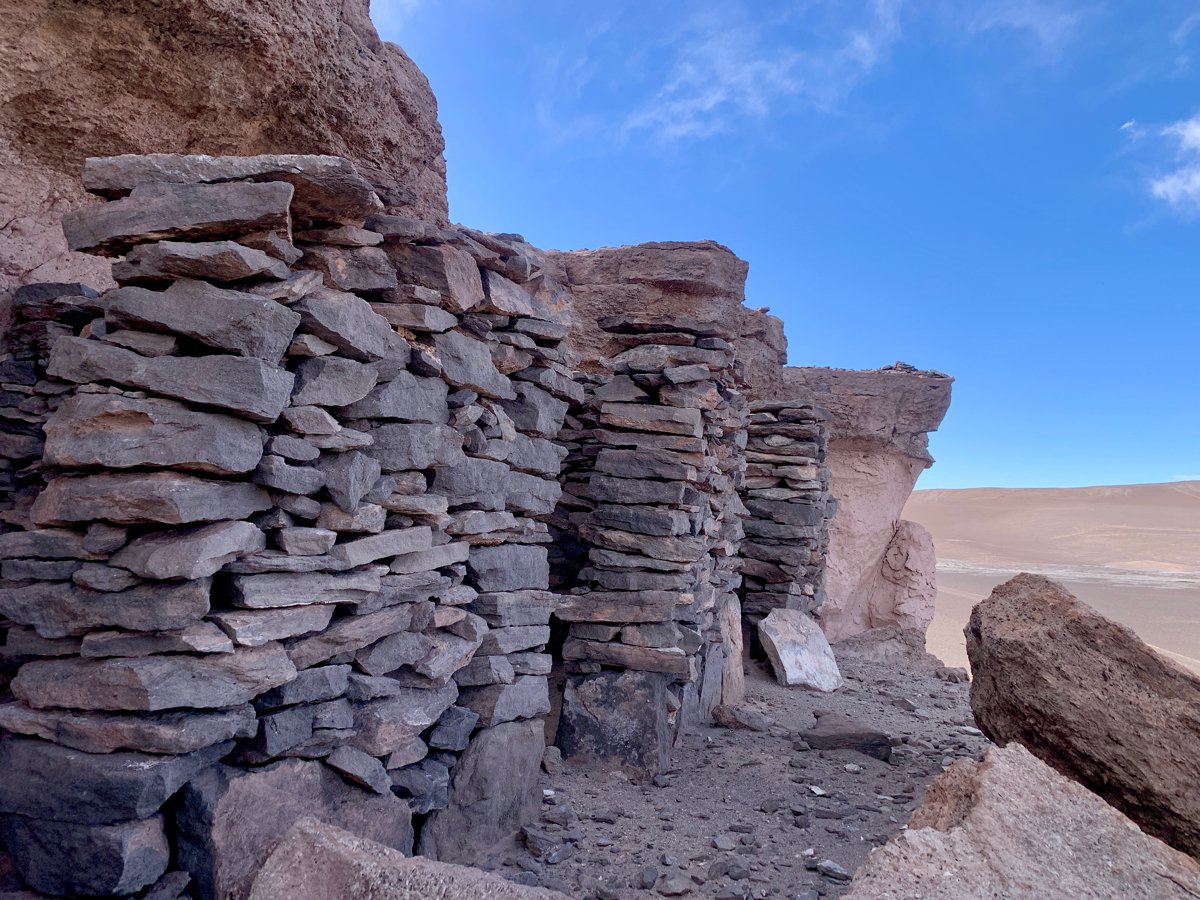
    Slight up, then nice rolling down into the next valley at the northern end of the Salinas del Fraile and Potrerillo Creek. It was still early and the air was warm. More burros stood curiosity at our presence. We set up camp in some rock ruins near the creek. We washed in the water, cleaned some clothes, and gathered water. The freezing morning seemed a distant memory and the warm sun improved my mood. The next morning we waited for the sun to rise before crawling out of our sleeping bags. It was a civilized waking.

  • Mina La Casualidad to Salar de Archibarca

    Mina La Casualidad to Salar de Archibarca

    Just as we rolled away from Mina La Casualidad, Neon discovered his tire was flat. He tried pumping it up, but it wouldn’t hold air. He finally added more sealant, which seemed to fix the issue. A long descent brought us to Salar de Rio Grande. It was hot and Neon had to stop several times throughout the day to add more air to his tire, discovering the leak was at one of the spokes.

    What was supposed to be an easy day turned into a long, bumpy, hard ride to our next campsite, waypoint label “Epic Spot to Camp Next to Cliffs”.  Frank and Steph were already there when we arrived. And epic it was. A beautiful flat spot nestled up in the cliffs, with warm clean fresh water flowing nearby. Neon and I spent the remaining afternoon washing our bodies and clothes, and gathering and treating 12 liters of water each.

    The night and the morning were warm. Frank and Steph headed out first, wanting to investigate a possible shortcut that avoids the next pass. Neon and I took the standard route. Soft, steep, sand became the theme as we slowly climbed the day’s pass. The bikes still heavy with food, and now another three-day’s supply of water too. It was a difficult push to the pass. Half way up, Steph and Frank came up from behind—the shortcut was a bust. Steph blows by, fast and strong, and the last time we see him.

    Near the top of the pass I watch the wind dance across the horizon. My gaze fixated, its movement mesmerizing, like a genie without a bottle. Frank is struggling with the sand and we ride some of the afternoon, after the pass, together.

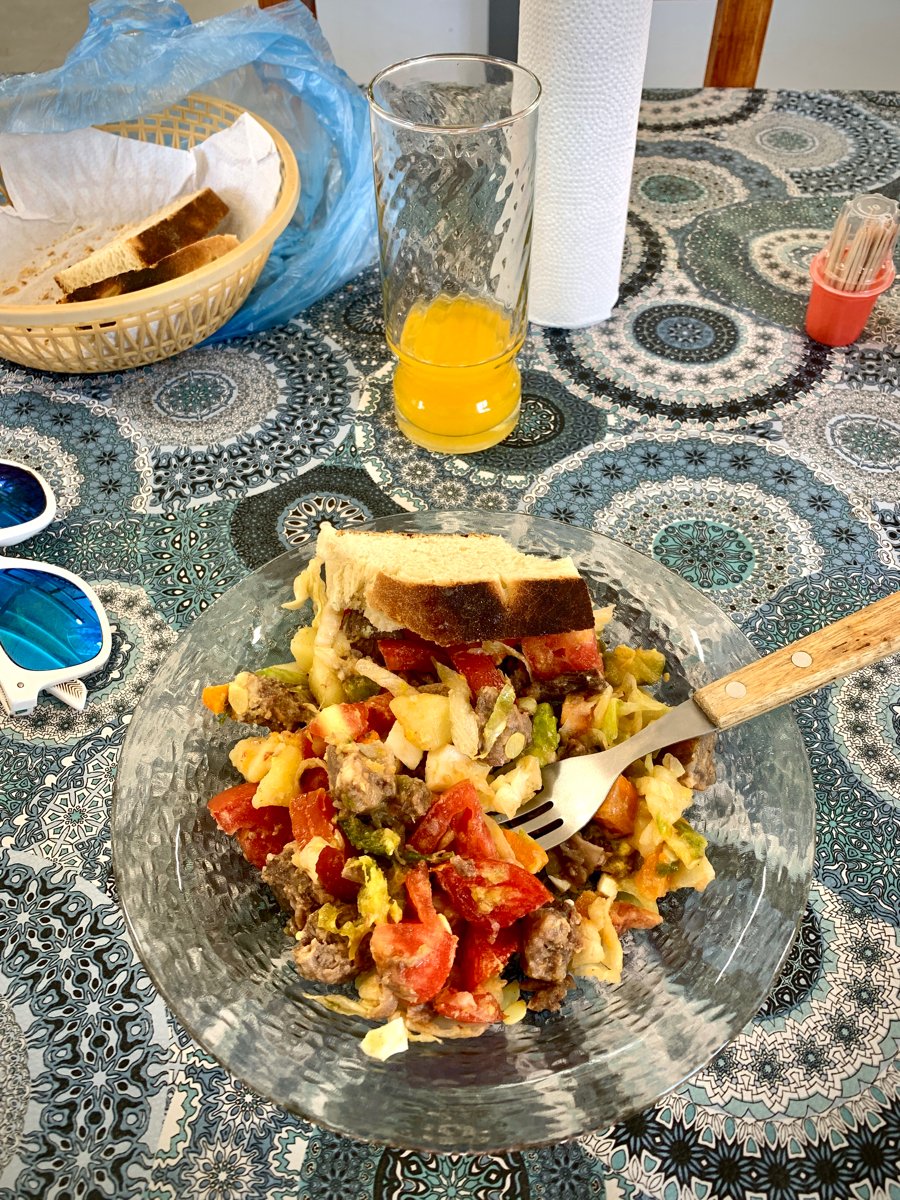
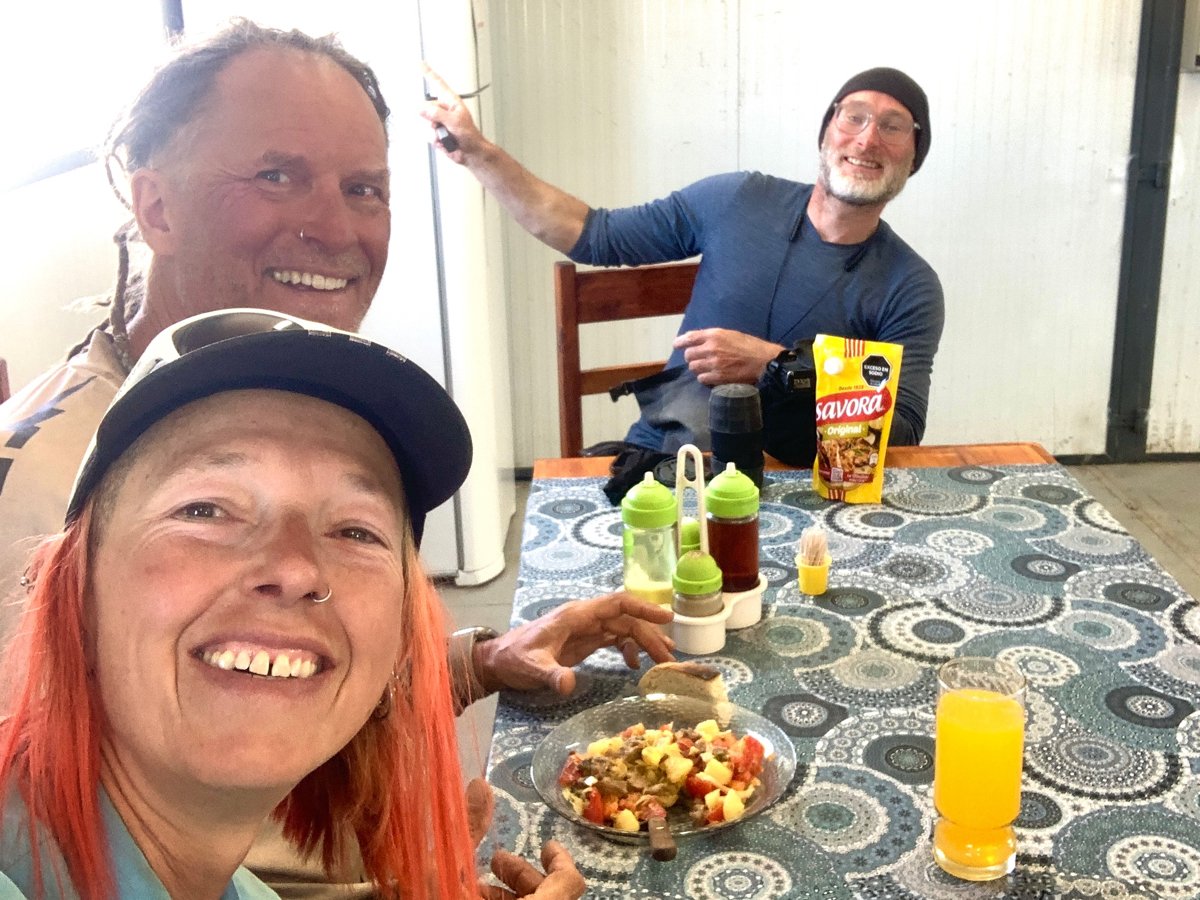
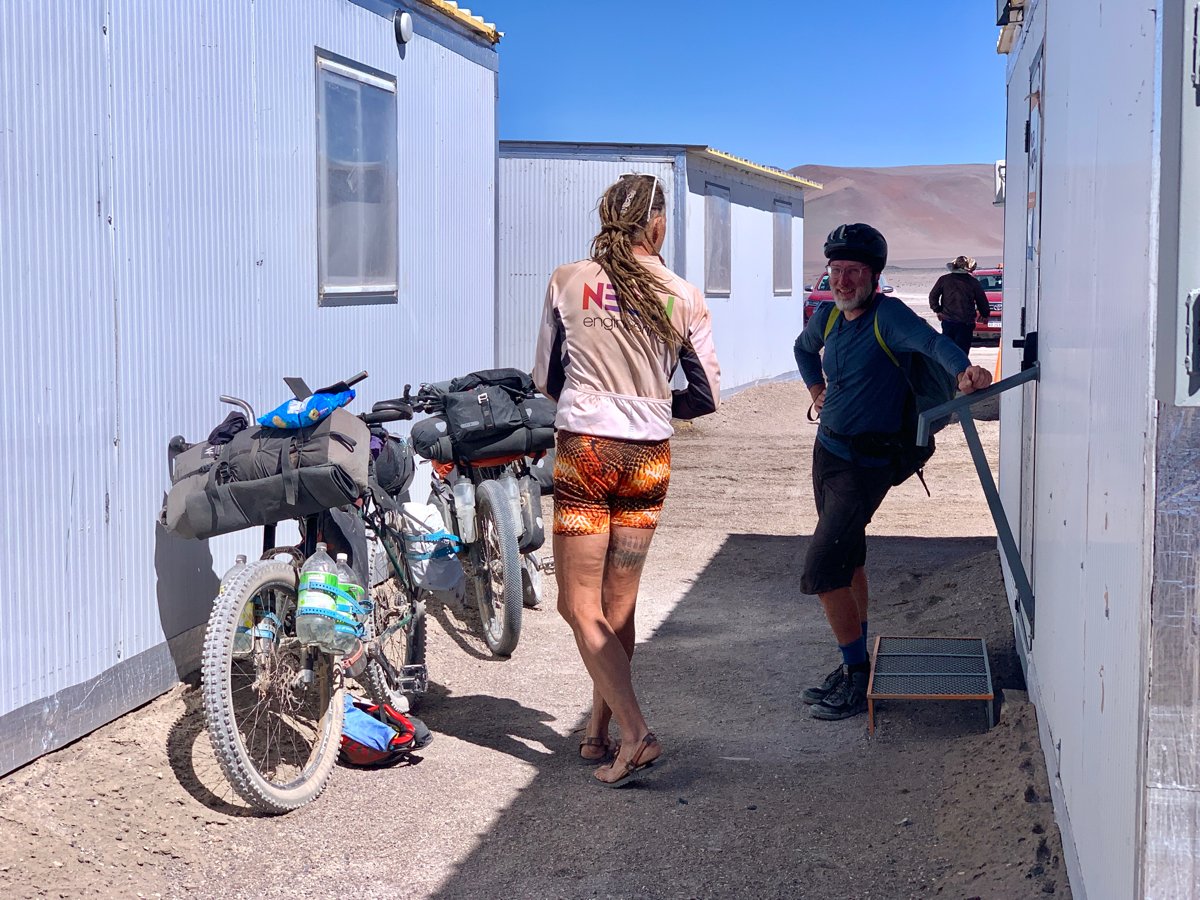
    As we draw nearer to the evening’s camp, we pass a small mining encampment. They honk and catch up to us to tell us they have food and showers. I’m blown away by how they chased us down to feed us. When we get back to their camp they have stew and salad and juice and bread waiting for us. It goes down in one bite, real food with fresh vegetables! Then they give each of us two oranges, an apple, and a bag of cookies, and offer to take our trash too.

    Even after arriving at our camp, a few miles away, I’m still blown away by how the miners chased us down to give us food. The people along this route have been more generous than any I’ve ever met on any of the trails we’ve hiked or biked. On the long trails in the U.S. we call them “trail angels”.

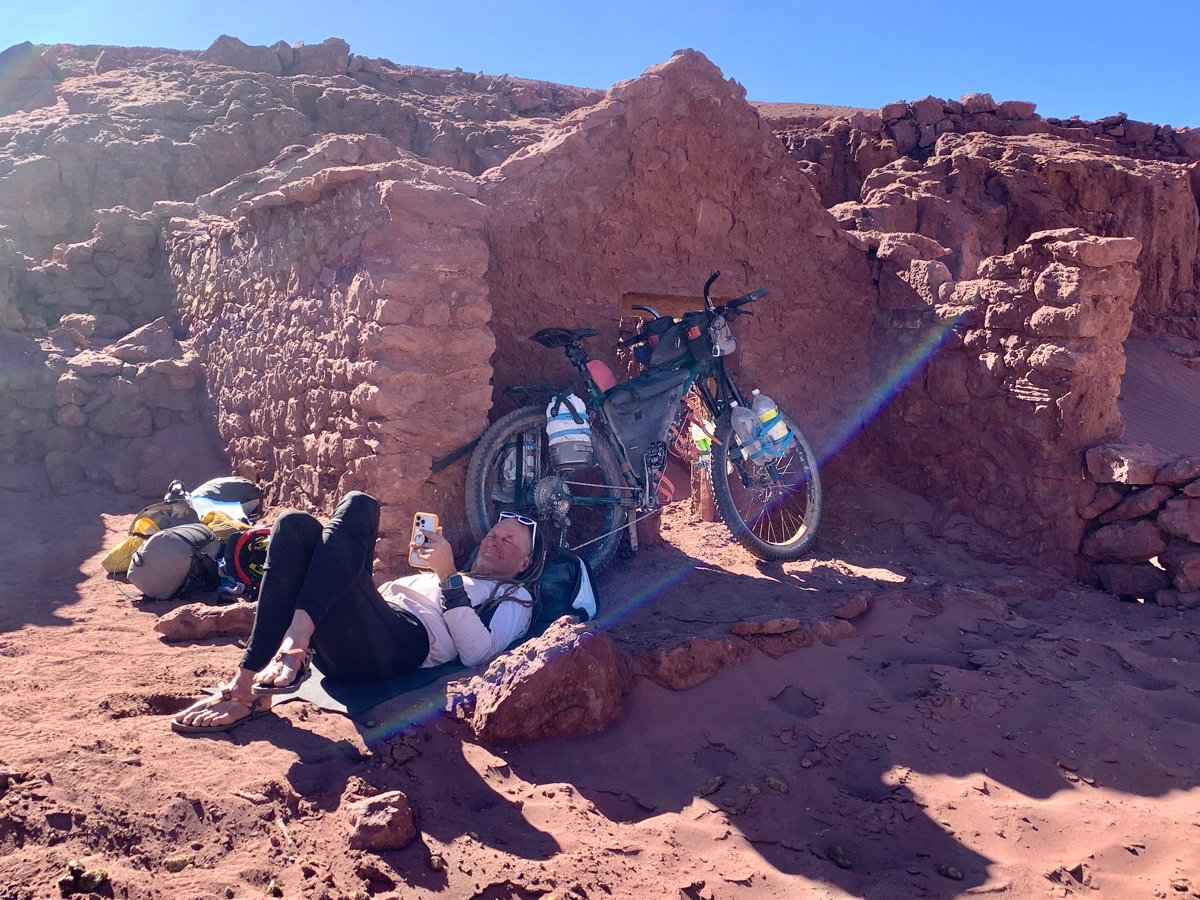
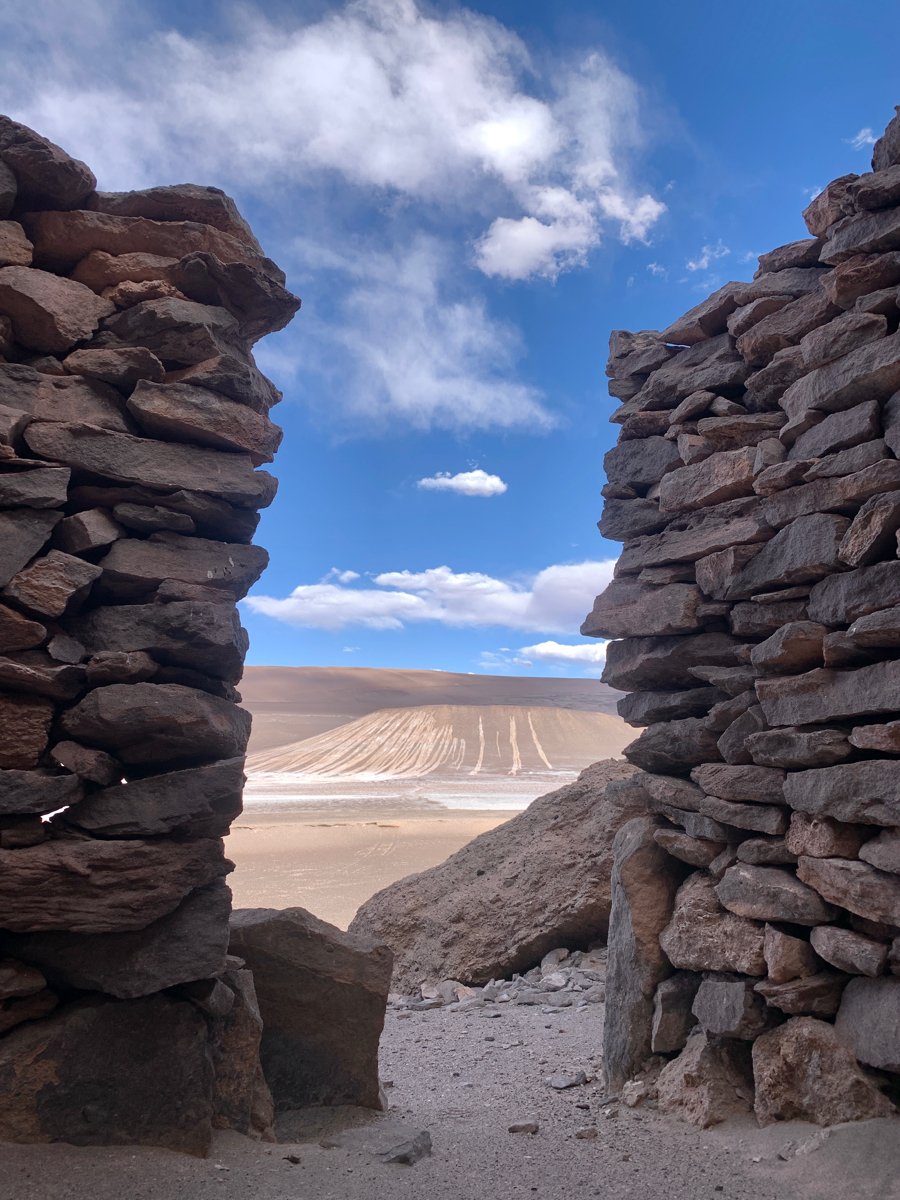
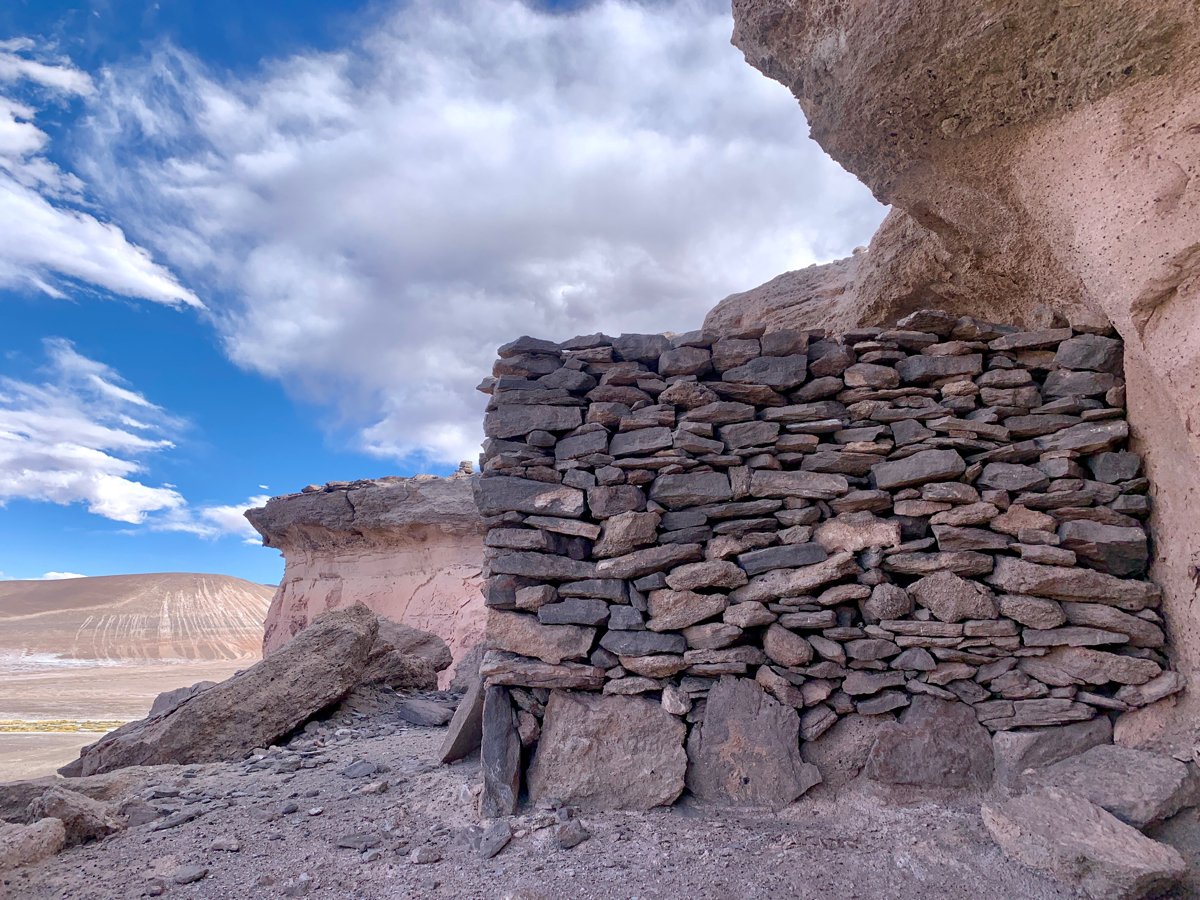
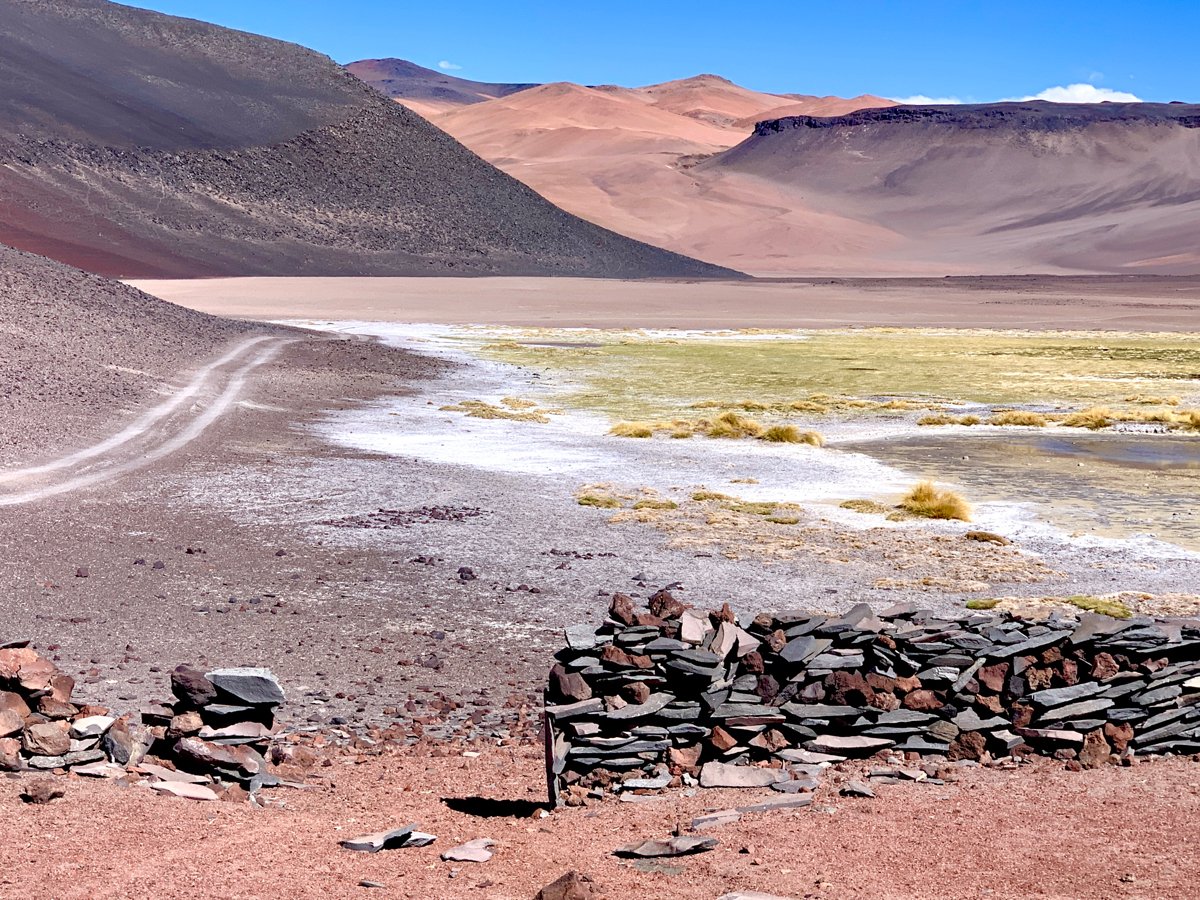
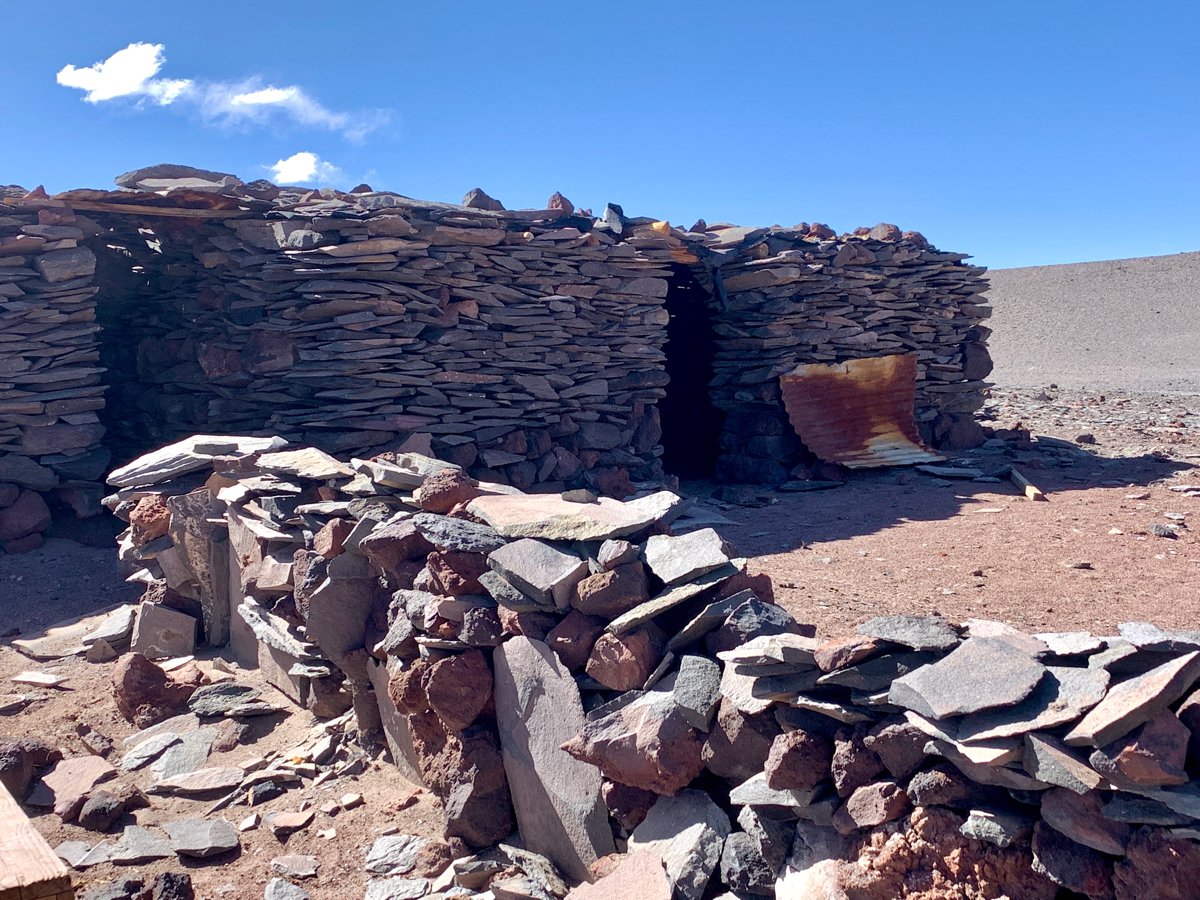
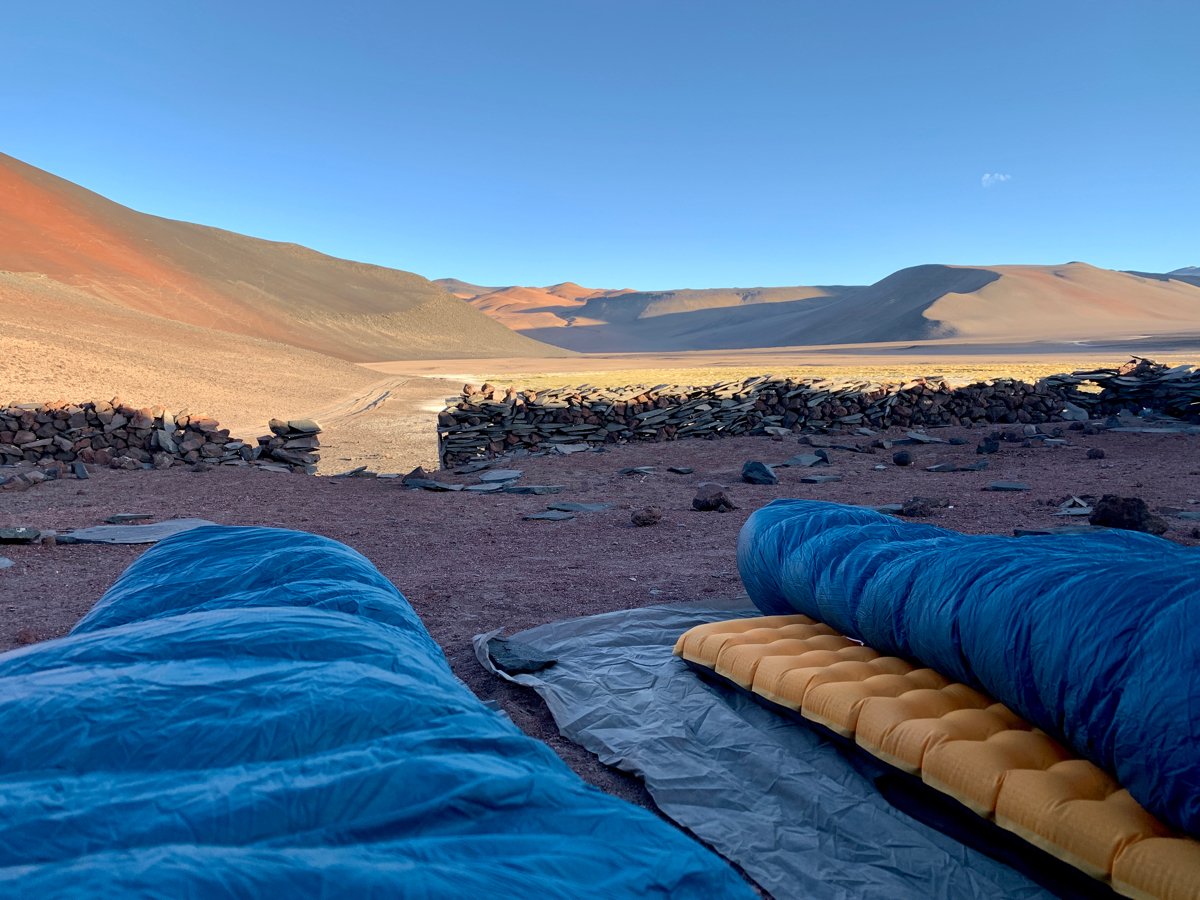
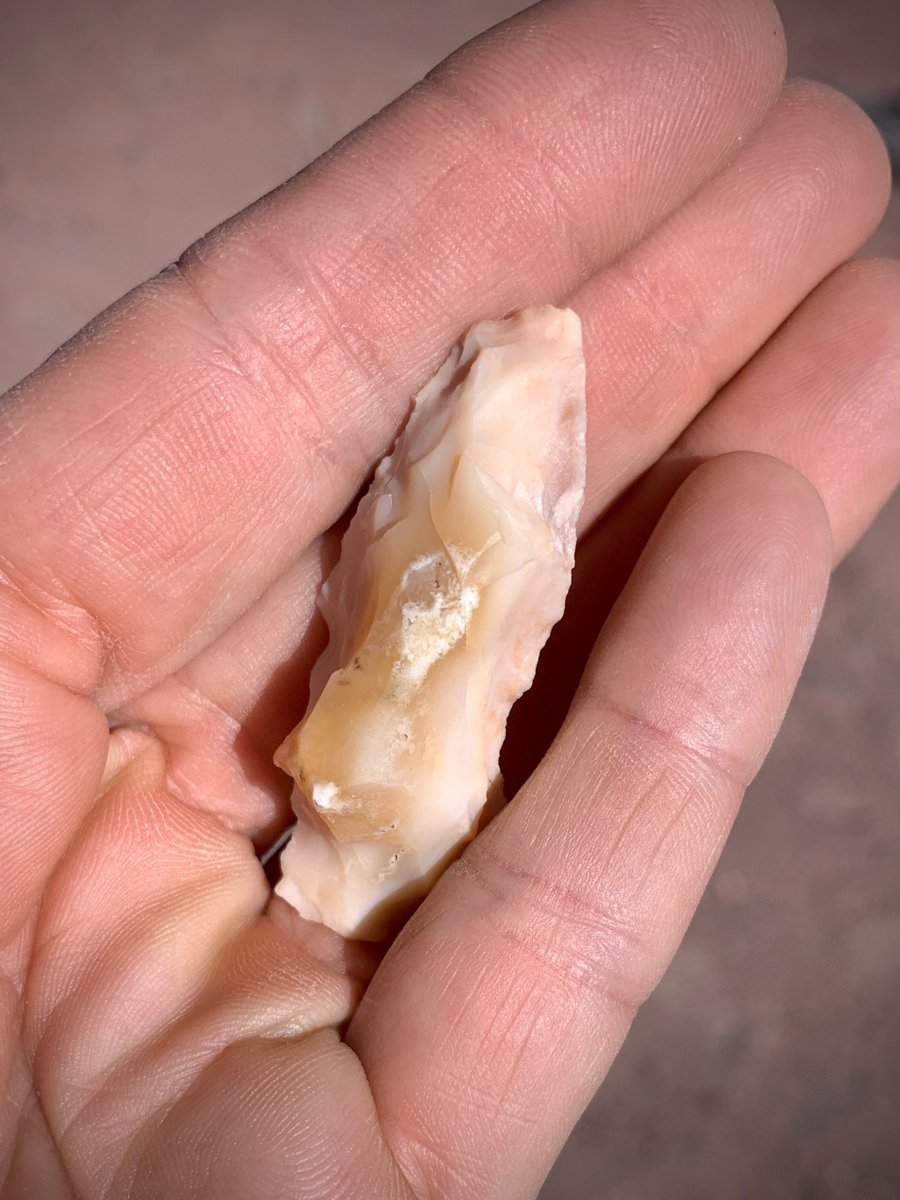
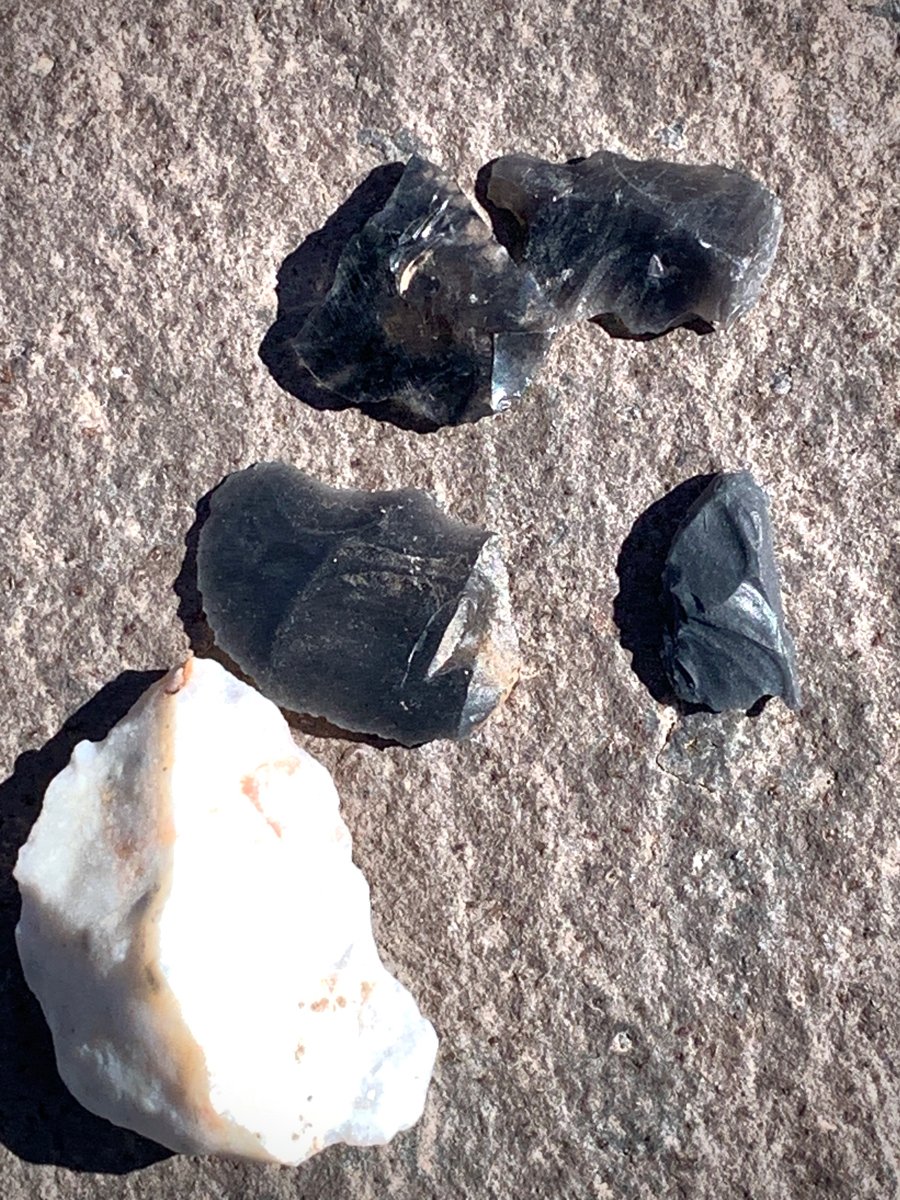
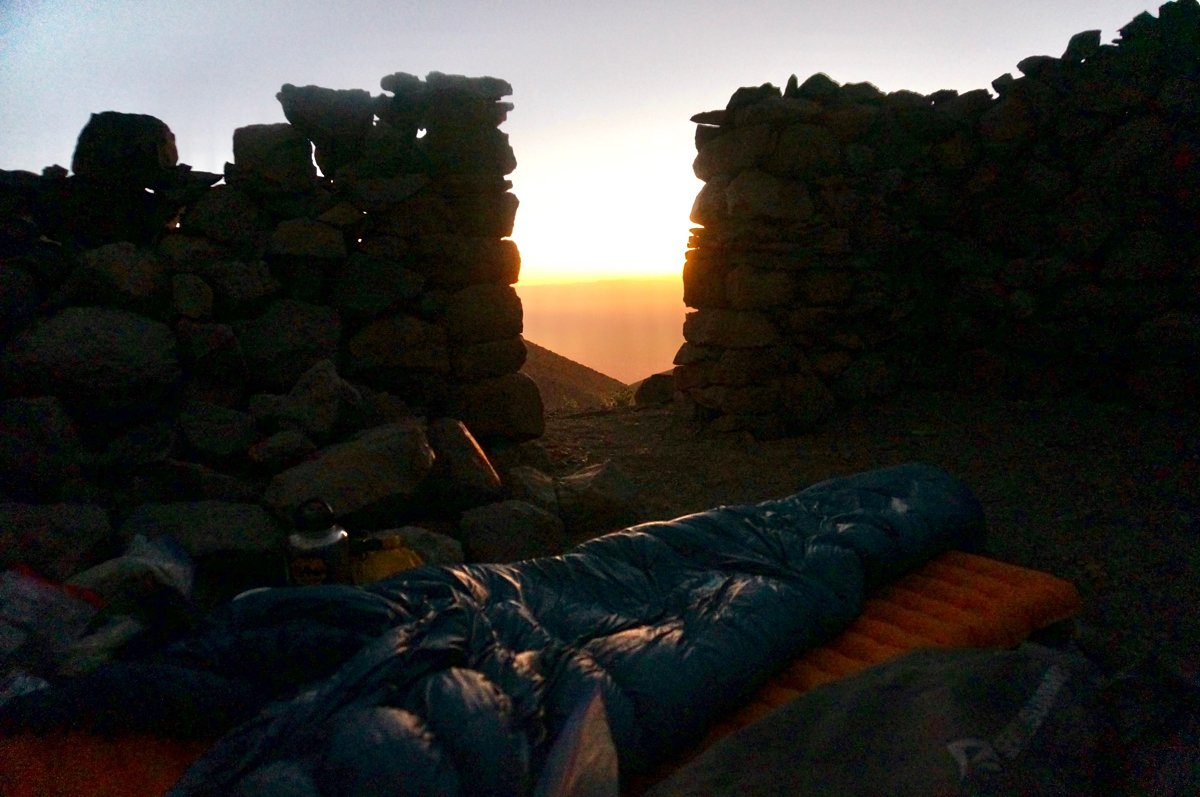
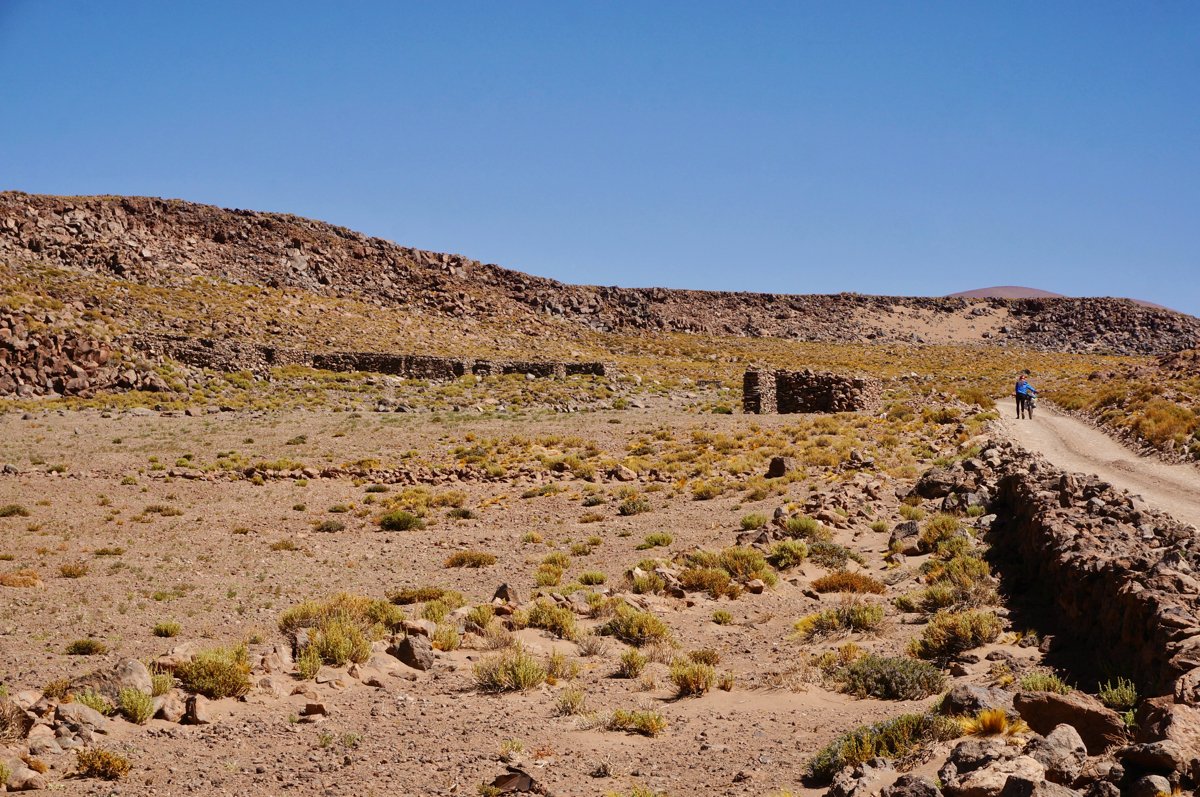
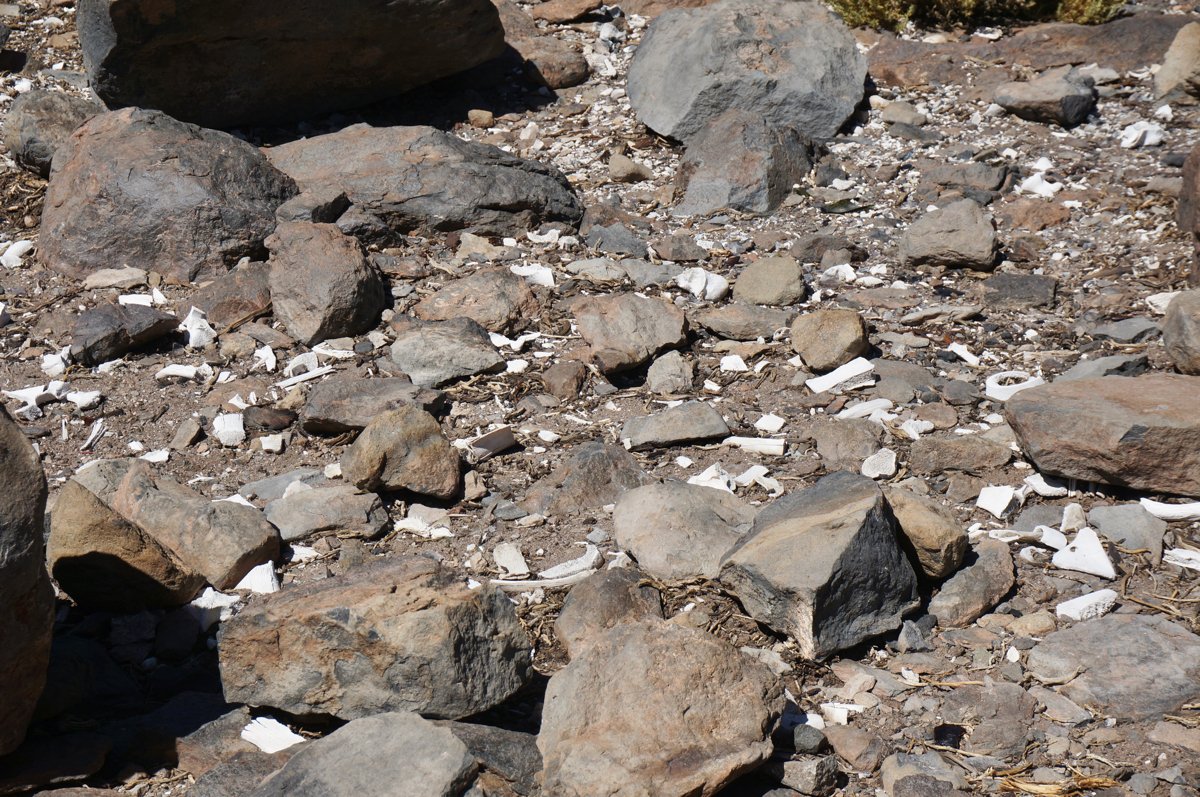
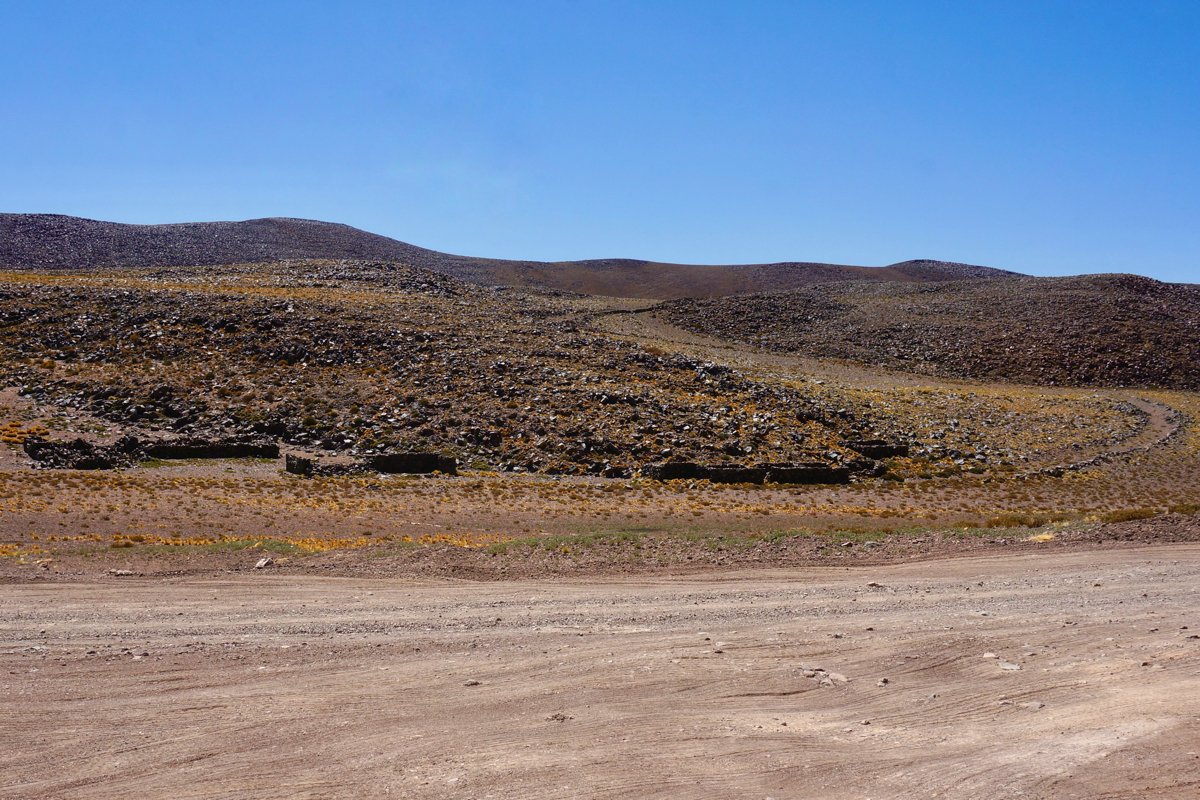
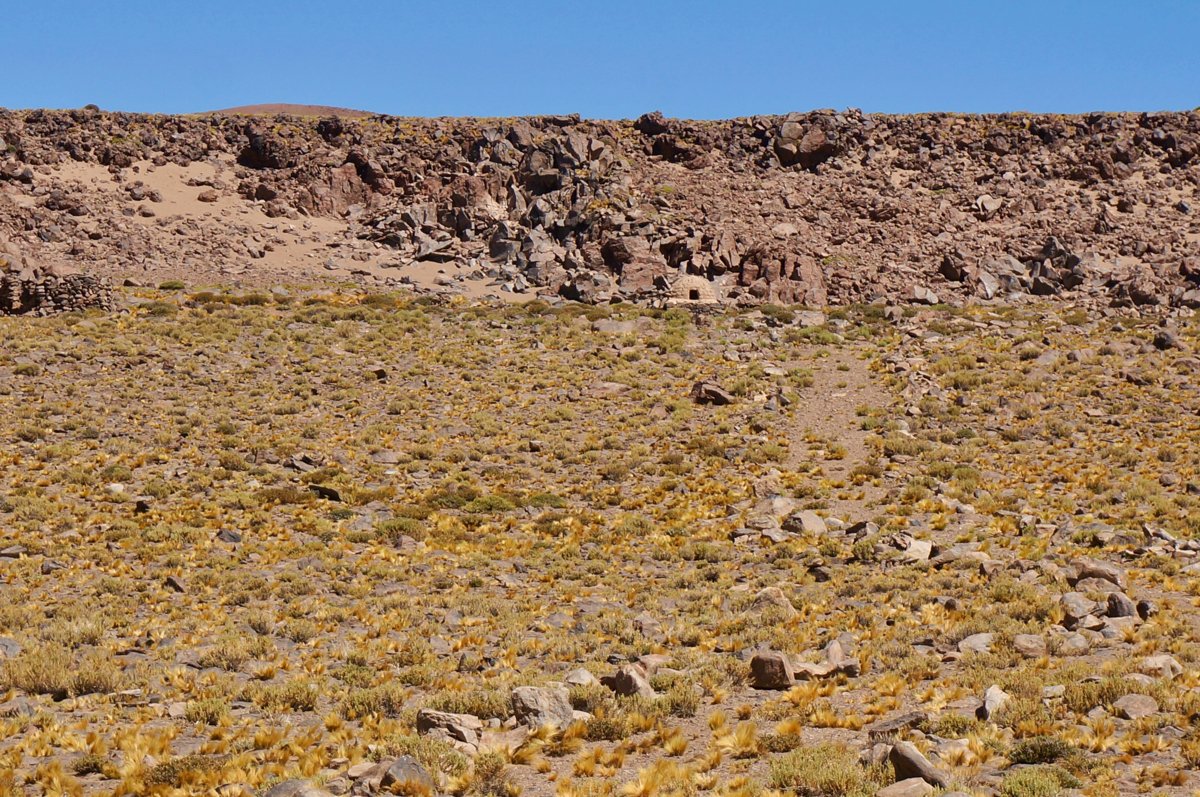
    We camped inside some old stone ruins at the far end of Salar de Archibarca. There are a couple of small rooms and a large area enclosed by a short rock wall. It blocks the wind completely. Around the enclosed rock wall there are knapping shards everywhere, hundreds of them. At first I think they are made of obsidian, but then decide perhaps they are made of onyx. It’s warm in the sun. I watch the vicuña in the nearby water. I ponder the knapping shards, wonder what this place was, and who once lived here. I think this is my favorite camp—there’s just something haunting about this place.

    I wake in the night to flashes of light over the mountains. Neon wakes too and says the flashes are lightening in a storm on the other side of the mountains. But they’re otherworldly, more like seeing the northern lights for the first time, than just looking like lightening. Nothing out here is ordinary. And the stories forming in my thoughts are extraordinary, mysterious—so many oohs and ahs and woahs! The sky is clear and full of stars, more stars than I’ve ever seen anywhere. The flashes of light continue, greenish-yellow flashes here and the there and then over there—and with each one I let out a low “woah!”. It’s like I’m watching my very own private light show. I watch until I can’t keep my eyes open anymore. The last thing I remember was a shooting star, fat and a little yellow, falling with a slow burn.

  • Iglesia Vega Socompa to Mina La Casualidad

    Iglesia Vega Socompa to Mina La Casualidad

    Ruta de Los Seis Miles, Norte

    From Iglesia Vega Socompa we were finally heading south on the original Ruta Seis Miles Norte bikepacking route. We had backtracked several kilometers north to get to here, as close to Chile as we could on the original route. The Ruta Seis Miles Norte bikepacking route was recently rerouted due to the border crossing at Socompa not having enough staff to process non-essential border crossings.

    After our late start the previous day we decided to start at daybreak today. The morning started out colder than we had anticipated, dropping to 27° F (-3° C) at Laguna Socompa. We quickly learned that early starts equal unnecessary freezing. By afternoon we had climbed 2600 feet, reaching 14,347 feet, before dropping into the next valley, near Llullaillaco.

    ~Llullaillaco dressed in afternoon light.~

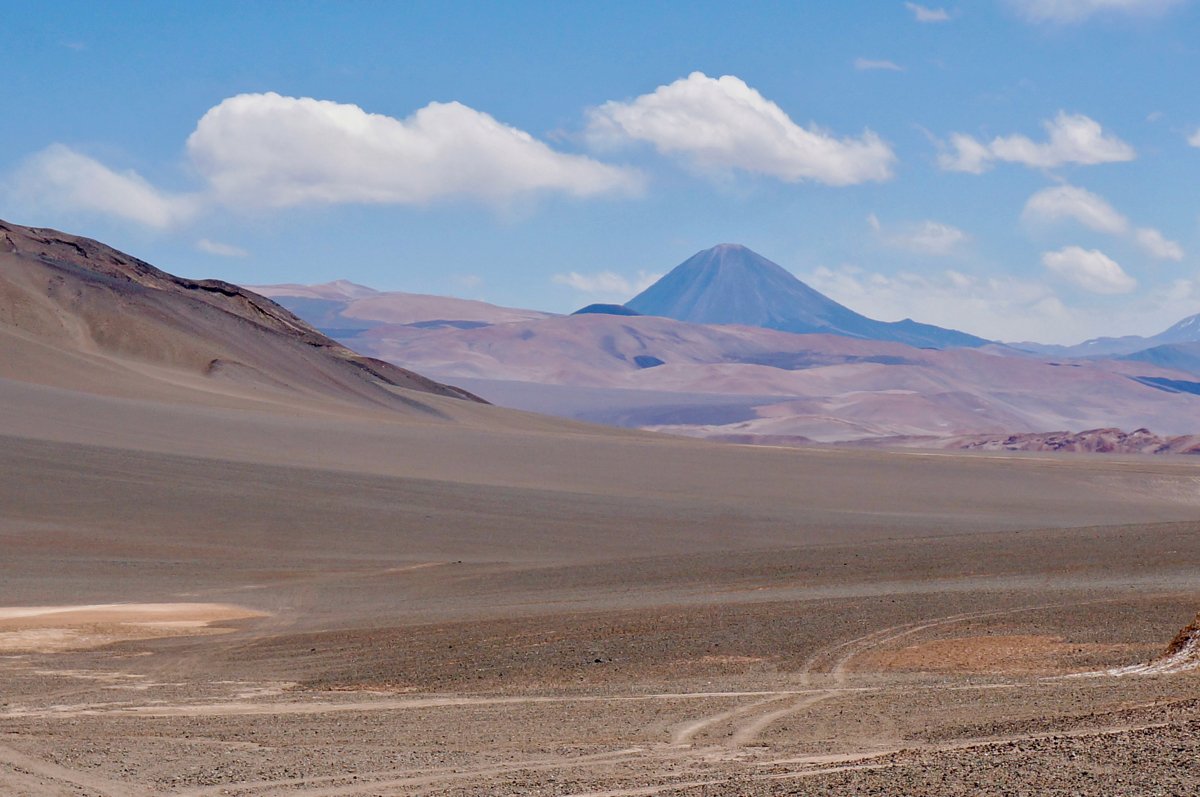
    Neon’s anxieties were running high. We decided not to attempt a climb of Llullaillaco, thinking at our pace we might likely run out of food before the end of the route. A disappointment and a relief emerged from that decision—knowing we’d likely never get the chance to walk this mountain again. And I had grown quite fond of it after all my research. I felt a little as if I were abandoning a life-long friend. Funny how some mountains just get under my skin. If I were to come back to climb any of the mountains along this route, Llullaillaco would be at the top of the list.

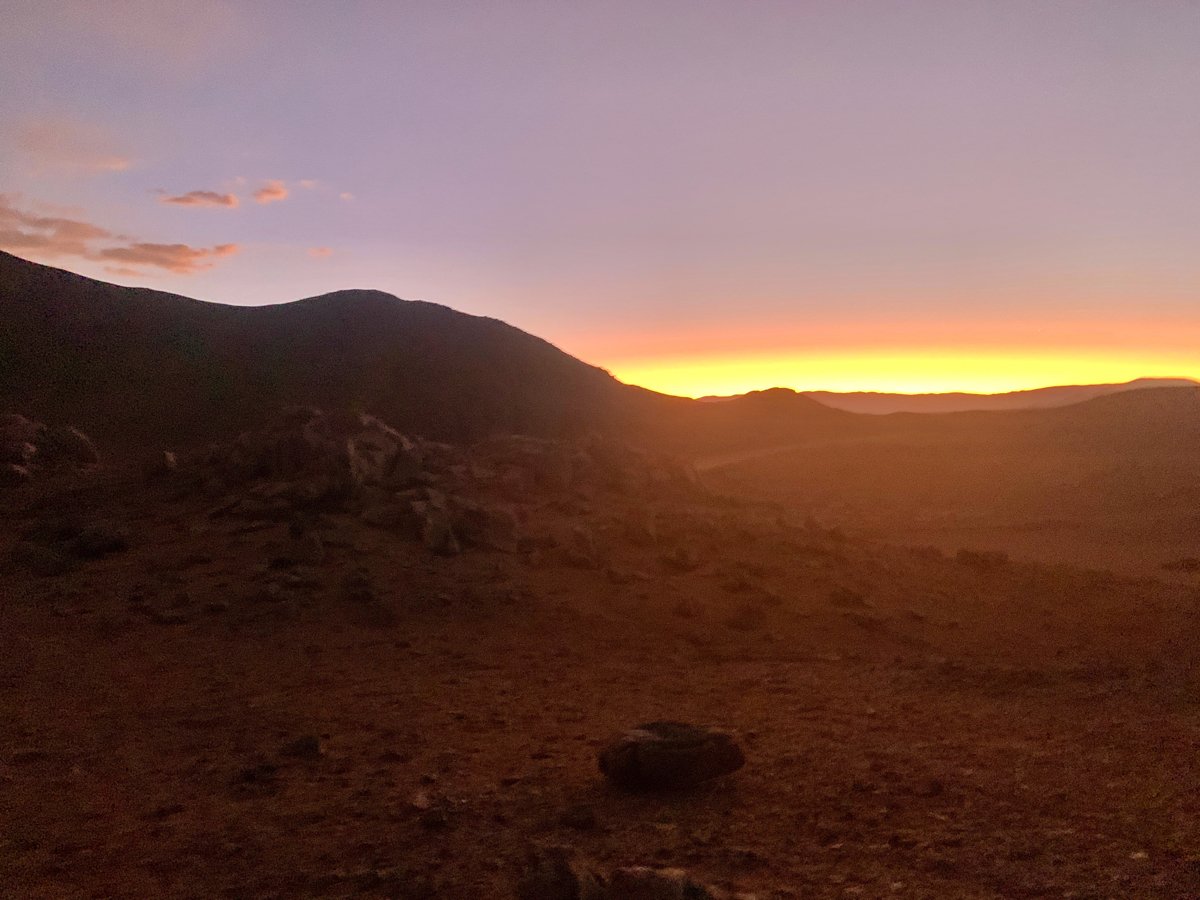
    We stopped late afternoon and spent the next hour building a short rock wall to camp behind. Cowboy camping is cold out here, but the night’s sky absolutely glorious. I see Orion’s Belt first, then Pleiades; two familiar constellations. And later, a whole mysterious speckling of stars appears, denser than any I’ve ever seen. By morning, the Southern Cross is prominent. At 18°F again, these morning temperatures are several degrees colder than the rating for my sleeping bag. Waiting for the sun to crest the ridges makes these freezing mornings tolerable.

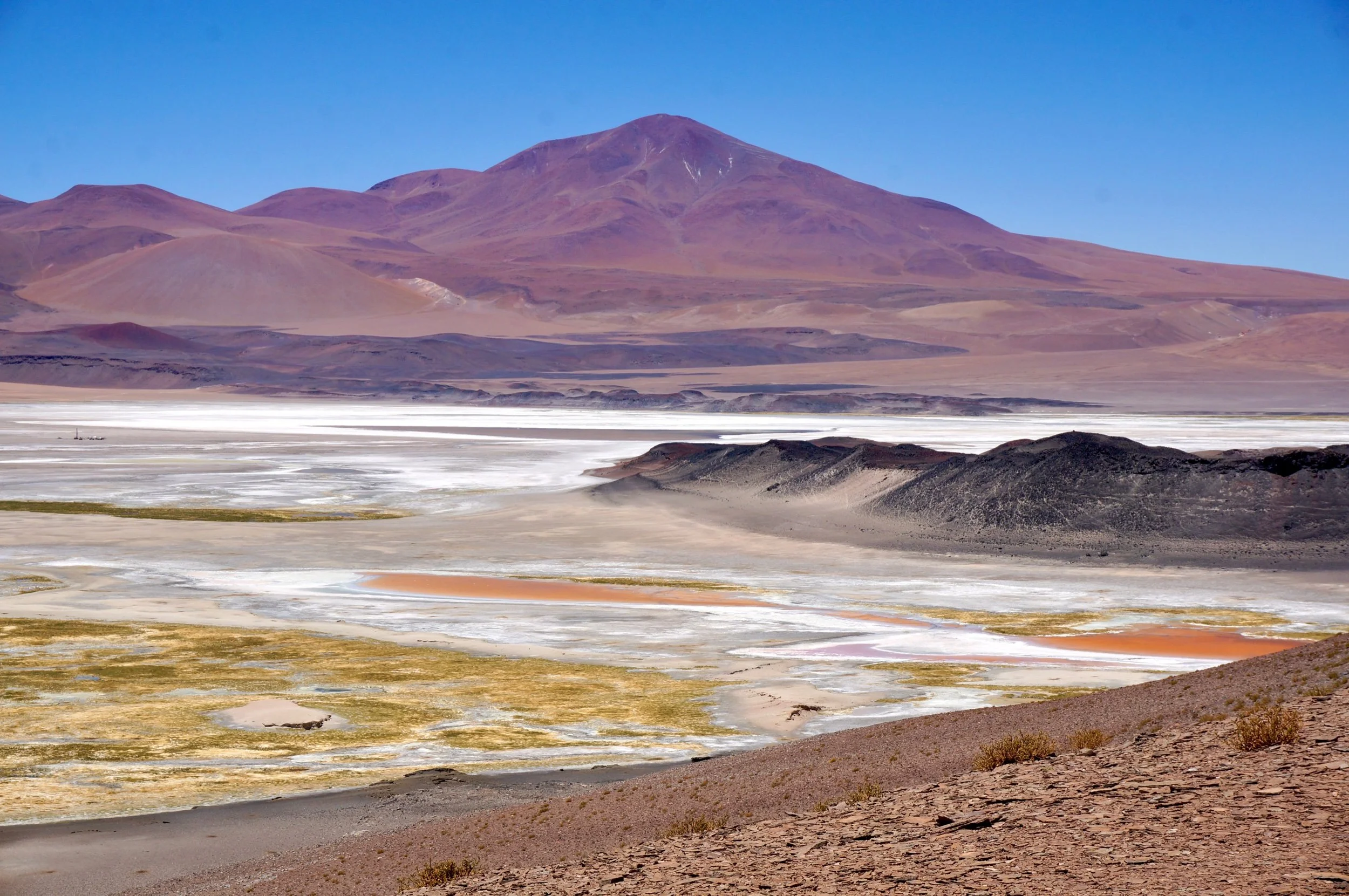
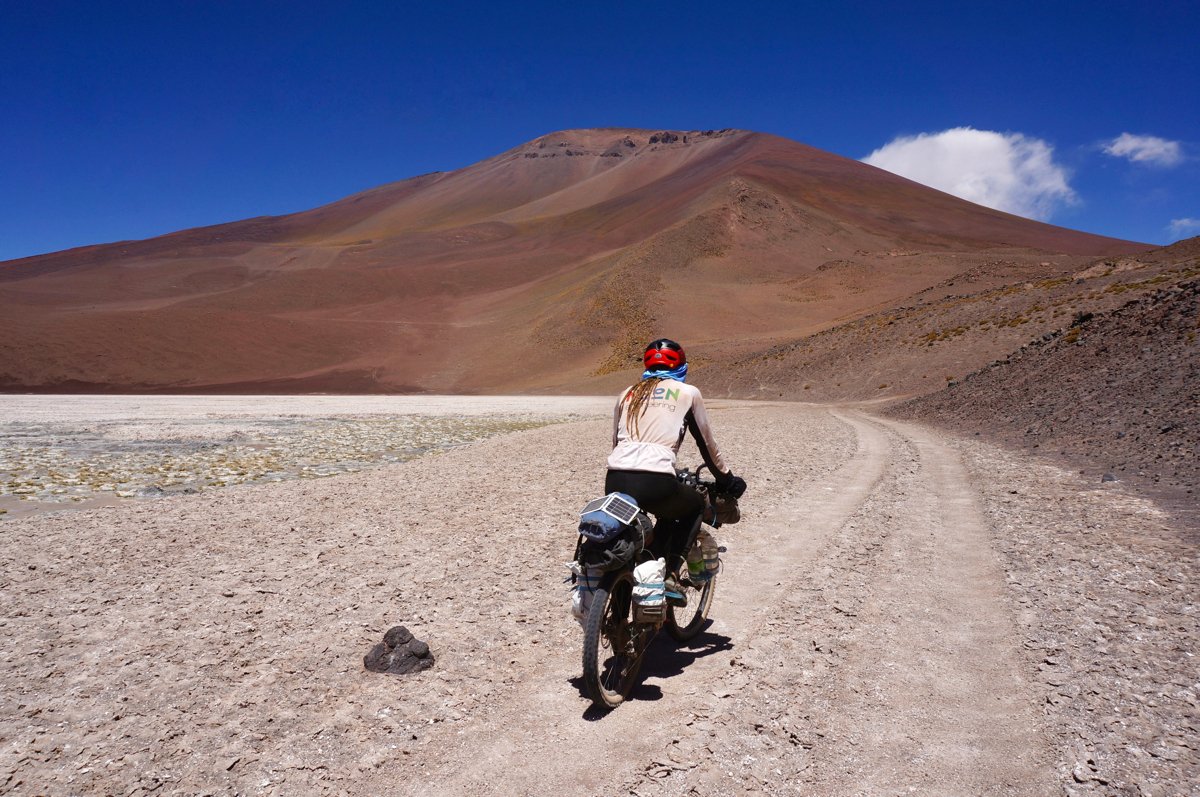
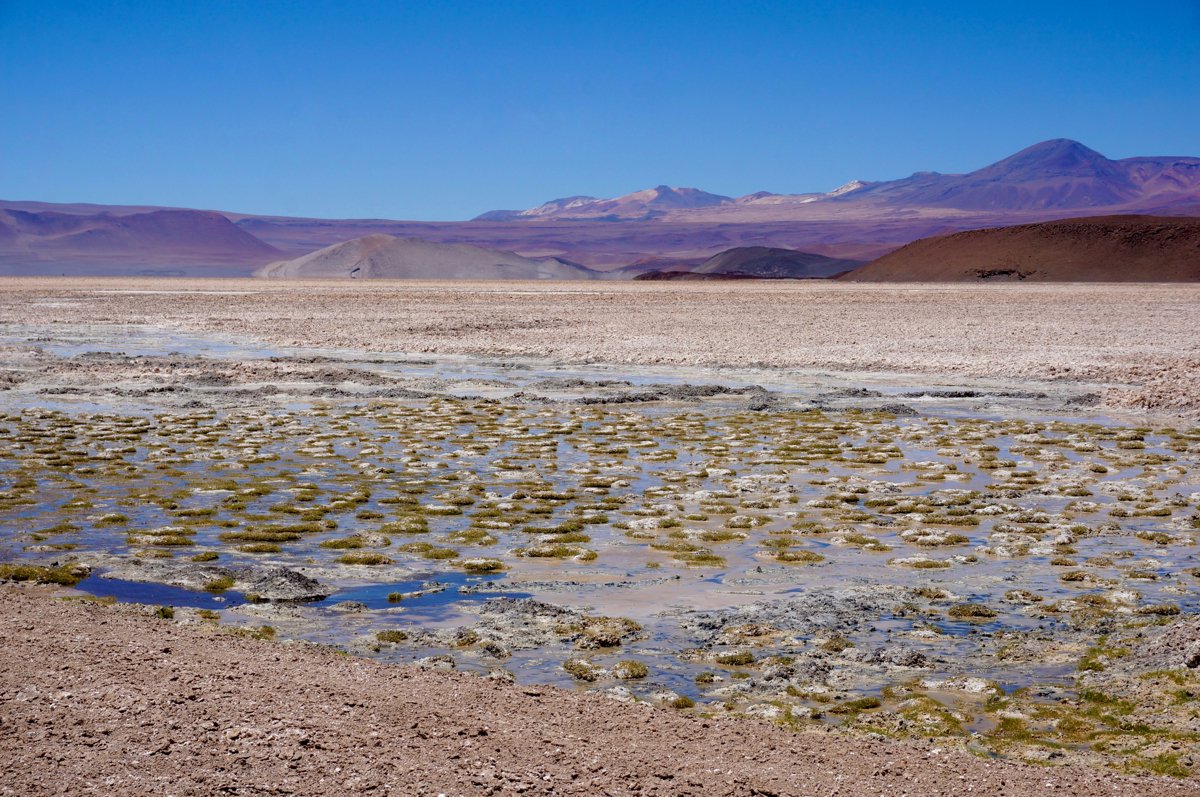
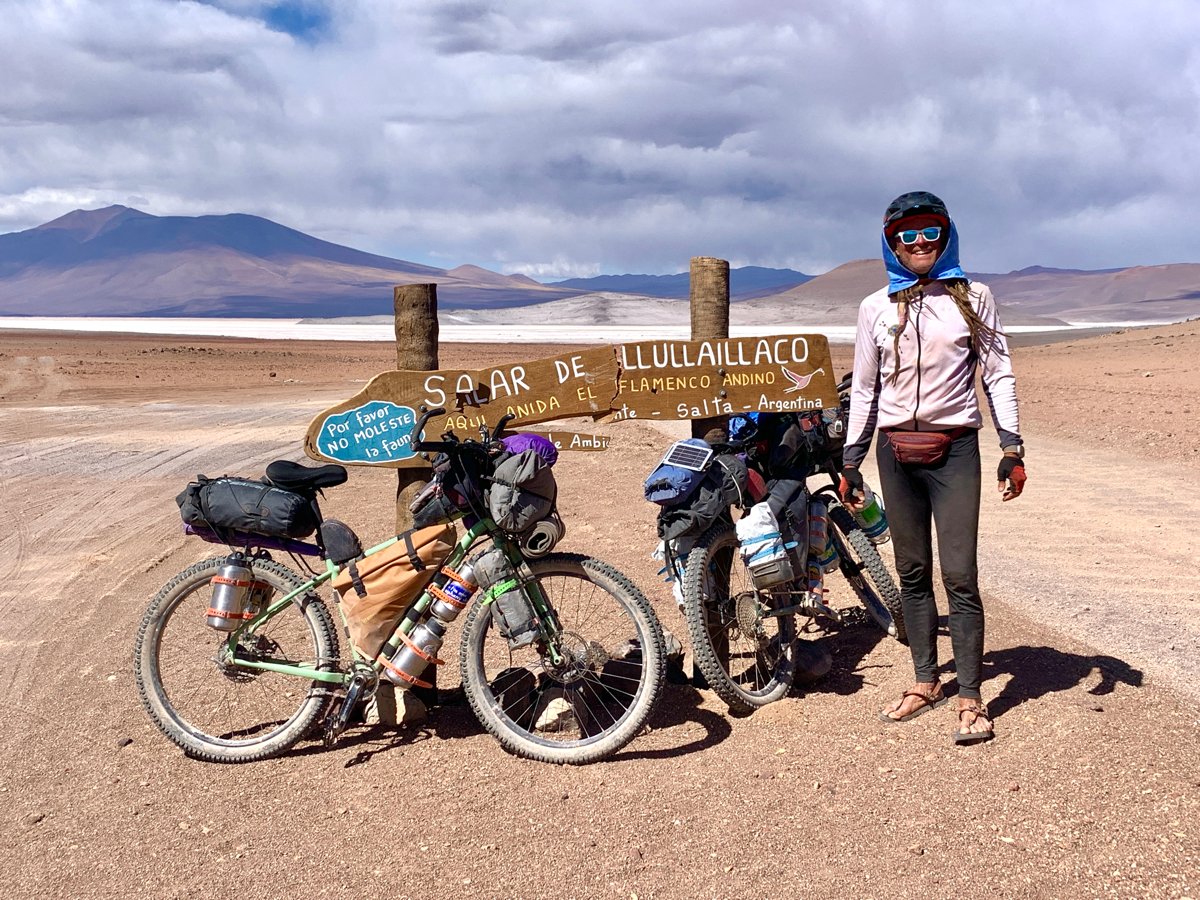
    A long descent down a gravelly, sandy, old two-track drops us into Salar de Llullaillaco. Firm roads made of salt, more ruins, and my first flamingo sighting passes the afternoon.

    I saw my first flamingo, in the wild. In Argentina, In the Puna.

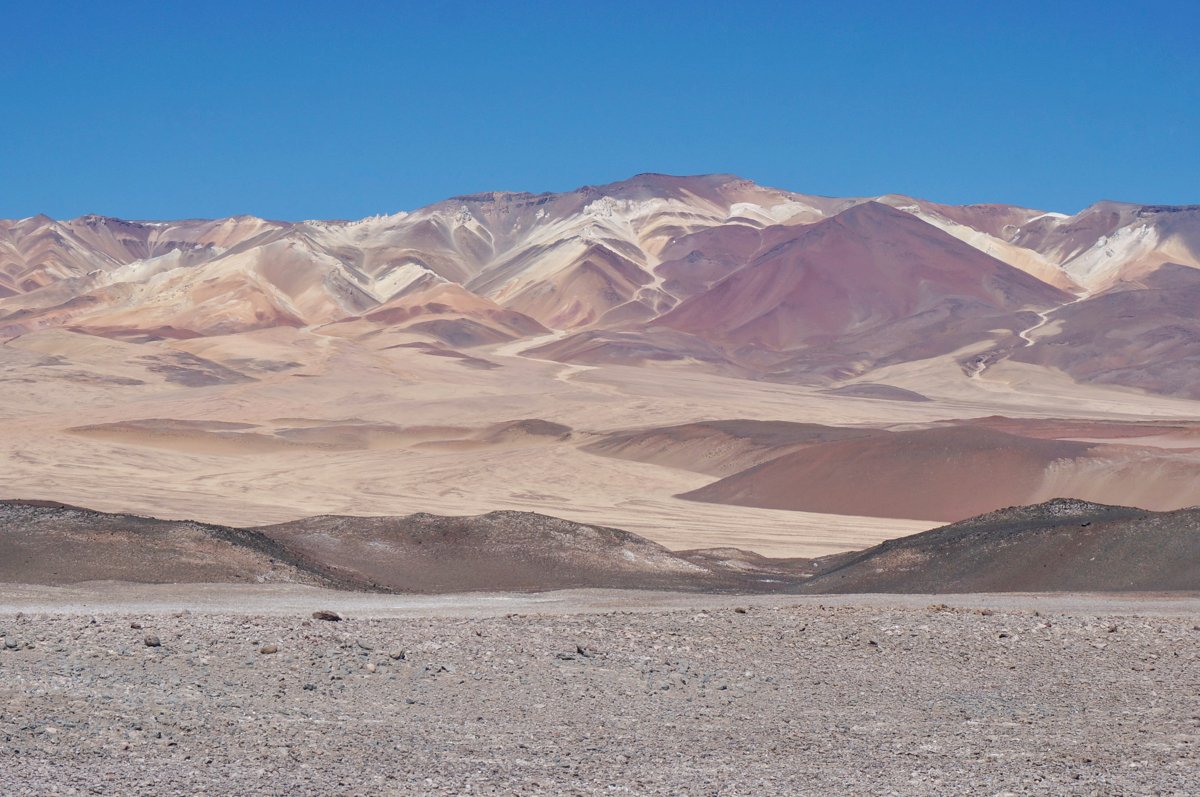
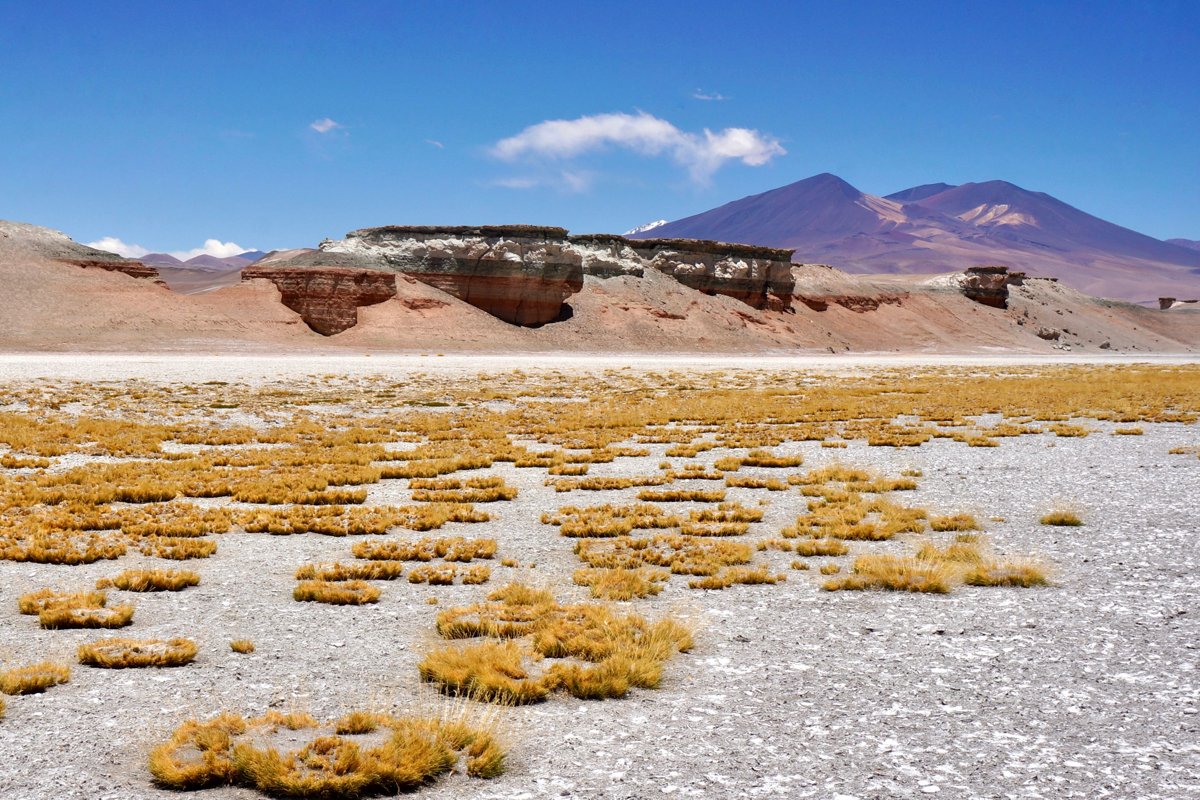
    The area this route travels through is the Puna de Atacama, with an average elevation of ~4500 meters. 85% of the Puna de Atacama lies within Argentina’s border, and the other 15% lies in Chile. It’s very dry here. The area is characterized by large salt flats and high mountains, especially a string of six thousand meter peaks, hence the route’s name “Ruta de La Seis Miles” or “route of the six thousanders”.

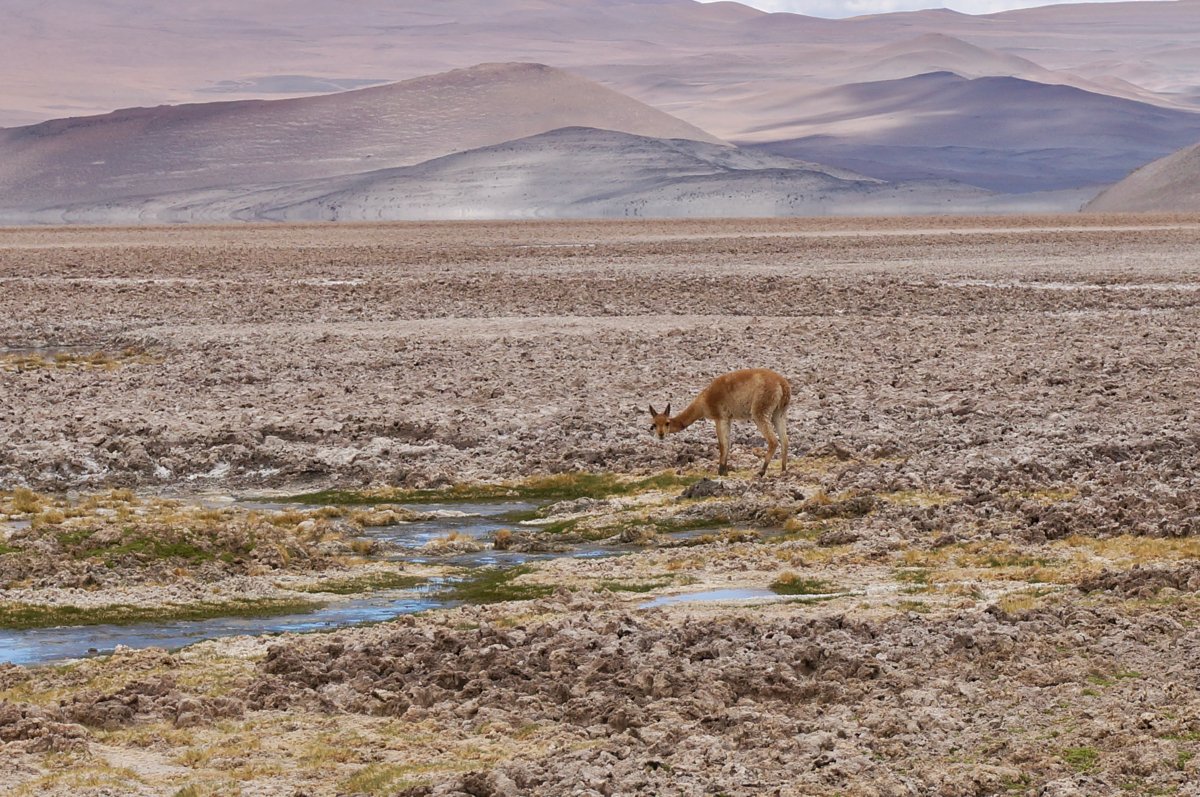
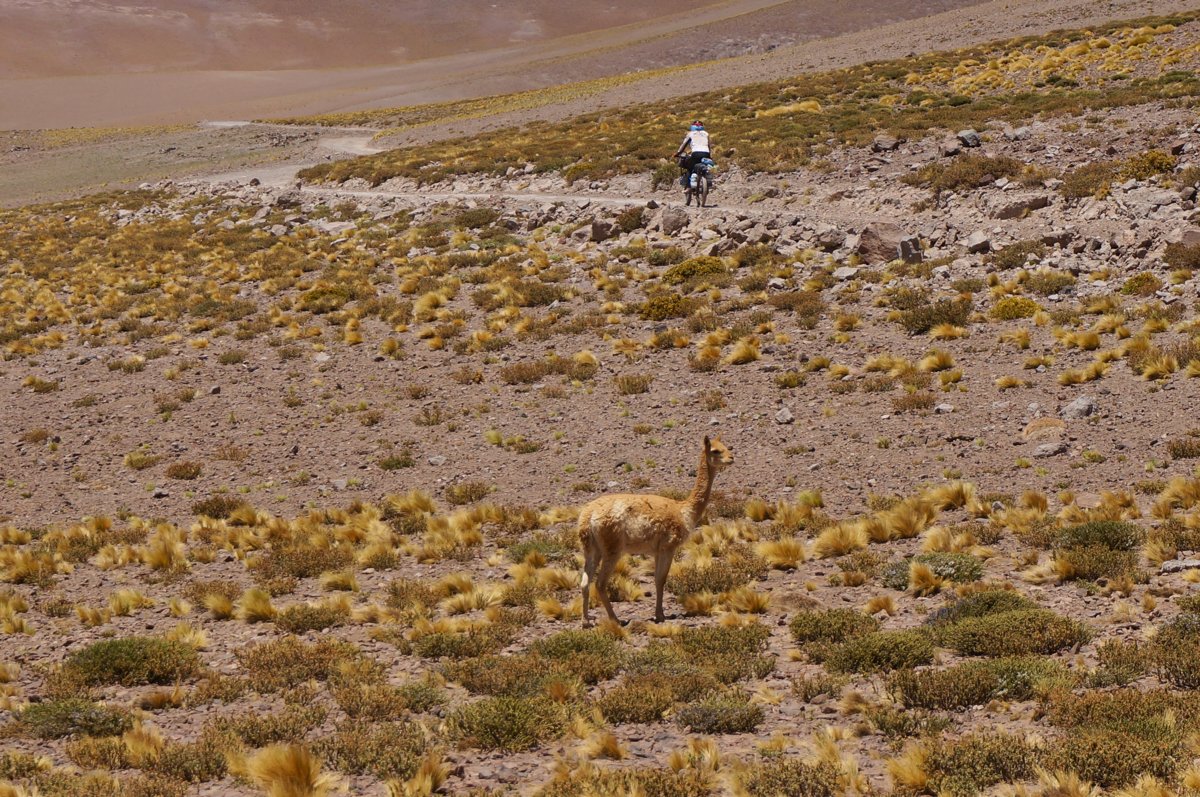
    The most abundant wildlife we’ve seen out here have been Vicuña (a camelid). We’ve also seen lizards, a few foxes, burros, and a few flamingos and ducks at some of the lakes, and a handful of other small birds here and there.

    Neon’s energy was fading with the afternoon, perhaps an electrolyte issue. We had a long break in the road. I was explaining to Neon how I see in shapes. The shapes between the rocks and the mountains and the clouds. I remember things in shapes. Even words are just shapes. He interrupts and says, it’s not “bikepacking with girl”, really it’s “Bjork-packing” with girl. We laugh and wrap up our break.

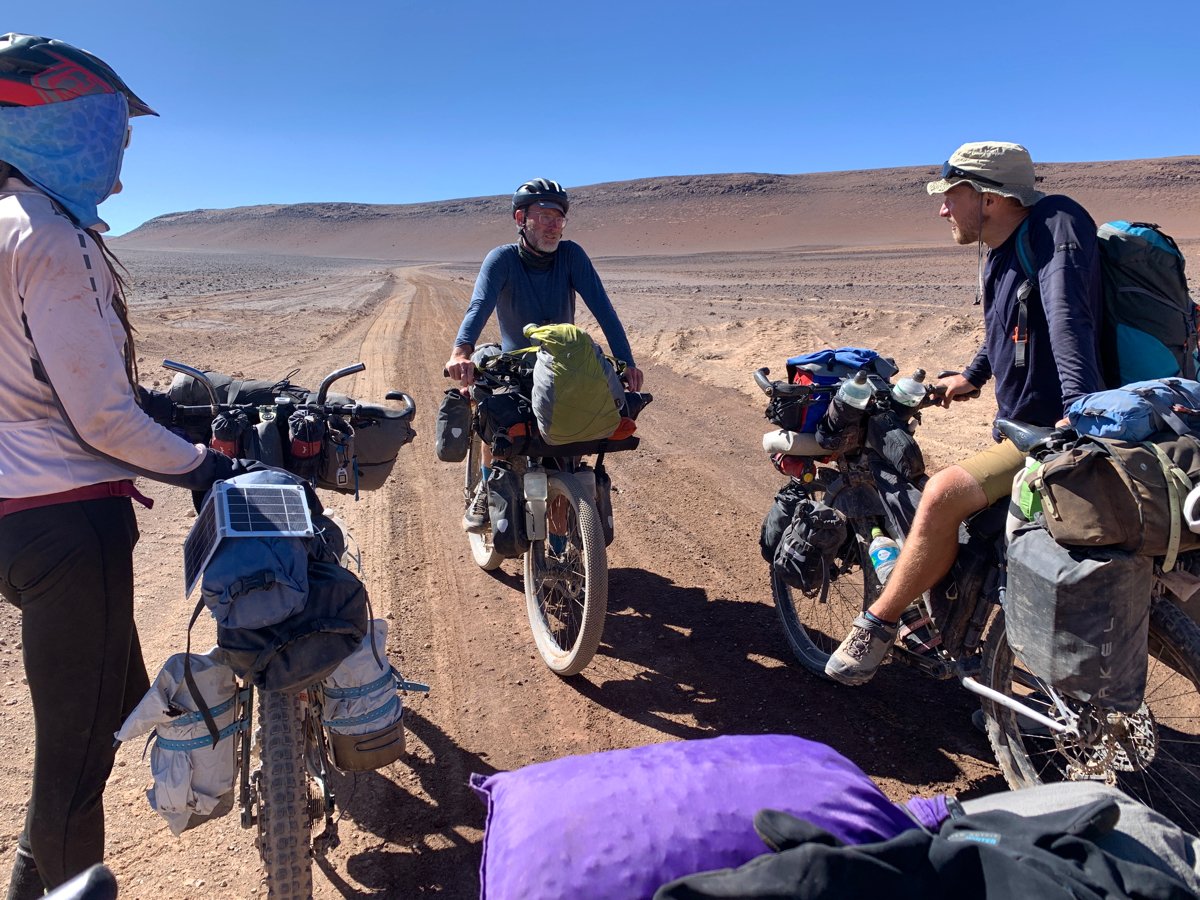
    Near the end of Salar de Llulaillaco, we spotted another cyclist approaching. We met Frank just as the afternoon wind become fierce. We pushed hard against the wind, sometimes hardly remaining upright. We made it to a short rock wall where we all huddled out of the wind together. We helped each other pitch tents in the wind. And in the morning, we headed out together.

    A short while later, another cyclist came up from behind, Steph. We each made our way to the next pass, and met up again after the long descent down to Mina La Casualidad.

    The “town”, now abandoned, was once home to 3000 people. From what I’ve read, sulfur was discovered in the area in the 1940’s, mining went into full operation in the 50’s, and the mine was abandoned in 1979. Over the years, the church has become a Refugio of sorts. It’s a big church, and we each had plenty of room to sort our food and fix gear.

    I’ve been thinking a lot since we started this adventure, rolling around the same question I ask myself on every adventure, “why”? Why do I do these big adventures, climb big mountains, hike long trails, cycle remote routes? Each adventure more grand than the last—often remote, difficult, and long? The question is fuzzy, but an answer of sorts has been bubbling to the surface. On one hand, and the part I’ve always known is for the beauty, the discovery of it all, but the other part has come through with more clarity these last few days. Still a bit fuzzy to put into words, but it’s centered on finding comfort in difficulty, which comes out sounding not at all like what it is. It’s the removal of fear. It’s the absolute enjoyment of a moment. The joy of just being. To be thoroughly relaxed in the process. These adventures dissolves my own boundaries, and everything becomes a moment, natural and at ease. It is in the quote from a D.H. Lawrence poem I’ve always loved: “I never saw a wild thing sorry for itself.” It is in the process of these adventures that fear dissolves and the comfort of being a wild animal evolves. There are joyful moments, and difficult moments, but every moment is part of the process and the story—and the more adventures I do, the more the layers of fear and uncertainty dissolve.

    It was a relaxing afternoon until the wind picked up once more. It was so loud against the church it sounded as if the building might break apart. I have not made friends with the wind here as I have at home. Here the wind is mischievous, occasionally helpful with a tail-wind, but unpredictable, and even scary at times. It cannot be trusted here. The wind finally mellowed and I slept peacefully through the night.

  • Tolar Grande to Iglesia Vega Socompa

    Tolar Grande to Iglesia Vega Socompa

    Tolar Grande seems like such a long time ago now, a fading memory or story I heard. Our excitement was running high. We left town late again, after breakfast. Breakfast is always tea or coffee with dry bread or crackers, jam, and sometimes butter and or dulce de leche. But if we ask, most places will accommodate us with scrambled eggs.

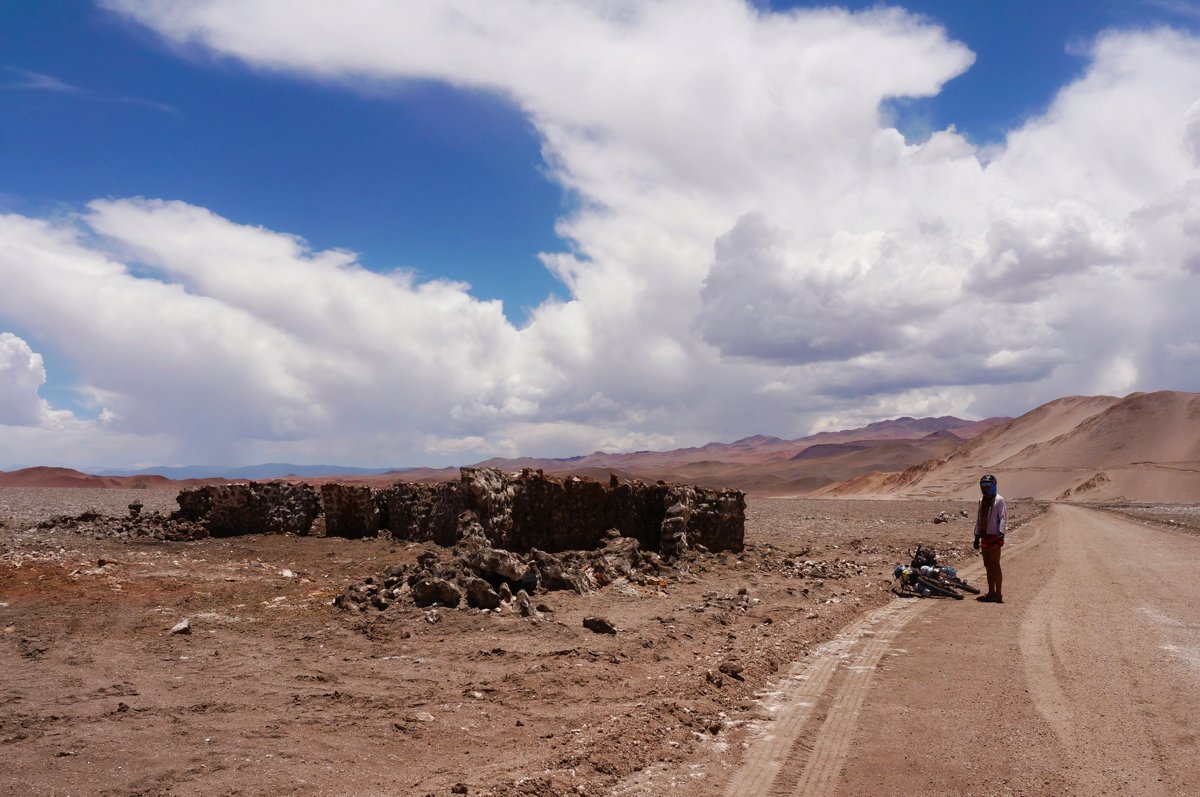
    ~The walls of this ruin are made of salt from the Salar de Arizaro.~

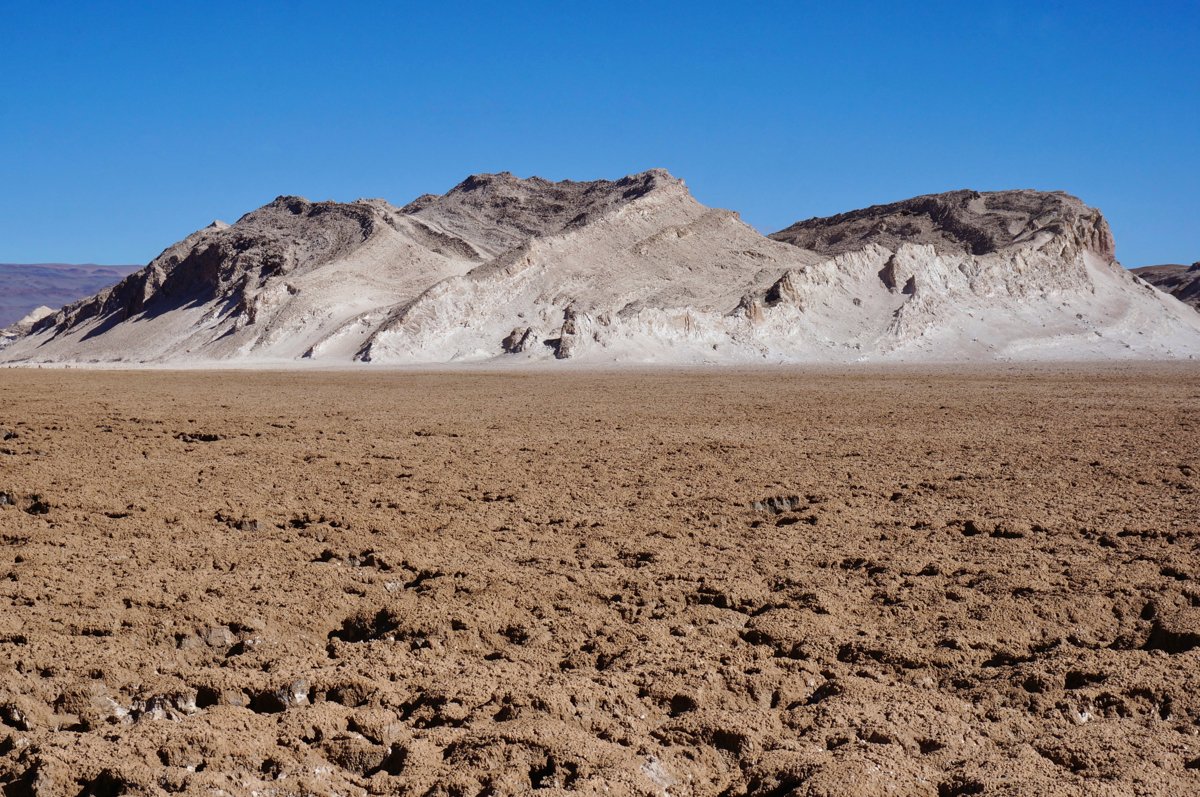
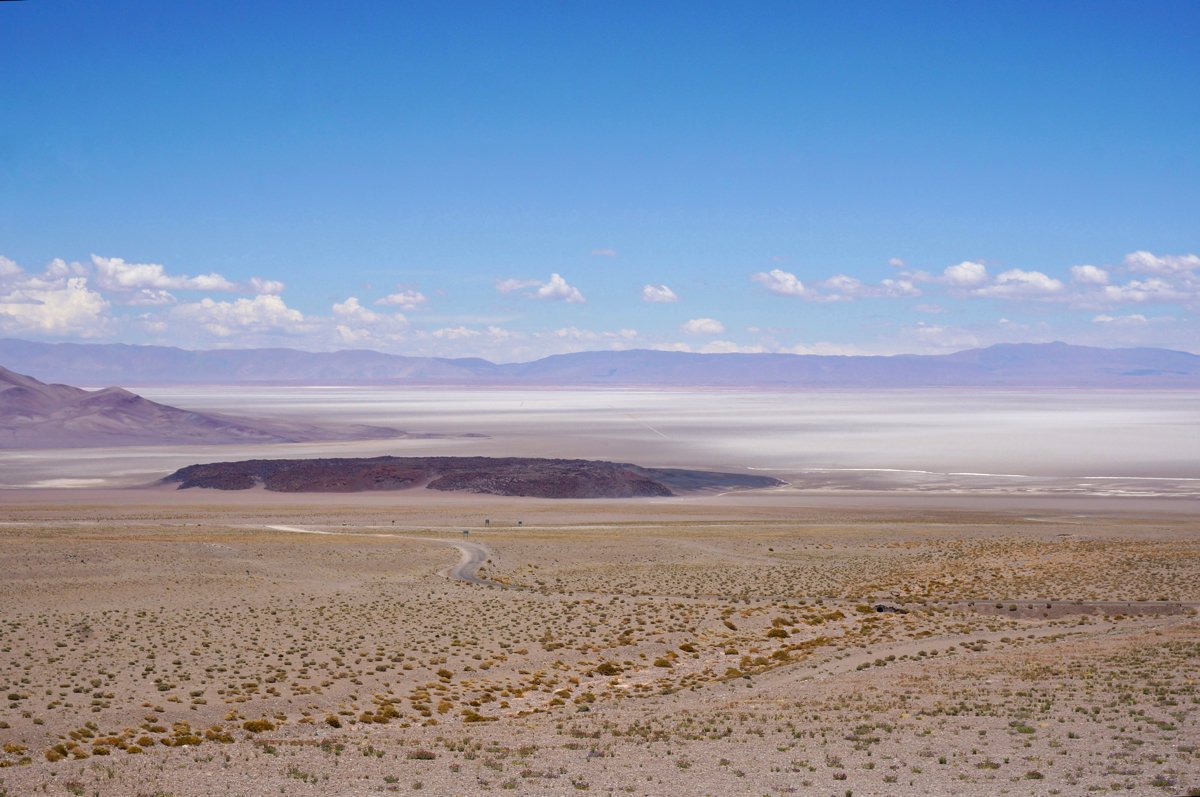
    We spent most of the day crossing the Salar de Arizaro. The sixth largest salt flat in the world and the second largest in Argentina. It has an area of 1600 square kilometers. The salt flats out here are part of what make this route unique.

    We stopped early, thinking it might rain. I think we were still a bit traumatized by the storm we had in the Desierto del Diablo, or perhaps really, it was all that sticky mud that left us storm-shy. In any case, we stopped and set up the tent at three in the afternoon. It was baking hot inside the tent, and blowing a gale outside the tent. Part of the mine road crew stopped and offered us water, three liters! He told us it never rains down here. I think I got dehydrated hanging out in the tent.

    The tent flapped hard against the wind, and did not stop until two in the morning. The edges of the tent tore against the sharp volcanic rock, and the zipper refused to close after all that mud from the previous storm (and that’s after having washed it in Tolar Grande). Gear failure has been a big part of this route. I had three hours of sleep that night. And so body failure has also become a big part of the experience.

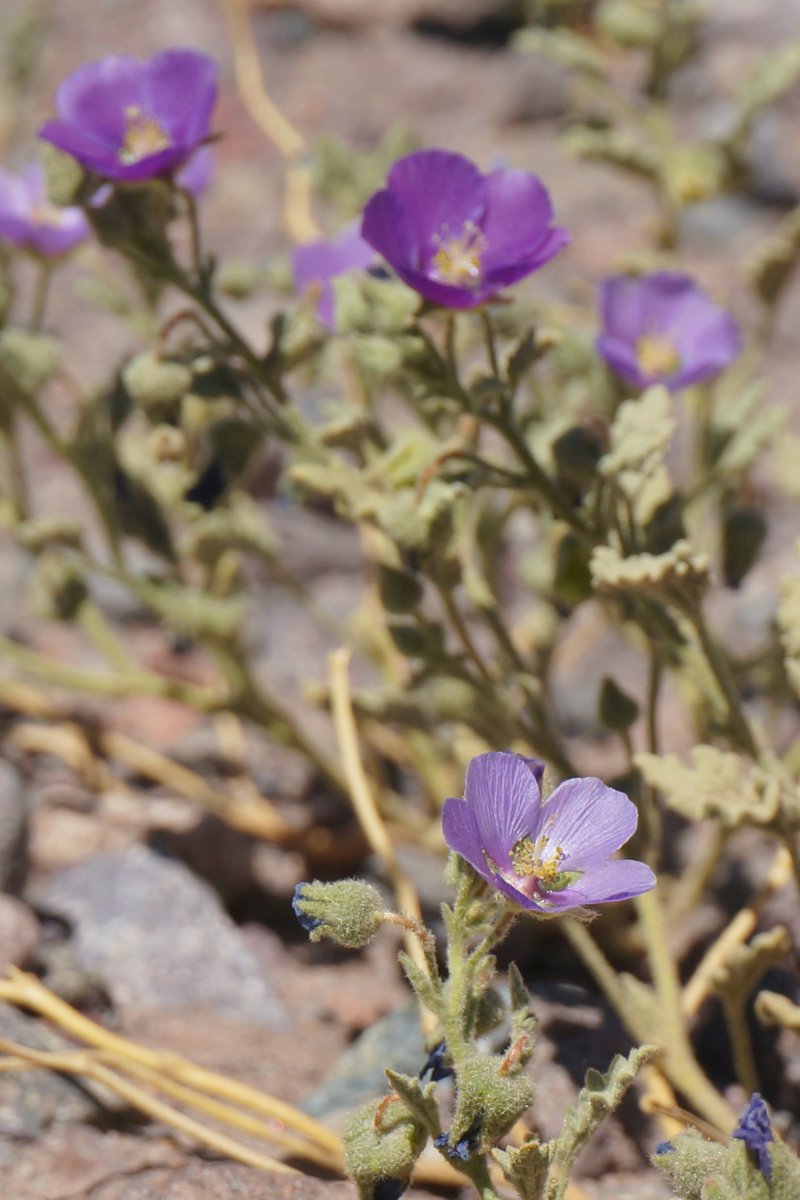
    ~Purple Mallow grows everywhere here.~

    ~More ruins around every corner.~

    The next day was painful, with a seven to ten percent grade (and the bikes still heavy!) climbing up out of the salt flat. I was so tired. My head was pounding with lack of sleep. I could hardly muster the will to push my bike, and riding was a no-can-do. There were an abundance of rock ruins as the road gained elevation. An uneventful day passed painfully and slowly. We found a nice set of walls up high away from the road and set up camp. I slept hard! No flapping tent, away from the mine traffic, and out of the wind. The next day I pedaled the whole way. It’s amazing the difference a good night’s sleep makes.

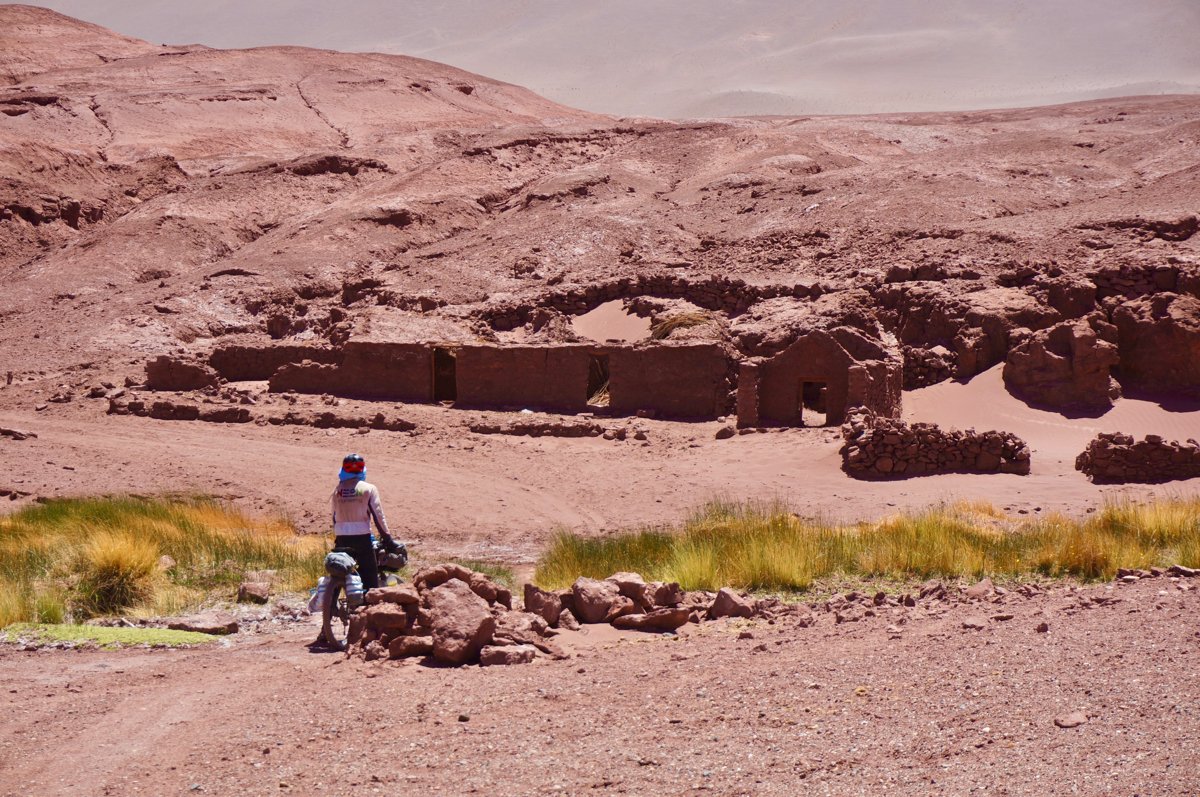
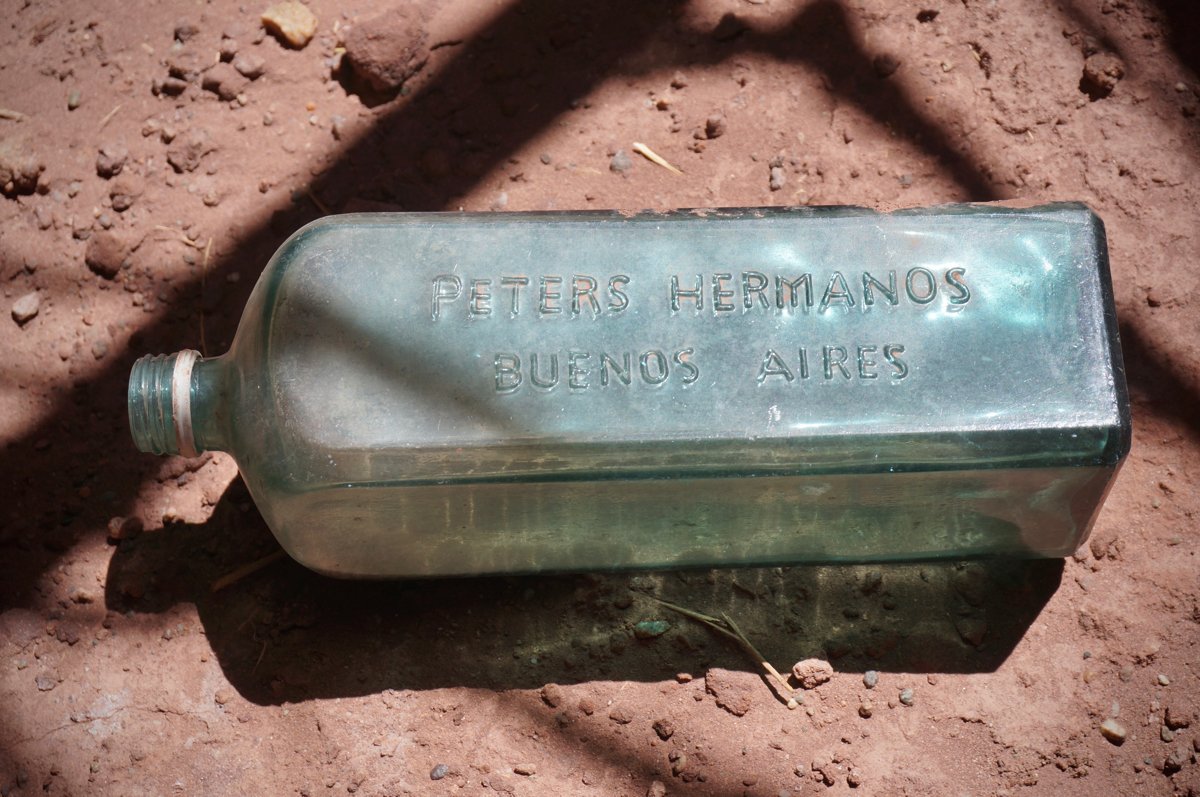
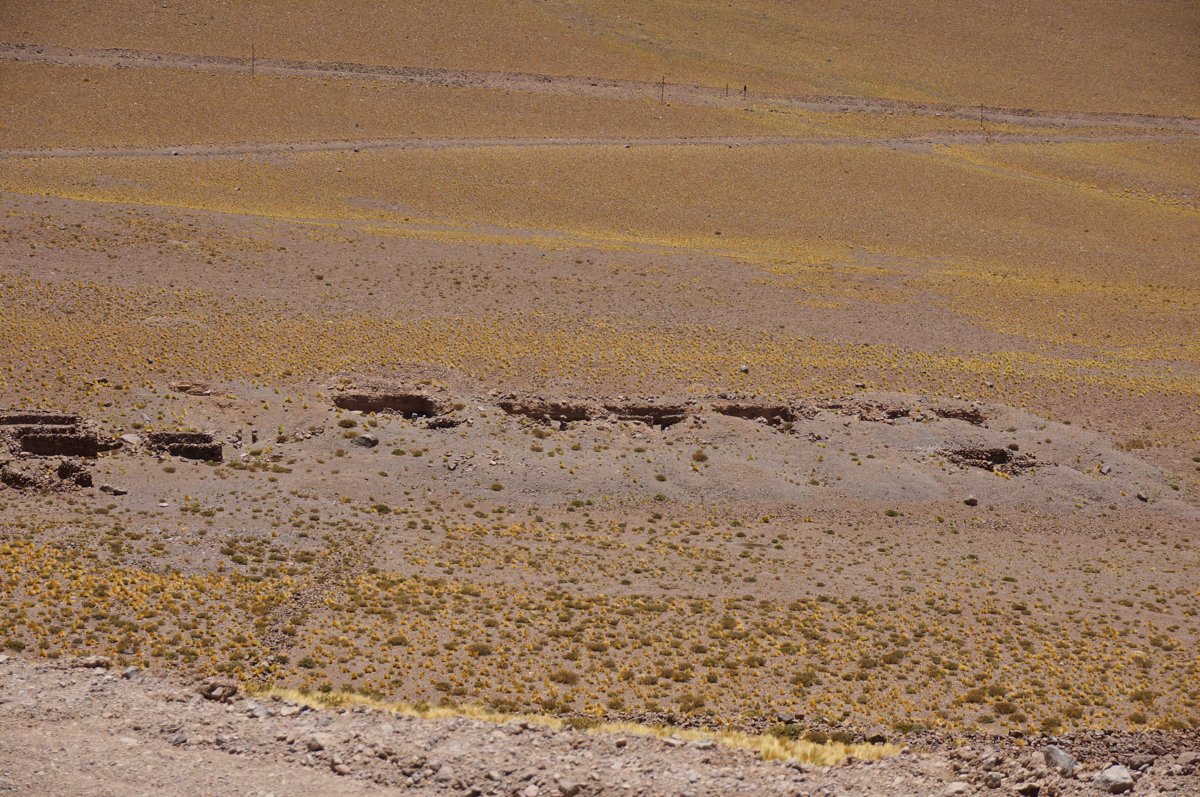
    The rock ruins got more elaborate as we got closer to the Chuculaqui Spring. It seems there was a whole town there. Every train station has had old ruins around it. These places were places long before this now abandoned rail line was here. Old cairns mark these roads, not always right where the road is now, but these are old routes, surrounding long-used water sources, with a string of old dwellings, large rock ovens, and larger short rock wall delineated areas that perhaps were once used for agriculture. I’ve had so many questions as we’ve rolled through this area. How old are all these ruins? How many people once lived here? What did they grow? Did the area used to be wetter? Were there more trees? So many possible stories.

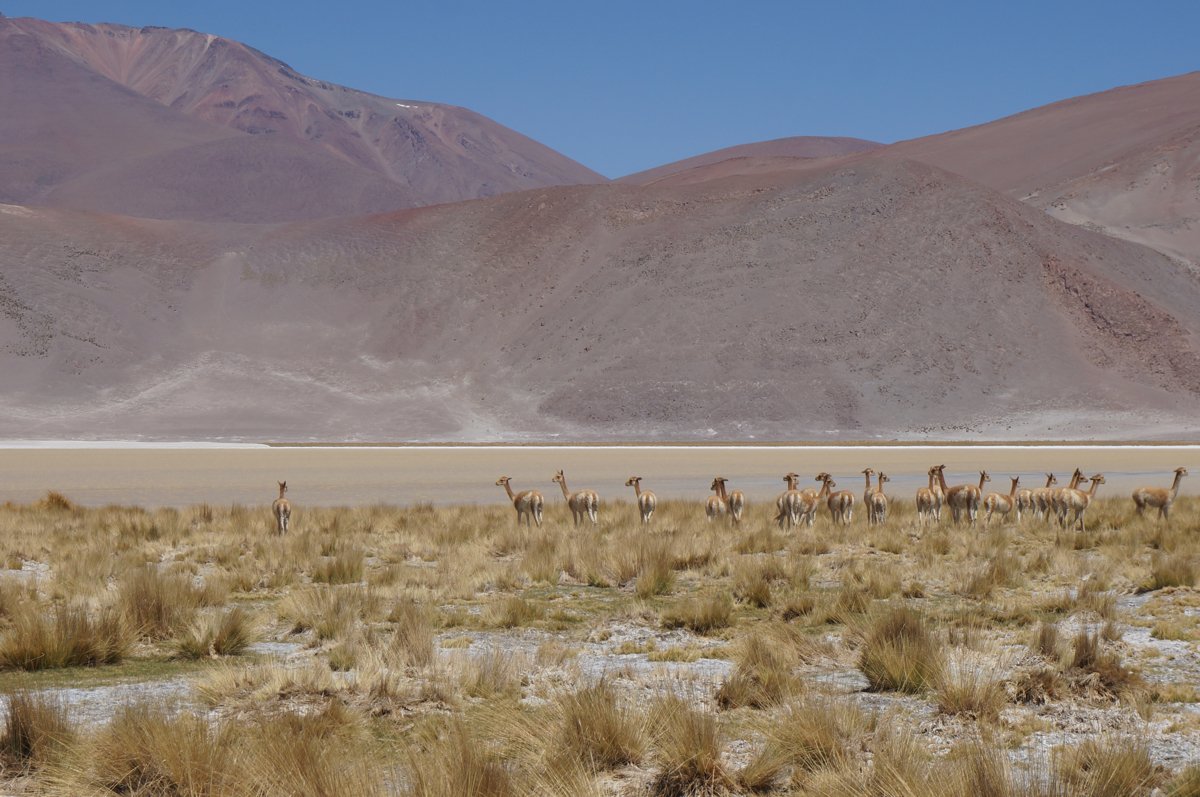
    ~Vicuña.~

    We filled our canteens at Chuculaqui Spring and continued heading toward our route. The wind got stronger. I had to duck behind my handlebars several times to hide from sand waves blowing through.

    We finally made it down into a bowl in the landscape where some previous riders had built a short rock wall to bivy. Behind even just a few stacked rocks can make a huge difference from the wind. Sit down, and it all seems to go away, a calm respite in the chaos of the mischievous  northwestern winds.

    The temperature dropped to 18°F (-8°C) by morning. We didn’t budge until the sun crested over the ridge. A late start, and this day the winds started at 10:15 am. A fierce headwind all the way to Inglesia Vega Socompa.

    ~Vicuña hanging out at Laguna Socompa.~

    Despite the fierce headwind, we arrived early at Iglesia Vega Socompa. We had plenty of time to wash ourselves and some clothes, gather and treat 12 liters of water each, and warm up in the wind-protected sun in front of the church.

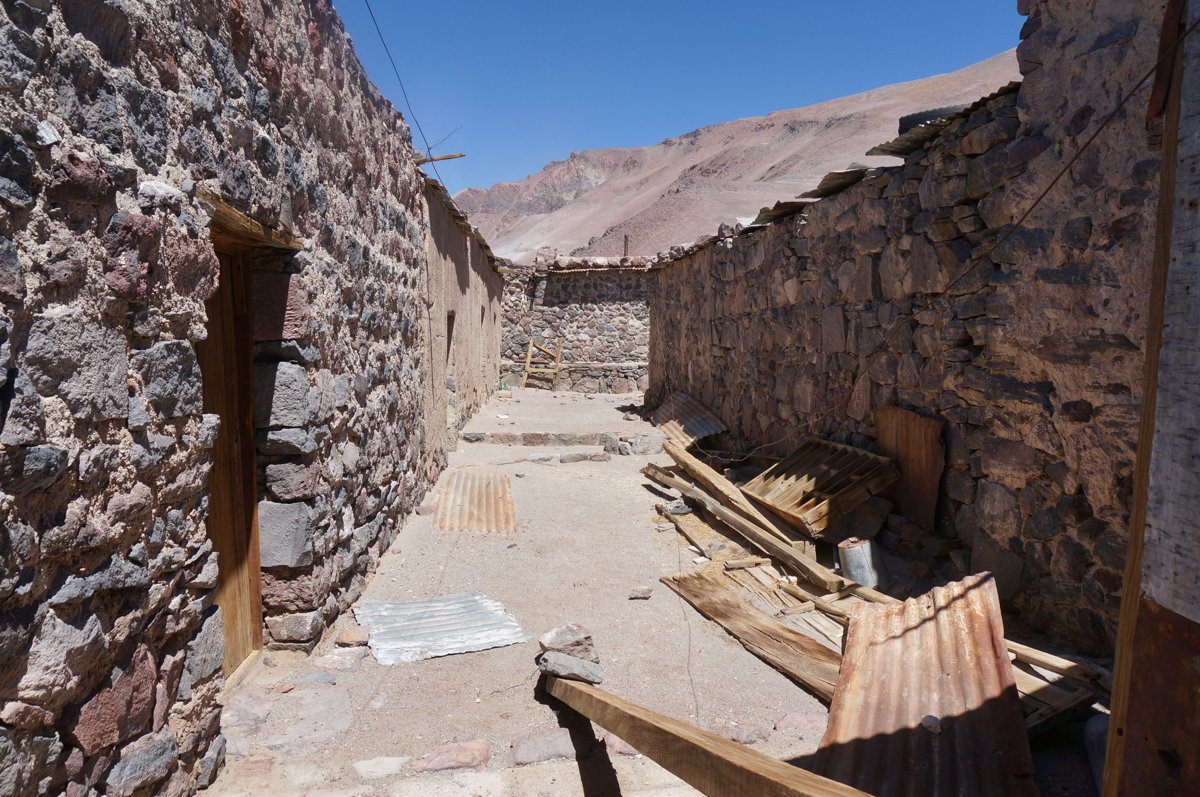
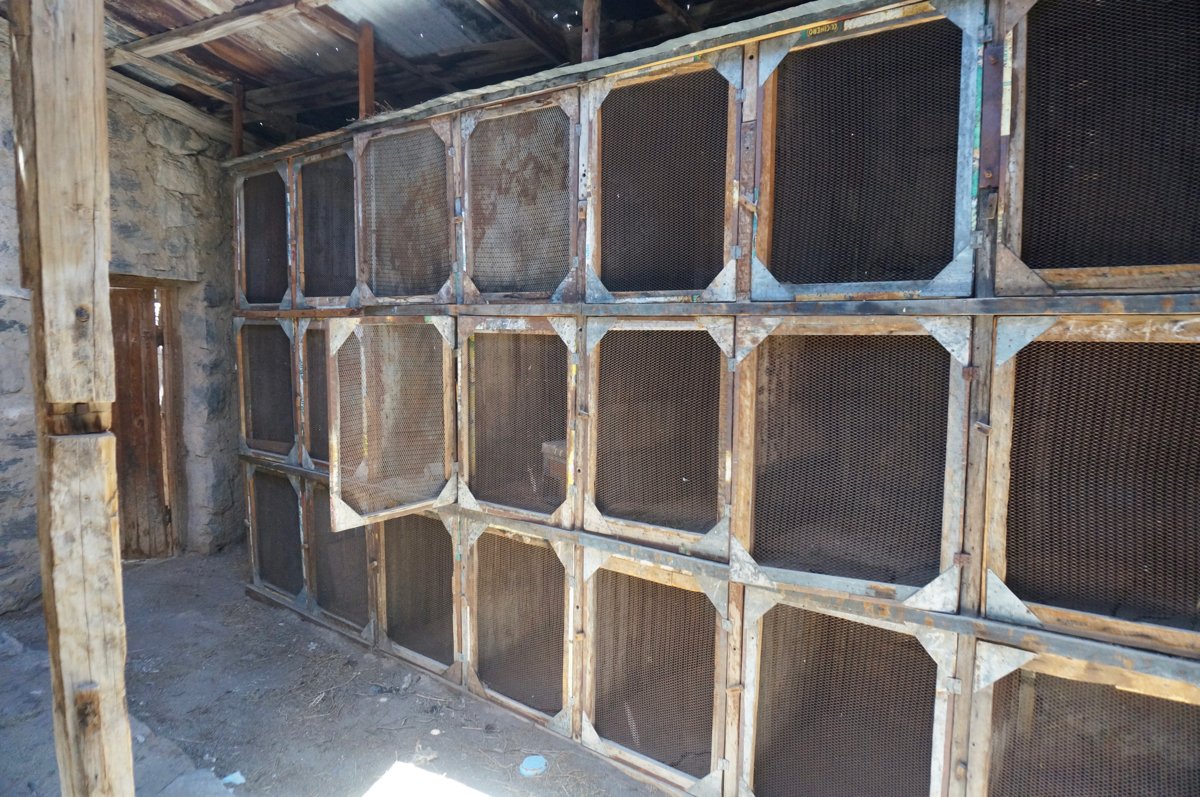
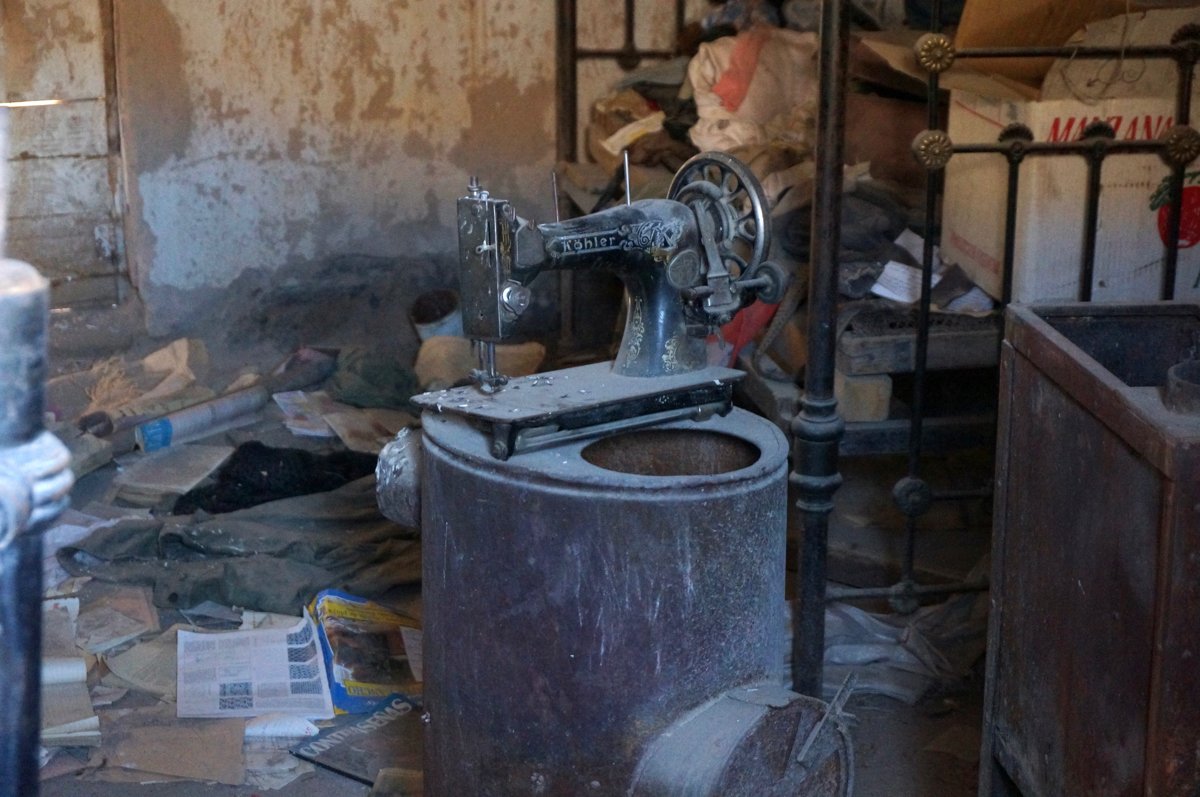
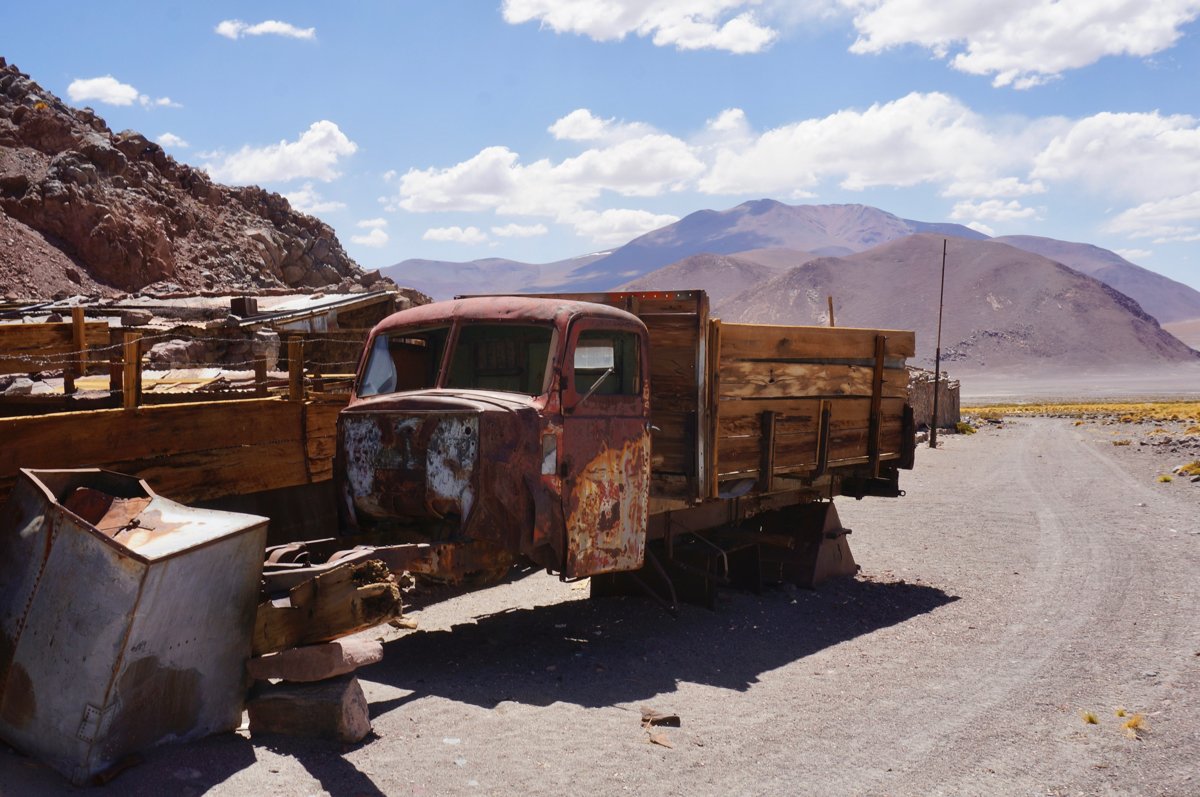
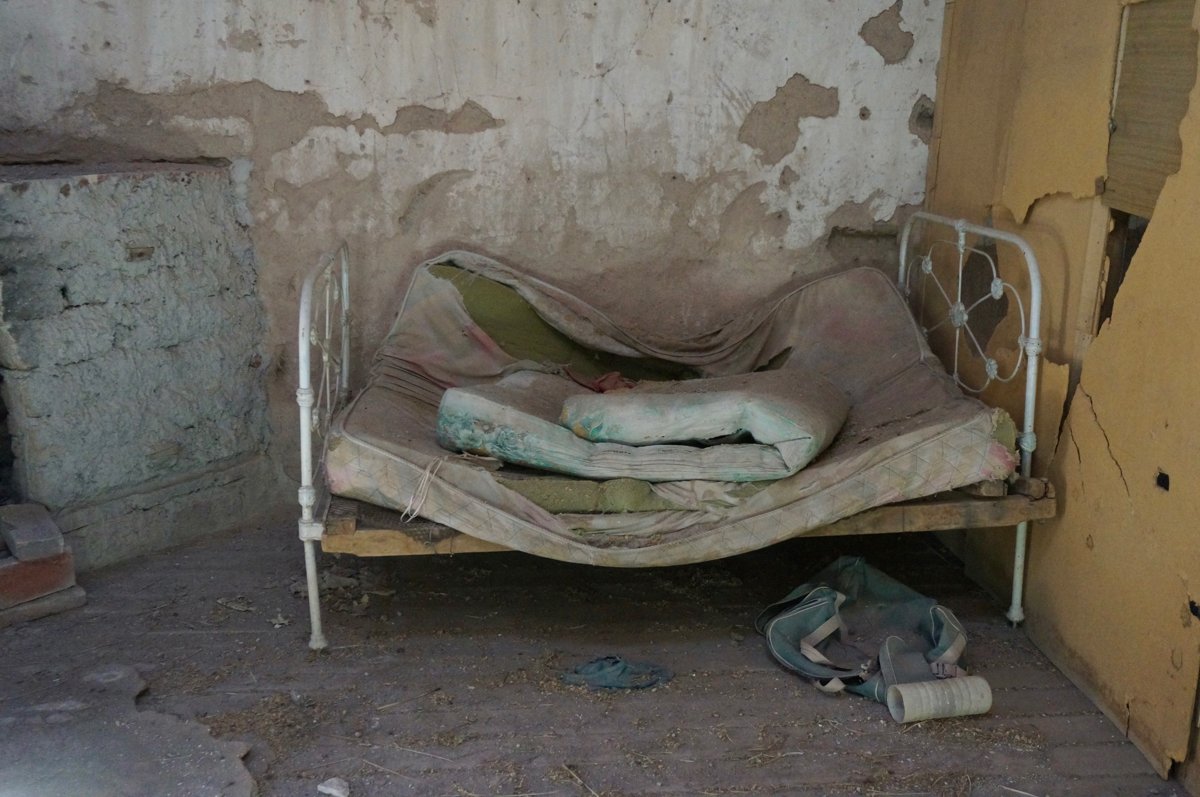
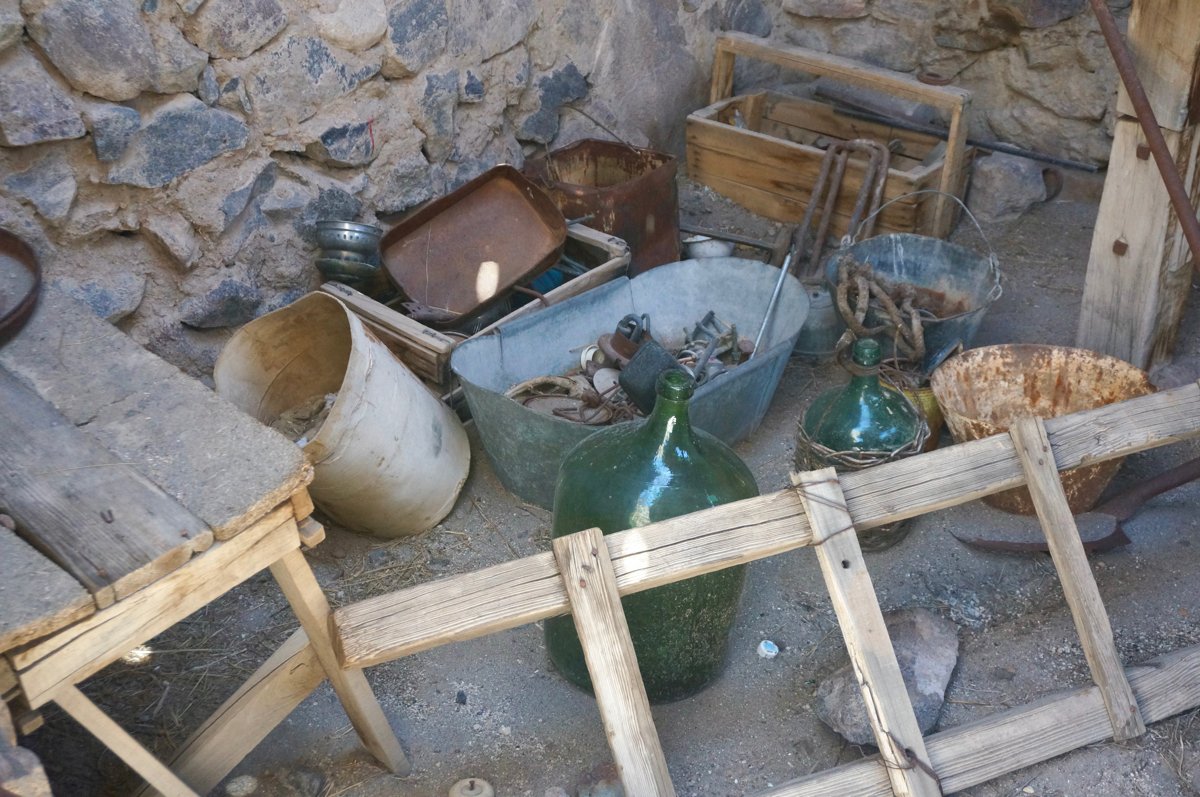
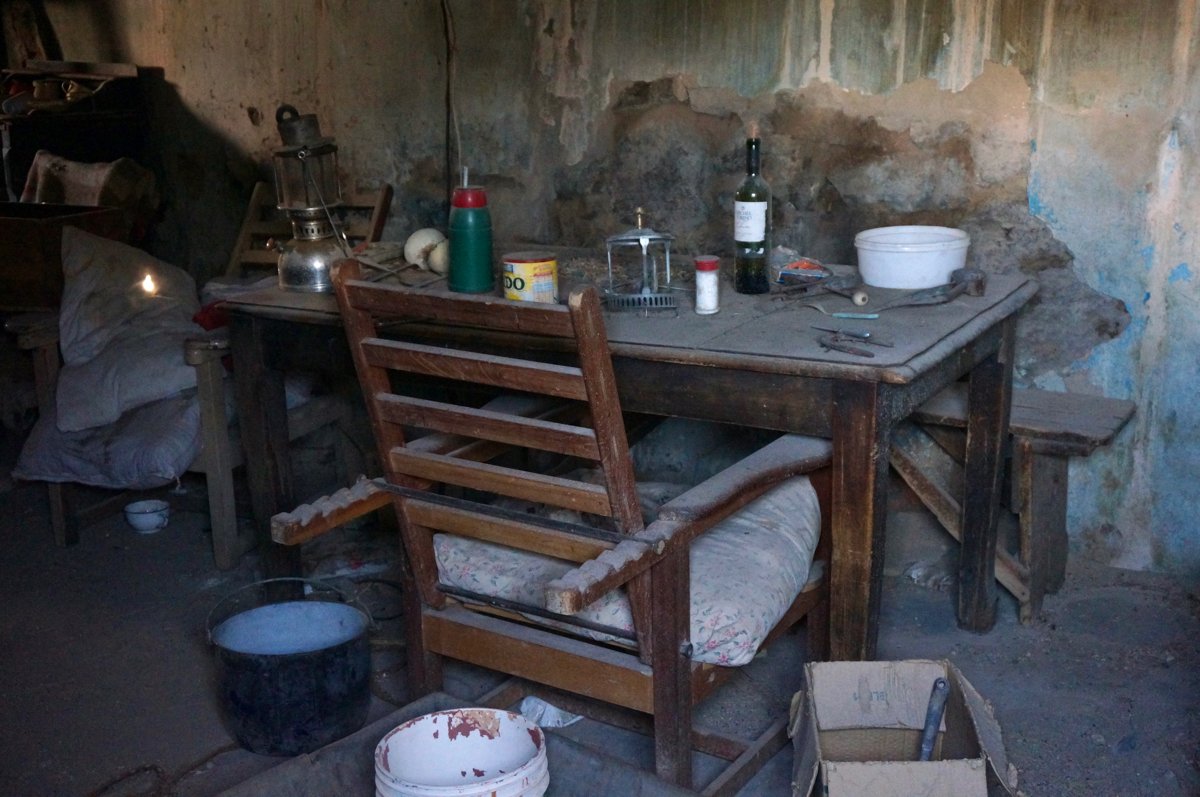
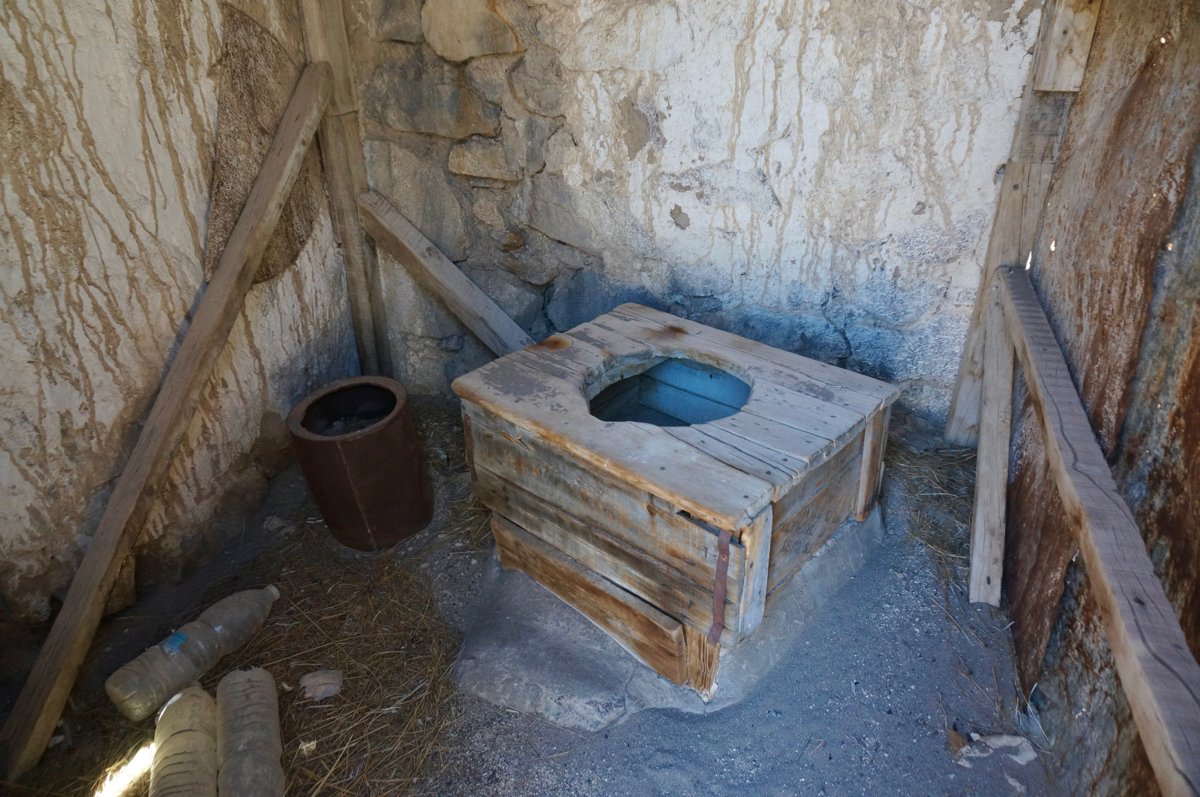
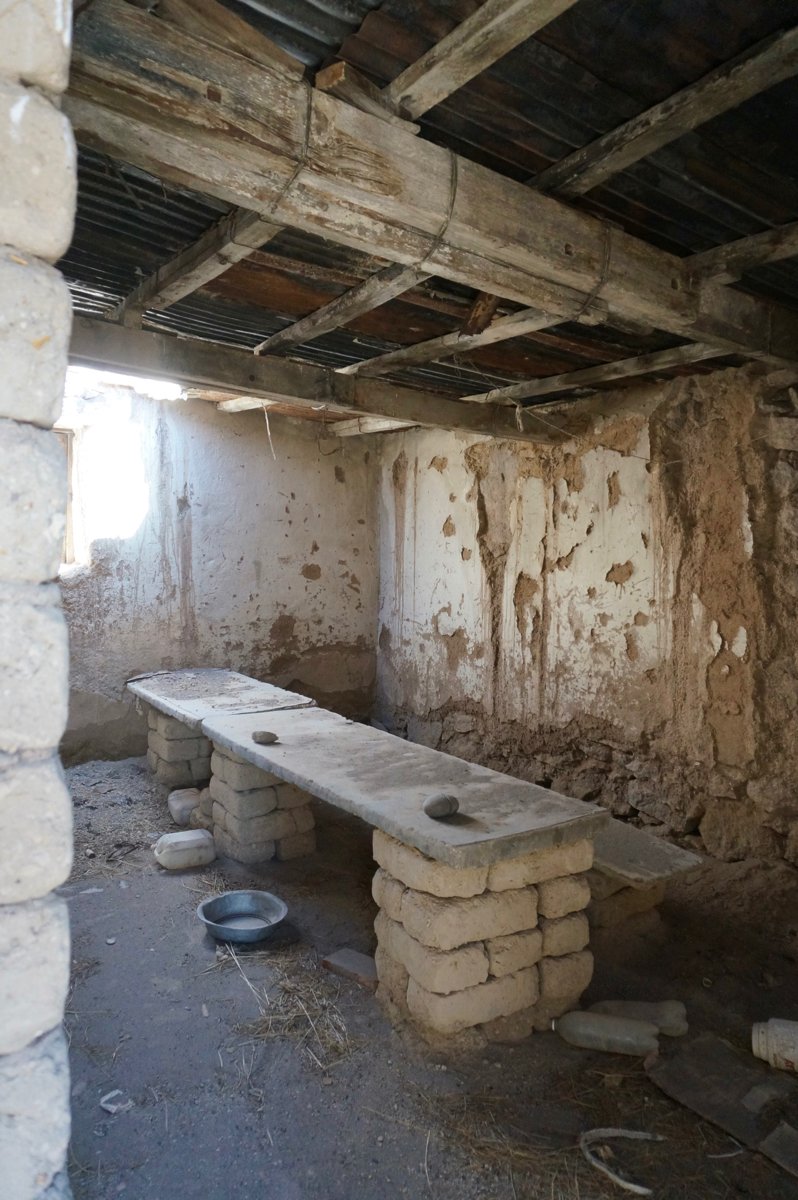
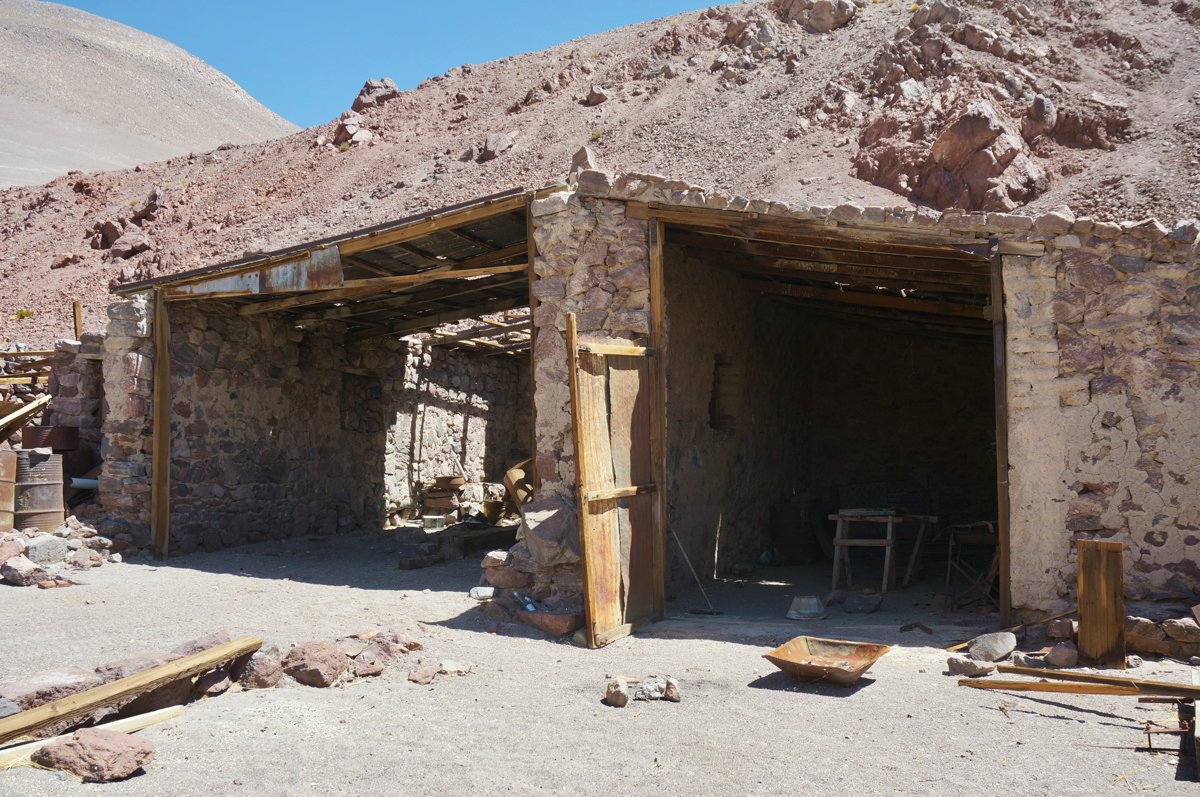
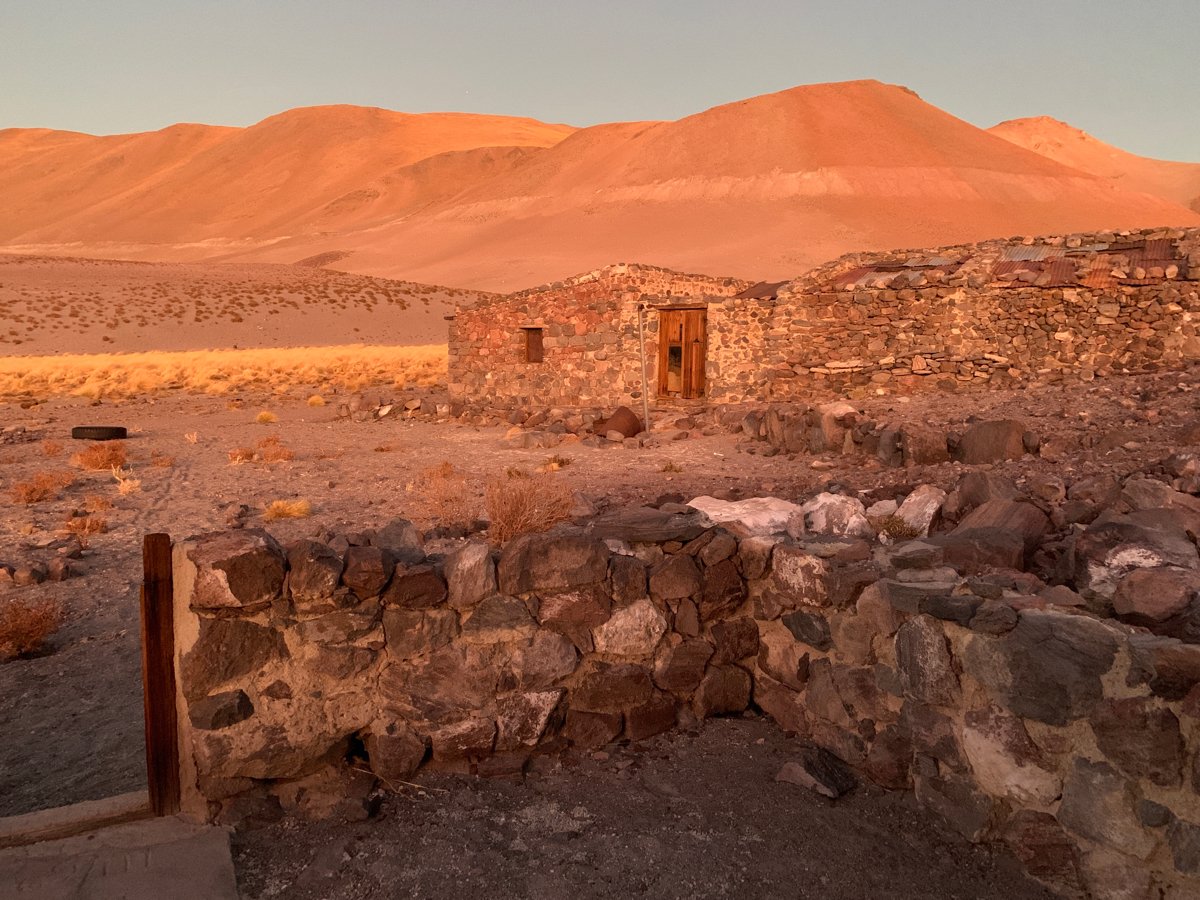
    I poked around the old buildings later in the afternoon, surprised by how big the place was. Inside the modest looking walls are inner streets, a whole little town protected from the wind. Several rooms with animal cages, homes, storerooms, vehicle garages. Irrigation lines, and a very large rock wall delineated area at the edge of town. Socompa is much more modern than any of the other abandoned ruins we’ve passed through, but still piqued my curiosity just the same. The mysteries of how people once lived always stirs my imagination.

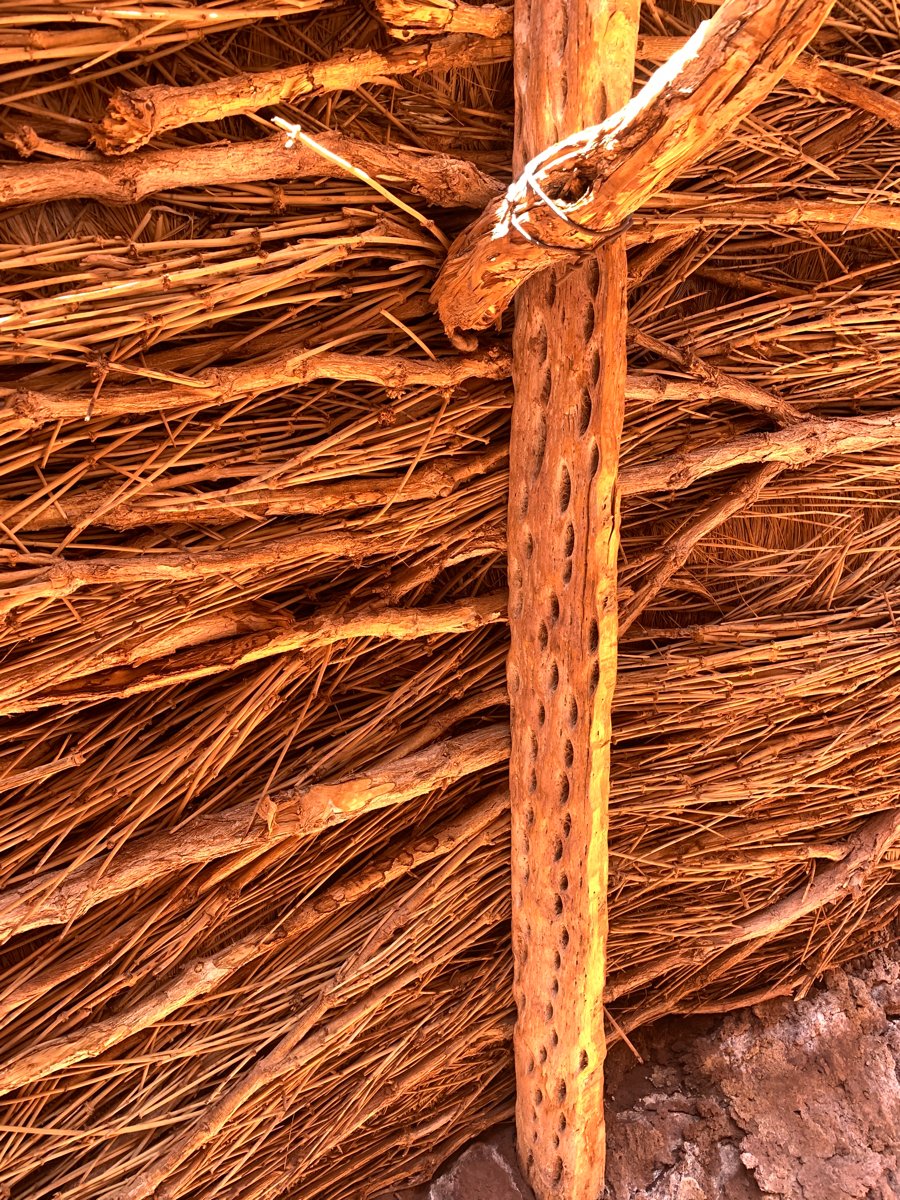
    ~The church ceiling was made of cactus wood, lashed together with animal skins and wire.~

    ~Morning light outside the church.~