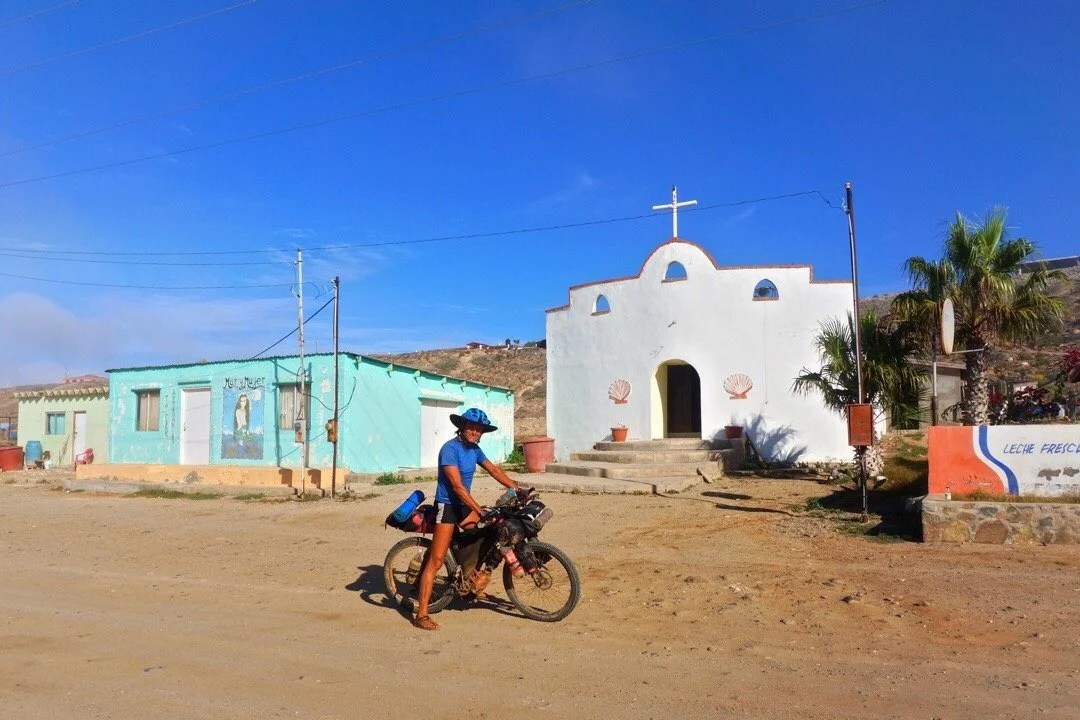
“Cabo Pulmo to La Paz”We woke early to watch the sun rise over the Sea of Cortez, then walked down the road to Caballeros Restaurant for coffee. After lingering over breakfast with our friends we headed back on route. We made good time and stopped for lunch at the first beach access after our route left the main road. After lunch Neon made some emergency repairs on his bike after one of his bottle cages came loose.


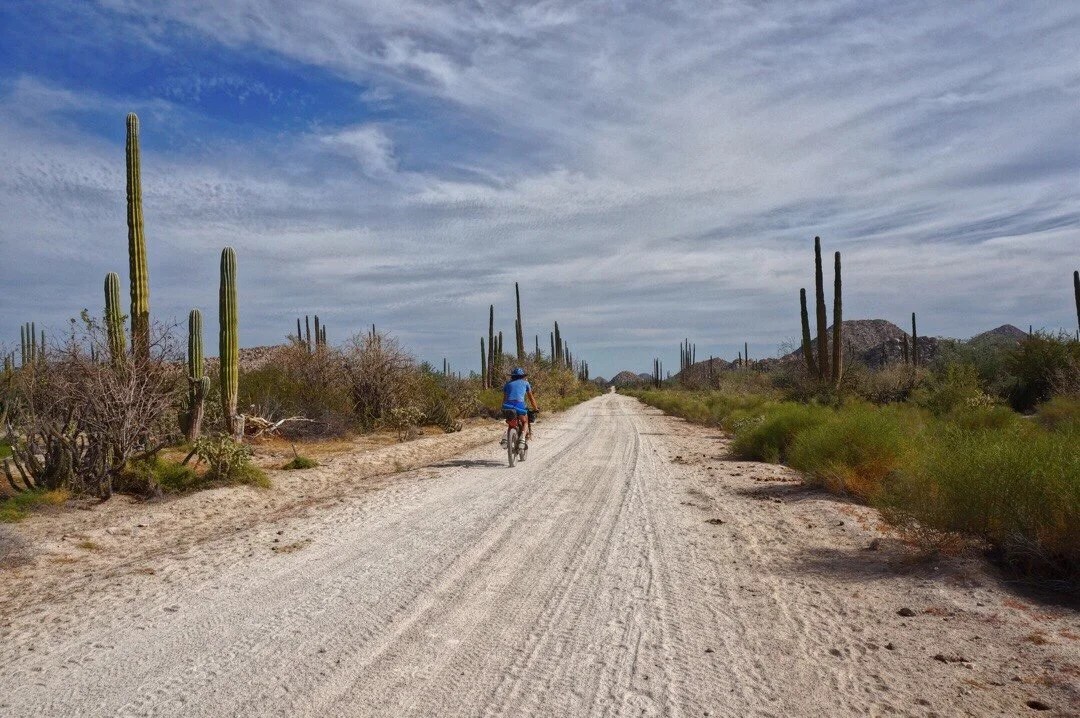
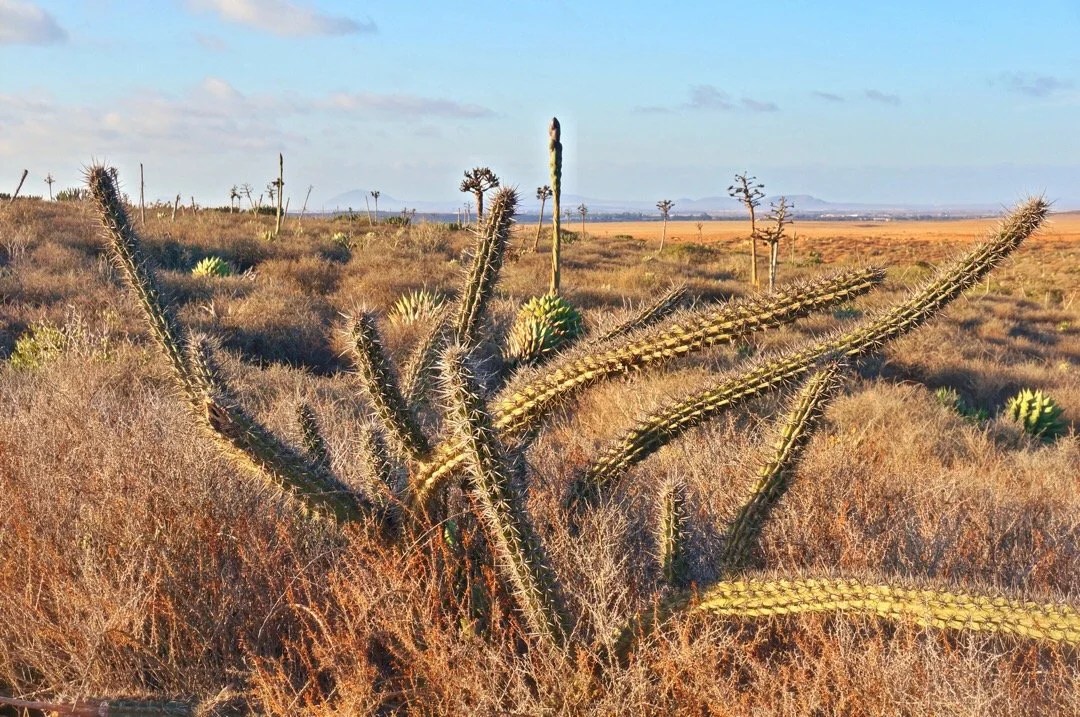
 We stopped in La Ribera for snacks and water and camped a few kilometers before Los Barriles. Everything was already starting to feel like “the last” …the last beach picnic, the last view of the Sea of Cortez, our last desert camp, the last …everything. We found a place to camp up a hill where we could hear the Sea of Cortez, and frogs in a nearby pond.The next morning we met another Baja Divide rider who is also a thru-hiker. He’s thru-hiked the Pacific Crest Trail and the Arizona Trail. We rode along the Sea of Cortez Coast the whole day, stopping for one “last beach picnic” again. We found a beautiful place to camp surrounded by cardon, elephants trees, tree ocotillo, and all the other Baja plants I’ve come to love. Cows with bells on their necks passed by us all through the night like a jingling lullaby.

 We woke early and continued along the Sea of Cortez coast. We stopped for another “one last beach picnic” before climbing into the mountains away from the coast.


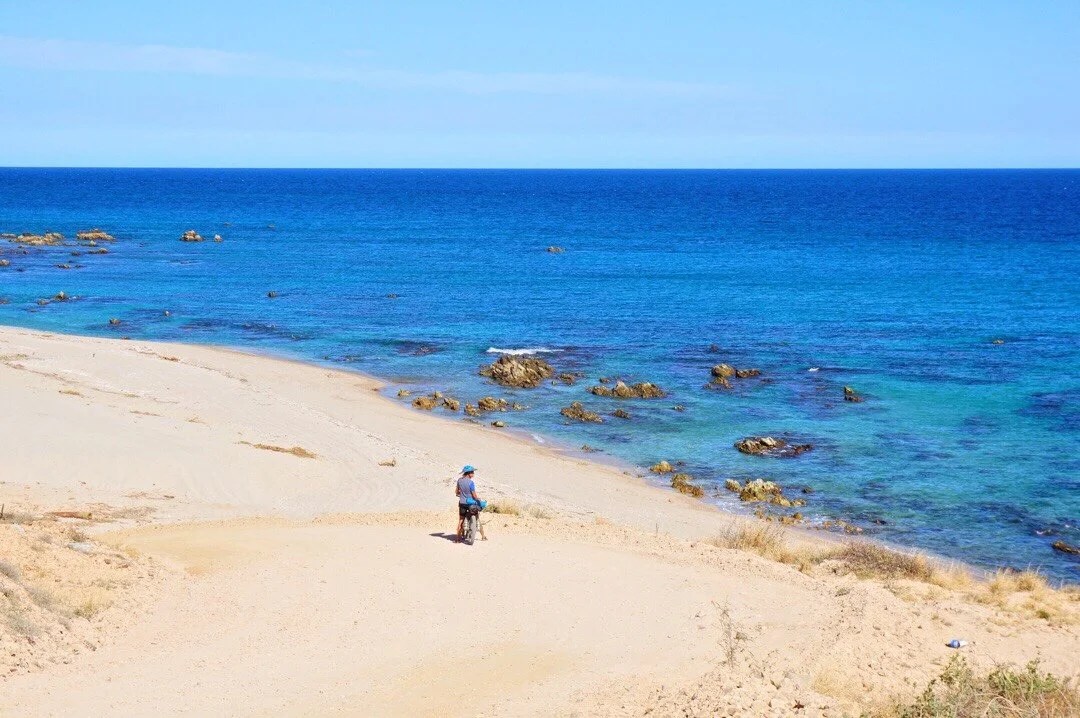


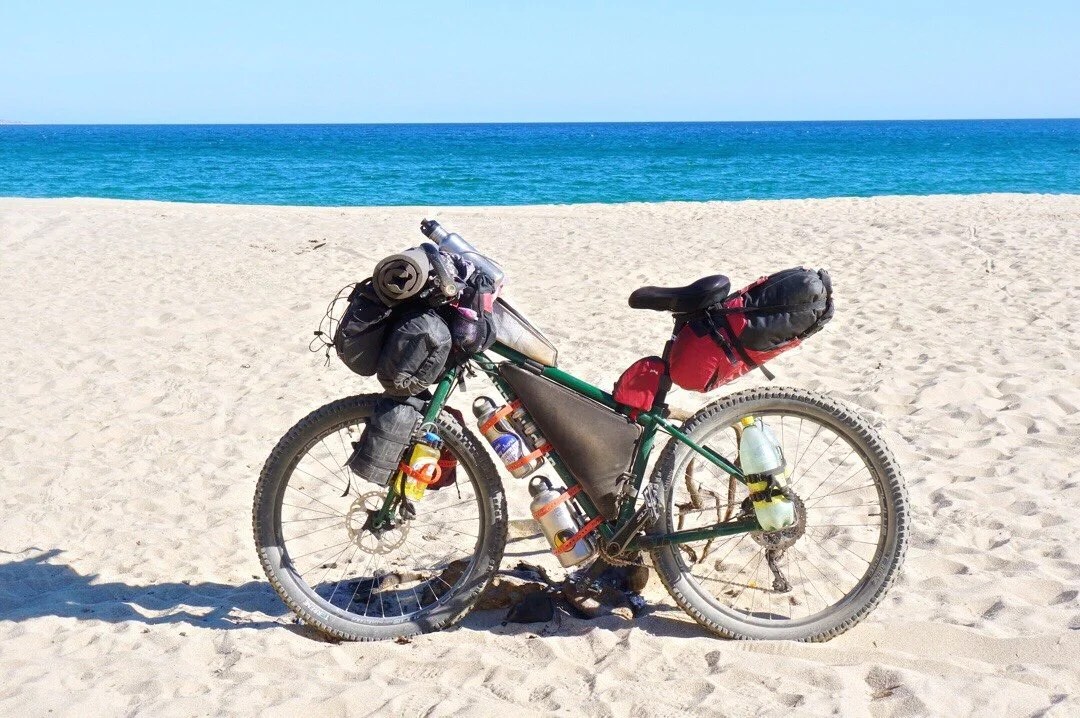


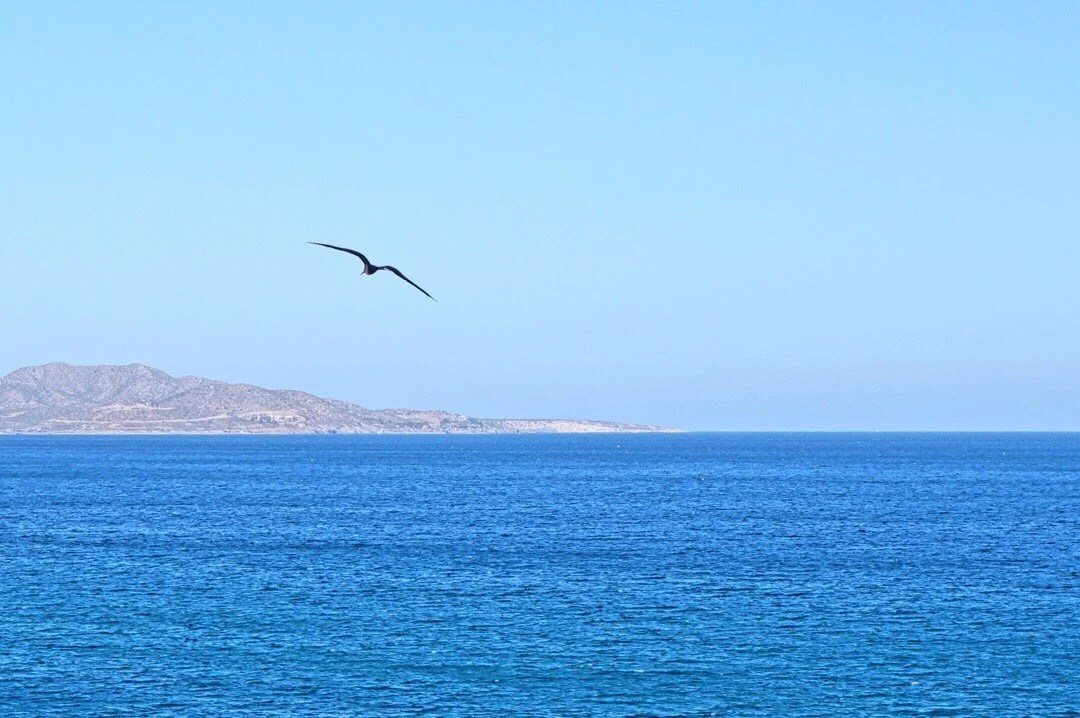


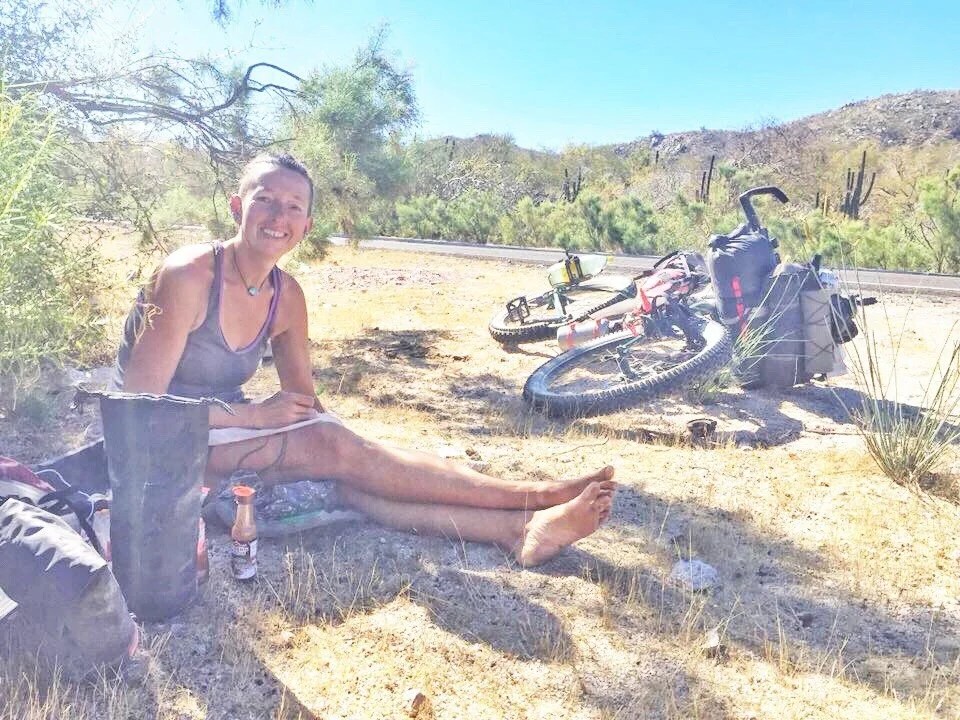
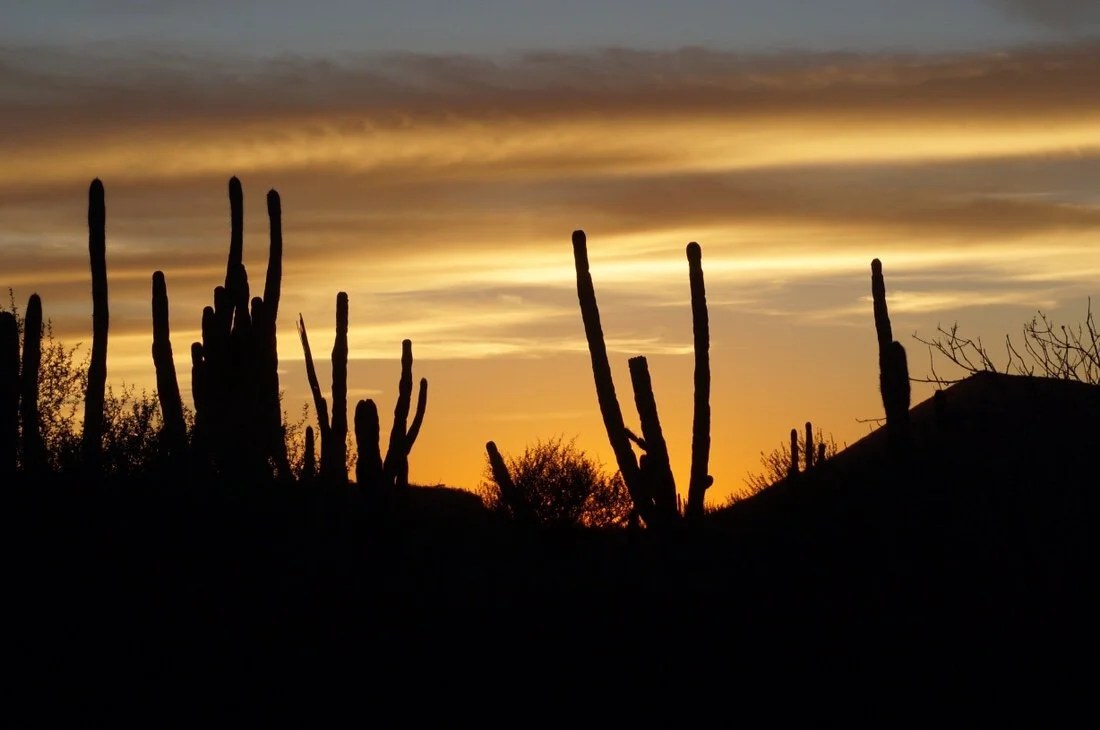
 After a fast downhill, we arrived in San Juan de Los Planes midday, bought a few supplies at a store, then rode a little further down the highway before weaving our bikes through the desert to a big wash, for “one last desert camp” in Baja California. It was all a little sweet, and a little sad, being “all done Baja”, and yet we were so ready to move onto the next part of this adventure.
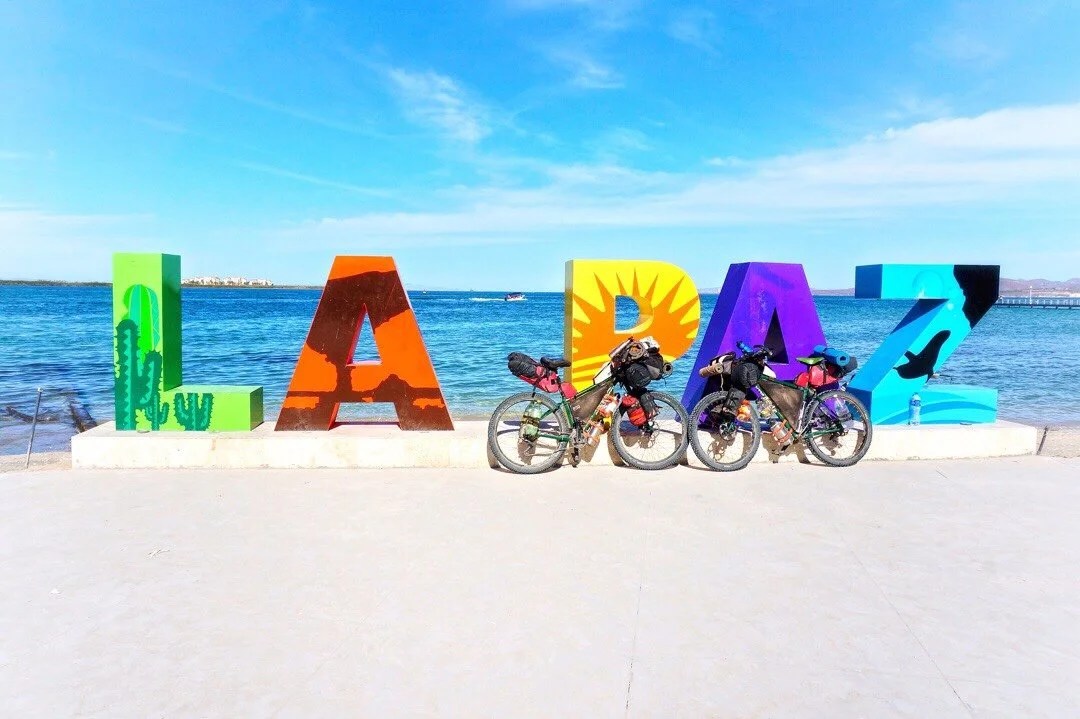
 The next morning we climbed 700 meters to a pass, then descended 30 kilometers into La Paz. We stoped by a hospital to get another vaccine, went to the Baja Ferries office to purchase tickets for our ferry ride to Mazatlan, then chilled out in a hotel for a couple of days to plan the next part of our adventure.
 _____________________You can sign up to receive The Redheaded Nomad’s blog posts in your email inbox; sign up at the bottom of any page on my website: theredheadednomad.comFor more frequent updates, follow me on Instagram at: instagram.com/theredheadednomadYou can also find me on Facebook at: facebook.com/redheadednomad_____________________
Tag: advocate cycles
-
BAJA DIVIDE 12: Finishing the Capeloop
-

BAJA DIVIDE 9: Sleeping with Beasts
“San Javier to Todos Santos”We had such a great week in Loreto it was almost sad to leave. But we packed our bikes into our friend’s truck and got the easy ride up into the mountains, from Loreto to where we left off on the Baja Divide route. After a few goodbyes and a quick selfie we put our bikes back together and rode off toward San Javier Mission, late in the afternoon.
 Is Solstice tonight or tomorrow, I asked Neon. Tomorrow, he replied. Good, I said, then we can find a nice camp, and watch the sunset with all this wine I’m packing. San Javier Mission is supposed to be pretty cool, I add; I want to take some time to look around and see that three hundred year old olive tree. It’s getting late, but it should be pretty easy to find a camp shortly after the mission site.


 We cruised into San Javier Mission, took a few photos, then rode several kilometers past the edge of town, and past several ranches, before weaving our bikes through a grove of coral bean trees, and vines that looked a bit like wild bougainvillea. As we settled in for the night a deep disappointment hit… Oh no! I forgot to look for the olive tree. How far are we from the mission? We can go back in the morning. I can’t believe I forgot. [if you know me even a little bit, you know how important plants are to me]. I grumbled for a bit as I inspected the cool vines sprawling everywhere. They have a huge seed I tell Neon. Really big for how little the flowers are. I slowly let go of the olive tree, commenting that there would be many more cool things along the way. But I still couldn’t believe that I was so distracted that I completely forgot about a three hundred year old olive tree, three hundred years old, an olive tree. How could anyone forget about a three hundred year old olive tree? The sky grew dark and the mosquitoes grew fierce. I unpacked my headnet, pulled it over my head, and laid down to sleep. I didn’t sleep that well with the mosquitoes whining all night, but the sun rose and slowly drove them away. The riding was good, up and down hills, with beautiful water crossings.


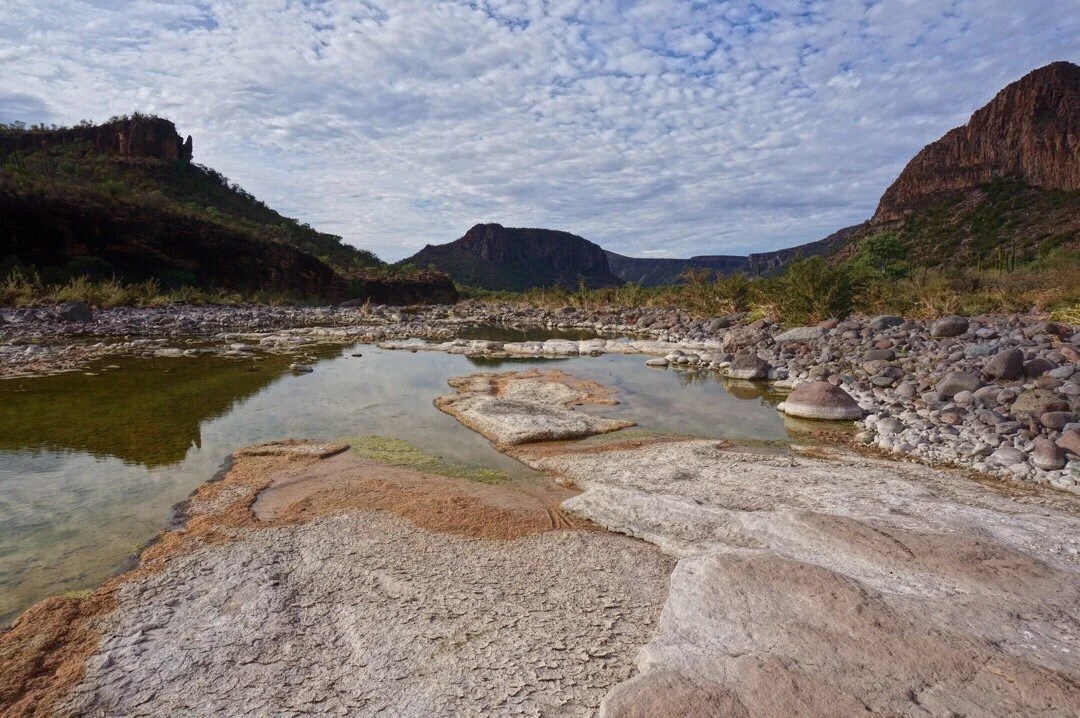
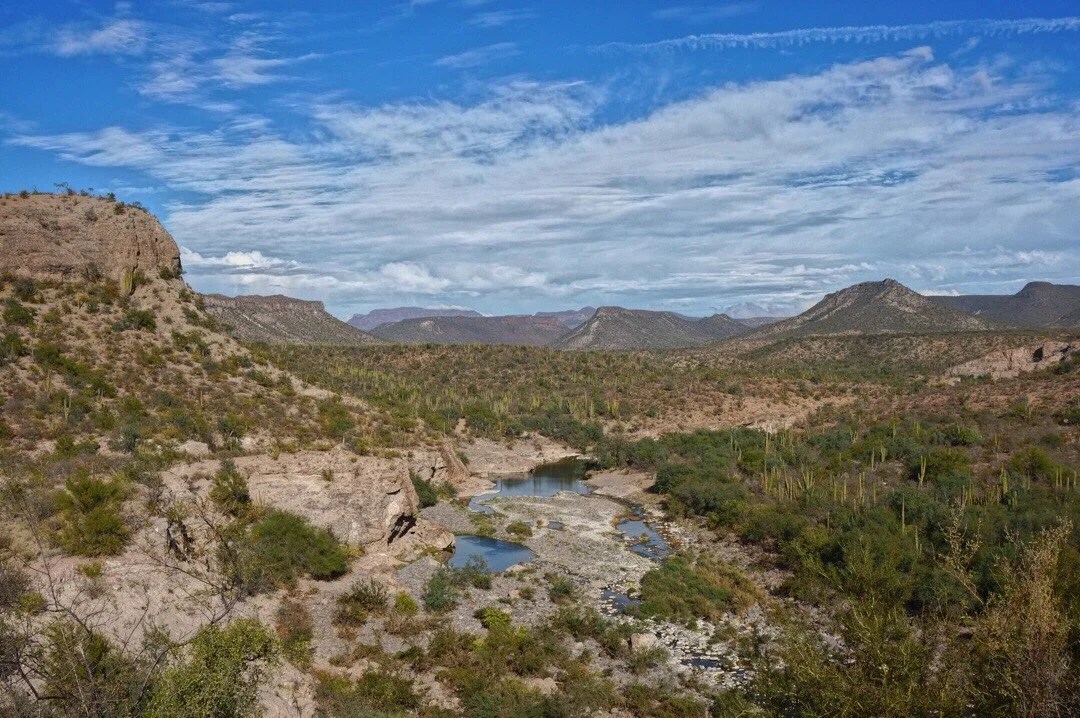

 We stopped for lunch on a large plate of rock on one of the rivers, palm trees graced the riverbed on both sides. The rest of the day brought the same …up into dryer hills, down into river oases. Just before camp we met two other Baja Divide riders, Brian and Janet, on a tandem! They’re from California, and have ridden all through Mexico, and Central and South America too. We all camped together and watched the sun set on solstice eve. The night brought more mosquitoes (another headnet night). I fell asleep to the tiny whinings of flocks of mosquitoes.


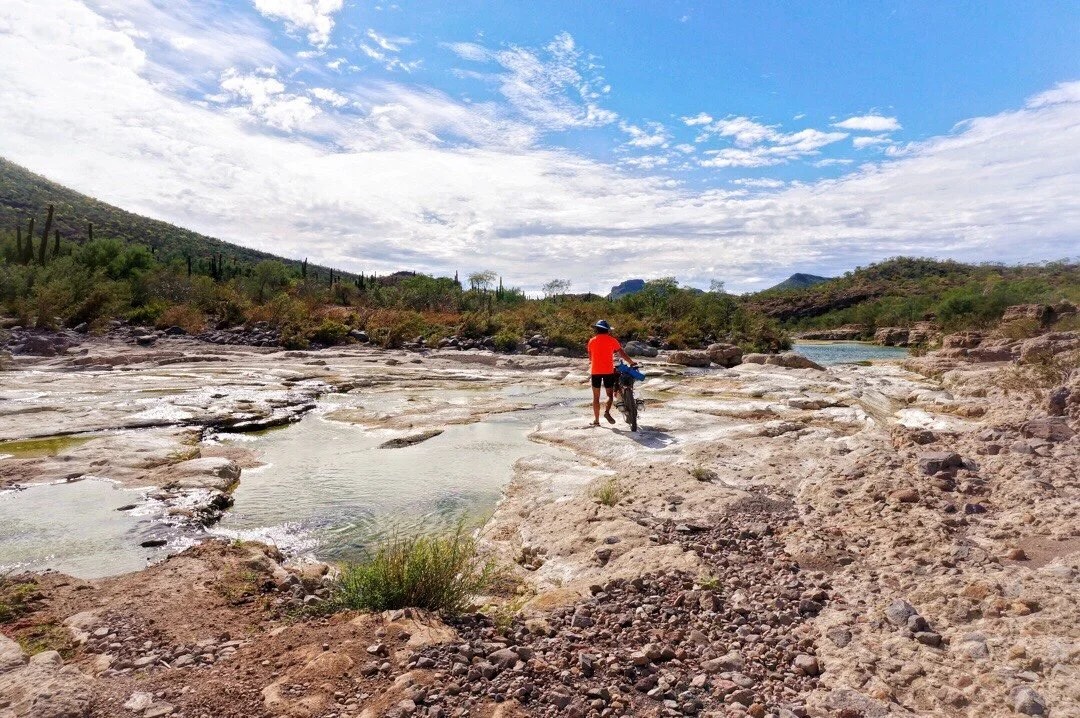

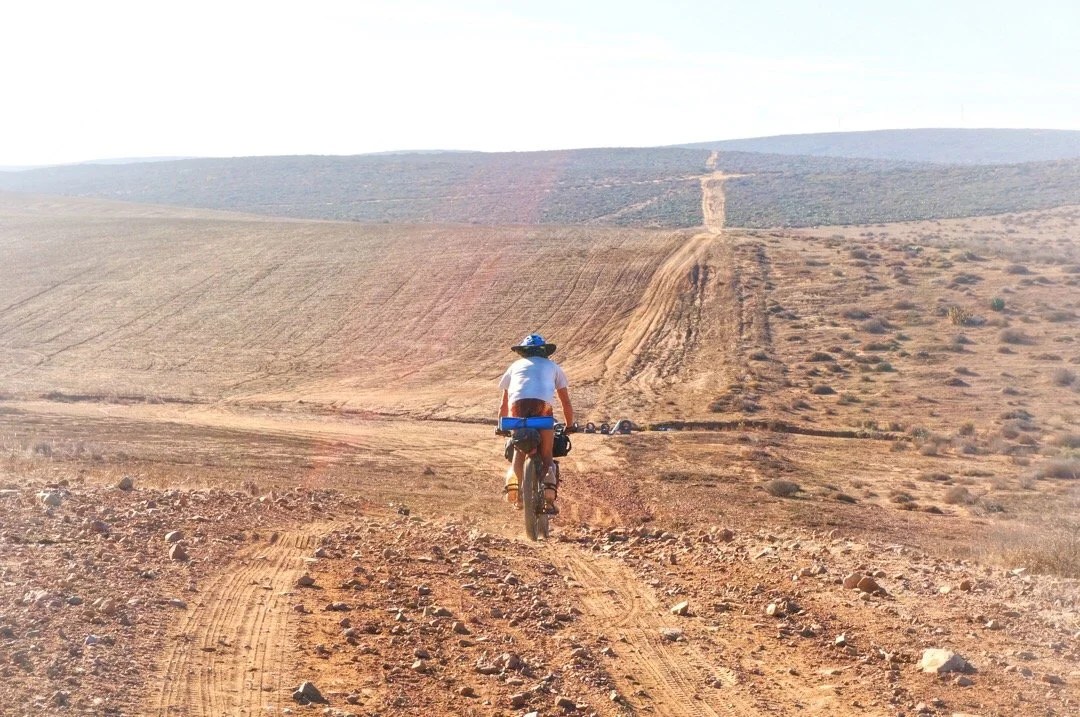
 We’re early risers so we bid our farewells to Brian and Janet and headed out as the sun rose. The riding was pretty easy, except for a few rocky, and sandy, water crossings that took some patience and a little hike-a-bike to cross.

 We arrived in Ley Federal just after the Tienda closed. We decided to continue on to to the next town with the supplies we had. The kilometers cruised by quickly and we started looking for camping on the outskirts of Cuidad Consticion. We kept passing potential camp sites, thinking we’d find a better one, until we found our selves so close to town that the orange grove farms, ranches, and fences, limited us to a roadside camp. We finally settled on a slightly out of sight dip in the landscape, near a Y in the road. We pushed our bikes in and hunkered down, watching farm trucks pass as the sun set. I could hear music in the distance. Dogs barked. Cows grunted to each other across the ranches. I had a difficult time falling to sleep, so close to the road, in such a populated area. Around midnight I woke to the sound of thunderous footsteps and the loudest elephant bellow I have ever heard. I saw large beasts, elephants, near a grass hut, before I realized I was dreaming. Jeez, what’s it like to bike-pack in Africa, I wondered. Then I sat up quickly to the sound of deep thudding footsteps. Cows! Can they see me in this ditch? How will they know I’m here? I don’t think they see very well, and it’s completely dark out. The thudding grew closer. I got out of my sleeping bag, stood up, and stomped around loudly. It bellowed at me. It’s so close! I stomped around a few more times. Neon grumbled. I told him to go back to sleep; I was just saving his life. I heard it wander a little further away. I’m so tired, I just want to get a little sleep. I laid back down, started to drift off, then heard small scratching and digging sounds in the grass. Maybe it’s a skunk, I thought. I’ve heard so many stories of people getting bitten by skunks. A whole other world comes to life after dark. I rattled my bottle against my bike, and tried to fall back to sleep. I woke before dawn. I turned to Neon… let’s go to town and get breakfast; I want hot coffee!
 We were in town in less than an hour, checked into our hotel, and went out in search of hot coffee before even showering. We found a place just down the street; as we approached, someone waved at me. It’s Brian and Janet I told Neon. We all had breakfast together, and chatted about bike routes in Mexico and South America.
 The next morning we had breakfast at a nearby coffee shop. The espresso I ordered might just have been the best espresso I have ever had. I ordered a double. What she brought me looked like it was maybe half an ounce. I looked at her and asked, “¿Esto es un doble?” Si, she replied. I looked at Neon; I don’t think this is even a single. Then I took a sip, and my whole body melted. Oh, this is good! I think this rivals any espresso I’ve had in Italy. After that I didn’t care how small it was, though I fantasized about swimming in a vat of it. This is all I want for Christmas, more coffee like this. We should bicycle across Italy, I told Neon. After breakfast we went back to our hotel, packed up our bikes and rode to the local bike shop, PROBIKE, to get new chains installed. Then off to the supermarket to resupply, before heading out of town late in the afternoon.
 The route leaves town and follows pavement for several kilometers before turning into the “burning dump”. I stopped and said “this is it. This is the dump we’ve heard about.” We rode in, two dogs laid in the shade under an old pickup bed. They had flies in their eyes. They didn’t bark; they didn’t even look at us. One lifted its head, slightly. A little further in we passed three guys. There were two younger ones leaning against some garbage with their heads down; they didn’t lift their heads. An older guy on the left was standing, looking at the ground. No one made eye contact. I wondered what they were doing here. Were they that poor that they came here to look for rotting, burning, food? Were they meth addicts? Who ends up here? We rode on, past fermenting grapefruit, rotting fish, clam shells, tomatoes, Burning plastic, car parts, and broken glass. The place smelled worse than I was anticipating; it made my nostrils tingle.
 We made it well past the burning dump before setting up camp in the desert. In the night I heard digging behind us. Then Neon grunted a bit in his sleep. I touched his shoulder; he said warthogs were chasing him. I told him it was probably just the digging sound behind us. Later I woke again to horses galloping nearby. I sat up to see if they were near. Despite the digging, the warthogs, and the horses, I slept great and woke excited to be out bikepacking on christmas day.


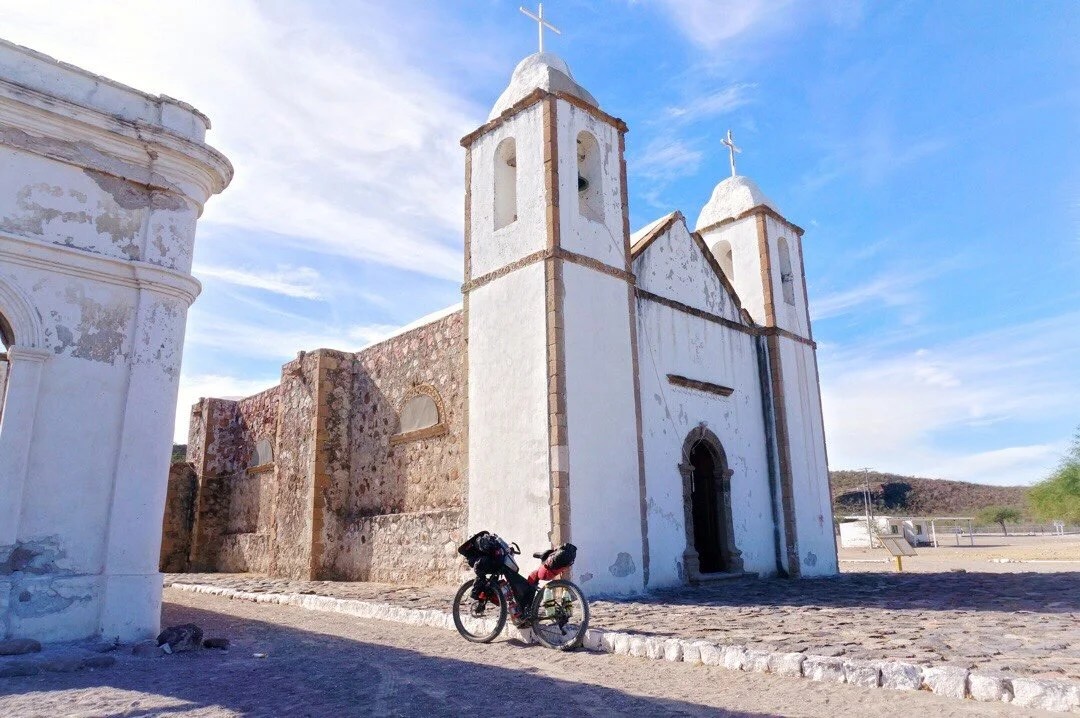 We rode into the San Luis Ganzaga Mission site early in the morning. The tienda was closed since it was Christmas Day. A family across the street from the mission invited us over to fill our water bottles. They offered us coffee and food, but since we had already eaten we declined, but thanked them graciously. We left the mission and cruised through the afternoon hours. Toward the end of the day we climbed higher into the mountains. We found a place to camp down an old road. We heard donkeys in the night, and some nearby scratching sounds.


 The next day brought more climbing, more river crossings, up and then down and then, up, up, up into the mountains. We filled our bottles at a few of the water crossings, and cleaned ourselves up a bit too. We found a place to came uphill from La Soledad. As the sun set I started feeling sick, sneezing, coughing, runny nose. It came on fast, and with a bang. Neon started coughing a little too. My eyes itched and my nose wouldn’t stop dripping. Toward dark the mosquitoes came out in force. Great, now I have to wear the headnet to bed. That’s just what I need with stuffed up sinuses. I tossed and turned all night, suffocating from the headnet and stuffy nose, and listened to the constant whining of mosquitoes. Donkeys past nearby in the night. Goat bells chimed. And owls called across the hillside to one another.
 I woke worse than I had fallen to sleep. Neon was sneezing now too. My sinuses were so clogged. Neon suggested it might have been the water we cleaned up in. We climbed higher into the mountains. I felt a little dizzy, and walked some of the downhills since I felt so out of balance. We finally arrived at the top, to the view of a two thousand foot descent down to the Sea of Cortez. Down, down, down, much faster than all that up. We turned to San Evaristo to buy more food. We sat on the porch of the tienda for a long time before leaving.


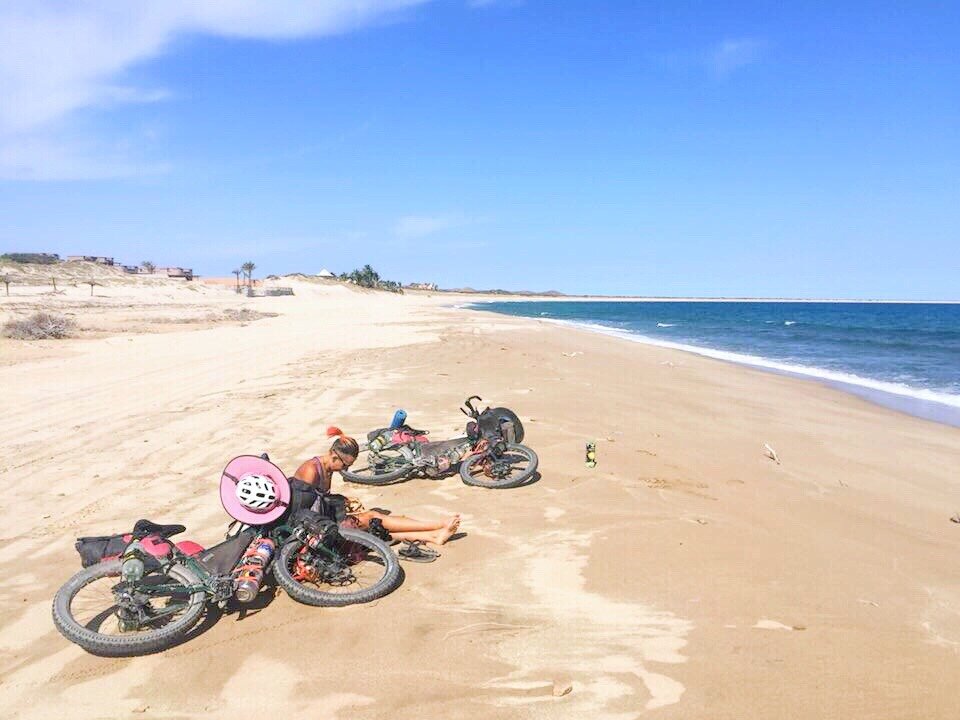
 We rode along the Sea of Cortez for several kilometers until we found beach access through a wash. We set up camp between beach plants. I ate, and laid down to sleep before the sun had even set, watching frigate birds in the sky as I fell asleep. There were no mosquitoes, no donkeys, no cows, no elephants, and no warthogs. This must be heaven I thought. My thermometer showed it was ~75°F, but I was completely bundled up, wearing my tights, socks, puffy, and head-buff to bed, fully cinched up in my 10° sleeping bag. It felt unbelievably cozy. I was so happy to lie here in this beautiful place. I fell asleep quickly, waking a couple of times to pee and guzzle water. I slept for fourteen hours, a good feeling kind of sleep. I didn’t want to leave. But we finally packed up our things. I found a questionable looking spider under my ground sheet, and Neon found a little scorpion under his sleeping mat.


 The day started off with a big uphill with lots of hike-a-bike pushing. It was draining. I wasn’t feeling any better. But I hoped that all this hard work and sweating would push this alien out of my body and sinuses. We spent several hours, pushing, riding, and resting under trees, before deciding to hitch into La Paz to find a cheap hotel with a hot shower.
 It took about fifteen minutes to get a ride, but a big pickup stopped, helped us load the bikes, and drove us to the outskirts of La Paz. We found the closest cheap hotel, showered, and went to bed before sunset again. I woke late. My head was pounding. We decided to ride into La Paz Centro, a few kilometers further. Riding a bike never felt so bad, that round and round motion of the tires, the ground wizzing by, being dizzy and unbalanced on a machine that requires balance. It hurt, but we made it to a cheaper hotel (Hotel Baja California), with hot water and good wifi. I crawled into bed and didn’t move. We spent four whole days in La Paz before we felt up to riding again.


 We left early to conquer the seven hundred meter climb before needing to camp. We found a place to camp in a wash. In the night I heard a cow bell approaching. It took a while to open my eyes and focus. I sat up and looked at the cow. It turned its head and looked in my direction. It just stood there for a long time, and then turned around and walked out the way it came.
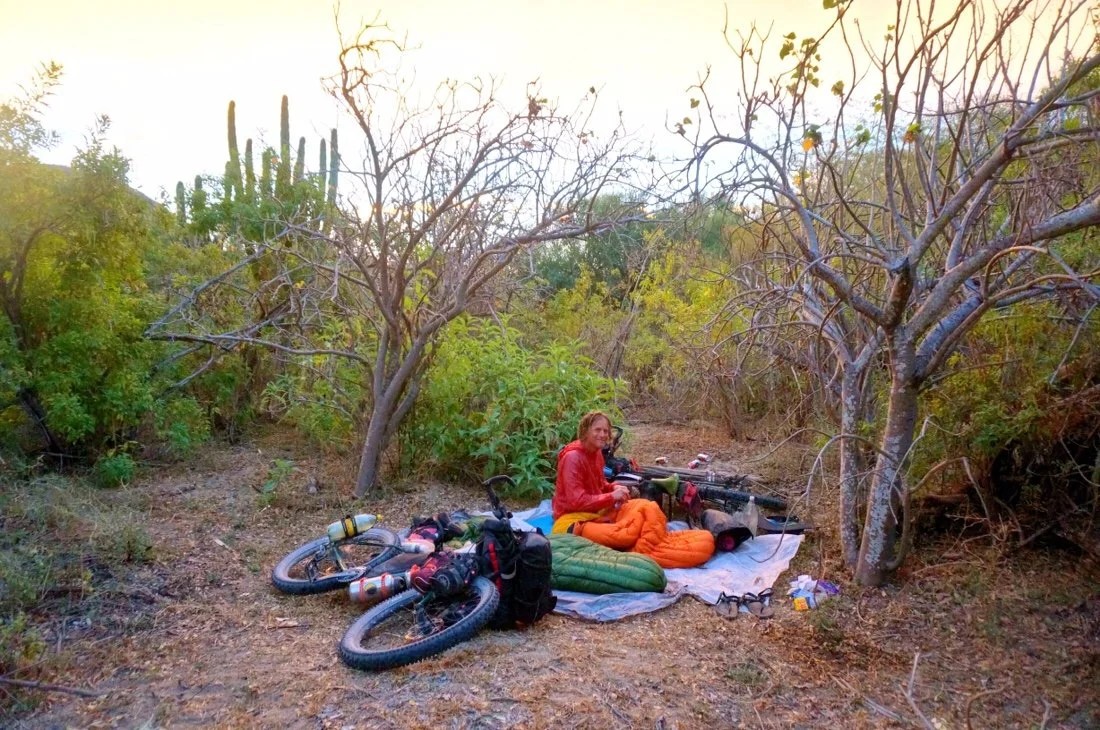
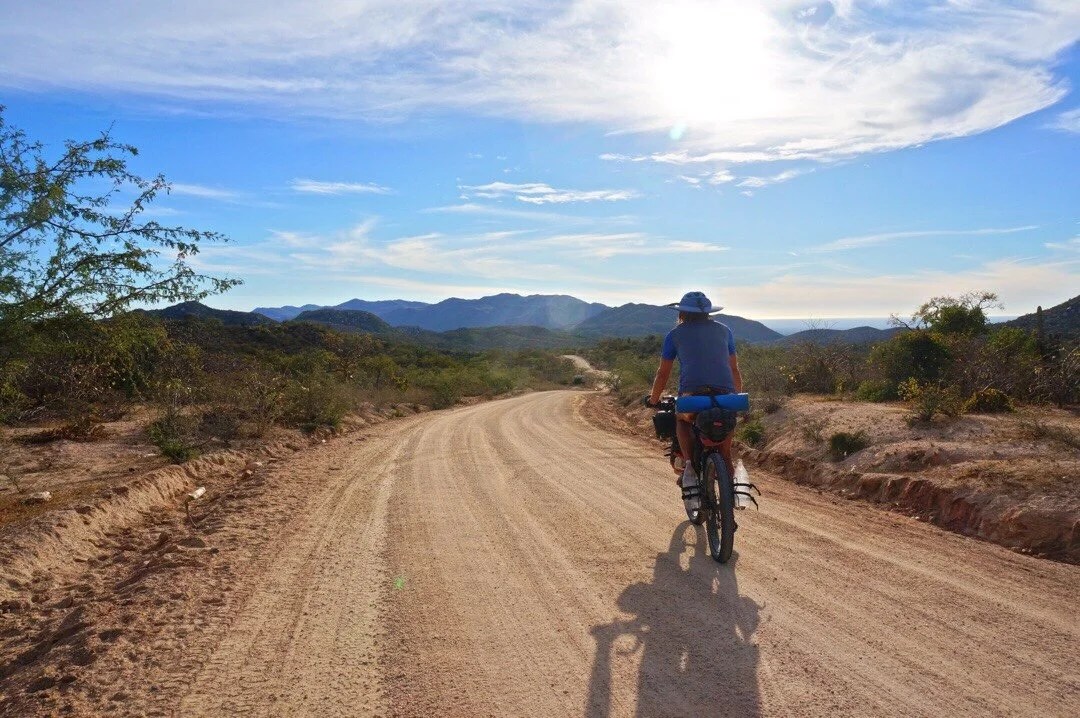 They next day was great riding. We were both feeling better. We stopped at a couple of tiendas for drinks and snacks. The plant life was getting more dense. It took a while to find a place to camp, but we finally found an open path through the dense foliage. We wove through trees and bushes and vines to a secluded spot surrounded by mesquite-looking trees, coral bean trees, organ pipe cactus, and a few cardons. As the sky grew dark several bats swooped by, inches from my face. They’re smaller here than in Arizona, more like the size of a luna moth.
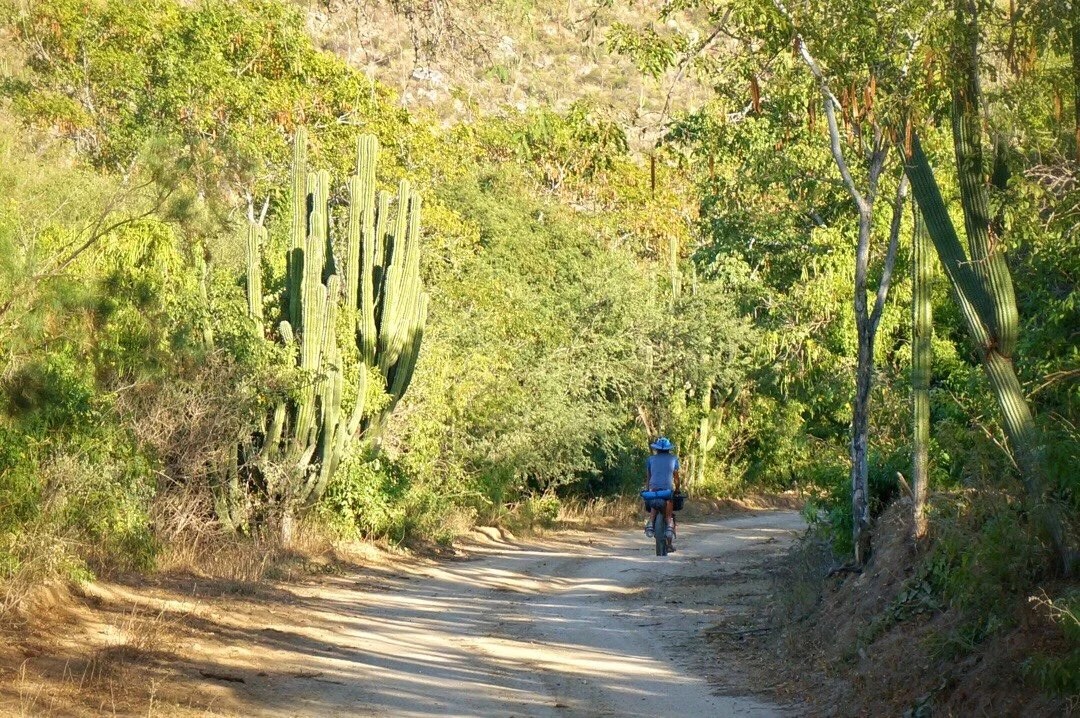

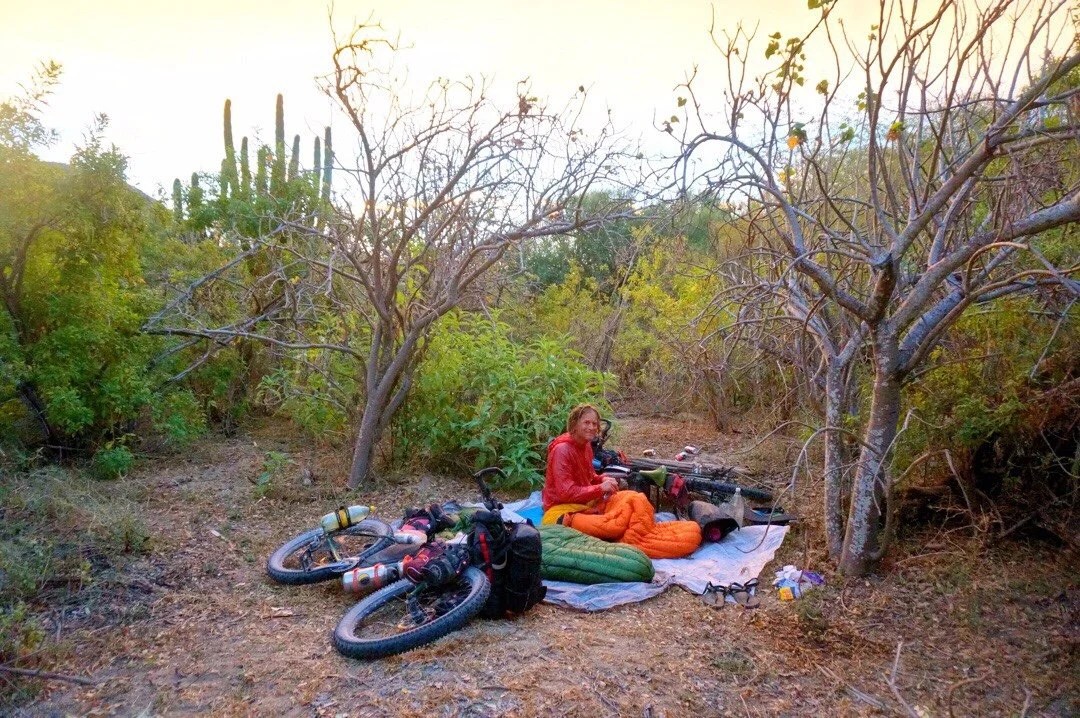


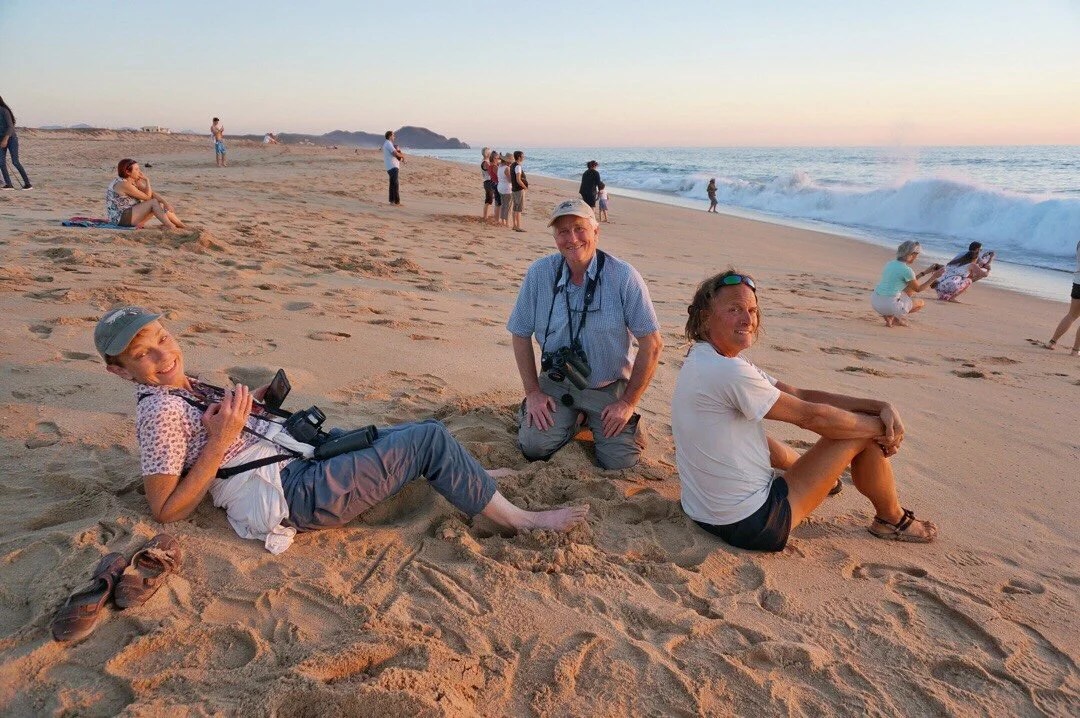
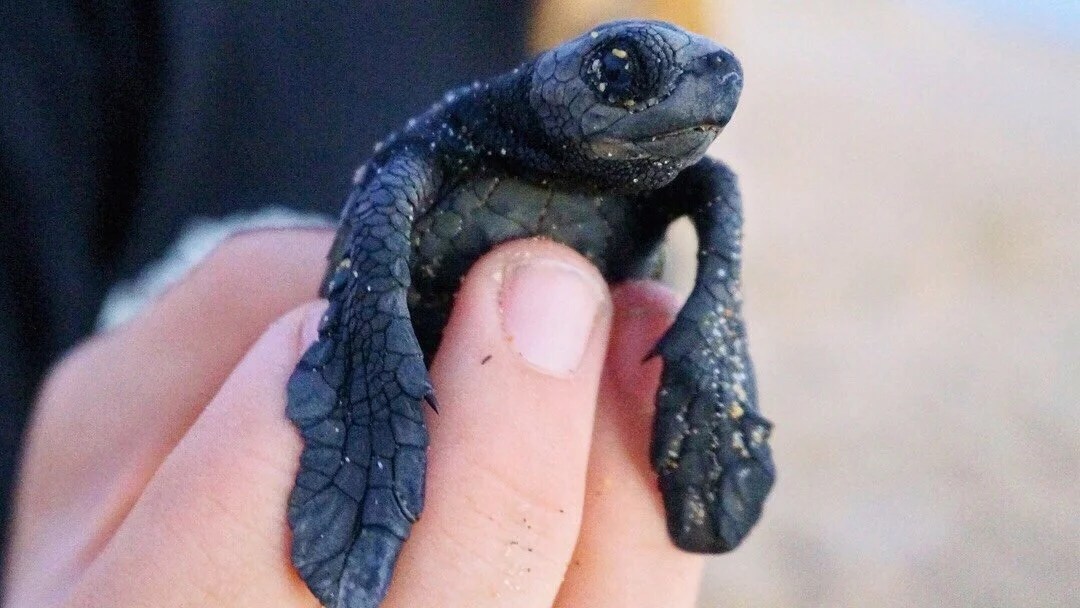
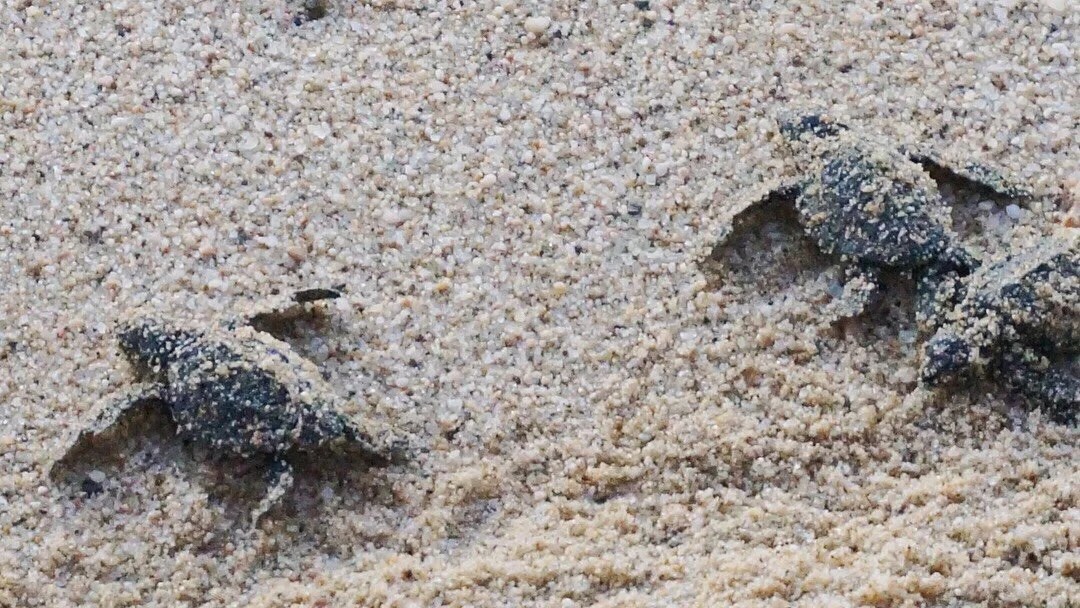
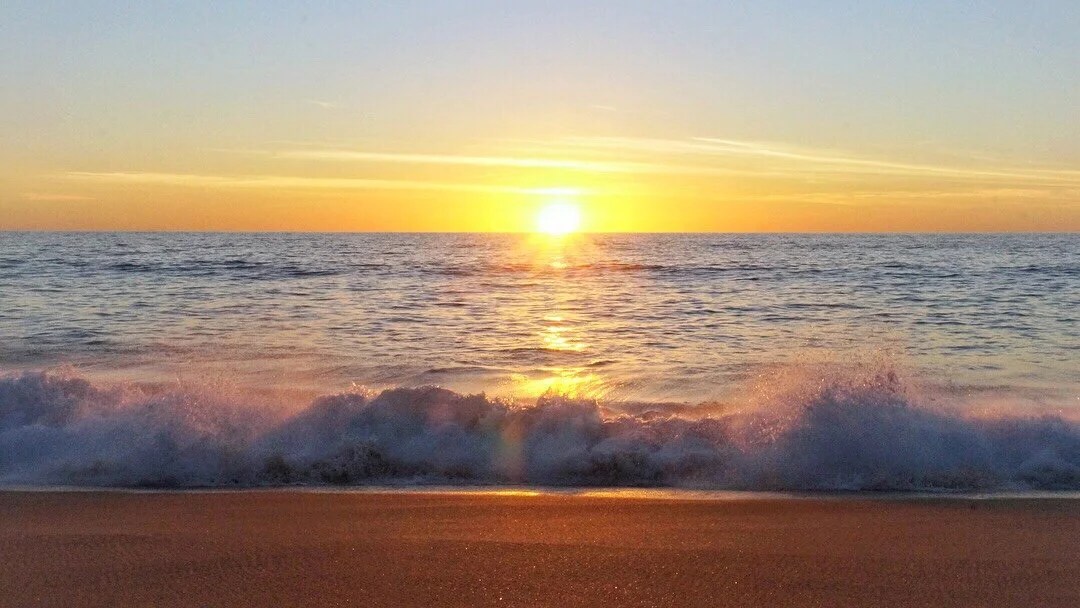
 I woke feeling a lot better than I had in at least a week. The riding was more difficult, with a lot of sand, but we made it to Todos Santos by late afternoon. Our friends from Maryland we’re waiting for us there so that we could all climb the state highpoint of Baja California Sur, Sierra la Laguna highpoint, together. We spent a day in town, watched the baby turtle release, and supplied for three days in the Sierra la Laguna mountains.
 _____________________You can sign up to receive The Redheaded Nomad’s blog posts in your email inbox; sign up at the bottom of any page on my website: theredheadednomad.comFor more frequent updates, follow me on Instagram at: instagram.com/theredheadednomadYou can also find me on Facebook at: facebook.com/redheadednomad_____________________
-
BAJA DIVIDE 8: Coast to Coast
“San Ignacio to San Javier”We left Motel Fong late in the morning. We rode a paved road, lined with tall date palms, into old town San Ignacio, running over fallen dates along the way. While taking photos of the mission in old town, we met a lady that had cycled the length of Baja California, on MEX-1, twenty years ago. She said she came back this time to see all the sites she didn’t have time to see then.

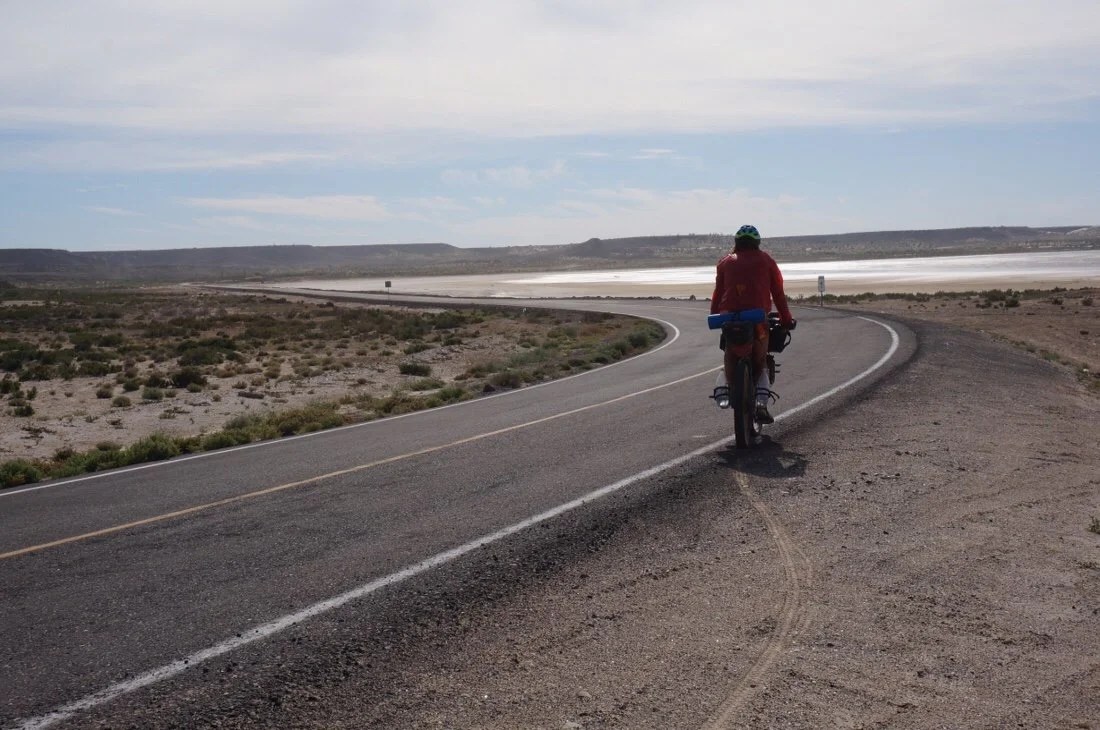
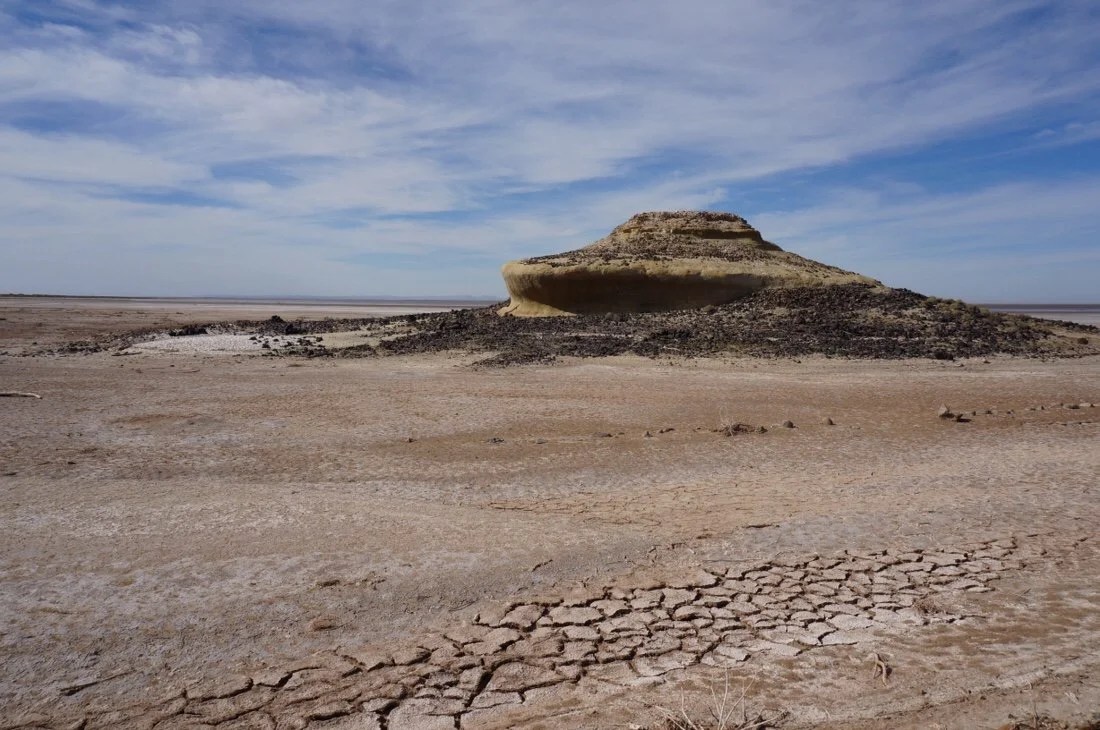 The road leaving old town was on fast, mostly downhill, pavement with a tailwind almost all the way to the Pacific Coast. We stopped at the tienda in San Zacarias for a rest break. They had bags of mini mixed Lindt dark chocolates; the first good chocolate I’ve seen in Baja. Neon wanted to split a bag, but no way was I going to split the first real chocolate I’d seen since we left the states. I walked back out to my bike, giddy with delight, and opened a little square of dark chocolate with sea salt, bit off a corner and just sat there smiling while the tiny goodness melted on my tongue.
 The road turned to dirt shortly before La Laguna. We stopped for lunch under a tree, looking across the water at the mountains we had ridden near out of Vizcaino. We continued past Ejido Luis Echeverria Alvarez until we found a place to camp, a ways off the road, in some short bushes, in a low undulation in the landscape. We watched the sun set over the ocean and talked about all the cool things we’ve seen and experienced on our trip.

 We woke the next morning to a colorful sunrise, and headed out into a slight headwind on the salt flats. Near lunchtime, a man stopped and asked about our ride. He delivers produce to the little towns out here and offered us some oranges, handing us three each. We immediately sat down and ate them all. Despite their yellowish orange, and a little green, peels, I think they were the best best oranges I’ve ever had. We discussed our route, deciding not to take the canyon road to Mulege since we’d already spent a week there over Thanksgiving, but instead to take the alternate that continues south along the coast to San Juanico, then back east to reconnect to the main route at San Isidro.

 We made it to El Datil by mid-afternoon. We bought water and snacks at the tiny store. On our ride through town a group of boys on bicycles flocked around us, asking for stickers. Two of them were riding barefoot and another did a wheelie as he rode up beside Neon. Neon told them a little about our bikes and what we carry for our trip. I stopped to take a picture of a group of pelicans hanging out on a boat when one more boy came racing up behind me yelling “stickers”. I told him “no stickers”. He stopped and just sat there in the road, staring at me with disappointment. I said goodbye and rode on to catch up with Neon. Rap music blared from one of the houses on the edge of town.
 We continued back out onto the salt flats, climbing small sand dunes, before climbing up into the mountains. Late in the day we came across a road working crew with big trucks spreading new rock dust on the road. I’d been wondering who maintains these backcountry roads. We found a place to camp deep in a wash and listened to the sound of big trucks dump and spread rock until, all at once, they stopped. I guess it’s quitting time, I remarked to Neon. We watched the sun set through the trees and toasted to another day. I watched a fuzzy white velvet ant meander through our camp in the glow of the setting sun. A few birds came and went. We settled in for the night.
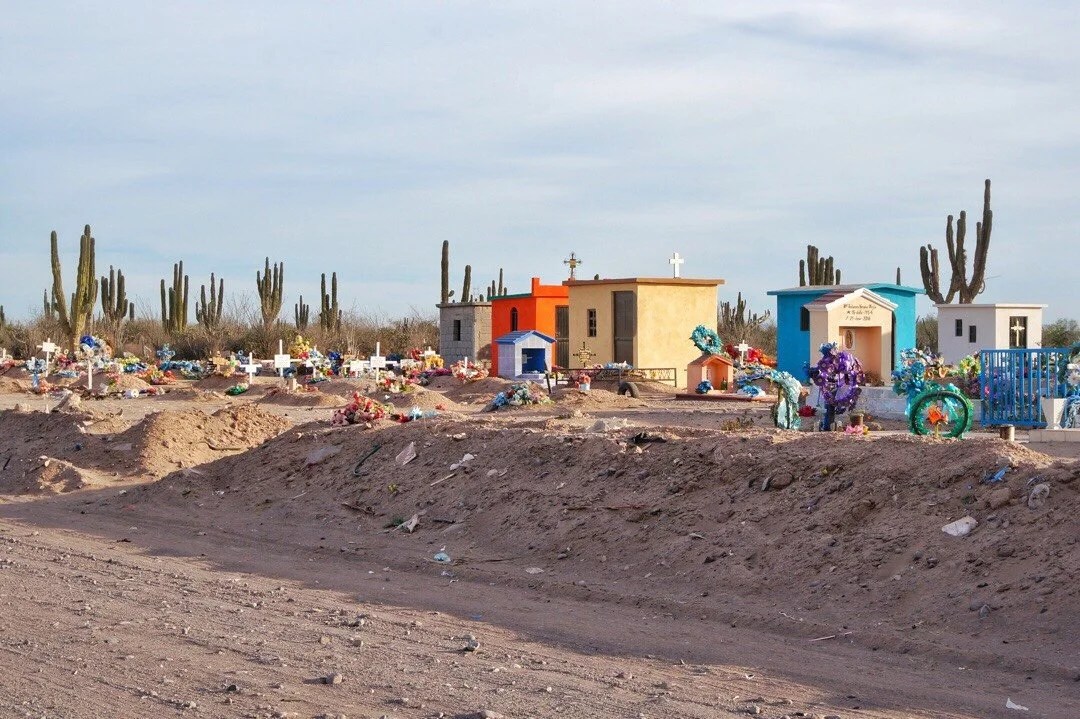
 The next day we rode through the tiny town of Cadejé, passing a small colorful, cemetery on the way in. A little boy ran out and started taking to Neon. The little boy said he used to go to school, but his town doesn’t have a school anymore. The closest school is in the next town and there’s no bus. As we rode on I wondered what sustained this little town. A few hours later, a truck stops, and a old hippie gets out and says “No way, bicycles! I couldn’t believe my eyes when I saw bicycles coming down the road.” He told us about his ranch, just a few kilometers away, all the organic produce he grows, how he rescues horses and donkeys and dogs and cats. Before leaving, he gave us each a sticker, a rainbow for Neon, and a “Go Vegan” sticker for me. Everything you can imagine seems to exist in Baja, especially in what seems like the middle of nowhere. After a few more kilometers we pulled into the town of San Juanico on Scorpion Bay. We found a hotel and then a restaurant with a second floor patio with a view of the bay.


 The next day we headed out of town on pavement, for ~sixteen kilometers, before turning uphill onto a soft silty road that climbed up onto a mesa. We pushed our bikes for most of it until descending the most fun sandy steep hill ever, all the way down into a canyon with a wide valley and steep cliff walls. We pedaled across sand, and river rock, until we came to a beautiful swimming hole at the base of a cliff. The walls of the cliff were embedded with sea shells. We climbed back up, winding our way through the the hills and camped amongst the cactus.


 The next day we road through La Purisima and San Isidro. The towns were small, off the beaten path, on a paved road lined with palm trees, a whole forest of palm trees. An old canal ran through the towns, supplying water from the nearby river. We climbed out of San Isidro and connected back with the main route. We pushed our bikes up steep hills, then rode fast downhills, then climbed again. The terrain changed from river oases back to desert, then to a volcanic landscape littered with dark rocks. The rocky terrain made camping difficult. We finally found a pullout on the side of the road and setup for the night.
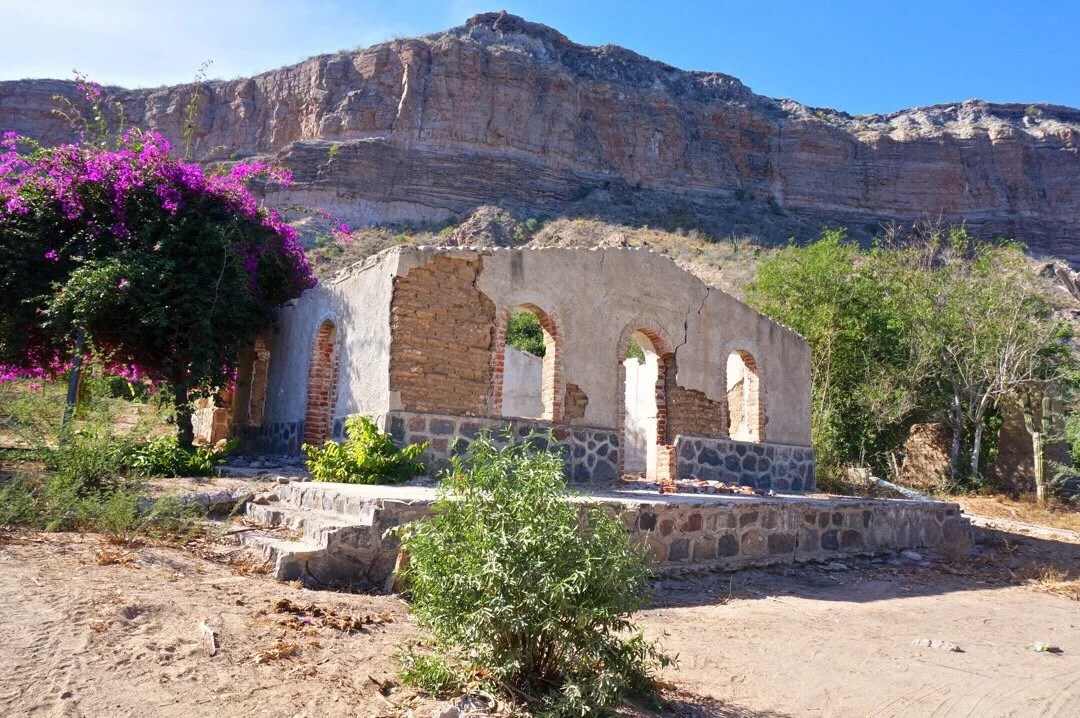


 The next day we road through San Jose Comondú, another river oasis small town, past another mission, and another old canal at the edge of town. We climbed out of the river valley, pushed our bikes up hills, rode some fun downhills, encountered more road work, and then climbed one last giant hill at the end of the day. Toward the top of the climb we met Francis, a Canadian guy with two dogs, hiking around Baja with a mono-wheel cart for carrying supplies. We found a beautiful place to camp, with a perfect sunset view, down an old road at the top of the hill.
 The next morning we made our way toward San Javier Mission. Once we reached the paved road that leads to the Mission, we turned left to make a detour, all the way down to Loreto. We rode the most amazing windy road, thirty kilometers, down into Loreto, back to the Sea of Cortez, to visit a trail friend from New Mexico.
 Our friend lives in Loreto part time and plays Santa Claus every year at some of the local schools. During our visit we had the privilege to visit one of the schools with him. I’m not sure I’ve ever seen kids so excited to see Santa before. When we arrived there were only a dozen or so kids; apparently because the bus that brings the children to the school had ran out of gas, but these kids had all walked. Not missing a beat, Santa offered to go pick up as many kids as he could fit in his four wheel drive sleigh. An hour later he returned with a truck full of moms and children. Photos and candy-canes proceeded. I never participated in this tradition as a child, but for these children it seemed to mean so much. I struggle to understand what that “much” is, but clearly it has deep significance and this was a day that they will cherish forever.


 We spent an entire week in Loreto. It was a very different experience from anything previous in our trip. We wandered the streets, found a favorite breakfast place, not for the food, but for the conversation with a new friend (from Columbia), where I listened so intently to understand Spanish that it actually gave me a headache. We met so many other people that have travelled all over, extensively, through Central & South America (oh, the stories). I finally got to eat at the infamous “El Ray Tacos”. And in finale, Neon finally got the bike seat he had ordered three weeks previously.


 Thankfully our friend (from New Mexico) let us stuff our bikes into Santa’s 4×4 sleigh, so we could have a chariot ride back up the long and windy road. He dropped us off right where we had turned to ride down into Loreto. One quick selfie and we said our goodbyes. We got our bikes all put back together and headed back on route to San Javier Mission._____________________You can sign up to receive The Redheaded Nomad’s blog posts in your email inbox; sign up at the bottom of any page on my website: theredheadednomad.comFor more frequent updates, follow me on Instagram at: instagram.com/theredheadednomadYou can also find me on Facebook at: facebook.com/redheadednomad_____________________
-
BAJA DIVIDE 7: A Long Way to Go
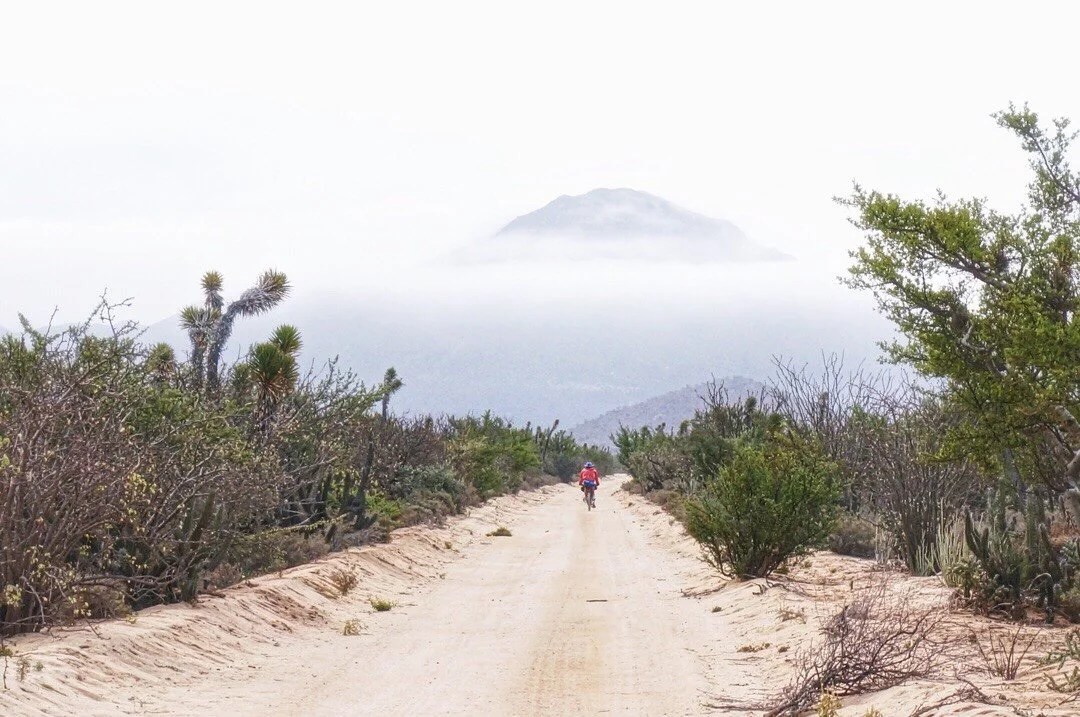
“Rosarito to San Ignacio”.After picking up Neon’s new bike seat in Guerrero Negro we took the bus south to Mulege to meet family for Thanksgiving. We swam in the Bay of Conception on the Sea of Cortez, watched a parade, and drank margaritas on the beach. The bus ride back north (after Thanksgiving) to Rosarito (where we had left off before Neons seat rail broke) was long, too long. It was near 10:00 pm, and dark, when we arrived. Not wanting to stay at the hotel with the wet floor again, we headed out into the desert. This was our first night ride in Baja. Riding at night felt like hovering over a dark abyss, and the photons from my bike light were just teasing me as they bounced around the darkness. It seemed like we had ridden forever, wobbling down the dark dirt road, but when we finally stopped to camp, my odometer only had two kilometers on it.I woke the next morning feeling stiff from the long bus ride, but it felt good to be back on the bikes again. The roads were good and we made it to Mission San Borja before lunch time, feeling overheated from the from the hot mid-morning sun. Neon headed straight to one of the palapas (palm leaf roof / structure), while I stood in awe staring at the stone work on the mission. When I got to the palapa Neon was already crashed out on his sleeping mat. I followed suit. When we woke, Jose (the property owner), introduced himself. He asked us about where we had ridden from; we replied, Rosarito. He told us the bicycles were easy, that when he was a boy he used to walk to Rosarito once a week to get supplies. He told us stories about the history of the area, how there used to be more Indians that inhabited the land, but when the Spanish arrived they brought sickness and many died and the rest were enslaved to work the land and build the mission. He said he is mixed, Cochimí Indian and Spanish, and that he was born on the land, and his ninety year old mother too. He told me that I looked like his niece, and that that made him happy. We are all related, he said with a smile.He invited us over to his place to fill up with cold water from his cistern, noting that it’s the original cistern. We asked about the warm springs on the property, and he directed us down a trail, past several water catchments and pools, that led to the springs. When we returned, he invited us into the mission to look around. He smiled and told us that everything is original from the time it was built. I rode off into the desert trying to imagine what it would have been like to have been born at Mission San Borja.We camped early, nestled in a wash, surrounded by cirio trees, cardon, chollo, and tall yuccas that look a little like joshua trees. We woke the next morning to misty fog rolling in from the pacific coast. The ride into Bahia de Los Angeles was a mix of easy dirt roads and fast downhill pavement into town. We found a cheap hotel with a big porch facing the Sea of Cortez, a hundred feet from a sandy beach. I woke to a pink and orange sunrise, drank my coffee on the porch, and watched dolphins leaping through the sea.The dirt road leaving town was an easy cruise through a beautiful valley. Our route slowly climbed into the mountains, down into another valley, and then back to the sea. Late the next day, a truck, with a couple of locals, stops. The driver asks (looking at our bikes), in a thick Mexican accent, “where are you going?” I reply, Argentina. He laughs, in a deep laugh, and says, “oh, that’s far, long, long, way from here”. He reaches back into the vehicle and hands Neon a beer, reaches in the truck again, and then hands me a beer. We thank him. He smiles and says, “well you have a long way to go; you’d better get going”. We rode for a little longer before rolling off into the desert to camp. We opened our beers and toasted to “our long way to go”.The next day started with a slow uphill grind before coming to a pass, then a long downhill to Rancho Escondido where we stopped for water. There was no one around, and the place had sort of an abandoned eerie feel to it. We found a hose to get water from and then headed back on route . The road was sandy and slow going. We set up camp, in a narrow wash, in soft, cushy, sand. The clouds were thick and we fell asleep hoping it wouldn’t rain.We woke to a beautiful sunrise. We stopped at Rancho Piedro Blanco for a meal and a few snacks, then turned left and took an alternate road that parallels the route. We climbed a small pass and rode through a beautiful desert garden with a mix of Tree Ocotillo, Cardon, cholla, creosote, and Torote. We camped under moody skies and fell asleep to the sound of crickets.The roads got sandier the closer we got to Vizcaino. We rested in town, ate dates, watermelon, and other street foods. The route out of town was a mix of paved highway and sandy dirt roads. We pushed our bikes, a lot, through sand and fluffy silty volcanic ash before deciding to cut back to the highway, away from the route, for the final kilometers into San Ignacio. We stayed at Fong’s Motel. Nano Fong was a circus performer and had set a world record for Unicycling, 56 hours.We touch so many lives and places on this journey. It is truly an amazing world out here, and I’m so happy to have the opportunity to be out in it, experiencing the nuanced textures that make up its beauty._____________________You can sign up to receive The Redheaded Nomad’s blog posts in your email inbox; sign up at the bottom of any page on my website: theredheadednomad.comFor more frequent updates follow me on Instagram at: instagram.com/theredheadednomadYou can also find me on Facebook at: facebook.com/redheadednomad_____________________Parade in Mulege: Dìa de la Revolucìon
 _____________________Palapa: palm leaf roof (from the underside)
 _____________________We spent Thanksgiving hanging out on the beaches south of Mulege…_____________________Playa Ventura…

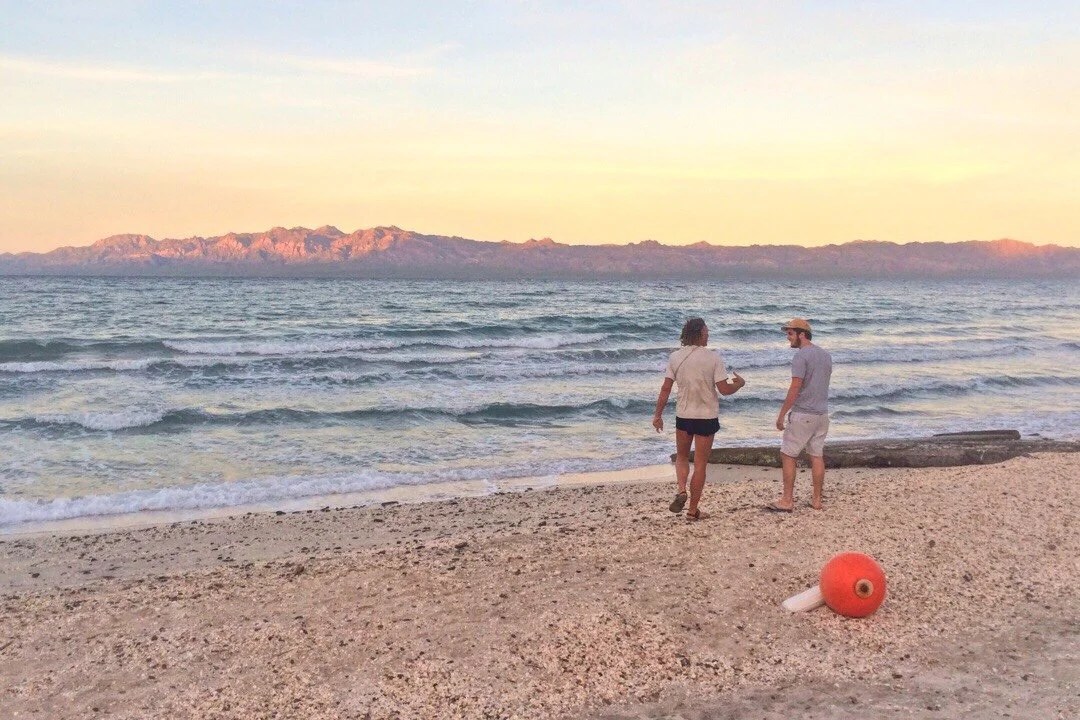 _____________________Ocean in the Sky (Ephemeral no.6)
 _____________________Playa Requeson…

 _____________________Playa El Coyote…Baja Note no.1 & 2
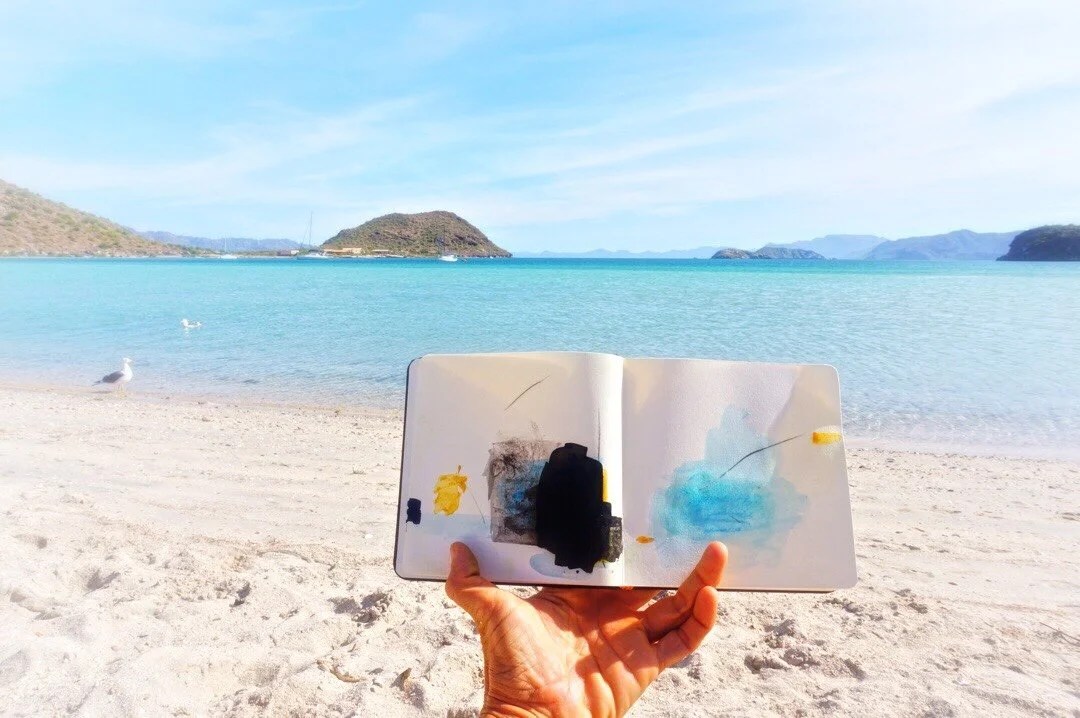 _____________________Back on the bikes, after Rosarito…


 _____________________Mission San Borja …founded in 1762, the church was completed in 1801.


 _____________________


 _____________________A third species of Fouquieria… the Baja California Tree Ocotillo (Fouquiera diguetti)


 ____________________Candelilla ‘euphorbia lomelii’ has cool looking fruit…

 _____________________Old Man Cactus…
 _____________________Sunrise on the Sea of Cortez in Bahia de Los Angeles, beautiful morning complete with dolphins leaping through the sea…
 _____________________Baja Note no.4
 _____________________

 _____________________

 _____________________
 _____________________
 _____________________Zopalilotes (vultures) roosting on a Cardon Cactus
 _____________________
 _____________________He likes to read in bed…
 _____________________Soft desert textures…
 _____________________I’ve been seeing a lot of these fuzzy critters…
 _____________________Elephant Tree (torete) is in the Frankincense family. This species leaves smell like peppermint with a hint of citrus.
 _____________________Moody Skies…
 _____________________Traffic on the Baja Divide…

 _____________________
 _____________________Abandoned buildings looking ominous with moody skies…
 _____________________Neon trying a local street food in Vizcaino: corn, slathered in mayonnaise, rolled in shredded cheese, and sprinkled with lemon chili powder. He said it was quite tasty…
 _____________________These mountains southwest of Vizcaino captured my interest. I’d like to climb them someday…
 _____________________We pushed our bikes through deep sand, and fluffy silty volcanic ash, on the roads after Vizcaino…
 _____________________Riding up on a plateau above the sandy layers…

 _____________________Sunset, Tree Ocotillo, Cardon, and Joshua Tree style yucca
 _____________________Sunrise, waiting for the sun to warm…
 _____________________Mission San Ignacio, founded in 1728…


 _____________________
-
BAJA DIVIDE 6: The Wild Pacific Coast
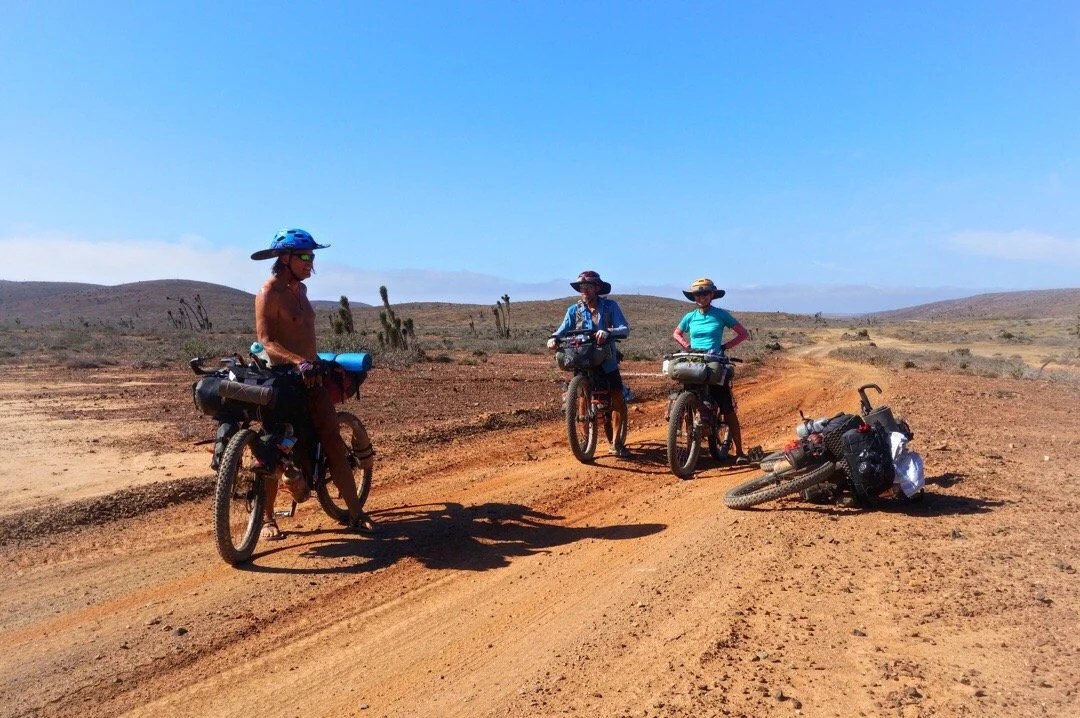
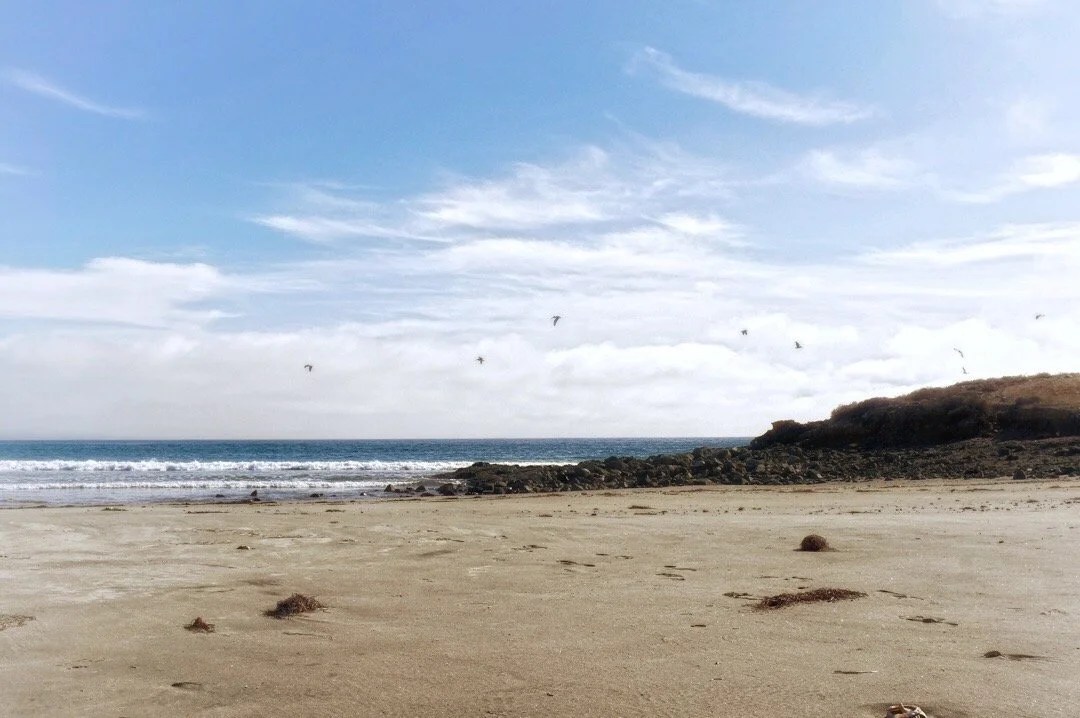
“Cataviña to Rosarito”.It’s 10:00 pm, the lights are out, and I’m having my own private dance party. Earbuds are great that way, shutting out the outside world, playing music that transports me into my own private universe. My legs are restless from the last couple of days of chilling out in town, and my mind too. Everything goes by so fast on the bike. I try to be present, and just let it all be, but that’s not really me; I’m always trying to fit everything together like a puzzle, thinking about how all the dots connect into some bigger picture. The rhythm of the music carries me away, body moving, mind still; quiet thoughts emerge, retracing our time on the wild pacific coast.I cruised out of Cataviña with 13 liters of water and four days of food on my bike, for a 161 km waterless stretch, and 202 kilometers between food resupply points. When I rolled my bike out of the hotel, I was expecting it to feel ridiculously heavy, and tough to get pedaling, but really, it rolled gracefully down the highway like a ballerina in full pirouette …until we hit the washboard on the sandy road that headed to the coast. That’s when I started having doubts about my decision to ride a bike without any suspension. I joked with Neon, “hey, maybe I should name my bike ‘salsa maker’, I’m sure my tomatoes and avocados are getting pulverized right now, next time I should bring an onion”.The landscape slowly changed from low rolling hills–dressed in large boulders, cardons, cirios, old man cactus, and elephant trees (torote blanco)–to steeper hills, that with a heavy load, I had to push my bike up. We found a secluded spot to camp, deep in a wash, and woke to heavy dew and foggy mist. It’s a surreal landscape in the mist. A short ride later the landscape became more barren and the Pacific Ocean came into view, and then the very small fishing community, just a few dwellings really, San Jose del Faro.We ride down the hill to the ocean. There are a few buildings nearer to the water, and people gathered out front of one, laughing and cooking. We’re hoping to purchase fresh fish. Neon rides up and asks if they have any. I ride up behind him, and he says, “they don’t have any fish right now, but they have lobster.” Ok, I’ve only had lobster a couple of times, but that sounds good. They offer up tequila. Neon takes a swig. Everyone is very animated and enthusiastic. I’m only catching a little bit, since my Spanish vocabulary is very limited. One of the guys pulls out two lobsters and cuts them open. Hmm, I think, this might be pushing the limits of my “aspiring vegan that sometimes eats wild fish”, but it does look good. Neon looks at me and says, “they’re cooking you a lobster, you want one right?” Yes; how much is it?, I reply. “They don’t want any money”, he says. Everyone chatters and laughs; Neon is telling stories about our travels, where we’re from, and where we’re heading to. I know these stories well, which helps a lot with picking out the Spanish words I know. This language barrier is a tough hurdle. I often I feel more like a spectator than a participant. The few words I know, well there are a lot really, but in the context of a language, my words are too few to make much meaning, and too few to understand most of the sounds that are bouncing around. Neon is fluent in Spanish, and I can see that even he is struggling at times. I think about language a lot; it is such an interesting construction of meaning. I’ve often wondered how much of my view of the world, and my experiences in it, is shaped by my language (English), and by the subtleties of how language (phrases, expressions, etc) change over time.We linger for a couple of hours, sharing stories from our bikepacking trip, talking about politics in the US, and stumbling over a few language barriers. Before leaving, all the young men take Neon’s bike out for a spin. Then the baby girl takes a turn sitting on the bicycle, she desperately tries to reach the handle bars, but she is too little. Her parents scoot her forward on the frame bar, she grabs the handle bars and shrieks with joy, laughing, and grabbing the handle bars over and over again, looking up smiling at everyone. These are the things I’m going to remember about this trip, the laughter, the awkward moments, and the look on that baby girl’s face when she grabbed the handlebars. This, this right here, is why I’m here and why I’m doing this.We wave goodbye and ride out toward the beach, checking our gps a few times at intersections. We take a good road past a few more homes before realizing we’re off route. There is a salt marsh between us and the road we should be on. We decide to cross it where it “looks” dry instead of backtracking. The ground sinks when Neon rides out into the “dry” marsh. He dismounts, and we start walking our bikes across. It’s like walking on thick pudding with a crusty, tough, skin. I’m starting to get a little freaked out now, thinking maybe it will get softer and just swallow us up. I can see Neon’s feet sinking more as he gets close to the other side. The mud is black under the white, salty, surface crust. My feet start to sink now too and I freeze. Oh, this is worse than a river crossing, I think, maybe, I don’t know, maybe it won’t hold me. Neon sets his bike down in the road and comes back and walks with me to the edge. I’m not good at stuff like this. Water, snow, ice, and I guess mud too, or at least the stuff that makes me think “uh, what if it’s quicksand”. It all just paralyzes me with some deep fear. I’m getting better at it. But I have to stop, breathe, turn away, and then look right at it, shove that fear down, and just make that next move. Sometimes I do that gracefully, with seeming ease, but often it’s not so graceful or pretty, and my emotions fall apart, but I still do it. I make it to the road. My feet are covered in a black tar-like mud. Jeeze, I think, “Was that a tar pit, like the ones they find the really old mummies in?” We get back on route and stop at the first shore we see so we can rinse our feet in the ocean. It’s a rocky shore. I’m standing in a couple of inches of water, trying to get the sticky black mud off my shoes, when a big wave comes up and crashes into my face, soaking me and my camera. I shake off the water. We push our bikes uphill and ride for a bit, then descend downhill, connecting back up with the road we were on when we discovered we were off route. The two roads connect. I laugh, and say, I guess these are the other parts that make up a memorable adventure.The next day we meet two other couples bikepacking the Baja Divide, one couple from Idaho, and the other from Canada. Between them, and our time in San Jose, this is turning out to be our most social section of the route so far, even though it is said to be the most remote. This section of the pacific coast, on the Baja Divide, is very wild. Even though we did manage to score a nice lunch in San Jose, there are no services between Cataviña and Santa Rosalillita, except for one well (where we can ask for water) at El Cardon. I didn’t think I had expectations about what this area would be like, but apparently I did …because I wasn’t expecting a dry desert environment, rocky, and almost barren at times, with misty fog in the mornings, so thick and wet that many of the plants are covered in moss. The afternoons are hot, much more like the deserts I know. The nights bring serenades of crickets, owls, and coyotes, and heavy moisture (even when the skies appear clear and are full of stars). I wake each morning to a wet sleeping bag, and water dripping from my bike, though there was no rain. Waves crash on the shore, pelicans dive like anchors into the water, and the sun sets and rises ablaze with color.The road after El Cardon has so much washboard that I occasionally walk my bike, even on the level parts, just to take a break from the obnoxious shaking and pounding of my body, and my bike, that resonates into the infinite with each ripple in the road. The breaks along the shore, called “The Seven Sisters”, near El Cardon are famous among surfers. Several vehicles pass us, carrying surf boards on their rooftops. One vehicle, from California, stops and chats with us for awhile, giving us apples before they leave. I have really come to love apples in Baja. I normally don’t care much for store bought apples, since I’m originally from Washington State, and grew up in a time when there were apple trees in everyone’s front yard. I miss the starchy crispness of an apple picked right from the tree. But the produce is pretty limited here in Baja California. All the little stores have produce, but typically it consists of tomatoes, avocados, potatoes, onion, and occasionally cucumber, cilantro, cabbage, or peppers …and apples (from Washington State). So when I find apples, they’re like a little piece of home that I can hold in my hand, and with a taste and smell, familiar enough, that my mind floods with all my childhood memories of every apple tree I’ve ever known.We arrive in Santa Rosalillita early in the morning and ride straight to the store for snacks. As much as I love beans and tortillas, I’m growing tired of them after having run out of produce two days ago. I am delighted to see that the tiny store has a nice assortment of produce. It’s only a few hours ride to Rosarito, but I buy so much produce that it doesn’t all fit in my food bags: three apples, two bananas, three tomatoes, two avocados, a cucumber, and… I stop myself from buying a little cabbage. A ways out of town, one of the rails on Neon’s bike seat breaks. He manages to slide the break into the seat clamp so that it holds a bit of the rail on each side of the break. We ride to the last beach, before our route turns inland. I make a tomato cucumber salad for lunch while Neon goes for one last ocean swim. I like this pace; it’s like a roving picnic with some nice riding through beautiful landscapes. This all feels very sustainable, like I could do this forever. The road gets rocky and the last miles back to the highway feel a bit like riding on a trampoline, but much smoother than riding on washboard.We arrive at a little hotel in Rosarito, 235 kilometers from Cataviña, and I still have two liters of water. Turns out I would have been just fine if I’d left Cataviña with only eight liters of water. How much I can ride in a day is so much more random than the regularity of daily miles while thru-hiking, some days the riding is difficult and I struggle to ride (push) my bike 30 kilometers, while there are other days when eighty kilometers cruises by with ease. The hotel here is pricier than any other we’ve stayed at yet, the wifi doesn’t work all that well, and water drips from a pipe out onto our floor, filling it to an inch deep puddle, but it has a nice hot shower (a luxury I’ve come to appreciate). We make a few inquiries about where Neon might purchase a new bike seat, and thankfully, we’re able to have one shipped to us via “bus freight” into a larger town to the south, Guerrero Negro. It’s a long ride on the highway (with no shoulder), so the next day we decide to hitchhike (with our bikes) to pick up the seat. We get a ride within ten minutes that takes us the whole distance. We find a cheaper hotel, amazing fish tacos, and a little espresso bar where my heart skips a beat in coffee joy; hot coffee, good dark sipping coffee, the smell, the taste, immortalized in my cells. I walk in, “doble espresso, por favor”. …and suddenly I am transported, e v e r y w h e r e …to home, in the Pacific Northwest; to every coffee shop I’ve ever loved; to Italy, where I’ve loved the coffee as much as the beautiful marble I’ve climbed on in the Dolomites; to every road trip and car-camping sunrise that started with coffee brewed in a travel French press or Bialetti. These are the things that make life so complicated and beautiful, and a deeply personal experience. I hadn’t realized just how much of me missed good, dark, rich, thick, coffee… it’s now close to midnight, and my dance party continues. My thoughts, and legs, are jumping all over the place …perhaps I should have ordered a single espresso?_____________________You can sign up to receive The Redheaded Nomad’s blog posts in your email inbox; sign up at the bottom of any page on my website: theredheadednomad.comYou can also follow me on Instagram at: instagram.com/theredheadednomadand on Facebook at: facebook.com/redheadednomad_____________________Loaded up with 13 liters of water and 4 days of food…
 _____________________Elephants tree (torote blanco)
 _____________________First tarantula I’ve seen in Baja…
 _____________________Misty morning magic…


 _____________________Lobster and laughs in San Jose del Faro…

 _____________________Black tar-like mud…
 _____________________Moss covered desert plants in the misty sunrise…

 _____________________Argiope, Orb weaver
 _____________________Morning light, and mist…


 _____________________Look, more Baja Divide riders!
 _____________________
 _____________________We had lunch on this beach, and watched the pelicans dive into the water for fish…
 _____________________Another couple riding the Baja Divide…
 _____________________Another great sunrise…
 _____________________These misty, foggy, mornings are magical…


 _____________________Santa Rosalillita…
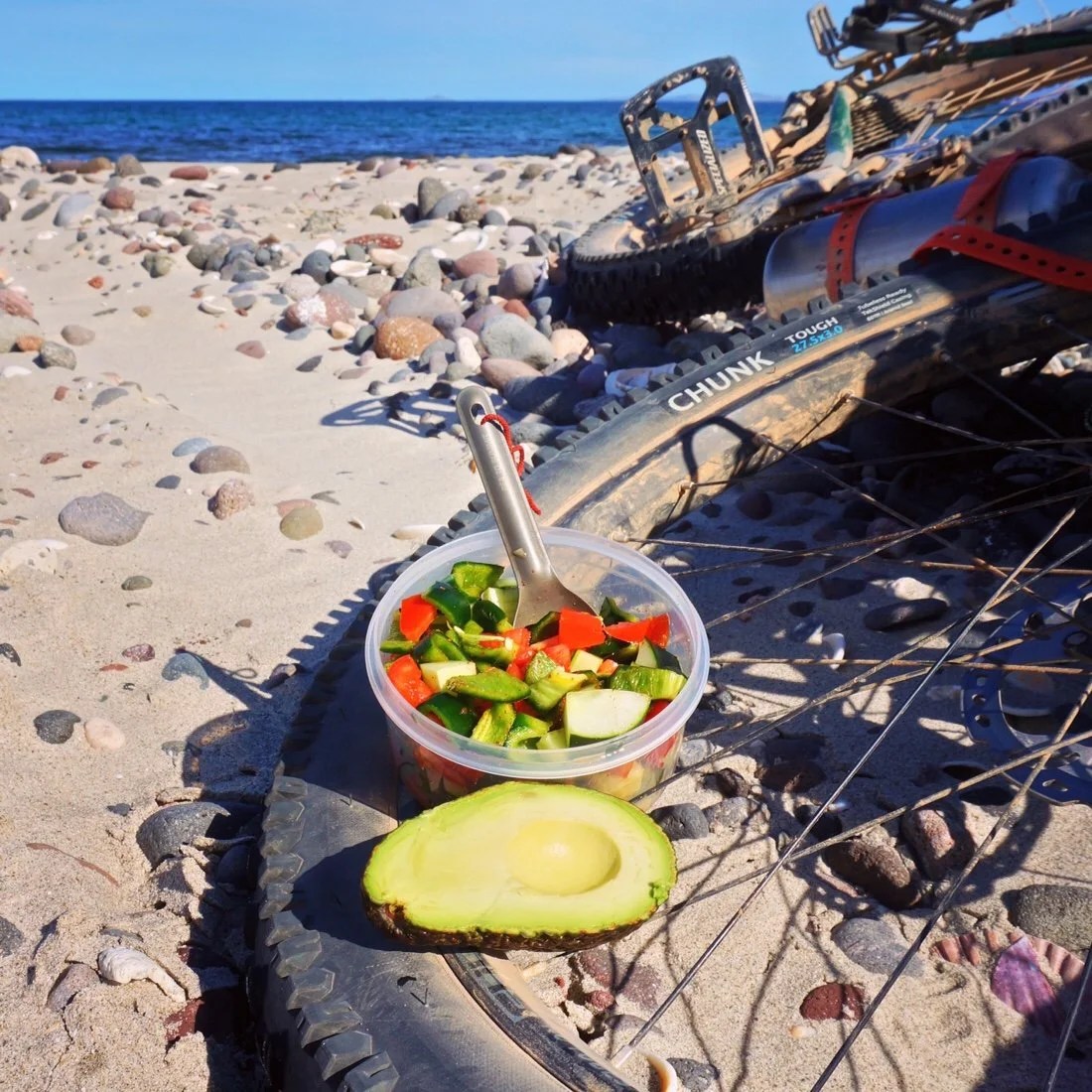
 _____________________Tomato cucumber salad on the beach…
 …with large pretty shells on the beach
 _____________________Rocky, almost like a road…
 _____________________
-
BAJA DIVIDE 5: The Pink Hotel
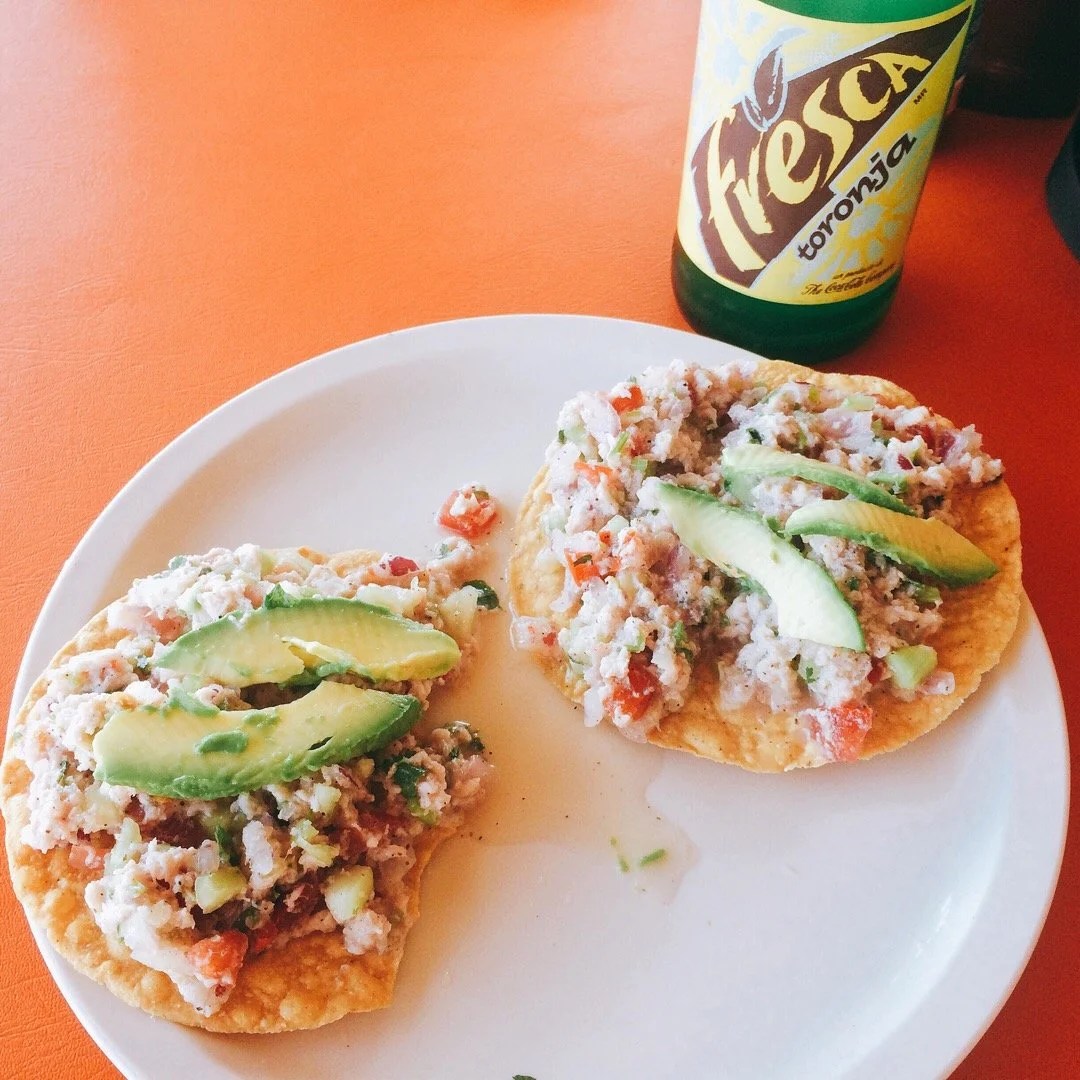
“Vicente Guerrero to Cataviña”. I’m lying in a bed in a pink hotel in Cataviña. It’s dark in the room, though it’s still early in the night; they only run the generator for a few hours in the evening. The whole town, the bit there is, is powered by generators, for brief periods of time. All is quiet now, even the highway out front is quiet; the only sound is the donkey out back …eeh orrh …eeh orrh …eeh orrh. I can’t sleep, my thoughts are spinning over all that I’ve seen in last few days. We left Vicente Guerrero a week ago, late in the afternoon. It was a gentle ride out of town, past agricultural fields, to a hidden camp up on a hill with an amazing sunset view. The next morning was an easy cruise, all the way to San Quintìn, where we stopped for ceviche tostadas at a little roadside loncheria. We rode out into the salt flats, and then south toward the ocean, trying our best to avoid riding through the salt water that has spilled over the road. We turn more inland through sandy whoop-de-doos, and then back to the salt flats again, occasionally hitting a bit of mud. A bit further, we miss a turn, so we turn around to get back on route. We find our road, with thick, heavy, clay mud. I ride, maybe a hundred feet, my tires are coated, my chain heavy with mud at the front derailleur. I pull my bike into the brush, slipping a bit in the mud as I walk. I catch up to Neon; maybe we should go back and take the other road?, I ask… he agrees. Twenty more feet through the mud, and my tires won’t even turn, I drag my bike sideways back into the brush, and pull it. The mud isn’t budging. I stop and remove as much mud as possible with my hands, then finally make it back to the sandy road. A short ride later and we’re on the beach. The sand is perfect, firm, easy riding. There are people way out in the water, swishing their feet back and forth, and then reaching down into the water. Maybe they’re digging for clams, I wonder. The sun is low. We set up camp in some tiny dunes near the edge of a little town called Olivia.The morning brings pink clouds. My sleeping bag is heavy with dew, everything is wet. We ride into the next little town, Nuevo Odisea, wash our bikes at a car wash, buy food and water, and then start climbing through the mountains, where I see my first Cardon cactus. They look a lot like Saguaros, I think. These are the things that propel my ride; I have lists of stuff I want to see, little experiences I’d like to have. We camp at the top of a hill and watch the sunset, and rise, through endless Agave and a few isolated Cardon.The next day is slow, rough, eroded roads. I spend a lot of the day pushing my bike. I’m worried about running out of water. I had thought I had plenty for this long stretch without water, 106 kilometers. But the sun is hot, and all this “hike-a-bike” is hard work. We finally climb up the highest point to a pass with a long down hill. I’m concentrating on the steep road, when I see my first Cirio tree, and then more, and more, until we descend into what looks like a fairytale forest of Cirio trees. We camp near a group of tall Cirios, a few Cardon, and a cactus that looks like it has fuzzy heads. I wake occasionally in the night to see if they’re all still there, or if I’ve only dreamt of them. In the morning I tell Neon that with how tall and crazy cool these trees are, I keep expecting to see a giraffe. He says, “I keep expecting to see a brontosaurus.”Thankfully the road is easy now and we cruise into our next food stop in just a few hours, a restaurant on MEX-1 at El Sacrificio. It’s a small stone building, very hand built. There is a man sitting out front. He waves us in and motions for us to park our bikes anywhere. We walk in; there are two tables with bright red chairs on the left, and a small living room with a tv on the right. A few steps up, there are a couple of cabinets with snacks for sell, and a kitchen. The lady starts telling us what she has available, and a young girl and the man start getting things ready. I pull a juice and a liter of water from the fridge. I’m still thirsty from nearly running out of water. The young girl brings me coffee. It’s hot, almost burning my tongue, but I can’t stop drinking it. I can’t remember the last time I had hot coffee. It’s so good. I’m almost giddy with delight, surrounded by all my drinks.A short distance further down MEX-1 we buy water for another long stretch. It starts to rain a bit, but then stops. I know what these roads can be like when they’re muddy; my tires won’t even turn. We head down MEX-1 and then onto a dirt road that leads into the mountains. It starts raining again. We stop and debate about how much it might rain. The clouds are thick and moving in. We decide to go back to the highway. The highway seems pretty mellow here, not much traffic, but no shoulder either so it’s a bit overwhelming when a truck passes. We ride another thirty kilometers and then take a sandy dirt road out into the hills to camp, setting up our tent for the first time in the seven weeks since we left home.The next day we continue on MEX-1 until a little town, St Augustine, where we connect back up with our route. After a few hours we crest a pass that opens up to a rocky landscape, with large boulders and more Cardon mixed with Cirios. The area reminds me a bit of a cross between Saguaro National Park and Joshua Tree National Park. The sand is smooth and firm, easy cruising back out to the highway, then downhill most of the way to the tiny town of Cataviña, where we stop at the little pink hotel. There are people selling gasoline, out of metal gas cans, on the side of the road to tourists. A few dogs gather out front of the store. It’s dark in the store; their generator isn’t running right now. I buy a few snacks, some produce, and some almost cold beer, then return to the pink motel, and wait for the power to come on so I can charge my electronics and use the wifi. The power goes off at 8:00 pm. I light the candle on the table and watch it flicker for a while before blowing it out, then lie in bed staring at the darkness listening to the donkey out back …eeh orrh …eeh orrh …eeh orrh. An owl joins in with a few hoots, before I finally fall asleep._____________________You can sign up to receive The Redheaded Nomad’s blog posts in your email inbox; sign up at the bottom of any page on my website: theredheadednomad.comYou can also follow me on Instagram at: instagram.com/theredheadednomadand on Facebook at: facebook.com/redheadednomad_____________________Another crazy cool cactus I don’t yet know the name of…
 _____________________The sky ablaze in color with another amazing sunset…
 _____________________
 _____________________Big church, looking little, on a big hill, in the middle of nowhere…
 _____________________
 _____________________Roadside loncheria in San Quintìn…
 Pescado Ceviche Tostados…
 _____________________Riding out into the salt flats to the Pacific Ocean…
 This boat looked like it had a lot of stories to tell…
 _____________________These old abandoned buildings, alone in the landscape, always bring to mind the painting “Christina’s World” by Andrew Wyeth.
 _____________________

 _____________________Made it to the Pacific Ocean again…
 Seagulls are so much more interesting at the beach than they are in a city…
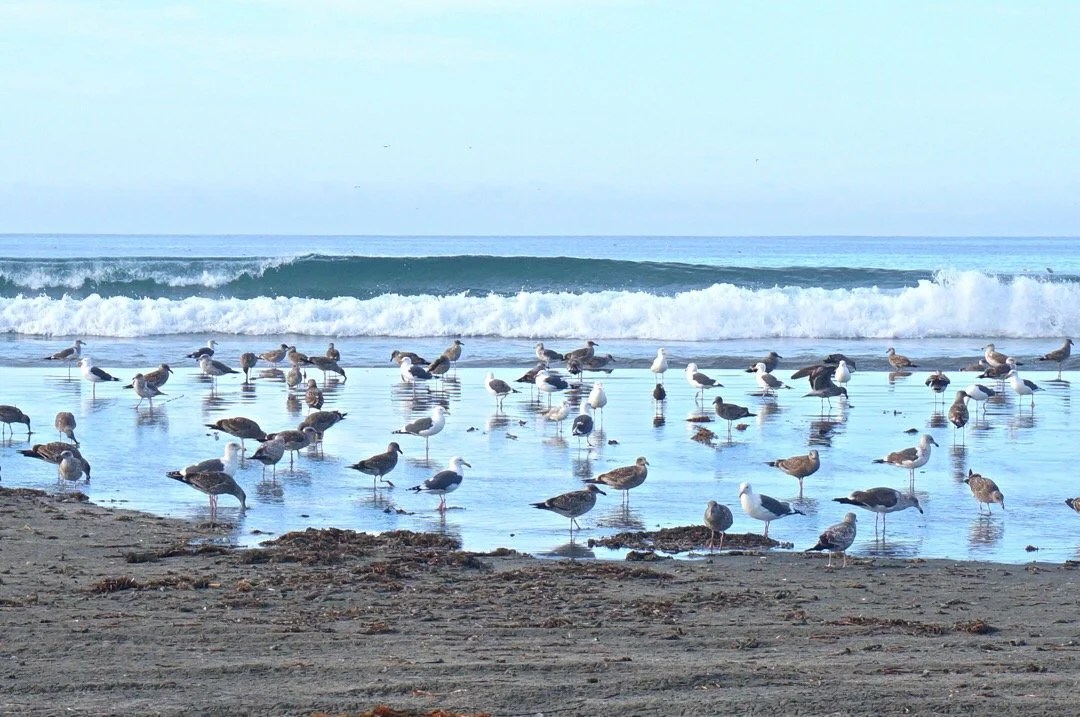 Beachside Sunset…
 Pink clouds at sunrise…
 Surreal sand dunes…
 _____________________Another old building that caught my attention. If it could talk, I’m sure it would have many stories to tell…
 _____________________Agave plants in bloom…
 _____________________Sunset with agave and a hawk…
 Sunrise…
 _____________________A lot of pushing our bikes, “hike-a-bike”, for a lot of the day.
 _____________________Cirio trees. They’re related to Ocotillo, and oh so cool looking…
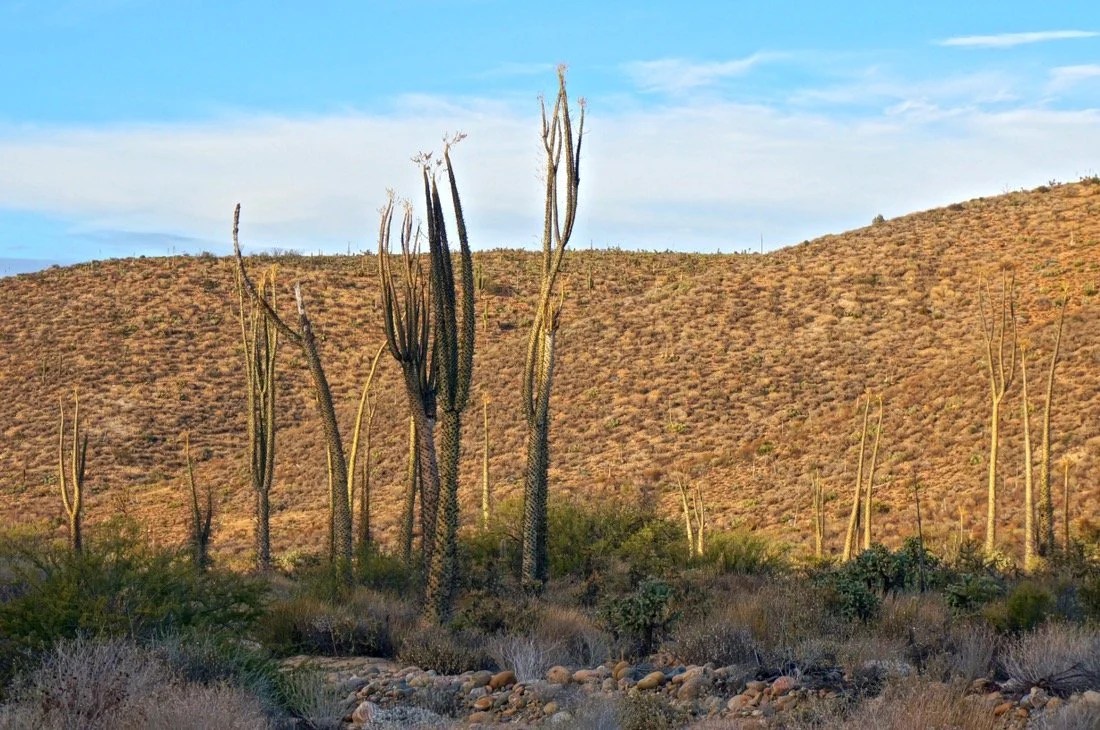 _____________________Sunrise, and our camp, with some very tall Cirio trees.
 _____________________Cirios, bike, me… these plants are so cool…
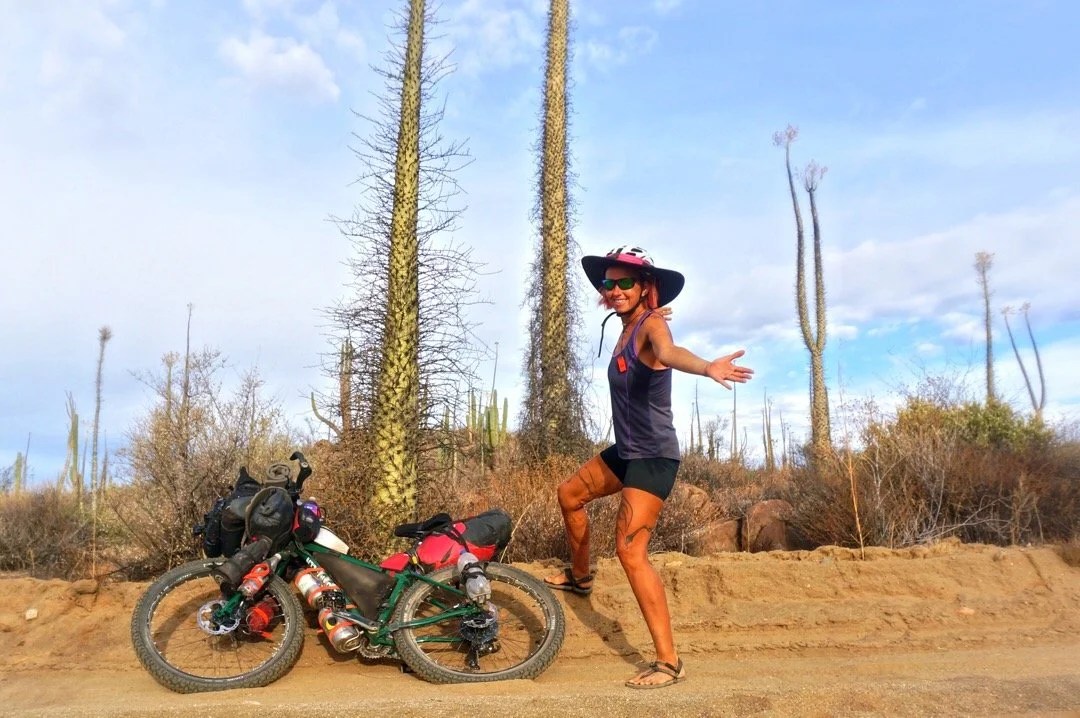 _____________________More Cirio trees. This area is called “Valle de Los Cirios” (valley of the cirios). There was an abandoned ranch out here that I had fantasies of turning into a remote art studio.

 A very large Cardon cactus
 _____________________Family home restaurant / truck stop at El Sacrificio…

 _____________________Sunrise, surrounded by creosote bush. This was the first time we’ve set up our tent in the seven weeks since we left home.
 _____________________I think this horse posed for me while I took its photo…
 _____________________More Cirios, rocky landscape
 Cardon, fuzzy headed cactus, and Cirios.
 There’s some cool stuff out here…

 _____________________The pink hotel in Cataviña…

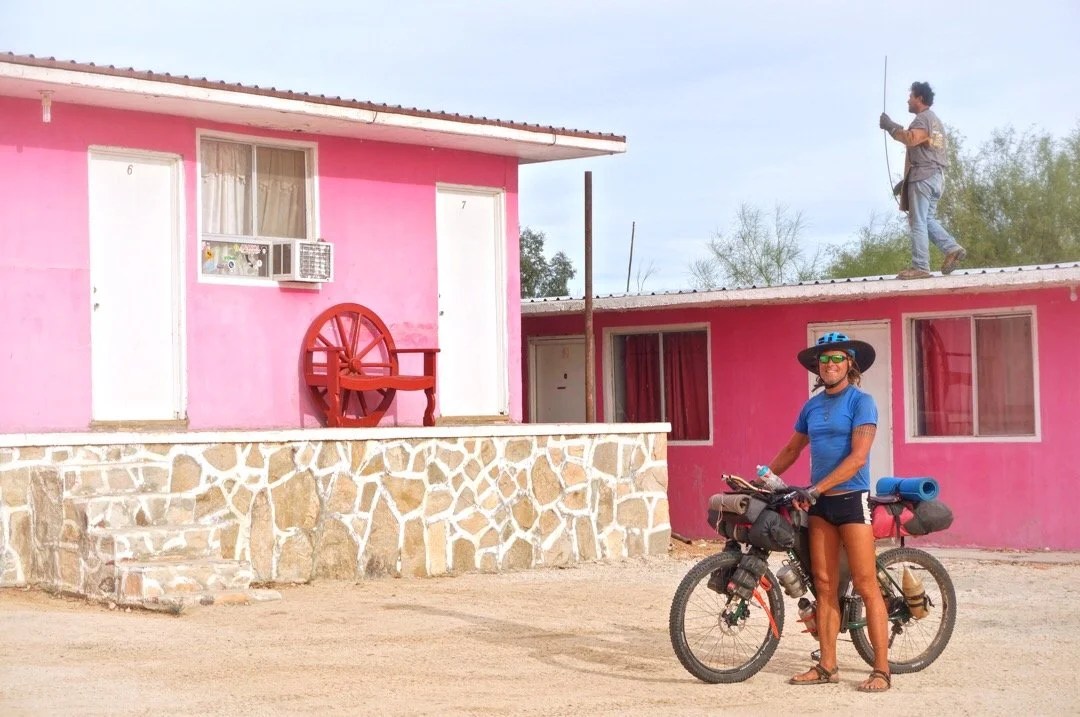 The wall in our room looked like an abstract painting. So much texture and history…
 _____________________