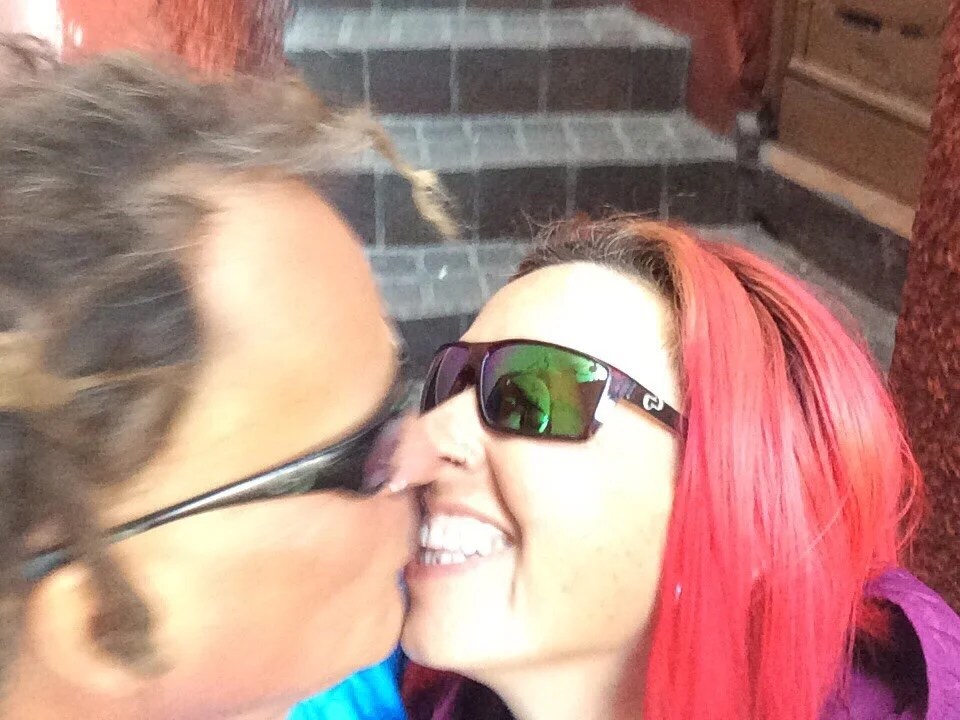
“Guanajuato to Raices” I really enjoyed my time in Guanajuato; it’s my favorite city in Mexico so far. Before leaving town we visited Callejon de Besos, and climbed a gazillion stairs to a huge sculpture, El Pípil, of a man the sits high above the city.
 [Callejon de Besos (alley of the kiss), the site of a classic love story with a tragic ending. Legend has it that if a couple kisses on the third step their love will last forever (…or they’ll avoid seven years of bad luck. There seems to be some variation in what kissing on the third step will bring).]


 ________[El Pípil, a miner who played a key role in helping to defeat the spanish during the war of independence in 1810 sits high above the city. It’s a lot of steps to get there, but there’s also a great view of Guanajuato.]


 Our route out of town took us through mining land, then to a high saddle where we found great camping nestled in a small grove of trees on the ridge.


 The next day we continued through patches of forest and open grassy hillsides before dropping down to a small town where we bought a few more supplies. We crossed over a small highway then back into open grassy hills. I was still moving a bit slow with my broken toe so we decided to stop early to camp.

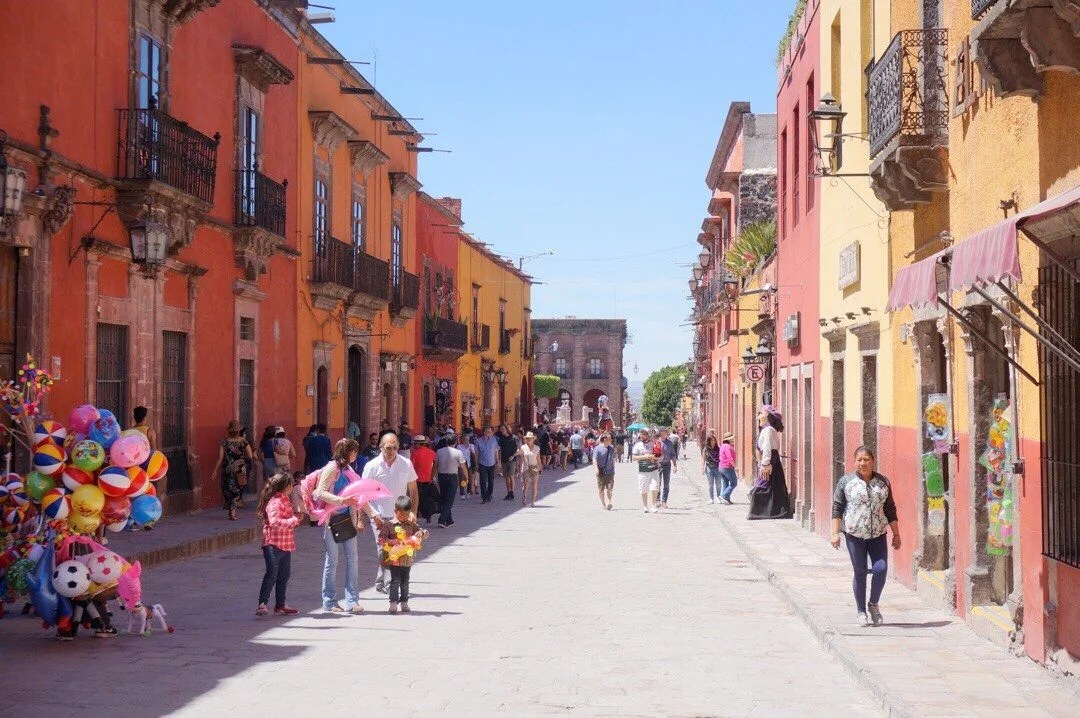
 The ride into, and out of, San Miguel de Allende was on busy highways. It’s a beautiful city, but much too crowded for our tastes. We spent one night in San Miguel, and enjoyed great coffee at Cafe Buen Dia in the morning.



 There was a lot of traffic, and mostly paved roads, between San Miguel de Allende and Apaseo el Alto, but we still managed to find a nice campsite and enjoy a few quiet rest breaks along the way.

 [This dog hung out at our camp for quite awhile.]


 [Mudpots on our way into Apaseo el Alto. There were a lot of hot, steaming pools and mud pots for a couple of kilometers. I would have thought an area like this would be a park, but it was mostly abandoned with cris-crossing roads through it.]We found an inexpensive hotel in Apaseo el Alto that had crazy, narrow, winding stairs up to our room, and doors of a variety of sizes.
 We stopped in a little pizza place for dinner and beer. One of the owners sat down a chatted with us for a long time, sharing stories from his time in the U.S. and telling us about cool places in Mexico that we might like to visit.
 Our route took us on a paved highway through the town of Jerecuaro, then turned back into the mountains and onto a dirt road, a nice and quiet change from the last few days of noisy highway riding. We found a beautiful campsite between Chilarillo and Puruagua on a small cliff above the road. It was an enchanted little area in a beautiful pine forest dotted with a few cactus, ferns, and epiphytes. We listened to wippoorwills, owls, and other animal sounds as the sky grew dark.
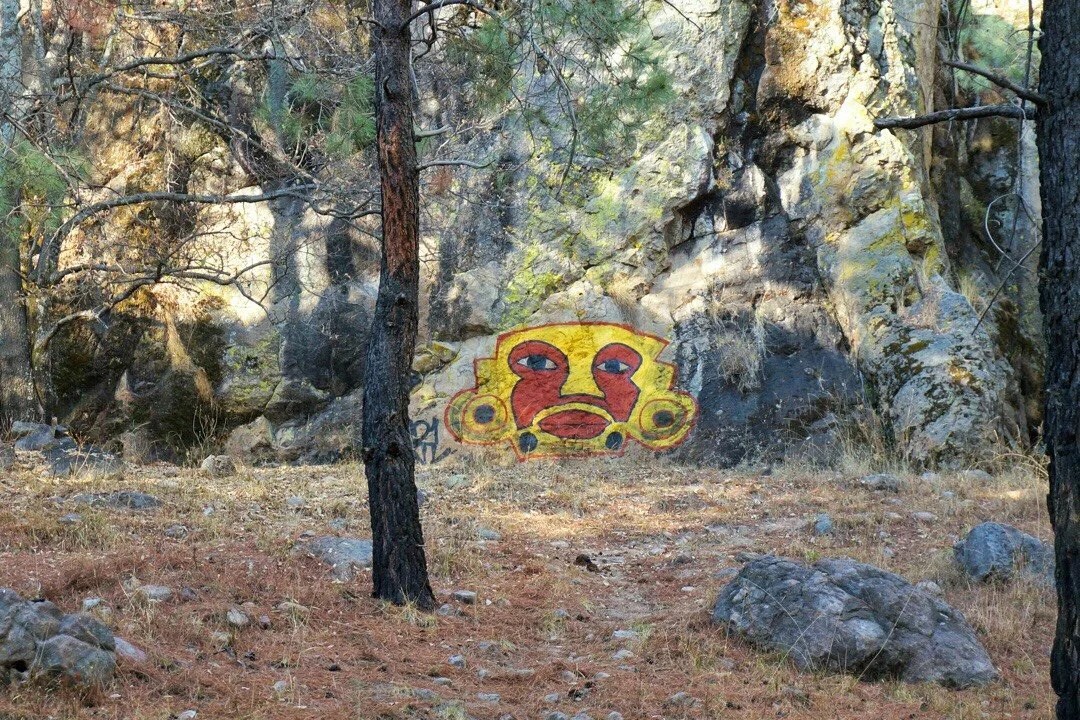 The next day we stopped for coffee in Puruagua, it was instant coffee, but we enjoyed sitting in the town square watching the locals move about their day. We rode pavement out of town until we turned onto cobble and dirt roads that led high into the mountains.


 After descending from the highpoint we detoured off the route we had been following, hoping to avoid some of its busy highways. We crossed to the other side of the mountains, then rode a quiet paved road into the town of Tetuxtepec where we found a cheap hotel for the night. We asked around for a place to eat, most places were closed, but we finally found a tiny kitchen that was open. They were hesitant when we asked about dinner, then said they had rice and beans. We smiled and said that would be great. Then the offered us a tostada. I wasn’t sure what it was; it sort of looked like pork or hamburger. Neon asked if it was meat, and they said no, they don’t eat meat on Fridays and explained that it was TVP (soy). It was delicious, made up like a ceviche tostada.
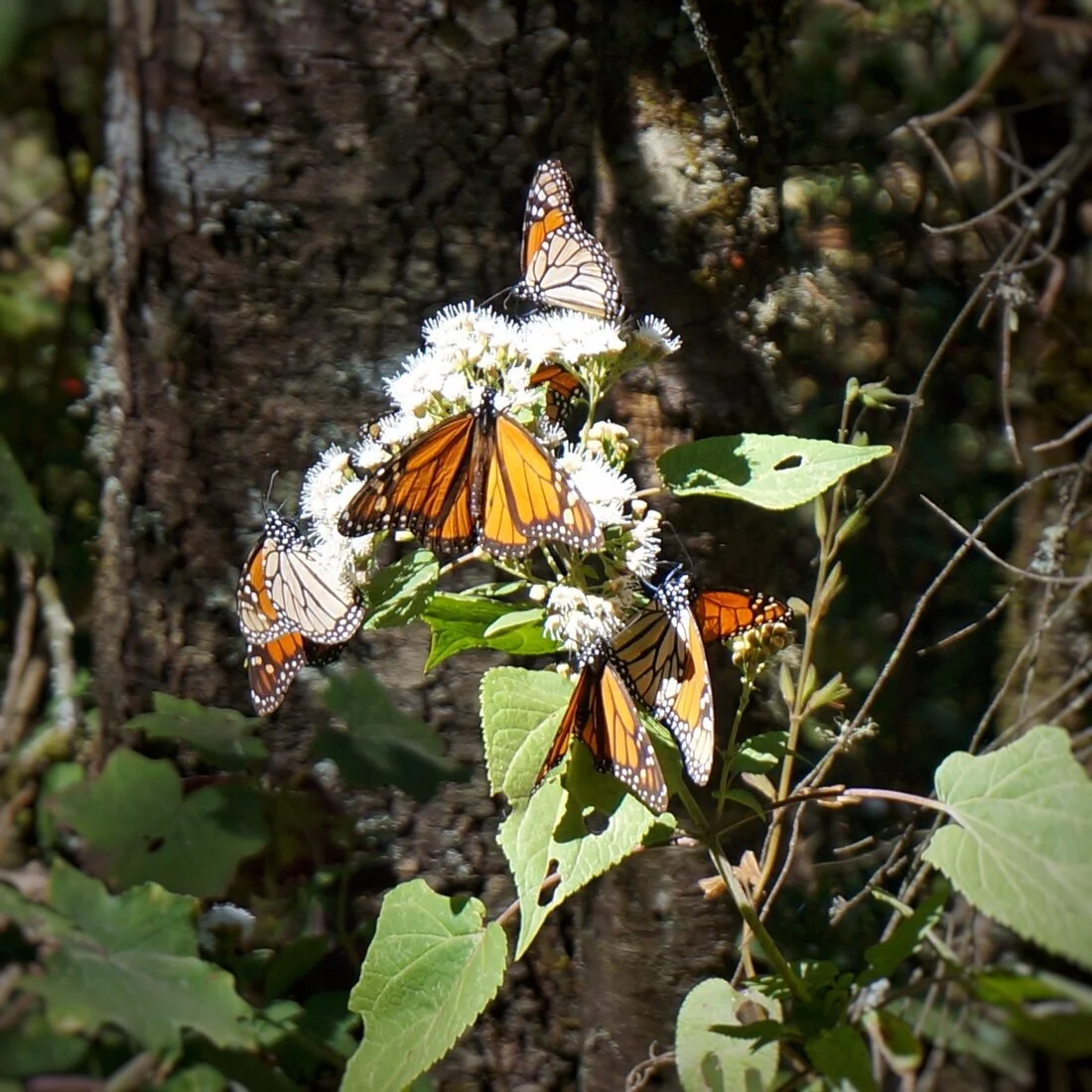
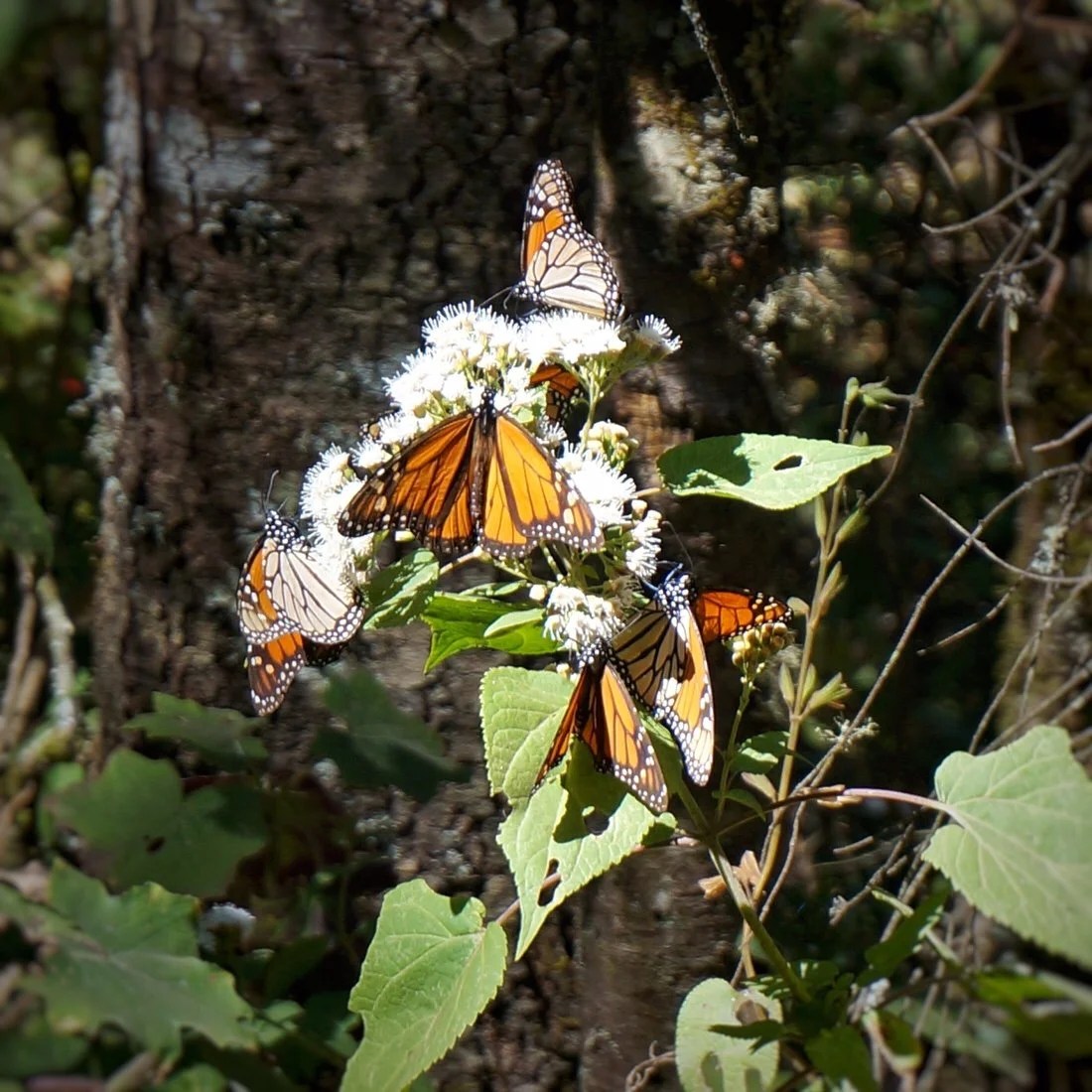
 The next day we rode high up into the mountains where the monarch butterflies spend the winters in Mexico. The lower parts of the mountains are pretty populated, but we still managed to find a place to camp out of sight in the trees.

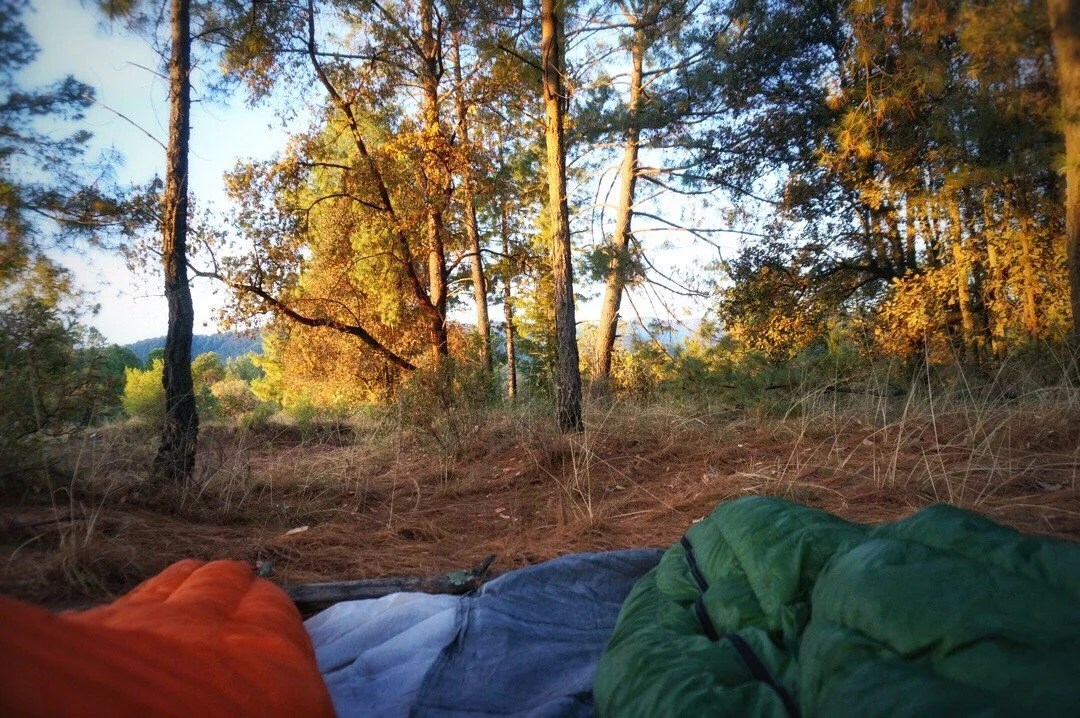 The next morning we finally made it to a high pass, Puerta de Llano, and just in time to roll into a bike race / endurance challenge. It was super fun descending down the other side of the pass with hundreds of cyclists racing by. All the road guards directing traffic just kept waving us along with the other cyclists.Twenty kilometers whizzed by in what seemed like minutes. Lots of “thumbs up” and double-takes as we rolled through the cycle route.

 We followed the cycle route down the highway, then side streets paved in cobblestones, to a dirt road that led into deep green hills before we decided that maybe it was time to look at a map to see how far off of our route we were.
 Several cyclists stopped to take photos with us. And the coolest part… …several days prior when we were riding through the small town of Jerecuaro—we were a bit flustered on our way out of town to find a place to camp; we stopped at a bank to get cash, and just then a man driving a bus stopped to say hello to us since he is also a cyclist …now back to the bike race… as we were riding down the dirt road, wondering how much longer we should follow all these cyclists into the hills for which our map didn’t show any roads … a guy stops Neon and says he met us a few days ago in Jerecuaro. It was the bus driver!
 We got back on route and found a hotel in Ocampo, the main town for access to the El Rosario monarch sanctuary. We spent the morning at the sanctuary, arriving early enough to catch the monarchs as they took flight from the trees after being warmed by the sun. Seemed not too different from our camping strategy, as we generally don’t emerge from our sleeping bags until the sun shines on them, warming everything in the process.
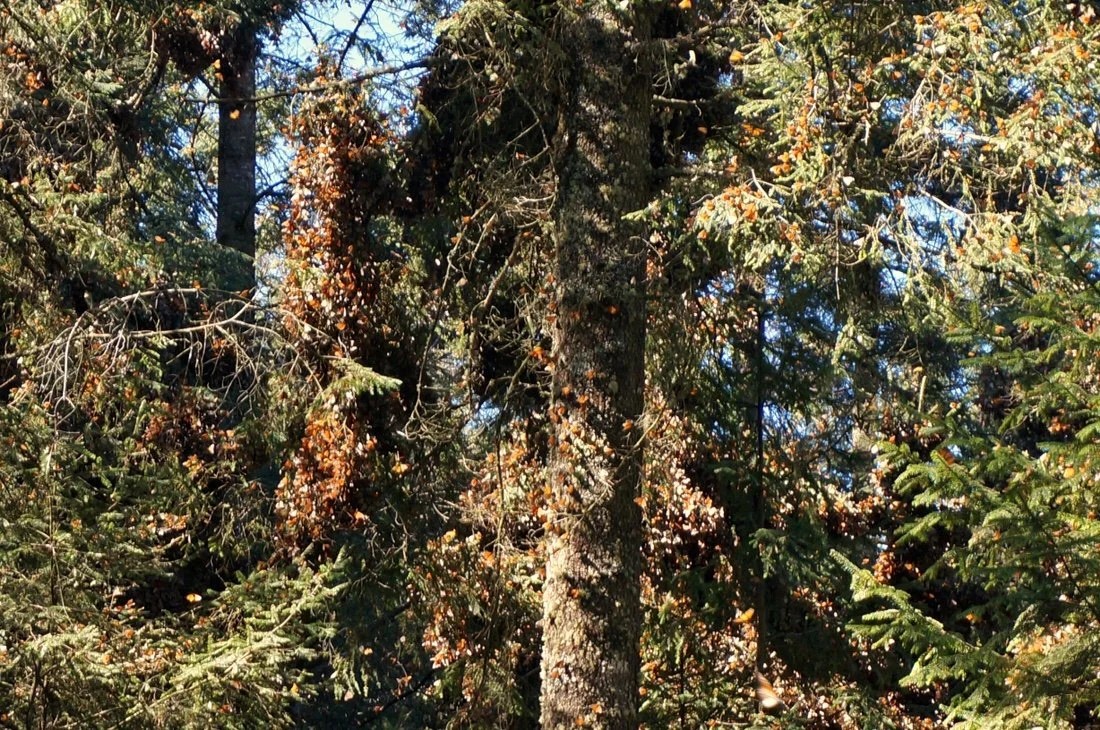


 […our guide, showing us the black spots on the lower wings. The two black dots mean it’s a male monarch.]
 The monarch sanctuary was pretty special for me; I’d always want to see all those monarchs gathered in one place, and I finally did; I only had to ride my bike 5000+ km, but I got there.


 We visited some nearby archeological ruins after leaving Ocampo, the San Felipe de Los Alzalti pyramids. Then after too much highway pedaling we finally turned onto a sweet little dirt road heading to the tiny village of Macheros.
 We were hoping to visit the monarch preserve at Cerro Pélon, but after arriving in town we were told they had already migrated north from this location. But the countryside was gorgeous and we were invited to camp in a local’s avocado orchard. A bright orange sunset, topped off with a little tequila, clear skies, and a night full of stars = perfect day


 After that our route followed busy highways, way too busy for our tastes, but we pressed on, for a couple of days, through Valle de Bravo, to just past Mesón Viejo before finally turning onto a dirt road heading to Raices (a small town at the foot of Nevado de Toluca).


 _____________________You can sign up to receive The Redheaded Nomad’s blog posts in your email inbox; sign up at the bottom of any page on my website: theredheadednomad.comFor more frequent updates, follow me on Instagram at: instagram.com/theredheadednomadYou can also find me on Facebook at: facebook.com/redheadednomad_____________________
 After one last good coffee in Durango we headed out of town towards Zacatecas (where we found more good coffee). I’m starting to feel like we’re riding bicycles and camping between coffee bars, and I like it.[Leaving the coast, we road a lot of pavement, over the Espinazo del Diablo, into Durango, but from Durango on, we’ve stayed much more on dirt, following a gps track given to us by: highluxphoto.com]
 The first day out of Durango had us on pavement into San Jose Mezquital, followed by a 1000 meter climb out of town and into the mountains.


 Ominous clouds chased us into the mountains before they let loose their wet, cold, holdings. Then it started hailing. We turned onto a dirt road with a locked gate (the first of many). We took off our bags and front wheels, then squeezed the bikes under the gate.
 Thankfully the rain had slowed to just a drizzle at this point, but the clouds were dark and full. Just a bit down the road a group of buildings came into view as thunder roared across the ridge top. We rode under a big porch of one of the buildings. We contemplated setting up camp under the porch; the building was locked and no one was around, but the porch was in full view of the dirt road we had been riding on. I checked the other buildings and the tiniest one was unlocked. It was clean, and empty, and had a full-sized bed frame inside. With some apprehension, we rolled our bikes inside the cabin, just as the skies opened up with one of those biblical-style rains.


 We slept warm and dry, and rode down into the canyon the next morning to, thankfully, a shallow creek crossing.

 [Neon untwisted and removed the top barbwire on the side of the gate so we could lift our bikes a short distance up and over the fence instead of the six-foot gate. After our bikes were over, he twisted the barbwire back into place.]

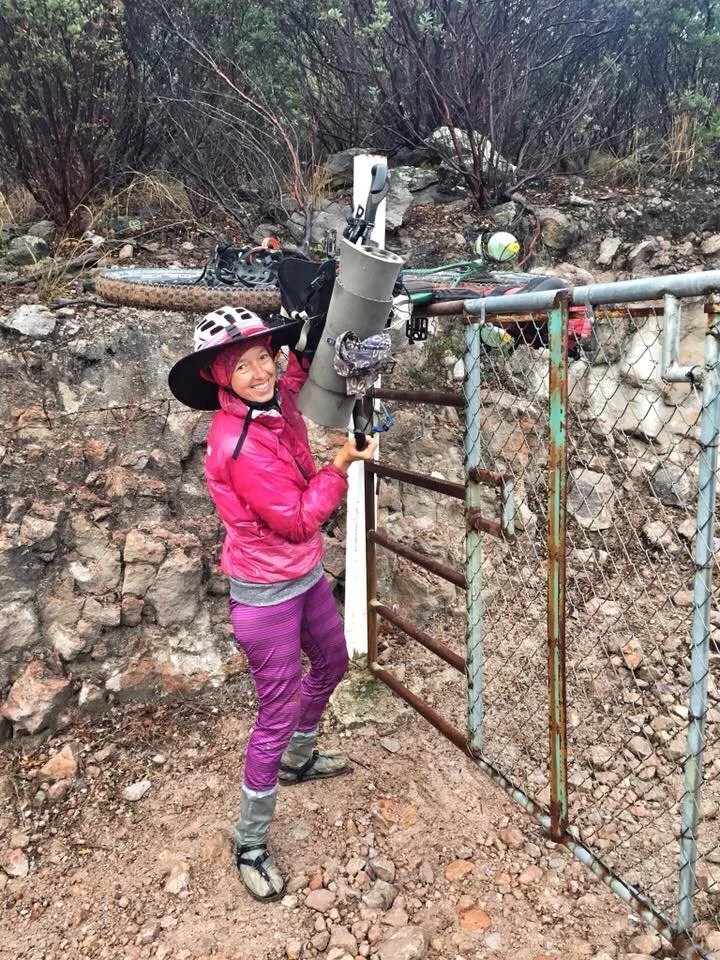 [There was no way around, or under, this gate so we had to lift our bikes up and over.]


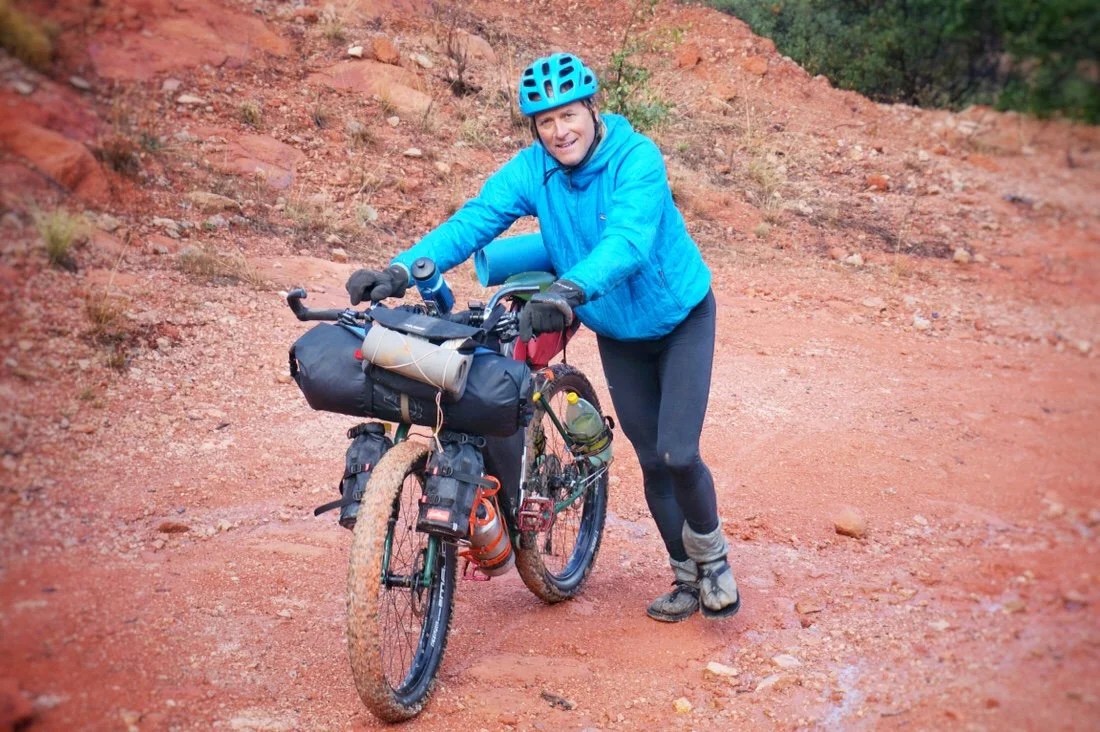 We pushed our bikes up the other, muddy, side for most of the morning. We chased storm clouds through the afternoon with only a few drizzles here and there.

 We found shelter, mostly camouflaged from the road, nestled in a few juniper bushes. The evening brought more rain, and I was happy to be checking out the view from under the vestibule of our little tent.


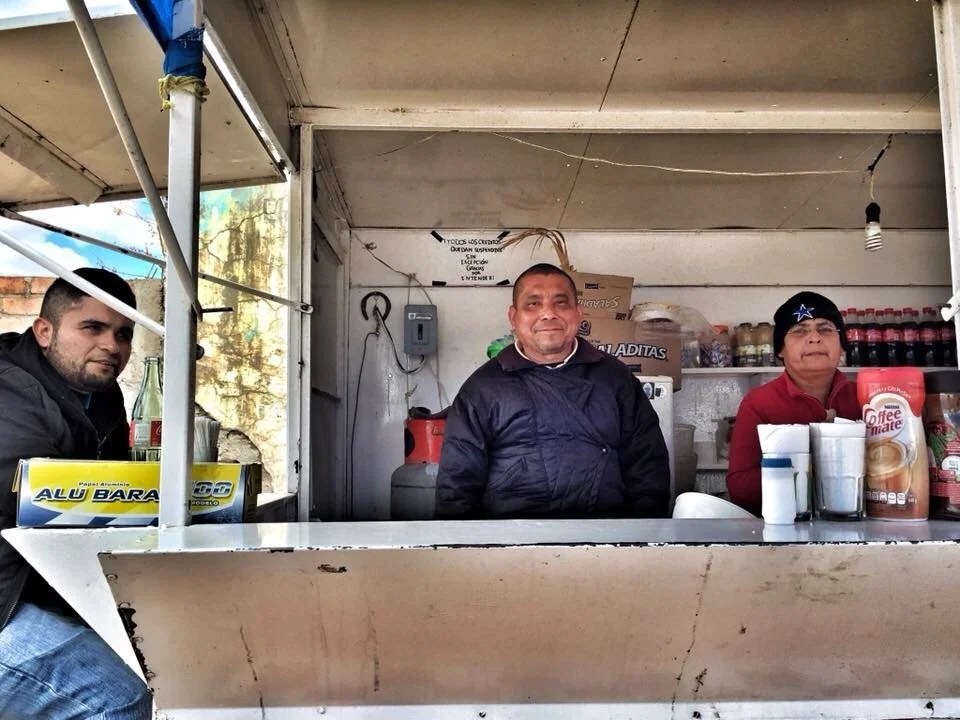
 The next morning we had easy riding into Suchil. We chatted for a long time, about the similarities and differences between the U.S. and Mexico, with a family at their gordita stand before heading out of town.
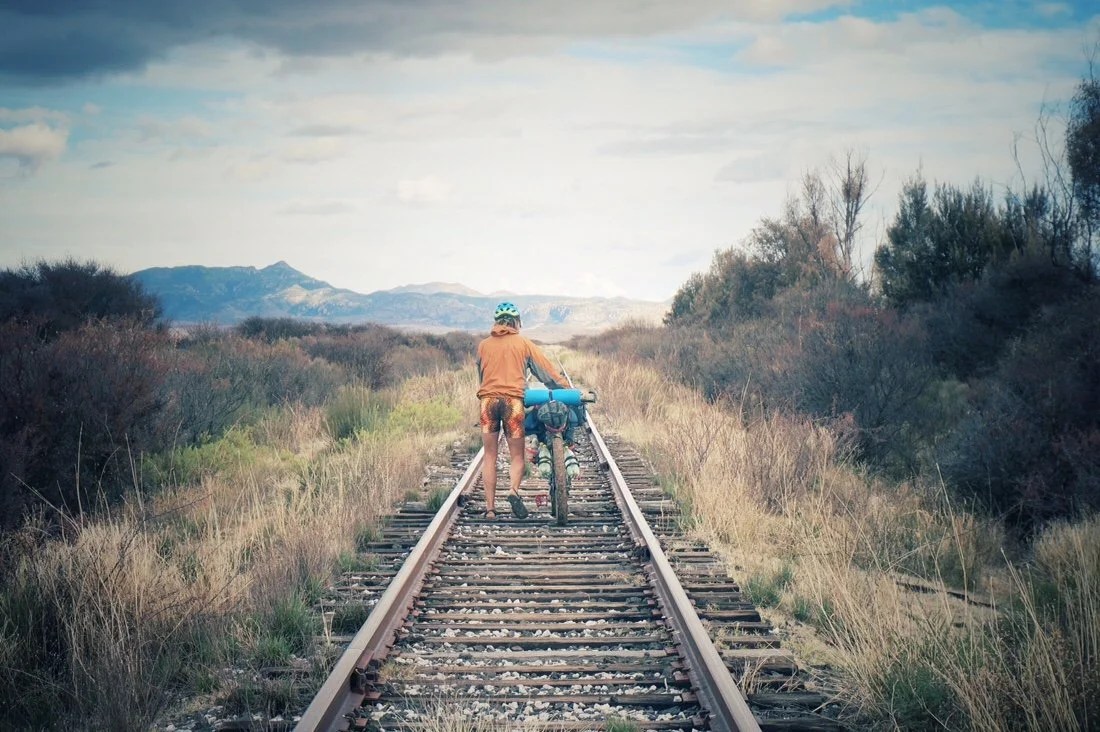
 We turned off the highway onto a dirt road that paralleled train tracks. The road was muddy, overgrown, and flooded from recent rains, so we decided to walk our bikes on the tracks.

 We set up camp between ranches, below the tracks, nestled between bushes and cactus.
 We woke to -3°C, bundled up, and walked along the tracks until the road got better.


 [A graveyard in the rural ranching area we rode through…]
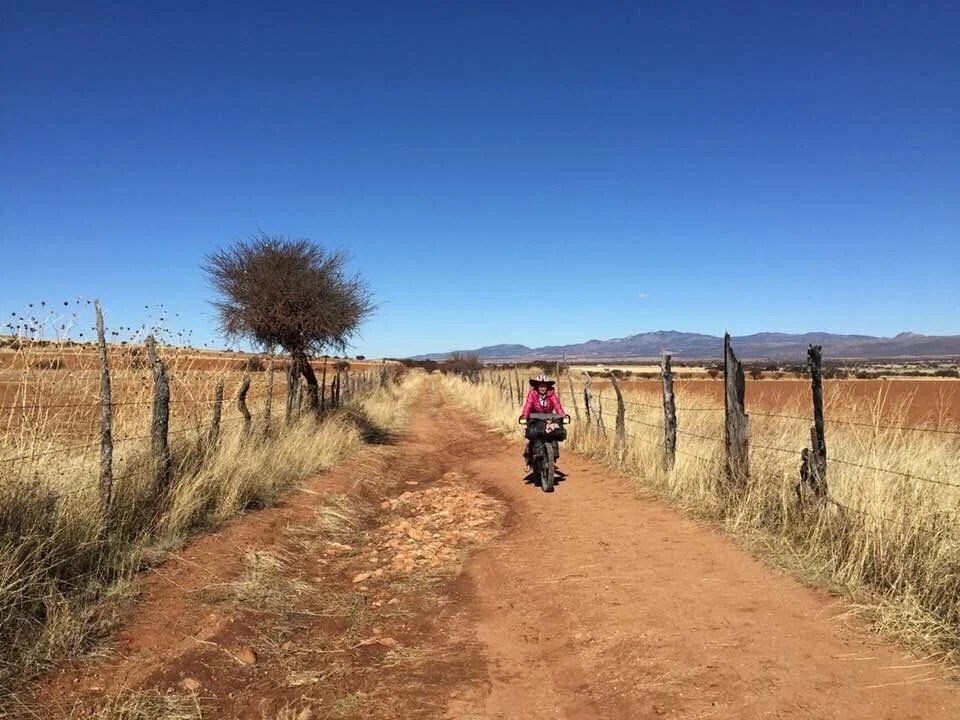 We turned from the tracks and rode between ranches, until reaching the small town of San Jose Mesillas.
 We stopped at several stores in search of produce and frijoles, and finally the fourth, and last one before exiting town, had canned frijoles (with vegetable oil) and a nice selection of produce. While there, the owner offered to let us cook breakfast in his kitchen. He offered hot water for coffee and full use of his kitchen, and a place to camp if we wished. He said he’s met cyclists from all over the world.

 I think this marks some shift in our travels on the mainland in Mexico, where we’ve met the friendliest folks, and not just in a helpful way, but where we’ve really starting making more real connections with locals. I’m sure a lot of it is also us, not just the area …perhaps we’re starting to soften up more, relax, be more receptive to our surroundings, or as the anthropological term would be maybe we’re “going native”. Whatever it is, it’s refreshing and welcome, and I’m very much enjoying this shift in our travels.The landscape slowly changed as we rode away from San Jose de Mesillas. The flats and grasslands rose into the mountains. The pines grew thick between junipers, oaks, and cliff formations.


 [This beautiful cobblestone road continued for several kilometers. I wondered how old it was… the towns out here are very, very small, and far apart. To the west of this area, maybe a days travel, is an archeological site called Alta Vista (or Chalchihuites). Perhaps this road was part of an ancient network of roads that connected to Alta Vista.]
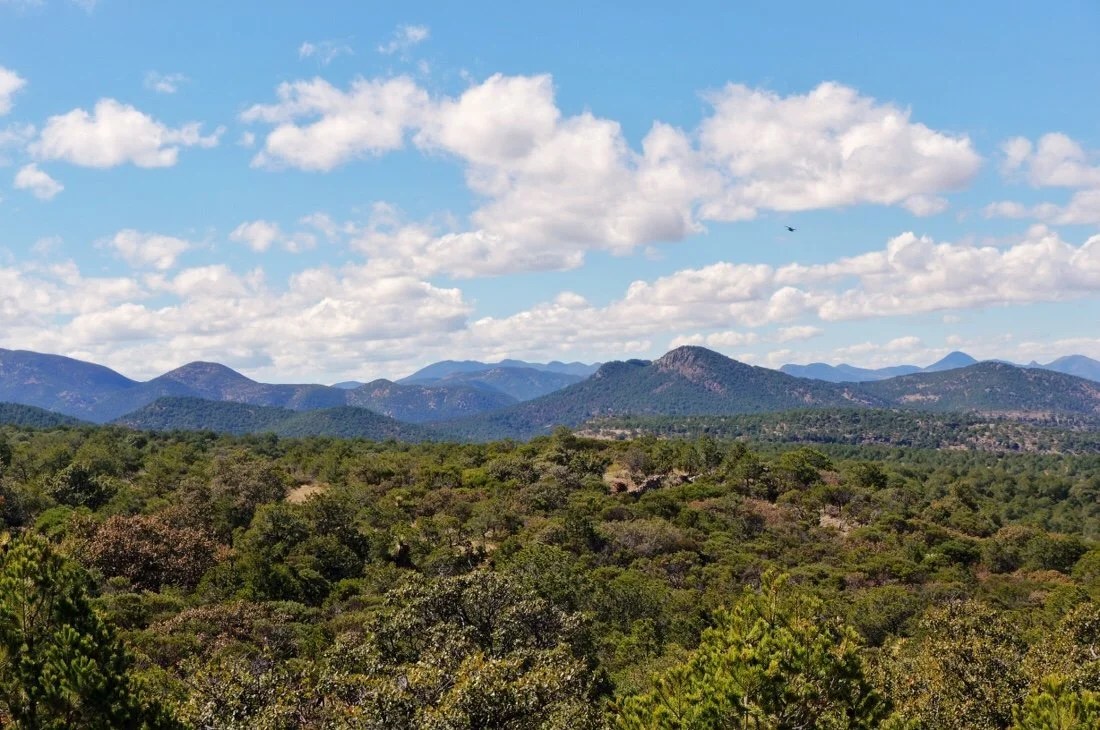

 It all started reminding me of New Mexico, and other places close to home (Arizona). We stopped for lunch high on the ridge, which I declared one of my “dream spots” (of which I have many).

 We continued on, through a tiny town, and up another ridge where we set up to cowboy camp with a view of the sunset.

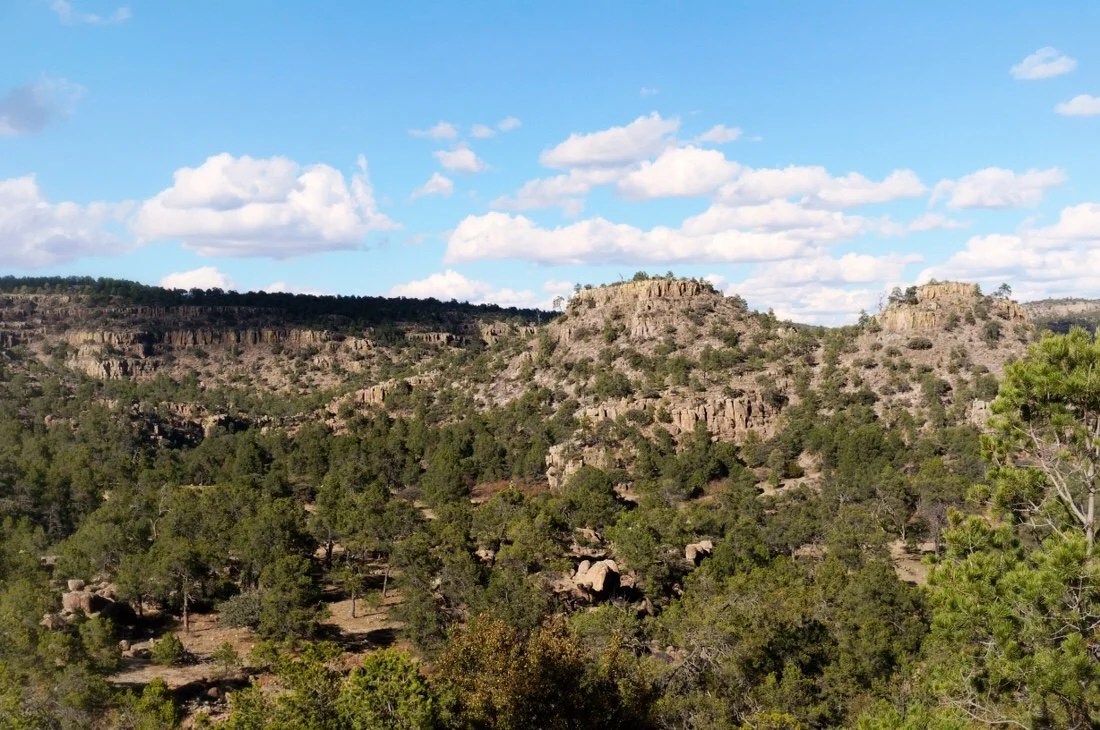


 We woke to -2°C, with a lot of morning dew. We waited for the sun to shine through the trees before fully emerging from our sleeping bags, then made a second cup of cold Nescafé Classico, and hung our things in the trees to dry before packing up.


 [Church & school-yard in the small town of Francisco Medero.]The day brought a mix of small towns along dirt roads and intermittent pavement. The landscape was all fenced between ranches and agricultural fields, which made finding a suitable, hidden, camp difficult.
 The day grew into early evening as we rode into the small town of Cabrales. We stopped at one of the first little stores as we rode into town to ask if there was a place to stay. The men outside the store all looked at each other, and then one stood up and said he had a second house that we could stay in. He walked us to the house, and then next-door to another store where we could get quesadillas (and for me with lettuce, tomato, chile, and onion).

 We sat outside and chatted the night away. It was all very grounding. These big adventures we do, our thru-hikes, and most especially this bike trip, has renewed my faith in humanity …reminded me, that for all of our differences, we’re all connected on this earth, making our way through this journey called life. It’s not always easy, and it’s often messy, uncertain, and difficult, but when we help each other (and accept help from others), we can grow much more, and go much further than we can alone.
 The next morning we had breakfast with the family next door before heading out of town. We rode pavement to a highway, then into the little town of Santa Rosa before getting back on dirt, and into more ranch land. Later in the afternoon we rode into a good size town that wasn’t named on our maps. We bought snacks and asked the name of the town: Comunidad Ermita de Los Correa.
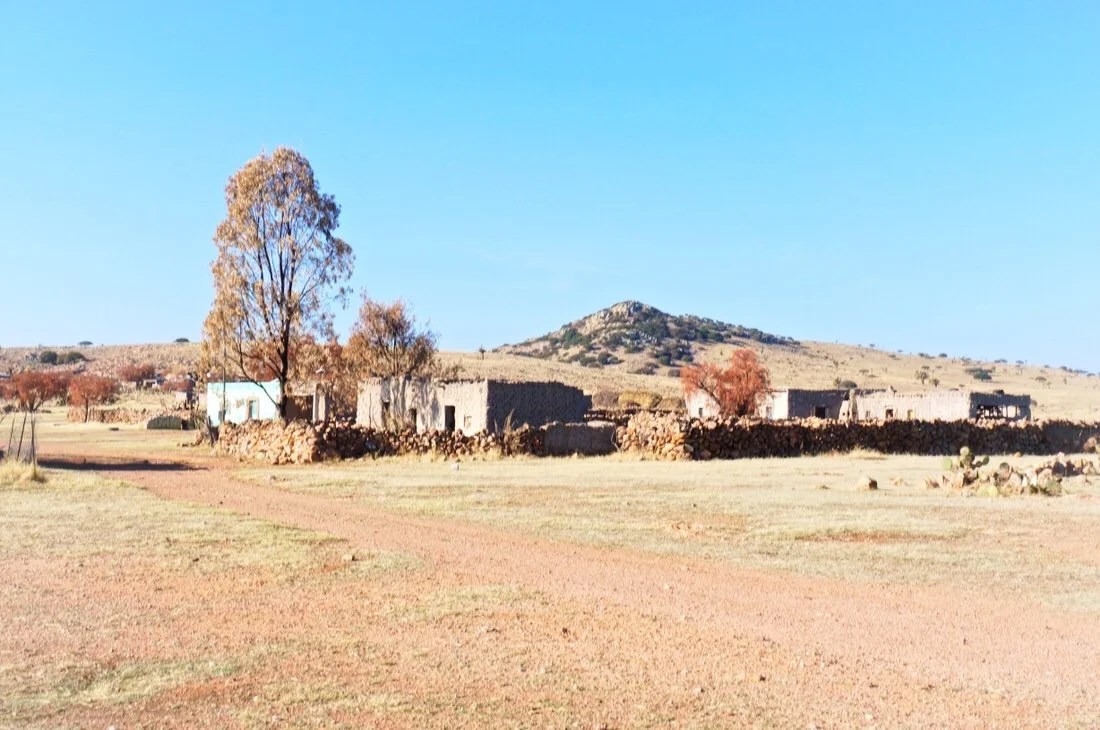
 [An old building on the outskirts of Comunidad de Los Ermita Correa.]We had lunch at the edge of town where a passing motorist stopped to ask if we needed anything. We told him we had just stopped for lunch; he smiled and said “provecho” before driving away. Provecho is, I think, sort of like “cheers”, or good health; it is often said when someone is eating.

 [A small church on the outskirts of the tiny town of Nueva Alianza.]We continued on, through another very small town, before looking for a place to camp. It took a while to find an isolated spot, that wasn’t a fenced off ranch, but we finally found a beautiful spot high on the plateau that was sparsely dotted with joshua tree-like yuccas. The wind was blowing fiercely so we were happy to set up our tent and sleep peaceful away from the elements.
 The next day we rode a mix of dirt roads and fast pavement into the city Zacatecas.



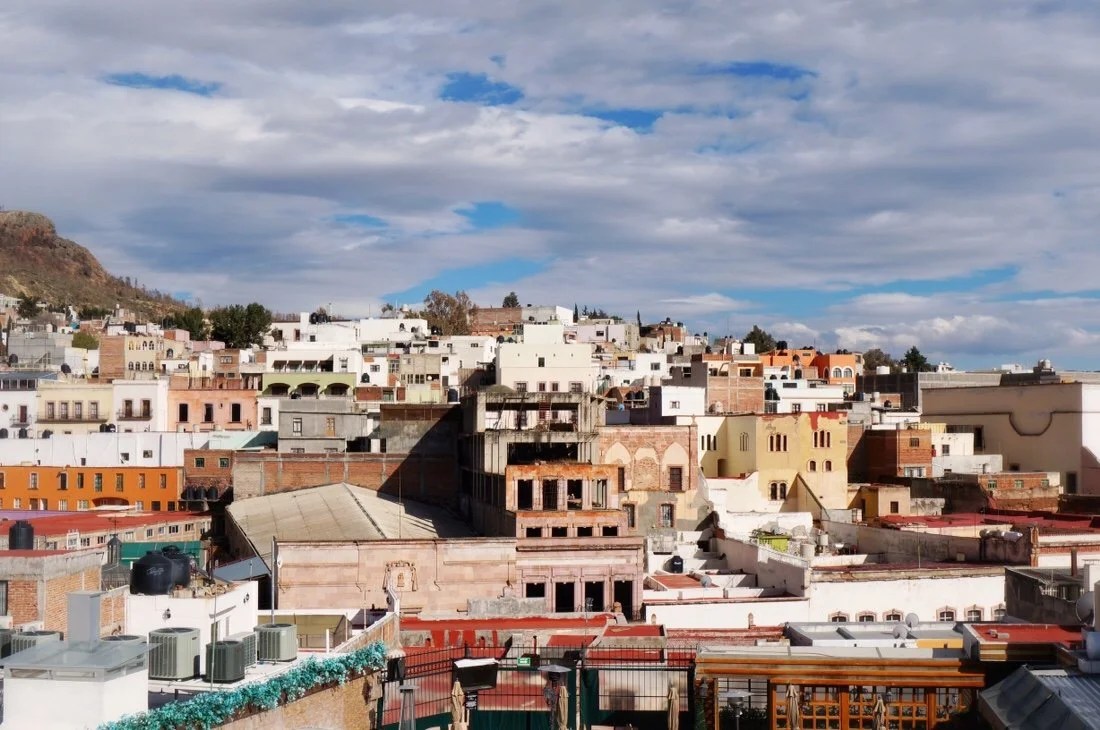
 We spent an entire week with a wonderful “warm showers” host. It turned out that they had travel plans and were out of town for most of our stay, but we kept company with their adorable little “perritos”. It was heart warming to hang out with two, obviously loved, pups in Mexico.
 We spent the week tearing down our bikes and building up new frames, taking care of health needs, and finally finding a replacement, even if temporary, puffy jacket for me. We visited the local markets …and of course, we found a nice coffee bar.
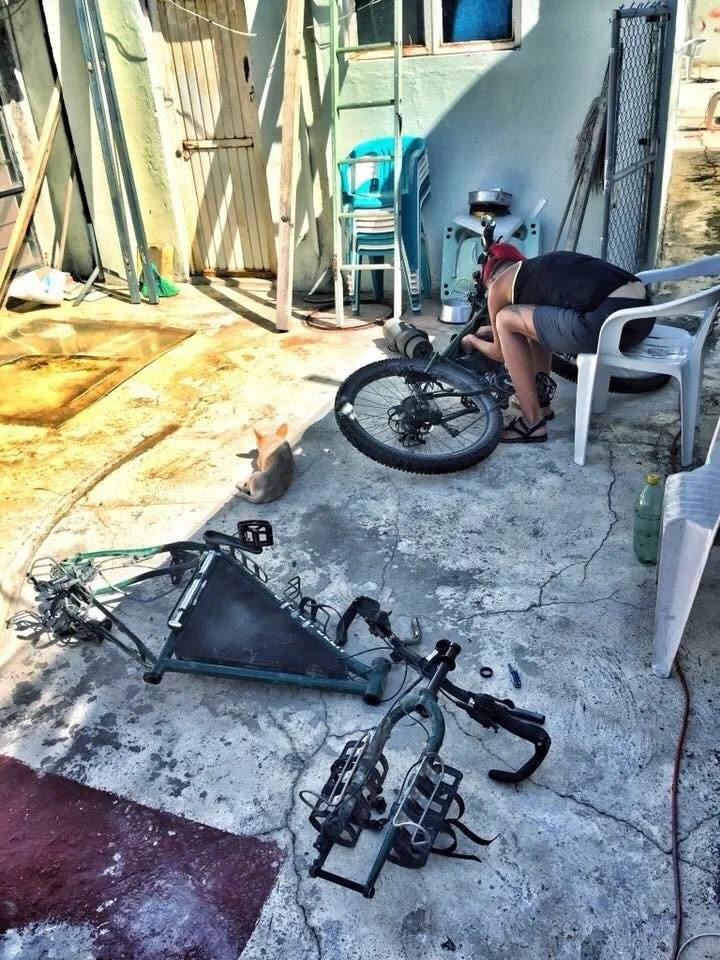 [tearing down our old frames, switching them out for larger sized frames.]
 [The great folks at Bicipartes San Martin, in the neighboring city of Guadelupe, switched out all the bearings from our old frames onto our new frames.]

 [A thing of beauty …and all back together again. I’ll be riding on a large frame now.]
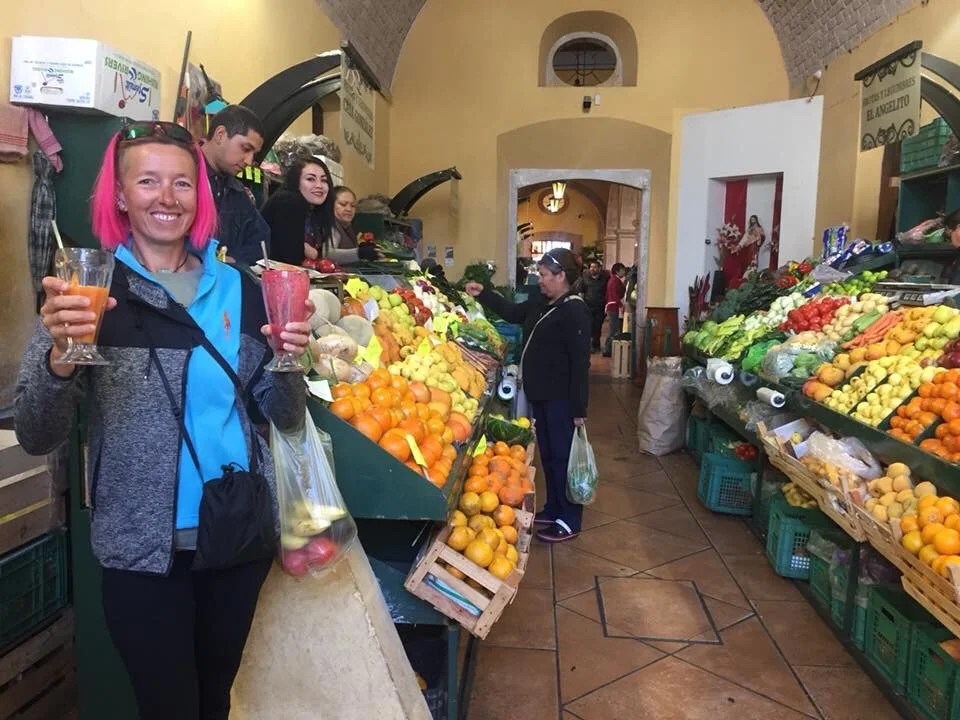 …fresh juice and produce!

 After a great week in Zacatecas we said goodbye to our warm showers host and headed out of town…
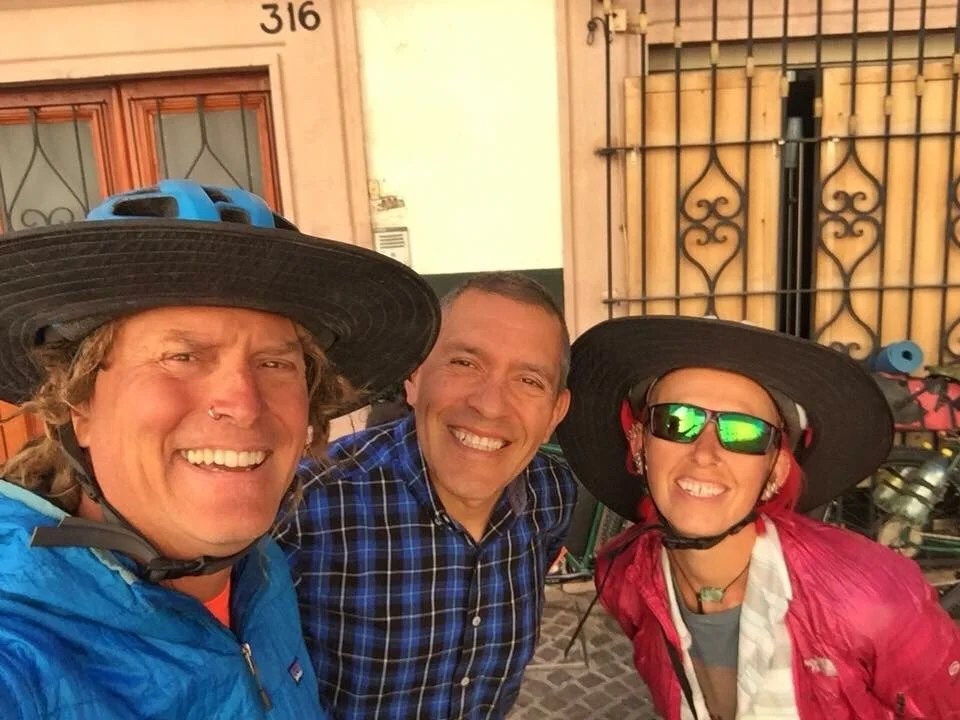 _____________________You can sign up to receive The Redheaded Nomad’s blog posts in your email inbox; sign up at the bottom of any page on my website: theredheadednomad.comFor more frequent updates, follow me on Instagram at: instagram.com/theredheadednomadYou can also find me on Facebook at: facebook.com/redheadednomad_____________________


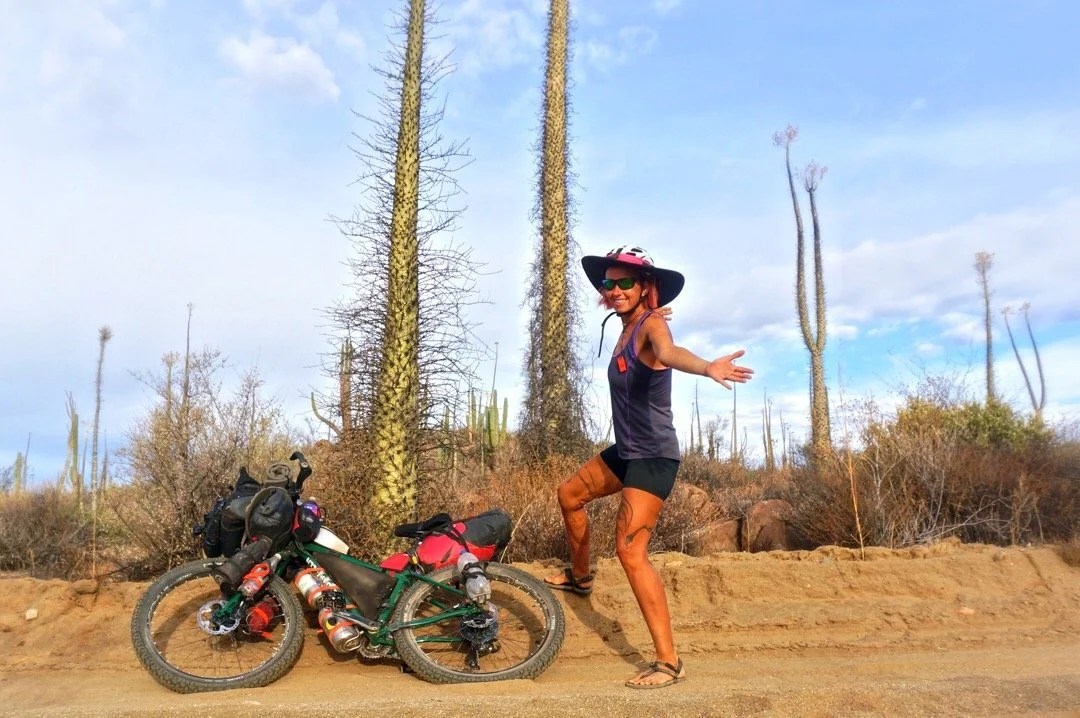


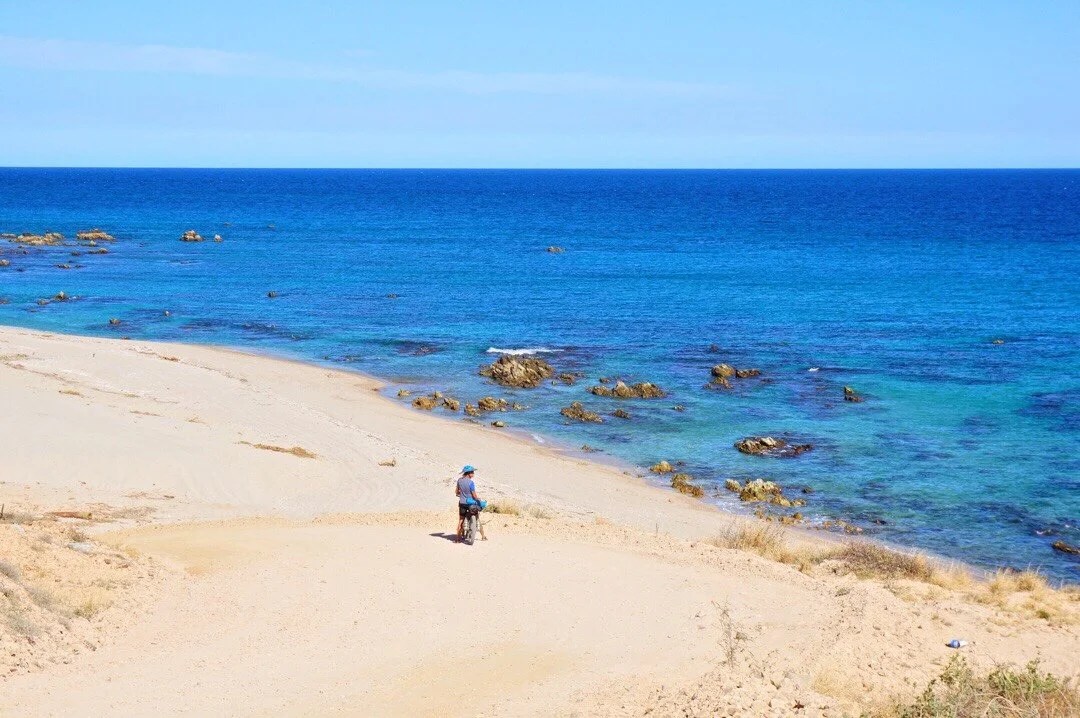 1 week: Picacho del Diablo, the Baja California Norte state highpoint. We had to wait a day in Colonet to organize a ride to the park. Travel to and from the park, plus the climb, was 4 days. After such an epic climb we took another zero in Colonet to rest.


 1 week (spread out over a month’s time): Getting a new bicycle seat for Neon. His seat rail broke south of Santa Rosalillita. He got a new one shipped via Baja Pack to Guerrero Negro, so we hitched (with our bikes) there from Rosarito. This all took several days. The seat didn’t work for his bum. So he bought a cheap one in Vizcaino that was wider and had more cushion, and then ordered another one from Amazon. Eventually, after extra days in several towns a long the way he finally got the seat he ordered from Amazon, a Brooks B17, and he loves it. If we were just riding the Baja Divide I think Neon would have just tried to get by with the cheap cushy seat he bought in Vizcaino. So I feel like this time was somewhat unrelated to riding the Baja Divide and more about riding to Argentina.
 …the seat that broke, a Selle Anatomica. It’s common for them to break, but they’re comfortable.

 …and the Brook’s B17 (the one he’s happy with)
 1 week: We took a bus (with our bikes) from Guerrero Negro to Mulege and spent an entire week there, and the nearby beaches, with family for the Thanksgiving holiday. After Thanksgiving we took the bus back to Rosarito to pick up where we’d left off on the Baja Divide route before Neon’s seat rail broke.


 1 week: We spent a whole week in Loreto hanging out with trail friends from New Mexico, and making new friends.


 4 days: We spent four whole days in La Paz sick with a sinus infection. Though I think this counts as Baja Divide trail time.
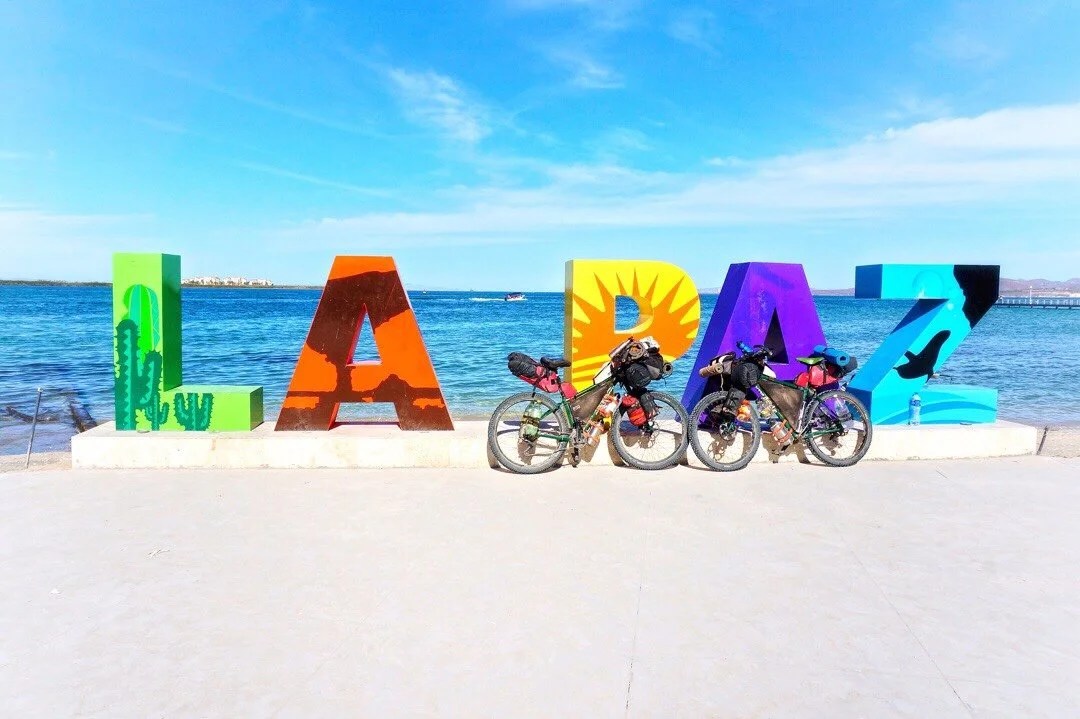

 5 days: Sierra la Laguna highpoint, the Baja California Sur state highpoint. We spent five days around Todos Santos, watching the turtle release, resupplying, climbing a couple of peaks in the Sierra la Laguna Mountains with our friends from Maryland, and resting in town afterwards.
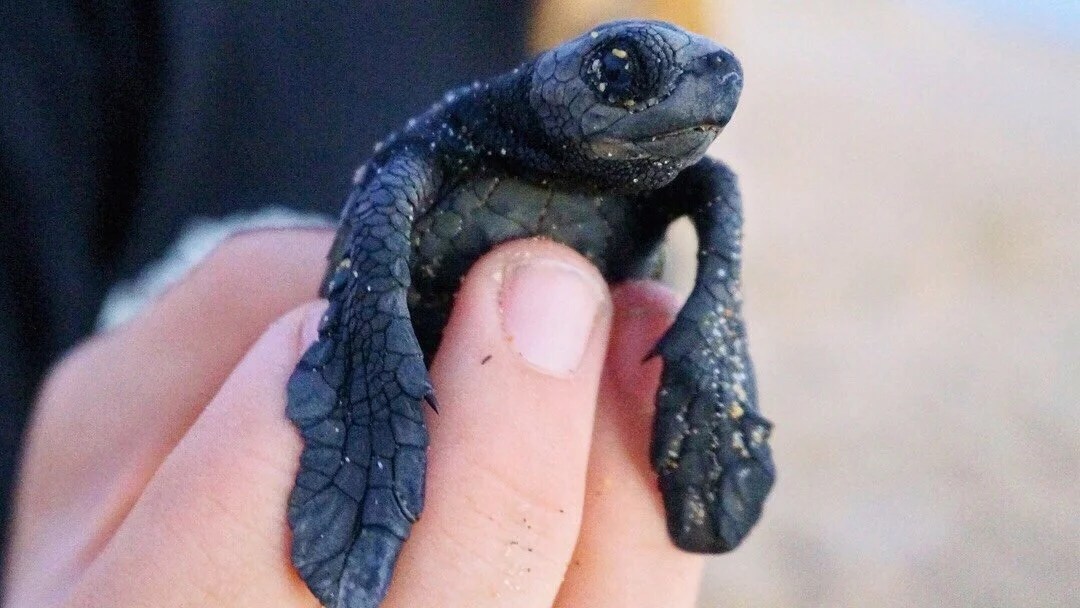
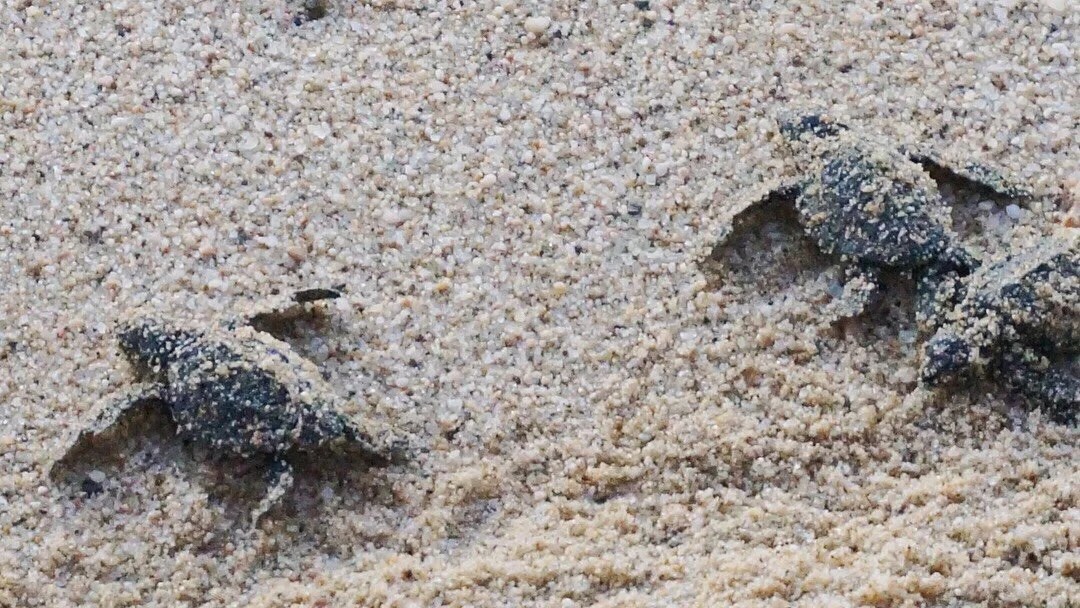
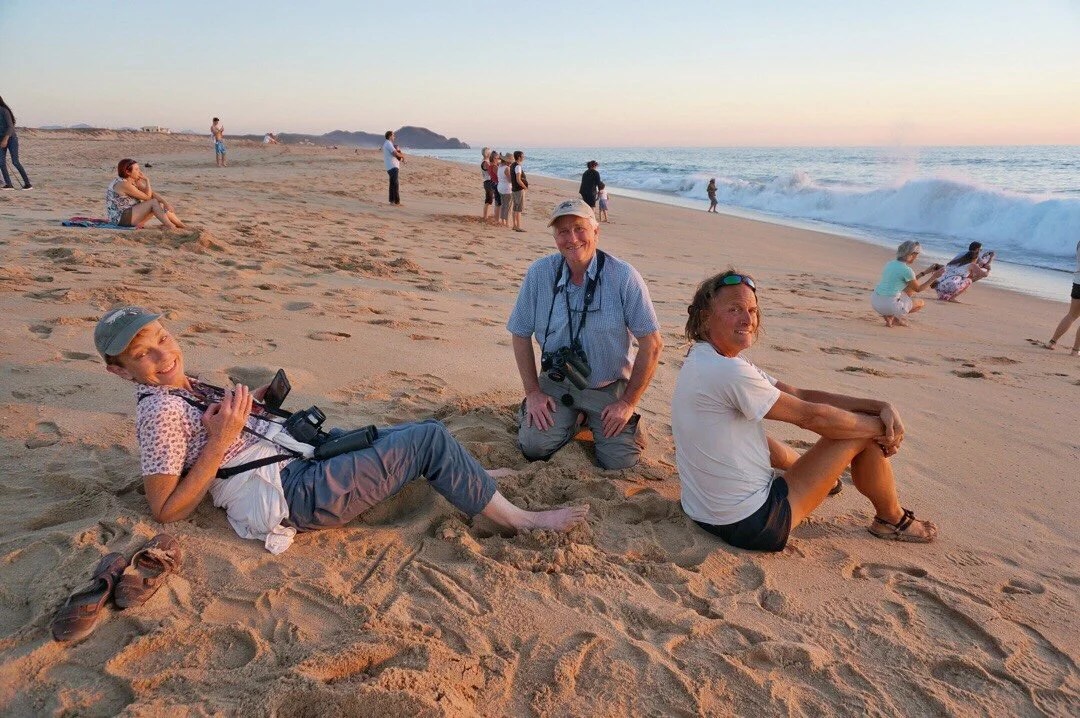
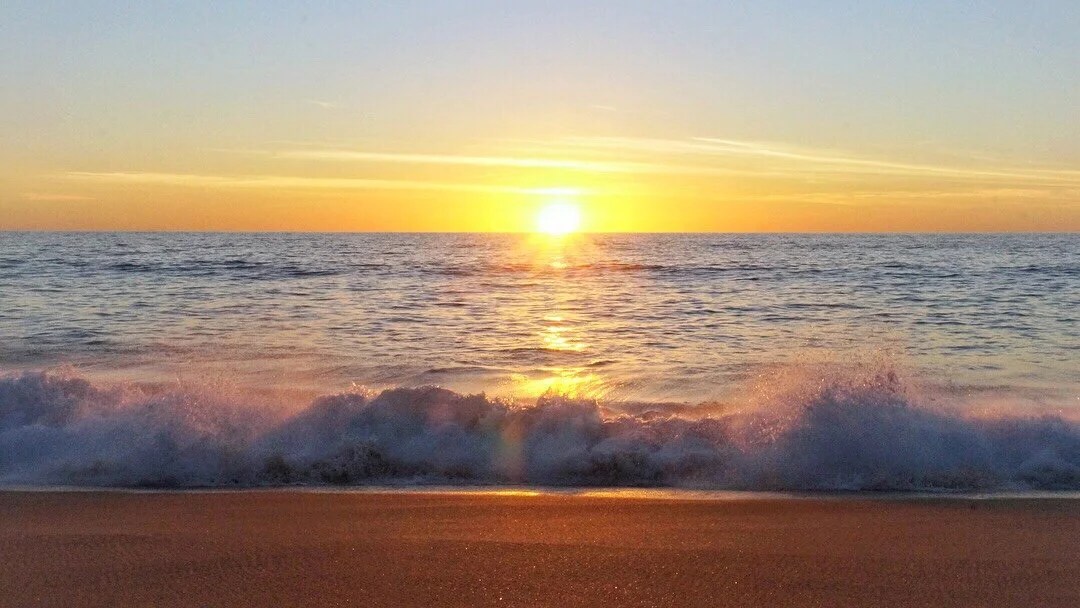


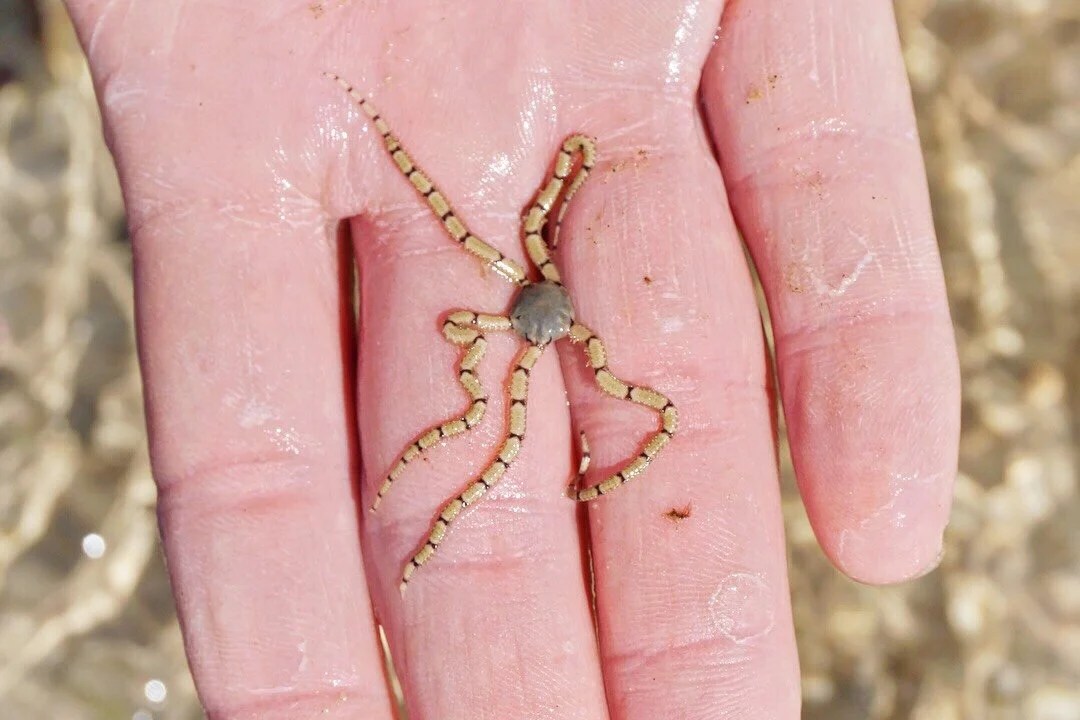
 2 days: We spent two whole days in Cabo Pulmo with our friends from Maryland, walking the nearby nature trails, looking at cool creatures in the tidal pools, snorkeling, and lingering over coffee and meals with our friends.


 FAVORITE PARTS:There are so many things that were highlights for me that’s it’s difficult to pick out just a few, but I’ll try.I had a great experience at Hotel Escondido just off route on the outskirts of Colonet in Enero, and the little market down the street from the hotel. The lady that manages the hotel was super nice, and we had a great time with her son as well. Everyone at the hotel and the little market were so friendly that I was almost sad to leave Colonet, though Colonet itself didn’t charm me as much.

 My two favorite restaurants in Baja were the little truck stop diner at El Sacrificio, and Alma y Manny’s in Todos Santos. The food was good, but of course it’s never just the food. We just had really great experiences and interactions at these places. The best espresso I had was at Parlante Restaurant in Ciudad Constitucion. And the Blue Anchor in Loreto was also a highlight, which was not so much for the food, but for the great conversation with our new friend from Colombia.


 My favorite riding and landscapes were all through Valle de Los Cirios in the areas around Cataviña. It’s just magical there and the plants are so Dr Seuss cool. I also loved everywhere the route travels along the Sea of Cortez.


 We also took the alternate (after El Datil) that goes through San Juanico, Cadeje, La Purisima, and San Isidro; perhaps it was just our timing and the people we met along the way, but it was one of my favorite sections. The towns were culturally a little different and I really enjoyed them.


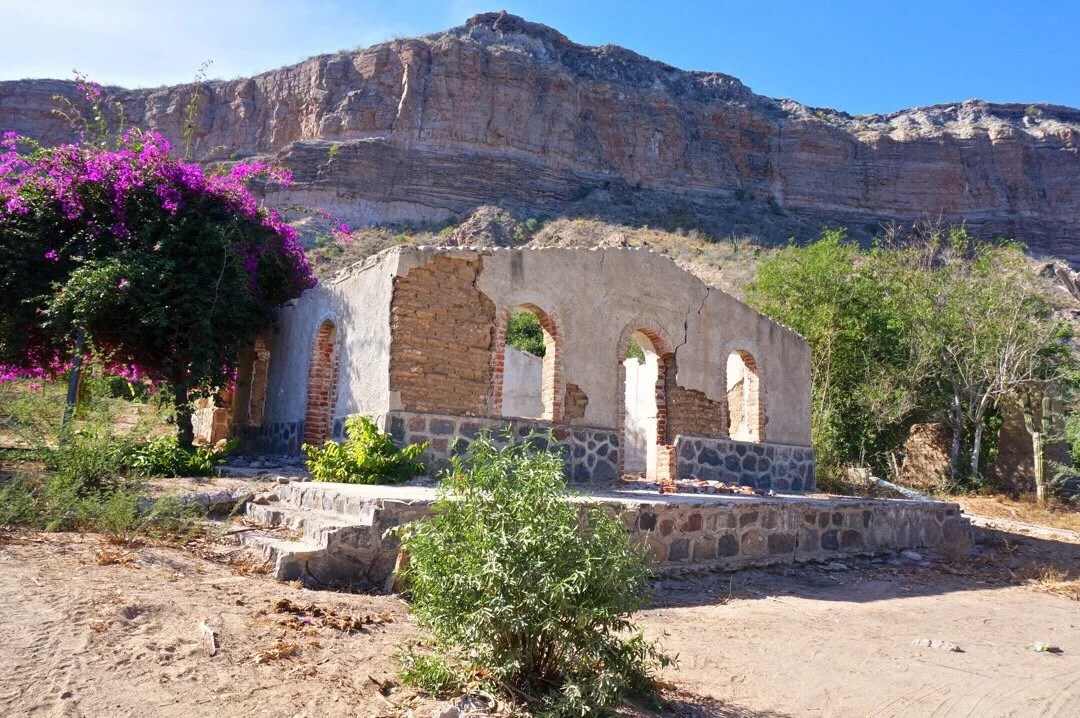

 In general, my favorite places and experiences were all in central Baja. The far north and far south just didn’t do as much for me. The northern parts are more gritty and the towns seem a little rough around the edges, and there was a lot more trash strewn about. The far southern parts of Baja (La Paz and south) are very touristy, which makes some of the towns seem a lot like visiting Jackson Hole, Sedona, or Beverly Hills; it’s just not my scene.MOST DIFFICULT SECTIONS:The two areas of riding that I found most exhausting were… ONE: a little before Rancho El Coyote, and after Rancho Meling. And TWO: about half a day after Nuevo Odisea almost all the way to the pass before you drop into Valle de Los Cirios. There were a few other discrete parts of the route that were difficult for sure, but it’s the really steep uphill hike-a-bike over eroded rocky “hard to call them roads anymore” roads that I personally find the most strenuous and tiring.


 RECOMMENDATIONS:I really only have one… ride the cape loop counterclockwise. The amount of climbing seems similar in either direction, but there are several very long sandy sections that are a downhill ride if you go counterclockwise, which would otherwise be a hike-a-bike push if you take the capeloop clockwise. And there is one super sweet sinuous downhill on the way to Cabo Pulmo that makes it worth riding the capeloop counterclockwise.
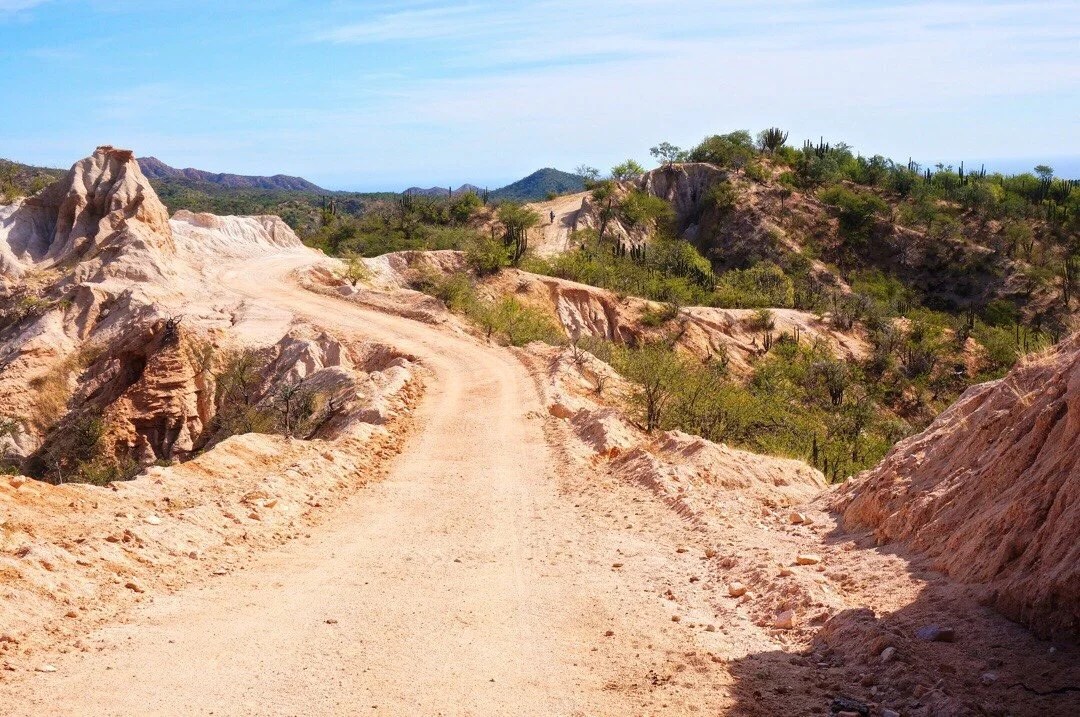 TIPS:I don’t really have any. Everyone is so different. Our home base is in southern Arizona, so Baja felt a lot like riding in our backyard …the climate, the different biomes, and all the plants and critters just seemed like an extension of home. This was our first long bikepacking trip, but we’ve thru-hiked several long trails, so we were already familiar with the the rhythm of being self sufficient for long periods of time in rugged wilderness.The weather will be pretty different depending on what month you start and how long it takes you. We started in mid-October and only had one real rain our entire time in Baja. We only slept in our tent three times; the rest of the time the weather was perfect for cowboy camping.If anything, I’d say pack light (especially if you’re only riding the Baja Divide and not continuing on a longer trip), enjoy, mix with the locals, and be patient on route. When the route gets difficult, it will change and there will be something magical on the other side.
 _____________________You can sign up to receive The Redheaded Nomad’s blog posts in your email inbox; sign up at the bottom of any page on my website: theredheadednomad.comFor more frequent updates, follow me on Instagram at: instagram.com/theredheadednomadYou can also find me on Facebook at: facebook.com/redheadednomad_____________________